Maximize your CES 2026 impact with dedicated pre-show, on-site, and post-show support exclusively for Korean brands, government agencies, and startups.
Our Services
Pre & Post-Show Promotion and PR – Build momentum before the show and sustain it after
Media Support – Strategic media outreach and relationship management
Client Relations – Connect with new customers and forge valuable partnerships
Proven Track Record
Successfully supported Korean clients at CES 2020, 2021, 2022, and 2025 with measurable results in media coverage, customer acquisition, and partnership development.
Why Work With Us
Korea-exclusive focus – We understand your market and culture
Deep CES experience – Proven success across multiple years
Dedicated to excellence – Elevating Korean innovation on the global stage
The Incheon Free Economic Zone Authority (IFEZ) announced on Oct. 12 that it has achieved $553.5 million in foreign direct investment (FDI) declarations for the third quarter of 2025.
This fulfills 92.3% of this year’s target ($600 million), with quarterly declaration amounts recorded at $309.61 million for the first quarter and $184.09 million for the second quarter.
Notably, significant progress was made in core strategic industries such as biotech and semiconductors. In the first half of the year, investment declarations were completed by Sartorius Korea Operations ($250 million), Lotte Biologics ($28.7 million), TOK Advanced Materials ($24.6 million), Orsted ($119.6 million), and Costco Cheongna ($61.4 million). The third quarter saw an additional investment from Starfield Cheongna ($52.5 million).
The FDI arrival amount reached $391.2 million, exceeding the target of $350 million and surpassing last year’s figure by 2.8 times. Consequently, IFEZ’s cumulative FDI declaration amount has reached $16.72 billion.
IFEZ Commissioner Yun Won-sok stated, “Despite uncertainties in domestic and international economies and tariff risks, IFEZ’s proactive IR activities and expansion of foreign resident infrastructure have led to these achievements.”
IFEZ maintains its goals of $600 million in FDI declarations and $350 million in arrivals for this year, actively pursuing investments in sectors such as medical and biotech, advanced strategic industries, and tourism and cultural content industries.
Yun added, “In my second year as head, we expect to exceed the FDI declaration target of $600 million again this year, following last year’s success. We anticipate visible results from new large-scale investment projects in biotech and semiconductor fields, as well as the Kessler Group’s Asian Hollywood investment project, which is being pursued as part of the K-Con Land project.”
I’m Don Southerton, and for over twenty years, I’ve advised executives, teams, and organizations navigating the complexities of Korean global business.
Each new post will share a practical, real-world “hint” to help leaders and teams succeed in Korea-focused business — from decision-making and hierarchy to trust-building and cultural nuances.
Follow along in the coming days for exclusive insights from my book.
With the release of my latest book, Korean Business: Challenges and Solutions – 25 Workplace Hints for 2025, I am launching a new 7-part mini-series.
Today’s hint
Face-Saving Is Strategic: Preserving someone’s reputation — especially in public settings — builds long-term loyalty. Avoid direct criticism in group meetings; address concerns privately instead.
If your organization is navigating Korea’s dynamic business landscape—or preparing for global partnerships—let’s connect. I offer consulting, briefings, and actionable strategies to help you succeed.
My practice supports companies in succeeding in Korean global business.
I assist global executives and teams in succeeding in Korea’s competitive market through cultural intelligence and strategic action.
New Mini-Series: Workplace Tips for Korea-Facing Business
I’m Don Southerton, and for over twenty years, I’ve advised executives, teams, and organizations navigating the complexities of Korean global business.
With the release of my newest book, Korean Business: Challenges and Solutions – 25 Workplace Hints for 2025, I am again sharing a new 7-part mini-series.
Each new post will highlight a practical, real-world “hint” to help leaders and teams succeed in Korea-facing business—from decision-making and hierarchy to trust-building and cultural nuances. Follow along in the coming days for exclusive insights from my book.
Today’s hint: The After-Hours Advantage
Some of the most important business conversations happen after formal meetings end. Dinners and informal gatherings are where relationships deepen and true alignment occurs.
If your organization is navigating Korea’s dynamic business environment—or preparing for global partnerships, let’s connect. I provide consulting, briefings, and actionable strategies to help you succeed. My practice helps companies succeed in Korean global business
I’m Don Southerton, and for over two decades, I’ve advised executives, teams, and organizations navigating the complexities of Korean global business.
With the release of my newest book, Korean Business: Challenges and Solutions — 25 Workplace Hints for 2025, I’ll be sharing a special 7-part Mini-Series.
Each post will highlight a practical, real-world “hint” to help leaders and teams succeed in Korea-facing business — from decision-making and hierarchy to trust-building and cultural nuances.
Follow along in the coming days for exclusive insights from my book.
Hint #1 — Why Hierarchy Matters More Than You Think
In Korean business, hierarchy shapes decision-making. Decisions often cascade from the top down, and knowing who holds real authority is critical.
If you bypass rank, even unintentionally, you risk stalling a project — or losing credibility.
Successful executives frame ideas in ways that align with senior leadership first.
This isn’t about formality — it’s about understanding how respect and authority drive business outcomes.
From my new book: Korean Business: Challenges and Solutions — 25 Workplace Hints for 2025
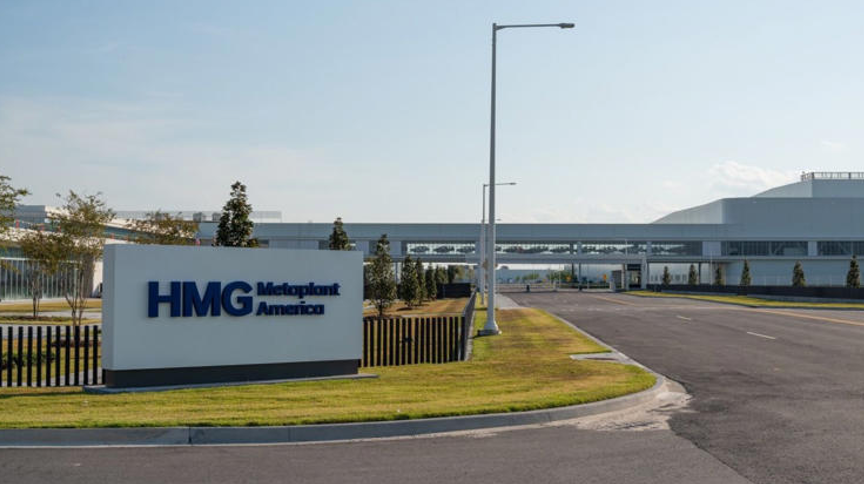
I contributed to a Wall Street Journal article on last week’s immigration raid at the Hyundai plant in Georgia. Reporting continues.Don Southerton
The Trump administration wants tougher immigration enforcement. It also wants Asian manufacturing powerhouses to pour investment into U.S. factories.
Those goals are now clashing because Asian companies are having trouble getting enough work visas for personnel needed to get the U.S. plants running, say immigration specialists.
Last week, the contradiction was highlighted when the U.S. carried out an immigration raid in Georgia and arrested some 300 South Koreans helping to build a Hyundai Motor joint-venture battery plant.
Now the South Koreans are expected to head home soon under a diplomatic deal, and experts say it might take longer and cost more for Asian companies to build their U.S. factories without the specialists they need.
President Trump hinted at such concerns when he wrote on social media that his administration “will make it quickly and legally possible” for foreign investors “to LEGALLY bring your very smart people, with great technical talent to build World Class products.”
One cause of the issue is America’s shortage of skilled technical workers, which stems from a long-term decline in manufacturing employment and the offshoring of production. The U.S. lacks the workforce needed to support advanced industries such as semiconductors and biotechnology, according to a July report by the Center for Strategic and International Studies, a Washington think tank.
That is why it is common for hundreds of employees from the home country to descend on big project sites. Companies such as Hyundai and its battery-making partner, LG Energy Solution, often bring along the same contractors they work with at home. Around 250 of the roughly 300 South Koreans arrested worked for contractors, LG Energy said. Japan said Tuesday that three of its citizens working at the site were also detained.
The detainees largely held temporary visas suitable for short-term training and supervising purposes, such as the B-1 visa, and many were working at the site as instructors, according to South Korean officials. Some had arrived in the U.S. through a visa-waiver program that allows entry for up to 60 days for travel and certain limited business activities, they said.
Don Southerton, a consultant who has advised South Korean companies including Hyundai on operating in the U.S., said some Korean firms and their contractors in the past used visa-waiver programs for short-term travel or business visits without triggering scrutiny.
“I don’t think they ever had to worry about it,” he said. “And there has been so much encouragement for these plants to be” in the U.S., he said.
U.S. authorities said those arrested illegally crossed the border, entered through a visa waiver program that prohibited them from working or overstayed their visas.
Hyundai said it was reviewing its processes to ensure that its partners “maintain the high standards of legal compliance that we demand of ourselves.”
Other nonimmigrant employment visa types allow companies to bring in workers for longer periods, but they aren’t easy to get.
The H-1B visa lets companies operating in the U.S. hire foreign workers in specialty jobs such as tech and engineering. The annual cap recently has been under 100,000 visas.
The E-2 visa is designed for specialized workers at U.S. units of companies from regions with commerce treaties with the U.S., a category that includes Taiwan, South Korea and Japan. Approval standards have been getting tougher as applications surge in South Korea, whose firms are overseeing many large projects in the U.S., said Hong Chang-hwan, a lawyer at Seoul-based firm Kookmin Emigration who specializes in U.S. immigration matters.
“The U.S. might say such workers can be hired locally, but Korean firms say such talent is difficult to find and deploy quickly in a plant that you’re trying to get going on schedule,” he said.
In 2023, Taiwan Semiconductor Manufacturing sought to bring in some 500 experienced workers to accelerate construction, igniting a protest by Arizona’s construction unions. TSMC said the workers were there only for short-term support, with no impact on local hiring.
South Korea’s trade and industry minister said last year that visa challenges have made it hard for many South Korean conglomerates to dispatch workers to the U.S. and increase investments there.
In July, Rep. Young Kim (R., Calif.) and others introduced a bill that would allot 15,000 visas for South Koreans with specialized education or expertise. The bill, proposed in varying versions over the past decade, hasn’t moved forward.
Similar visa categories have been created for countries such as Australia and Singapore through free-trade agreements. The U.S. grants more than 10,000 E-3 visas annually to Australian nationals in specialized fields, enabling them to work for up to two years in the U.S., renewable indefinitely.
Wendy Cutler, a former U.S. trade negotiator who is now at the Asia Society Policy Institute, said South Korea pushed hard for special visas like those granted to Australia and Singapore when it negotiated its own free-trade deal with the U.S., which took effect in 2012. Seoul ultimately didn’t get them, although it did get included in the visa-waiver program.With investment a U.S. priority, “a longer-term solution is urgently needed,” Cutler said.
Korea 101: 6-Week Intensive Course – Your Gateway to Korean Market Success
To Register https://buy.stripe.com/14A14o1ph5s4efGa48bMQ07
Credit Cards are accepted, and once you’ve signed up, my team will connect with you directly to craft a schedule that fits. Your path to mastering Korean business begins the moment you enroll.
25 Insights
1. At Hyundai, culture matters. The company is deeply Korean, and Confucian values like respect and harmony still guide the workplace today.
2. Korea’s discipline and commitment to education created the skilled workforce that built global giants like Hyundai.
3. Team harmony—inhwa—isn’t just cultural; it’s a competitive advantage for Korean firms.
4. Entrepreneurial spirit runs deep in Korea. Hyundai’s story is proof of that resilience.
5. The big question is: Can Hyundai keep its Korean roots while thriving globally? The answer lies in balance.
6. Founder Chung Ju-yung taught Hyundai a core belief: even the impossible is possible.
7. Hyundai began as a nation-builder—rebuilding Korea after war before building cars.
8. The Hyundai government-chaebol partnership demanded success—failure simply wasn’t an option.
9. Hyundai grew by diversifying fast: from concrete to cars, from steel to shipbuilding.
10. Chung Mong Koo’s leadership turned Hyundai into a global brand built on quality.
11. Hyundai’s original values—diligence, prudence, harmony—still frame how the company thinks and works.
12. Innovation at Hyundai means creating something from nothing—finding opportunity where others see limits.
13. Risk-taking is not only encouraged at Hyundai—it’s expected.
14. Hyundai Speed is more than efficiency. Once a decision is made, execution is relentless.
15. Core values like challenge, collaboration, customer, globality, and people show Hyundai’s blend of tradition and modernity.
16. Hyundai’s vision is simple: Together for a Better Future. That means mobility solutions beyond cars.
17. Management at Hyundai is learned by mentorship—styles are passed down from seniors to juniors.
18. Global exposure is reshaping Hyundai leaders, especially those educated abroad.
19. Collaboration is replacing hierarchy as Hyundai builds a more agile culture.
20. What Western teams see as rigid orders, Koreans see as following hierarchy. It’s about understanding context.
21. Jeans at Hyundai HQ? A small signal of a big cultural shift.
22. Flatter job titles are breaking down bureaucracy—speeding decisions and innovation.
23. Hyundai’s infusion of Western leadership brings fresh creativity and global perspective.
24. The old ‘Yes, sir’ culture is being replaced by a new ‘Why not?’ mindset.
25. Hyundai’s endgame is clear: become an agile, tech-driven mobility leader
Master Korean Business Success at an Unbeatable Price!
Supercharge your career with Korea 101: 6-Week Intensive Course – now at a limited-time offer of $795 (slashed from $1,595)! Perfect for new hires, team members on Korea-focused projects, or seasoned pros ready to dominate the Korean market.
Why This Course is a Game-Changer:
Unlock Insider Knowledge: Master Korean business culture and practices to navigate deals with confidence.
Stay Ahead of Trends: Learn how global and regional events impact Korea’s fast-paced market.
Winning Strategies: Gain practical, actionable tactics to forge strong partnerships with Korean stakeholders.
Interactive & Engaging: Dive into dynamic virtual sessions with live Q&A and tailored group discussions to tackle real-world challenges.
Course Details:
Start Date: Begins immediately upon registration – start learning today!
Duration: 6 weeks of high-impact, career-boosting content.
Price: Now only $795 (down from $1,595 – save $800!).
Format: Virtual, highly interactive sessions designed for maximum impact.
Scheduling: Flexible times and days arranged after registration to fit your busy life.
Don’t Miss Out – Enroll Now! Seize this exclusive offer and gain the skills to thrive in Korea’s competitive market. 👉 Register Now: Click Here to Secure Your Spot
After registering via Stripe, our dedicated team will contact you to customize your session schedule. Your 6-week journey to mastering Korean business starts the moment you enroll!
Need Help? If you encounter any issues with registration or have questions, reply to this message, and I’ll ensure you’re set up for success.
Act Fast – this $795 deal won’t last long, and spots are filling up! Sign up today to skyrocket your success in Korea!
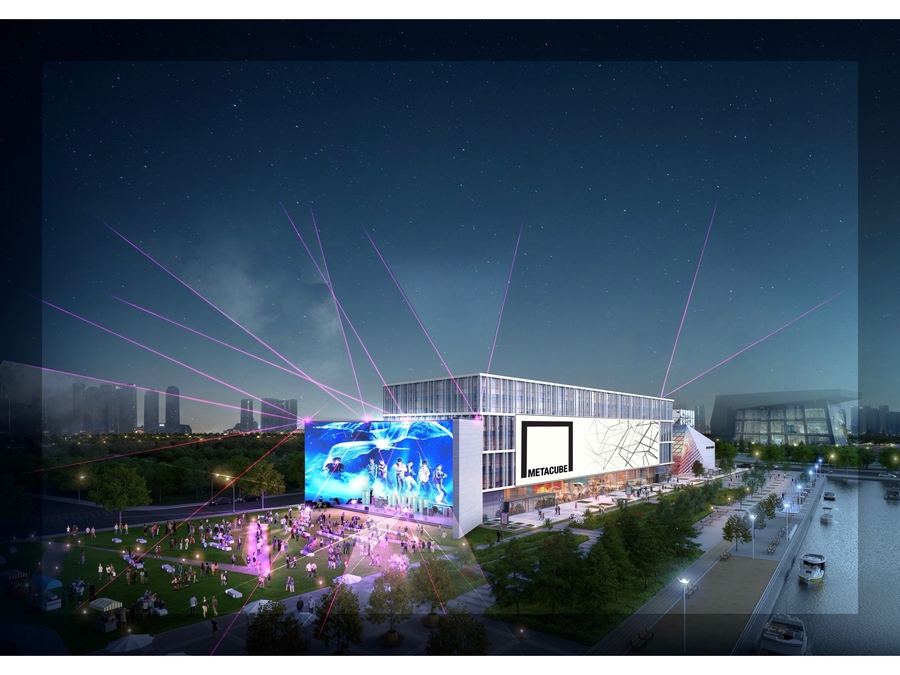
SONGDO SOUTH KOREA and GOLDEN, CO, June 10, 2025 /24-7PressRelease/ — Metacube Global is proud to announce The Metacube Square—a bold new venture at the convergence of immersive technology, art, and experiential entertainment.
Strategically located in Songdo International City, one of Asia’s premier smart cities within South Korea’s Incheon Free Economic Zone (IFEZ), The Metacube Square offers a transformative environment where audiences, creators, artists, and technology seamlessly converge. At its center is The Metacube, a six-sided high-resolution digital cube designed to host immersive storytelling, multi-sensory experience, and real-time audience interaction.
Investment Highlights: Why Now, Why Metacube? – Surging Market Demand: The global immersive media market is growing rapidly, driven by consumer appetite for interactive entertainment and tech-enabled experiences.
– K-Culture for Global: We are welcoming a new era. National policies are focusing on K-Culture, and projects in K-Content, OTT, and platforms will be leading the global market.
– Prime Location: Songdo is a government-backed innovation hub with world-class infrastructure, global accessibility, and institutional support for tech and culture.
– Proprietary Platform: Our media cube-based, fully immersive experience framework is scalable and customizable for multiple global deployments.
– Innovative: The Songdo Metacube will be the first multi-purpose mega platform for participative and experimental entertainment purpose in South Korea.
– Visionary concept: The Metacube established Songdo as the center of Art & EnterTech hub and will host the largest International Art & EnterTech festival in collaboration with its partners.
– Strategic Partnerships: We are forging international alliances and contracted partnerships with leaders across the entertainment, technology, art, and e-sports sectors. (French, Swiss, and Canadian museums, and a Channel for e-sports ESVT )
– Strong Finances: Return on business (after tax) 28%.
– Scalable model: High-margin IP, long-term space rentals.
Funding Opportunity We are currently raising seed capital to accelerate: – Final development and engineering of The Metacube platform
– Expansion of proprietary and partner-generated content
– Recruitment of key personnel across tech, operations, and business development
– Deployment of our first flagship installation in Songdo
This round offers early investors a first-mover advantage in a venture designed for global scalability, recurring revenue streams, and high-impact cultural relevance.
Call to Action We are scheduling one-on-one investor briefings to discuss partnership opportunities, business model scalability, and our phased global rollout strategy. Now is the time to be part of a paradigm shift in how the world experiences art, entertainment, and digital environments.
For over 20 years, Korea 101 has provided insights and support to a generation of teams in Korean firms worldwide.
In my upcoming six-week Korea 101 Intensive, I will share insights into Korean business that will help you navigate the nuances of the Korean workplace more effectively.
The weekly discussions cover Korea 2025 and its impact on the global workplace.
You can register today to begin. $495.00. This includes one-on-one classes and a complimentary Korea 101 book.
When you register, we will coordinate meeting days and times.