Tag Archive for Korea market entry

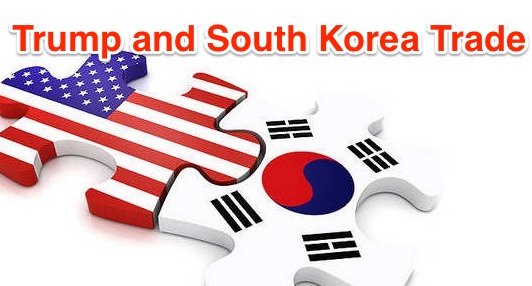
Everything Korea: November 14 Episode: Trump and South Korea Trade

I would not be fitting without sharing my thoughts on the recent US presidential election and its potential impact on US Korea global business. To many in Korea the election results are troubling… another layer of stress and concern amid a downturn in Korean exports.

Trade agreements, US military support for South Korea and dealing with North Korea top the list.  On the trade agreement front, I was a supporter of KORUS FTA both prior to its ratification and contributing a number of high profile articles on the benefits of the treaty.

From 2012:

https://bridgingculturekorea.blogspot.com/2012/05/korea-facing-business-2012.html

From 2013:

http://www.uskoreaconnect.org/blog/2013/04/trade-in-ideas-a-hidden-benefit-of-korus-fta/

From 2014:

http://www.uskoreaconnect.org/news-events/newsletter/newsletter-3-2.html

More so, I’ve commonly referred to KORUS FTA is news articles, interviews and speaking engagements.

My clients Hyundai Motor America, Kia Motors America and well as Mobis Parts America benefit from the treaty…  although I’m told 60% of the two OEMs finished product sold in America are made in US plants. (Some engines and a number of Tier 1, 2 and 3 components are still imported, but much less than when the plants were established).

Frankly, I am more concerned with trade agreements with Mexico. Korean Groups, Hyundai, Samsung and LG operate plants across Mexico for local demand and export to America.

As an example, a new Kia Motors Mexico plant opened earlier in 2016 with plans to supply up to 80% of their capacity for export. A heavy trade tariff on Mexican goods exported to the US would be troubling not only to Kia, but a growing wave of Korean Tier providers. On a side note, opening a plant in Mexico for an OEM is not only about labor costs and savings, but eliminates a heavy tariff on vehicles the brand also wishes to imports into Mexico.

In addition and less know as another example is Hyundai Motor Group affiliate Hyundai Translead, who I have also supported. First developed under the maquiladora program, trailers made in the Mexico plant currently are sold in the US—check out the back of a Wal-Mart trailer you see on the highway for the Hyundai logo… or this Hyundai Translead video.


As for Samsung Electronics, since the 1980s, with the construction of an electronics complex (SAMEX) in Tijuana, where TVs, color monitors, and mobile phones are currently being produced. Samsung Electronics Mexico (SEM), a local sales subsidiary, was established in 1995, and now the operation has been expanded to include refrigerator and air conditioner production. Samsung Electronics also has local production of side-by-side refrigerators, front-loading washing machines and other high-end appliances.

All said, Detroit’s Big Three automakers — GM, Ford and Chrysler — all have production plants in Mexico, and any hefty tariff would impact them as well. In addition, GM’s Korea plants produce cars for the US market.

With more questions that answers, I’ll be revisiting the impact of the elections as it unfolds over time. So stay tuned.

Oh one more thing-

Regarding North Korea, I see with President- elect Trump’s unpredictable, and aggressive way of thinking it may make Pyongyang more cautious about its military provocations.

Questions and comments welcome.

Everything Korea, October 24 Episode: Deconstruction

oct-24

As I have shared before, supporting clients and their challenges requires getting to the core issues. It’s distinguishing between what may be, for example, a local organizational, or what may be tied to the Company in Korea. It then requires probing for any cultural impasses before providing a practical solution and a work through.

Much of this work is first listening carefully to clients and their challenges.  Equally valuable is walking around the corporate offices, observing and capturing multiple viewpoints.  Nothing beats being onsite. Nothing beats getting face to face.

Too often, I find challenges as murky, complex and layered with frustrations, so a deconstruction is needed.

In most cases, I bring a fresh perspective—one rooted in years working with Korea-facing business.  I’d like to share that in addition to mentoring, my work also involves directly supporting specific and very select high profile projects with clients.

Next Steps

As a next step, I suggest we set a time to discuss how we can work together. My personal assistant Stacey at stacey@koreabcw.com can coordinate a time for us to meet or chat by phone.


Everything Korea October 17 Episode: “That wouldn’t work in Korea”


Old fortress gate with light trails at downtown

Old fortress gate with light trails at downtown

This remark can be heard often.  I personally have experienced it pop up in discussions while at working for Korea companies. It surfaces often in chats with my Korea facing international clients.  In particular, it’s an issue when Korean firms promote themselves as “global, “ but push back with few wanting to move beyond the standard response “That wouldn’t work in Korea” or the caveat “That’s not how we do things at [insert company name] – most often this is when international teams seek to share their global approach to business.

Frankly they are right–things do work well in Korea, but this is the very root of the problem for a list of reasons.  For one, if global brand or company enters the local Korean market with a new product or service they bring an international model, which needs to be followed A-Z.

I’ve seen brands and projects falter when they do not embrace fully or the local partner picks and choices what they see fitting well, dismissing what they see as “different.”  At times one has to question the motive behind this pick and choice, especially when drilling deeper –Control or Openness to Change– becoming the real issue.

On another level, asking global team to follow Korean corporate norms outside Korea is a huge and growing concern. Policy developed in Korea which works well in Korea, rarely translates internationally. More so, when this means decisions for what should be local have to come from teams Korean HQ.

Of course working through these issues is where I come in… mentoring, giving perspective, providing context, sharing workarounds and facilitating the change we seek.

Everything Korea, October 3 Episode, The HOW

oct-3

A respected colleague shared their thoughts on last week’s commentary “Hit the Target”—noting is was “a timely topic!” “… Especially as we enter the fourth quarter…”

Several readers also chimed in– lamenting that local leadership and teams receive little guidance in HOW to hit the target.

To add some context, HOW has considerable to do with Korean workplace culture norms. Leaders give directives, and teams execute in a top down manner. In some cases, well meaning leaders withhold detailed instructions to empower their teams to work through it themselves…. In other cases, some in less progressive management feel there are being paid to do a job…. And teams need to struggle like they themselves had earlier in their careers… While others recognize providing direction may be efficient, but hope their team will find new and better ways to tackle the challenge. In particular, some form of “hail Mary” that drives sales and even better at a low cost.

Frankly, demands today on Korean export driven business have pushed and stretched teams. Many feel they are operating at maximum with little room for additional market share or sales.

Risk avoidance adds another layer when new ideas are presented, too.

Under these circumstances I have two recommendations.

  1. Present multiple and alternative ideas and countermeasures… vs. selecting one idea. I know a common response is “we do this, but to little avail.”  This does take some cultural savvy… the best teams in Korea do find ways to get their message heard. I can help here…. in providing you with a best approach.
  2. Couple with suggesting a trial or pilot approach to minimize risk and investment— with the ability to roll out fast. Again, this takes some savvy in how best to share and present…. Something I do often….

Care to discuss solutions? My personal assistant Stacey at stacey@koreabcw.com can coordinate a time for us to chat by phone, meet or handle by email.

Everything Korea: September 26 Episode, “Hit the Target”

sept26

A week does not go by without a colleague or client expressing deep concern for what seems an overarching and singular need for their company to hit their numbers.  To most, despite a number of vital business initiatives, they feel the monthly demand to meet “plan” is all that matters.

Frankly, as long as I have been working with Korea facing global business it has been a (the) driven force.  In fact, I can recall more than a decade ago while mentoring a new American divisional vice president that his Korean coordinator, obviously under some duress and knowing I understood the company well, pulled me aside. He asked passionately I stress to the new VP they needed to “Hit the Target.”  Repeating the phase, 3 times so to ensure I got it… then patting me on the back and sending me over to the adjacent office with the VP.

In another case, I was a speaker at LG’s Mobile national sales meeting.  Capping the upbeat and motivating event, the CEO with a huge graph projected behind him shared their amazing unit sales growth over for the years, then added the next year’s “stretch goal” as a hush came over the room. The new goal a huge bump over past years, which had pushed teams and the organization to their limits.

To be fair, this model is not unique to Korean business. It is also the subject on frequent discussion in Korea.  However, South Korea’s modern economy was once rooted in a state run export driven model—the government fixing private industries and well as the nation’s overall production and sales quotas in many sectors.  Today despite leading international as well as Korean economic experts arguing the old model is dated and need to move more to the service sector…   the export production model still remains a driving force… one now where Korean Groups now direct their own organizations production and sales numbers across global organizations and into numerous markets. In part with so much of the Korean identify, economy and jobs tied to export production the Groups are under pressure to continue to seek growth each year—push the teams even harder.  More so, with global stagnation in new markets and China, the past successes are marginalized. As a consequence Sales to move inventories has to rely on special pricing and incentives, which hurt brand image and profits.

Sadly Korea brands are world class and should sell based on their quality and value from cars to smartphones.

So what’s the solution?  

First we need to accept this has long been the foundation of Korean business and it has been their proven success model.  It’s part of their Culture and in a sense Tradition accepted by many.  In turn, others do hope and argue for Korea to re-invent and redefine itself, less focused on growth numbers and more on a being a leader in new technology and innovation synonymous with Silicon Valley.

Care to discuss some additional solutions?  My personal assistant Stacey at stacey@koreabcw.com can coordinate a time for us to chat by phone, meet or handle by email.

Everything Korea, September 19 Episode, Sub-cultures Matter

sept-19

As many of you know, I work between Korean affiliates and companies. What stands out is how sub-cultures vary even within the same Group. Perhaps moving among affiliates sometimes in a single day, I see and experience the subtle differences more than most.  This can range from the tangibles like building design, workspace layout, dress code and amenities to intangibles such as what one can sense in day to day employee engagement, morale and comradery.

In fact, there are sub cultural differences:

1) in Korea between divisions and affiliates, 2) with Korea and their own overseas divisions and 3) as I noted between the local overseas affiliates.

So, sub-cultures do matter.

Digging deeper, I feel recognizing what is common between the companies’ counts, too. This can include intrinsic Group values and norms shared across the organization, or even more common general Korean business practices and expectations.

To add to the complexity, often the local sub-culture of an affiliate has evolved over time, and very independent of the mother organization in Korea.  BTW We’re seeing as Korean Groups have expanded their global organizations into many markets there has been greater effort to now align the overseas operations with the HQ corporate culture.  (I’ll provide some more on this in one of my next Vodcast)…

This means when a Korea related issue surfaces in local operations we have to look at with several colored lenses.  Candidly, that how I pull apart situations and provide a solid work-through when supporting clients as a mentor and their Korea business strategist.

Learn More

Have a question or want to learn more about how I support and mentor clients? My personal assistant Stacey at stacey@koreabcw.com can coordinate a time for us to chat by phone, meet or handle by email.

Everything Korea, September 12 Episode, Chuseok 2016 Culture Alert

It’s that time of the year with Chuseok, (the Korean Harvest Moon Festival) right around the corner.

In 2016, Chuseok holiday falls on September 15, the day before and after also celebrated as National Holidays.

Koreans previously followed the lunar calendar, but in recent history, they have followed the solar calendar in line with international practice.

While public holidays are based on the solar calendar, there are a few days that are celebrated based on the lunar calendar. These are the two most important traditional holidays, the Korean New Year’s Day (the first day of the first lunar month) and Chuseok mid-autumn festival (fifteenth day of the eighth lunar month).

In mass, (and I mean a substantial part of the population) families travel back to their home villages. Over the holiday they may perform ancestral rituals at the graves of relatives as well as share time with their family over traditional foods.

For your Korean colleagues (in Korea), you can wish them a happy Chuseok by phone, text, or email on Monday September 12 after 4 PM (Tuesday AM in Korea).  Again, most Koreans will have a 5-day weekend starting their Wednesday …

For expat Koreans working outside Korea, here and globally you can wish then happy Chuseok on Thursday September 15.


If you’d like to try, here’s a common greeting.

추석 잘 지 내 새요

Chuseok jal ji nae sae yo..

To conclude, even though many things have been changed by Korea’s rapid industrialization, urbanization, and globalization we find in the celebration of Chuseok that family remains one of the bedrock of Korean society.

Everything Korea, June 6 Episode, Life-Work Balance?

Work Life Balance Signpost Shows Career And Leisure Harmony

Korea “…a society where overtime work is seen as a symbol of diligence.”

A frequently surfacing concern among westerners in my work supporting Korean global subsidiaries is the Korean expatriates assigned to local operations have little or no Life-Work Balance.

In particular, expats (commonly referred as Executive Coordinators or Executive Advisors) work long hours often extending into the late evening. Westerners are sympathetic and respect this dedication, but question working such long hours and see the toll it takes their Korean colleagues.

Working lengthy hours has been a trait of the Korean workplace, in fact, it goes hand and hand with Korean students who in their middle and high school years can devote up to 20 hours a day on school-related work.

Frankly although Koreans endure long days I feel those assigned overseas tack on even more hours… the assignment demanding as well as time differentials requiring correspondence into the evening. Adding to the situation, whereas in Korea they work as a team—sharing the long hours with co-workers, many expats are the sole Korean in the department – with them remaining in the office into the evening when all others have left.  In many cases, expat feel they carry considerable burden for the performance of their department…

In a recent Korea Herald article, it notes:

For 26-year-old office worker Lee Hye-ri, it seems like a far-fetched dream to exercise and enjoy her hobbies after work every day. It is quite difficult to imagine life outside her workplace as she works as late as 11 p.m.

The newcomer, who was employed by a state-run company last year, often works overtime and sometimes works at home on weekends. She dozes off on the bus while commuting and sleeps a lot on weekends to fight a chronic lack of sleep.

“It has become a habit to work overtime. I might be able to finish my job during working hours if I focus, but I just think to myself, ‘Let’s just work overtime,’” she told The Korea Herald. “For workers, going back home in time is a special occasion and working late is part of everyday routine.”

Lee is one of many Korean workers who suffer from chronically long working hours in a society where overtime work is seen as a symbol of diligence.

The article goes on to point out the social ramifications of long hours including health and family issue.  Some in government have tried to address with introducing new labor laws to limit long hours….

All said, as the Western workplace recognizes and embraces the need for Life Work Balance it has become a frequent topic in Korea and one the new generation is beginning to consider when looking at their future and employment.

While we are looking at the Korean workplace, I’d like to take this opportunity to share an update on my Korean Global Business Mastery Program.

Membership-based, the program offers elite access to strategies and insights I’ve developed over decades of research coupled with hands on experience.

The paid service is part mentoring and part providing immediate solutions into the challenges into Korean facing workplace and global business for C-level leadership as well as teams. The main focus is problem solving and support.

Register today for a free introductory consultation at:http://unbouncepages.com/bcw-mastery/

For direct inquiries on enrollment and fees, please contact me at: questions@koreabcw.com

Korean Global Business Mastery

Global Business Mastery

There is synergic energy, commitment, and excitement in the air….

Beginning June  2016 I will introduce an exclusive Korean global business mastery service. Membership will be restricted to a select few… who will have elite access to strategies and insights I’ve developed over decades of research coupled with hands on experience.

The paid service is part mentoring and part providing immediate solutions into the challenges into Korean facing workplace and global business for C-level leadership, as well as teams.

The main focus is problem solving and support.

What it isn’t…

  • It is not a class or training program, while I do teach and bring a high level of expertise.
  • It is not group coaching individuals in a group setting, although there are weekly and monthly sessions.
  • It is not a Mastermind networking group, but we believe in sharing and connecting without soliciting.

Sign up for a Free Introductory:
http://unbouncepages.com/bcw-mastery/

For direct inquiries on enrollment and fees, please contact me at:
questions@koreabcw.com

Everything Korea: May 2 Episode, Part 2 Globally Mandated Programs

As I pointed out in Part 1 of this series, recognizing there will be challenges is one thing, providing a solid solution is another. I’d like to address these and other issues when we look at Globally Mandated Program.

It is always best that globally developed and mandated programs are crafted to mesh and align well in support local operations…

So what are my recommendations?   I’d be happy to share just a sample for consideration.

First all programs should:

  • Recognize the need for visual content to reflect our diversity– Low vs. high- context presentations, plus inclusive of individuals of Color, Ethnicity and Gender.  (In many cases, I find global content is very White).
  • Get high-level local leadership input and support (vs. just input from working level team.)
  • Programs regardless of the content should align with local operations. For example with corporate culture, efforts should allow the local organizations to define their own corporate culture, and the global content developed to be flexible and easily incorporated into current training initiatives like New Employee Orientation and mandatory compliance workshops.
  • Avoid hiring an outside agency to craft, they rarely get True Vision–they   understand the Data, but not Context.  They may add credibility and professional look and feel, but to be cost effective, they usually plug Data into a generic Boiler Plate.
  • Craft content in a way to connect to a wide segment of the workforce including  “The New Creative Class.” (See my case study on topic and who they are).  Here is the Link.Creative Class Case Study
  • The program should be launched in a way that dazzles and impresses the local teams and leadership.  Sadly I have seen well-crafted program presented poorly.

Concluding Thought  

Shared globally programs can align an organization and serve as a compass to steer the respective teams forward.  It is also a daunting task and one requiring a sound plan and execution.

###

For questions raised, Stacey, my personal assistant at stacey@koreabcw.com can coordinate a time for us to chat by phone, meet or handle by email.

Would you like a copy of my book Korea Facing: Secrets for Success In Korean Global Business?   Click Here