Site Selection Magazine just posted an article on the Incheon Airport City and the Incheon Free Economic Zone (IFEZ)— South Korea Aerotropolis leads the world in the combined magnitude, range, and quality of commercial investment in both its airport city core and peripheral business and urban clusters. Its planning and development epitomize the principles of “thinking big, acting fast, and doing it right.”
International Business Centre 1 (IBC-I) was designed to reinforce air traffic demand, boost airport commercial revenues and improve the operational efficiencies throughout the broader Incheon Aerotropolis. Image courtesy of Incheon International Airport Corporation
I’ll be a guest speaker sharing my thoughts on Deep-Tech and what Israel and South Korea have to share as both are strong centers for innovative technology. For all those in the tech sector, this webinar will prove insightful.
The webinar is hosted by Yaniv Goldberg Economic Attaché — Head of Israel Economic and Trade Office, Embassy of Israel in Korea, and Israeli Cardumen Capital.
The webinar will explore among other topics of interest Israel’s ‘Deep-Tech’. Speakers include Gonzalo Martinez de Azagra, CEO and Founder of Cardumen Capital and Ruby Chen, Venture Partner of Cardumen Capital.
The event will be held at 3 PM on Wednesday, May 13, Korea time (time subject to change).
To participate in the Zoom Webinar, you must register. Interested?
South Korea – A Roadmap to COVID-19 Economic Recovery For many weathering stay at home and a remote office, how businesses will return to work weighs heavy on the minds of governments, employers, and workers worldwide. It’s a delicate balance between staying safe and an urgent need to re-open commerce.
For an economic recovery, South Korea could be a glimpse into future best practices.
The world has been watching and, in some cases, following as South Korea benefits from its social distancing guidelines, technology-powered testing, tracing and treatment, as well as measures to utilize data in fighting the virus.
How South Korea tackles rebooting their economy will also be closely followed — as Asia’s fourth-largest economy, it is considered a bellwether for world trade.
As a trial, in their recent election, South Koreans turned out in record numbers. The country after much discussion went ahead with elections as its massive and rapid testing and quarantine efforts have slowed the spread of COVID-19.
On one level the strong voter response is a sign of intense public interest in what may be seen as a referendum on President Moon Jae-in and his administration’s handling of the COVID-19 crisis.
Perhaps more insightful, as a first step in COVID-19 recovery, it appears to have pushed more citizens to cast their ballots.
I believe all efforts will now turn to economic recovery.
For me, this was very apparent in recent in Zoom calls and correspondence with Seoul.
In one example following the election, a Korean colleague asked what was needed as the next step into jump-starting our marketing outreach for a stalled product launch. More so, sensing the urgency and some pressure, they shared leadership’s new and rather hefty quarterly goals for the product launch.
In another instance on a call with a team, senior leadership jumped in to get an update on a number of global business outreaches made in the last few weeks — leadership then asked to move forward ASAP with whatever support was needed from their teams and HQ.
Stepping back and pondering some, I feel we all need to have a plan in place — and be positioned to move forward fast.
As business and commerce recover, agreements will probably be revisited, terms subject to renegotiations, and above all expect partner and leadership requests for a detailed localized Recovery Plan!
To this, I’d add that it’s best to include some countermeasures for recovery. In weeks to come, and as economies emerge from COVID-19, early movers like South Korea may provide much-needed roadmaps for recovery and implementing return to work plans.
That said, we can assume recovery will be gradually phased-in, vary by location, industry sector, and the overall local health status.
It also will require continued social distancing, expanded use of personal protective equipment, and other preventative health measures. ###
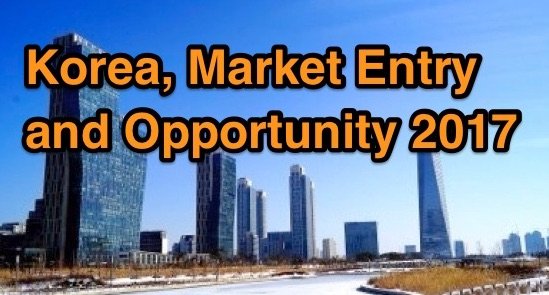
February 6, 2017StaceyvodcastComments Off on Everything Korea, February 6, Korea, Market Entry, and Opportunity 2017
With the start of every new year I am approached to consult on market entry and new business development projects that range in size and scale.
In addition to longtime and ongoing international support of major Korea Groups and their branding, marketing, sales, and manufacturing subsidiaries, I work with companies to secured overseas partnerships. This includes both Korean SME (Small to Medium size Enterprises) firms entering other countries (the U.S. for example) as well as foreign firms seeking opportunities into Korea.
Particularly for smaller Korean firms hoping to expand globally the challenges are many. In fact a recent Korea Times article, Korea seeks to boost SME exports points out SME struggle considerably more than the large group companies. I concur.
Why? Frankly, my experience is that global companies, even SME looking at Korea, recognize the considerable upfront investment required to enter the market. The companies invest time and resources in Discovery and hire experts to assist in the local market. As a benchmark based on recent projects this cost is easily a minimum of US$30,000- $50, 000…. just to accomplish an MOU with NO contingencies on fees for first securing a partnership. There are, of course, additional costs after an agreement is signed.
In contrast, Korean firms entering overseas markets prefer to take a different, more reserved approach. Sadly the success rate for Korea firms entering overseas markets is poor—even with the support of highly dedicated Korean government agencies such as KOTRA .
I can elaborate in more detail, but basically Korea companies tend to be very direct and want someone to focus on finding them a solid, committed overseas partner or client with little investment and upfront payment of fees to local experts in market entry — all compensation contingent upon first finding a potential partner. This rarely (never!) works.
More so, although Korean companies have websites, product, and company information (often in need of editing), they lack what is commonly accepted content for meeting presentations with potential partners, including, but not limited to, a detailed localized, savvy Go to Market Plan—often a high content 20-30 pages and a competitive market analysis. These western expectations are not options.
Even with adequate funding and preparation, getting in front of the right people is probably the greatest challenge in market entry. This is the same for Korean market entry or overseas market entry. For highly recognized U.S. or global brands, there is less a barrier in setting up meetings because of the strong desire for a top brand. For Korean brands entering an overseas market there is considerable more effort. In fact, I most often have to rely on my credentials to begin a dialogue with a potential partner vs. the Korean brand itself, which typically is little known outside Korea and East Asia.
All said, I am a strong advocate of Korean global business. I see great opportunity and am passionate about seeing Korean brands succeed overseas. However, as I have shared, this does require an upfront investment.
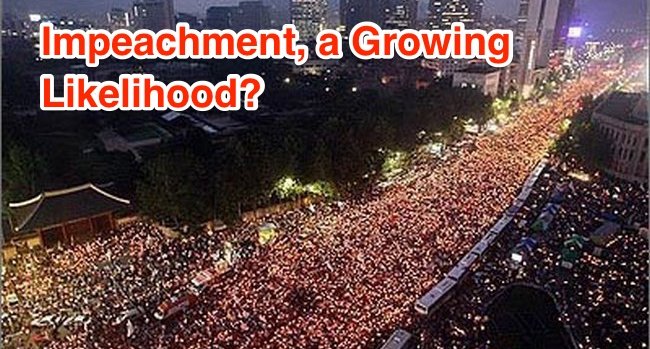
November 28, 2016StaceyCommentaryComments Off on Everything Korea: November 28 Episode, South Korean Impeachment, a Growing Likelihood?
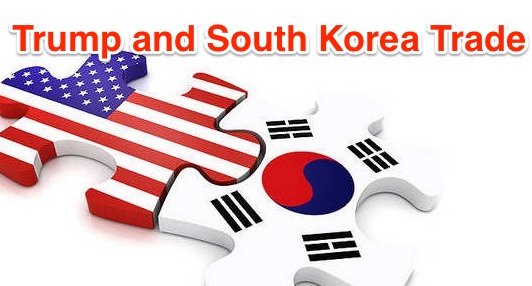
Commenting on the impact of the Trump election on Korean trade for the past weeks—Korea-facing trade an area of my expertise– I have been hesitant as a Westerner to offer my views on the indictments against South Korean President Park.
Nevertheless, impeachment seems a growing likelihood. Politicos now predict the National Assembly will secure the required two-thirds majority vote needed to pass an impeachment bill. To this point, I feel the compelled to share what “next steps” we may see unfold. Pouring over scholarly updates including my longtime friend Professor Steph Haggard’s insightful “ Park Unraveling” series https://piie.com/blogs/north-korea-witness-transformation, I present a number of “If’s,” in short of President Park stepping down and resigning.
The “If’s.”
1. If the National Assembly moves forward and passes an impeachment bill, the Constitutional Court is then responsible for deliberating the case. In addition, President Park’s powers would be suspended with the Prime Minister charged to lead the nation during the interim.
2. The Court then has 180 days to make a ruling on whether charges against the president warrant impeachment. If the Constitutional Court upholds the impeachment bill, the South Korean Constitution stipulates a presidential election must be held within 60 days. That means if the Court takes the full six months to rule on the case, the election would be held in August 2017.
3. If the Court rules in favor of impeachment, President Park would be stripped of her post and could face criminal and civil charges. Under Korean law, presidents while in office are immune from prosecution short of treason or insurrection.
4. It is worth noting, the next South Korean presidential election is scheduled for December 20, 2017. In the event, the Court rules in favor of President Park, incumbent Korean presidents are limited to a single 5-year term in office, and President Park could not seek re-election.
5. With no clear favorite yet for 2017 presidential election along with if President Park is impeached triggering an earlier election, pundits do feel the current United Nations Secretary-General Ban Ki-moon, a former Korean Prime Minister, positioned well as the front-runner amid a field of opposition party hopefuls.
All noted, with the situation subject to change and fluid, we’ll have to take a wait and see approach to what unfolds next.
I would not be fitting without sharing my thoughts on the recent US presidential election and its potential impact on US Korea global business. To many in Korea the election results are troubling… another layer of stress and concern amid a downturn in Korean exports.
Trade agreements, US military support for South Korea and dealing with North Korea top the list. On the trade agreement front, I was a supporter of KORUS FTA both prior to its ratification and contributing a number of high profile articles on the benefits of the treaty.
More so, I’ve commonly referred to KORUS FTA is news articles, interviews and speaking engagements.
My clients Hyundai Motor America, Kia Motors America and well as Mobis Parts America benefit from the treaty… although I’m told 60% of the two OEMs finished product sold in America are made in US plants. (Some engines and a number of Tier 1, 2 and 3 components are still imported, but much less than when the plants were established).
Frankly, I am more concerned with trade agreements with Mexico. Korean Groups, Hyundai, Samsung and LG operate plants across Mexico for local demand and export to America.
As an example, a new Kia Motors Mexico plant opened earlier in 2016 with plans to supply up to 80% of their capacity for export. A heavy trade tariff on Mexican goods exported to the US would be troubling not only to Kia, but a growing wave of Korean Tier providers. On a side note, opening a plant in Mexico for an OEM is not only about labor costs and savings, but eliminates a heavy tariff on vehicles the brand also wishes to imports into Mexico.
In addition and less know as another example is Hyundai Motor Group affiliate Hyundai Translead, who I have also supported. First developed under the maquiladora program, trailers made in the Mexico plant currently are sold in the US—check out the back of a Wal-Mart trailer you see on the highway for the Hyundai logo… or this Hyundai Translead video.
As for Samsung Electronics, since the 1980s, with the construction of an electronics complex (SAMEX) in Tijuana, where TVs, color monitors, and mobile phones are currently being produced. Samsung Electronics Mexico (SEM), a local sales subsidiary, was established in 1995, and now the operation has been expanded to include refrigerator and air conditioner production. Samsung Electronics also has local production of side-by-side refrigerators, front-loading washing machines and other high-end appliances.
All said, Detroit’s Big Three automakers — GM, Ford and Chrysler — all have production plants in Mexico, and any hefty tariff would impact them as well. In addition, GM’s Korea plants produce cars for the US market.
With more questions that answers, I’ll be revisiting the impact of the elections as it unfolds over time. So stay tuned.
Oh one more thing-
Regarding North Korea, I see with President- elect Trump’s unpredictable, and aggressive way of thinking it may make Pyongyang more cautious about its military provocations.
Perspectives from a speaker, humanitarian, and businessman who has made “shaping the world’s future” his lifelong passion.
Joseph Chung
by Joseph James Chung
Coming straight from my home in Silicon Valley, California, I arrived in Songdo hoping to discover the world’s most compelling city. You may ask, what might such a city look like? I was looking for a city that could support a collaborative international community capable of solving the world’s greatest challenges. An entire city well poised to help shape and implement innovative and practical answers to global issues such as finding a cure for cancer, eliminating extreme poverty, developing capable leaders, or constructing the most efficient educational models for people of all ages, is a compelling city to me.
I arrived in Songdo ready to put this new city to the test. Quite naturally, I applied a three step process. The first step was to identify the true intent of the people involved in its development. The second step was to reach out to the pioneers — the people working on the ground — of this community to see what type of response I received. The third step was to investigate the city’s infrastructure and practical matters such as size compared to demand, support for transportation and information flow, and geographic location.
Steps One and Two are integrally connected: Identifying the true intent of people backing the city by reaching out and working with the pioneers of the community.
My questions were, “Is this city just a flash in the pan? Another glorified tool to obtain money from investors? A castle in the sky?”
Having worked with leaders from several industries and sectors and some of the top talent and faculty developing in the Harvards, Stanfords, Yales, Johns Hopkins’, and MITs of the educational world, and having built teams, organizations, and companies with these leaders, I felt prepared to begin looking for answers to my questions. My approach to answering questions did not include going straight to the people-at-the-top (Mayors, Directors, and Government Officials), who are often surrounded by the typical political and practical barriers people in their positions face. I figured at this point, there was little relevant information I could learn from them, which I couldn’t read on a website.
Thus, I jumped right toward the people doing the groundwork behind developing this city.
The first leader I met was Don Southerton, an American born and educated historian on South Korean business and culture. Don Southerton wrote the book on Songdo from a historical perspective, leading readers into its future vision. The first conversation I had with him was highly educated, inspiring and authentic. The articles and books he wrote came from a passion that money couldn’t buy. Not only this, but his passion came out in his willingness to point me along my journey to discover what Songdo is really all about. Whoever brought him on board was either very lucky or really cared about doing their homework.
The second leader I met was Dr. Jorge Nelson, an expert educator pushing the envelope in education that should have been pushed several decades ago. Of course, I learned that Dr. Nelson has been pushing the envelope on education for several decades indeed. His passion and abilities clearly shine through in a sector (education) that desperately needs it. With the jaw-dropping, highly qualified faculty team he leads, I would beg to be his next door neighbor and put my children through his school any day. I might even consider going through K-12 (what Dr. Nelson now calls K-100) again with him at the helm. As of now, I consider myself lucky to be teaming up with International School Songdo to develop model workshops led and created by facilitators from top Universities around the world. Whoever brought Dr. Nelson on board to become the Headmaster of International School Songdo was once again either extremely lucky or really did their homework to maintain the high quality touted as being the very fabric of Songdo.
The third leader I met was Michel Ouimet, a multi-faceted and talented visionary well grounded in the arts of wise long term and strategic short term investments. Yet his work does not stop with his immediate role as CFO of the International School, but is powerfully manifested through his passion to build a community. Everyone is invited to play basketball in the school’s state-of-the-art gym on Wednesdays, be a contributing musician during music nights in his apartment building, and many more community oriented events. At this point in my endeavor to find the world’s most compelling city, I began to believe maybe the creators of this city were onto something special. Maybe Songdo would truly grow into its role as a global leader. Or, maybe the people that brought Michel aboard were just really lucky again. But meeting Michel, after discovering Songdo and connecting with Don and Jorge, was like watching a grand slam in the first inning of the World Series. It was like watching a highly practiced and prepared team, coming powerfully together for the big opening.
Michel Ouimet, Dr. Jorge Nelson, Joe Chung
Thus, I decided to pull the wild card. There’s no way a city with the slightest hint of inauthenticity could respond positively to this next move. I approached Songdo’s centrally located and first 5-star hotel with a request for a highly integrated, millenium-paced (meaning very fast-paced) partnership to help the city bring several world-class conferences to its doorsteps beginning as early as 2010. I did not think they would agree. Overstaffed and underoccupied given the timing of Songdo’s development, the Sheraton Incheon Hotel had already taken the necessary risks associated with being a first mover in a city that showed great potential. Therefore, either Sheraton’s investors were out of their minds or maybe they really actually knew what they were doing. Either way, if they had over-exerted themselves and weren’t focused on the main objective of a truly fast and successful launch, they would have easily overlooked my request and busied themselves within the much slower and traditional model of growth that all other cities and companies drably inspire from their people. Yet upon meeting with Sheraton’s head of Sales, Mun-Hee Park, and later the General Manager, Alain Rigodin, we began collaborating and I discovered the same common thread of passion-fueled movement integrated with reason-based action-planning truly existed within them, as it had within Don, Jorge, and Michel.
These five instrumental leaders gave me the confidence to wrap up the research completed for steps one and two. But the work was just beginning. In the very nature of conducting my research and being prepared to fully support a worthy endeavor, I was lucky to begin building a working relationship with these leaders and pioneers creating the city on a day-to-day basis. And in my line of work, coming across happy, inspired people working on the city means that the creators of this city have achieved no small feat in putting these teams together and creating these conditions for our success.
Step Three: Investigating the City’s Infrastructure.
Public Transportation and road infrastructure often reveals the first sign of weakness in a city. How fast and efficiently can you get around in this city? Unfortunately, the extremely critical and analytical portion of my research abilities were not able to find any weaknesses here. State of the art, near silent, subway lines, inside of state of the art (glowing light-bubbles included) subway stations, one-way fares equivalent to three US quarters, parks and open space encouraging walking instead of riding, a 20 minute bus ride to an International Airport where you can get to 1/3 of the world’s population within a 3.5 hour flight in any direction, taxi cabs arriving within 3 minutes of calling them (sometimes I think these cabbies have telepathy as they come zooming down the road 100 meters away, shortly after you call them), and my very favorite — the motion-detecting (only moving when you are on them) ultra-green, environmentally friendly escalators. Additionally, in future years there will be a high-speed train launched to transport people between Songdo and Seoul within 20 minutes.
Now onto observing supply as compared to demand in cities that have come from the ground up. With previous development of planned-cities, there have been few parameters in place to stop overbuilding. Some metropolises spread out of control. High supply, such as Dubai’s 70,000 units which came onto the market in late 2009 contributed to the current debt crisis occuring in Dubai today, which some experts estimate at up to $90B USD of troubled debts.
However, with Songdo, I have not observed over-building. The size of land in the main International Business District is limited, tightly knitted together and compact (though spacious with park space). The pre-planning and preparation of this city were unparalleled. Parties involved certainly completed their due diligence as they built Songdo.
Information flow in my version of a compelling, global city, is a must. Thus I will review language and technology.
Considering first the language of Songdo, my experience is that it truly is an English-speaking, International community. Of course Korean will be spoken widely but so far, I have not experienced an immediate need to learn the Korean language while working in Songdo. Other languages that I imagine will be used around the city, given its geographical location between China and Japan, are Mandarin, Japanese, and Cantonese. Once again, this mixture of languages and the International nature of the city, strengthens the necessity and usability of English as the main language used to get around in Songdo.
In terms of the technology backing information flow in Songdo, we are lucky to be sitting on the technological infrastructure created by Korea. People ride around on subways while having video phone conversations with each other or watching television on their handheld phones. This super high speed of data transfer can only mean one thing. Songdo city is extremely well poised to have its roots in Korean technology.
Enter companies such as Cisco. Cisco has developed dedicated lines for communication within the city of Songdo. Currently having implemented its best technology between important locations in the city, Cisco will be opening up the opportunity for people in Songdo to “telepresence” with each other and people and institutions from around the world. This instant form of communication can be likened to Skype Video conferencing x 100,000. These dedicated lines make it possible for data transfer at the speed of light from one point in the city or world to another. The technology behind this allows us to see even the most vivid details of the person you are communicating with and as you extend your boardroom, conference table, or dining table from Asia to Africa, India, Europe, North America, South America, or anywhere else in the world you’re looking to connect to. In Songdo, the world is truly at your fingertips.
Conclusion:
Others might glow red with instant content in a city that is abundant in wealth and profitability through the development of new technologies. But trust me, wealth and technology are just the beginning in a city like Songdo. Songdo is not a flash in the pan, it is not a glorified tool to obtain money from investors, and yet in a special way, it is indeed a castle in the sky. But this, I have found, is a very good thing. As Henry David Thoureau put it, “If you have built castles in the air… that is where they should be. Now put the foundations under them,” and that foundation is exactly what we as people, have the opportunity of becoming in Songdo. Afterall, people should be the very foundation of any community, and the fact that Songdo was built with this purpose in mind (that we have this opportunity to become the foundation of this new city), attains for Songdo’s initial creators my most sincere and appreciative thanks for having the audacity for such a vision and the ability to bring it this far.
I first journeyed here to find out if Songdo might be the “world’s most compelling city.” Call me over the top, but after doing my research “A new hope for humanity” is a much more accurate title for a city like this. You might soon find Songdo replacing San Francisco as my new “current city” on my facebook page (so long as my buddies in Silicon Valley can keep up as Facebook recognizes Songdo as one of the world’s newest major cities).
And, I would encourage anyone with an appreciation for advance, quality, community, true learning, adventure, and forward movement to come out and join me!




Deep-Tech: Israel-South Korea Webinar
I’ll be a guest speaker sharing my thoughts on Deep-Tech and what Israel and South Korea have to share as both are strong centers for innovative technology. For all those in the tech sector, this webinar will prove insightful.
The webinar is hosted by Yaniv Goldberg Economic Attaché — Head of Israel Economic and Trade Office, Embassy of Israel in Korea, and Israeli Cardumen Capital.
The webinar will explore among other topics of interest Israel’s ‘Deep-Tech’. Speakers include Gonzalo Martinez de Azagra, CEO and Founder of Cardumen Capital and Ruby Chen, Venture Partner of Cardumen Capital.
The event will be held at 3 PM on Wednesday, May 13, Korea time (time subject to change).
To participate in the Zoom Webinar, you must register. Interested?
Email Me
Questions? Comments?
Don