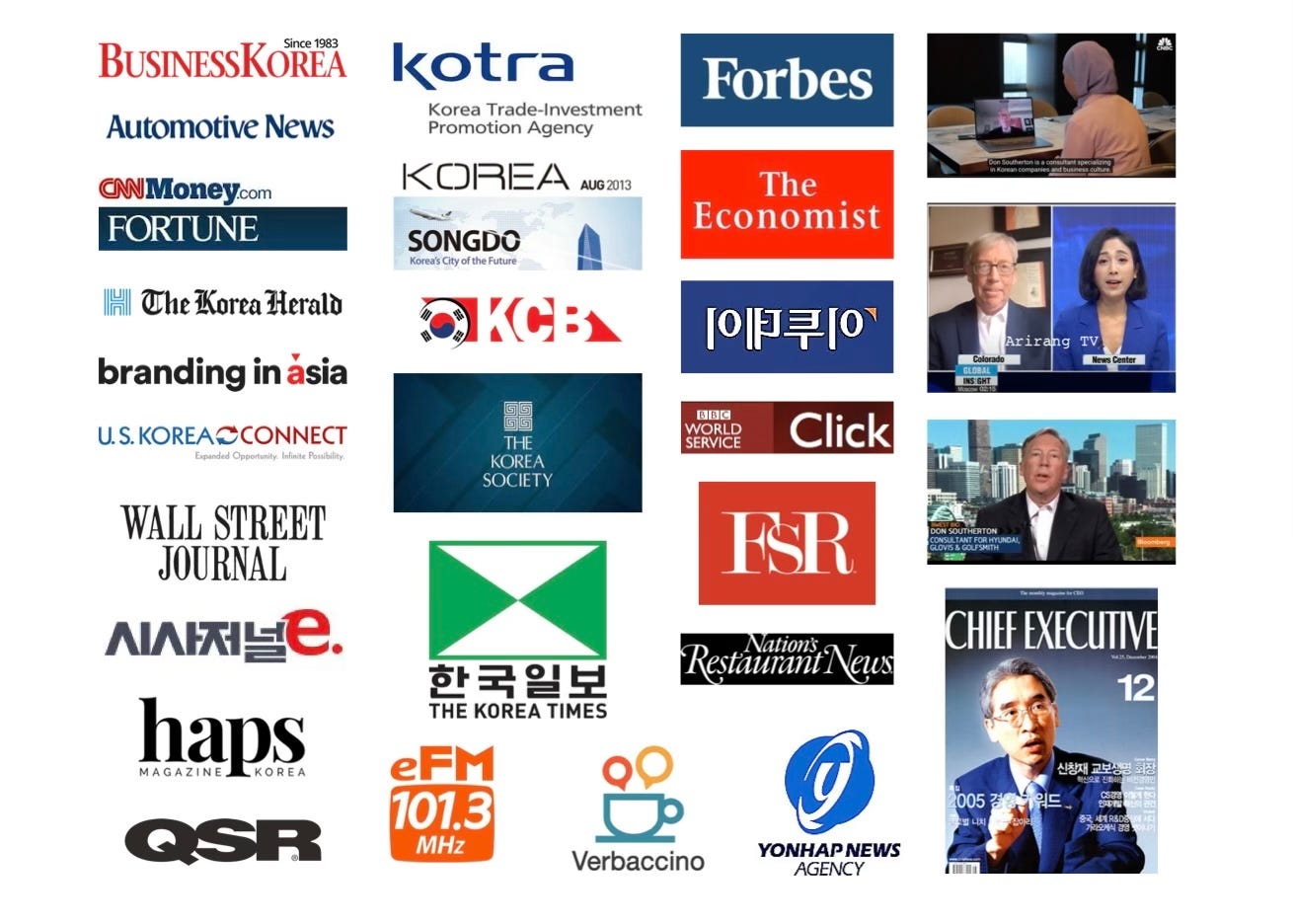
I have been fortunate throughout my career to receive extensive media coverage in both Korean and Western publications. I feel a major contributing factor is that as a consultant I cover and am engaged in Korean business.
I have a lot to say, and many people seek out my perspective. In fact, in just the past 6 months, I’ve contributed to Korea Times, CNBC, Branding in Asia, Haps Magazine, and Sisajournal-e.com, not to mention releasing a new book and multiple press releases.
Topics often vary — Hyundai, Startup Ecosystems, EV and Critical Minerals, Smart Cities, and insights into the ever-changing Korean business culture.
So why “Tip of the Iceberg?” As a prolific writer, I enjoy sharing my perspective, but only a fraction of my insights are shared, like the tip of an iceberg.
It’s in my consulting work that I explore the difficulties that companies and teams encounter in greater detail. I have decades of experience providing solutions and workarounds.
All said, for those who follow my commentaries and writings as well as acquaintances — Have a request for an article? — please let me know. Have a question or opportunity… let’s talk.
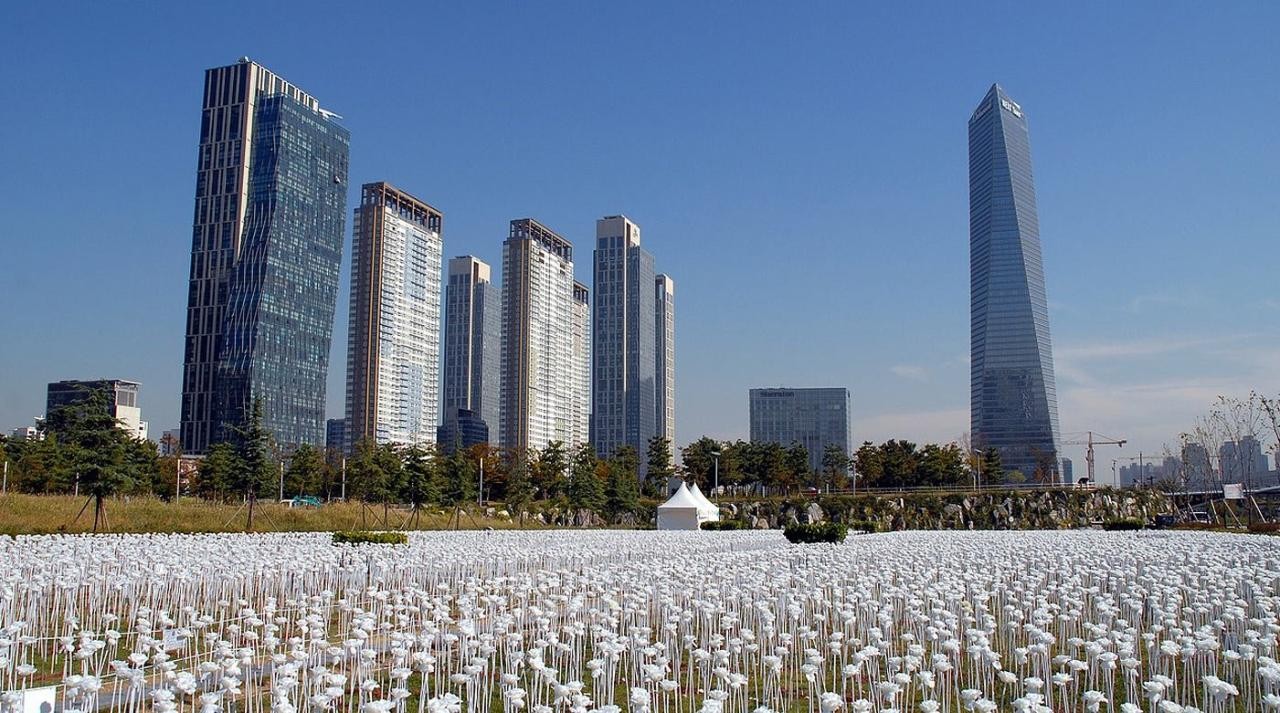
Over the past nearly 20 years, I have been engaged in Smart Cities. This work has involved various Smart City projects. The first was the Songdo International Business District in Incheon, South Korea, and more recently—cutting-edge Smart City Platforms.
The concept of “Smart City” is an emerging technology that many local governments see as the future; however, few municipalities have a solid roadmap.
The term “Smart City” can be defined differently. Some envision a green and sustainable community that offers a life-work balance and implements cutting-edge technologies to achieve these benefits.
For example, Songdo, on the West coast of South Korea was built on reclaimed land and covers roughly 1500 Acres. Today, Songdo is a community of 167,000 residents located within one of three Free Economic Zones (IFEZ) in Incheon, South Korea. The project has been approximately 86% completed. Aside from residential areas, the location is also home to a Global Campus, Pharma Hub, Startup Center, and international organizations such as the Green Climate Fund.
Songdo’s development aimed to create an integrated 15-minute city, where people can access 90% of their daily activities by bike or public transportation in fifteen minutes or less.
In Songdo, traffic sensor data is utilized to regulate signal timing on the technical front, while household waste is directly transported from homes to waste processing centers through underground tubes.
Additionally, various apps assist residents in managing their daily lives providing them with information on bus schedules or checking on parking availability in the area.
That said, since these innovative systems were first offered, many new smartphone apps are now available across Korea and provide these and other digital services.
Today, there is a continuing effort to foster the development of Songdo as an urban district under the Incheon Free Economic Zone (IFEZ).
Dr. Won Sok Yun, who has been named the new Commissioner of the IFEZ) notes, “Over the next three years, I will aim to attract foreign and domestic investment in pharma and healthcare, tourism and leisure, and high-tech industries to create a ‘world-class city’.”
Smart City Platform
Recently, we are seeing the adoption of Smart City Platforms. These provide an integrated Geographic Information Systems (GIS) and Information and Communication Technology (ICT) platform. Plus, they offer municipalities some innovative urban solutions.
With the help of the Internet of Things (IoT) and AI, cities can enhance their emergency and fire response, traffic management, sanitation services, and facility maintenance. I’d add that it’s a tool for urban development and revitalization, and in some cases can enhance a city’s security.
Seoul, South Korea’s Smart City Platform is an example of successful integration. The system was developed between 2017 and 2019 to provide various services, including sophisticated drone defense monitoring.
The platform has been highlighted at recent Consumer Electronics Shows (CES) and gained global attention when it was modified during the COVID-19 pandemic to track real-time virus outbreaks.
In January 2024, neighboring Incheon’s Mayor Yoo Jeong-bok was quoted, “Building a smart city is a global challenge that all cities worldwide should aspire…. in collaboration with leading global companies and cities that possess state-of-the-art technology related to smart city construction.”
I agree that developing “Smart Cities” will require collaboration between private tech companies and local government. The mayor envisions building “eco-friendly smart cities centered around people’s needs.” This will address concerns about the ambiguous nature of the “Smart City” identity, which may mean different things to different groups.
The bottom line is that in discussions centered on “Smart Cities,” I suggest there is no one exact definition, however, the goal should be improved quality of public services and citizen welfare.
Incheon
Incheon is a city located on the northwest coast of South Korea and is home to a population of about 3 million people. Its suburbs are situated on the outskirts of Seoul.
Moreover, Incheon is home to South Korea’s primary international airport, the Incheon International Airport, serving as a gateway to northeast Asia.
IFEZ
In 2003, the Incheon Free Economic Zone (IFEZ) was designated as Korea’s first free economic zone. Within the Zone are three districts– Songdo, Cheongna, and Yeongjong International City.
Over the past 20 years, IFEZ has grown significantly and developed into a global city currently home to more than 400,000 residents, 3,300 businesses, 14 international organizations, and renowned foreign universities.
Don Southerton takes a look at smart city development in South Korea
Heads up– I am a keynote speaker at the 2024 Korea’s Sisa Journal-e.com Start-up Conference this week.
My topic–The Ecosystem of Global and Korean Start-ups: Risk, and the Shift in Startup Mindset.
I’m joining an amazing lineup of guest speakers talking on: the electric vehicle market, the Unmanned Exploration Research Institute Space robotics, and The role of climate tech in achieving carbon neutrality.
The event will be held in Seoul at 10 AM, March 20 KST, and shared Live via this YouTube link.
Black mass and upcycling. Once a lithium battery reaches the end of its useful life or becomes damaged, the battery pack can be collected, dismantled, and shredded.
The shredded material is then processed to produce what we in the industry call black mass, not be confused with an astrophysics term, or a dark movie on Netflix.
This black mass can consist of high amounts of lithium, manganese, cobalt, and nickel metals. EV batteries use these metals in ratios which we label as NMC 622 or 811–60% nickel, 20 % manganese, and 20% cobalt, or 80% nickel, 10% manganese, and 10% cobalt. [1]
These metals when sent to a facility can be reclaimed from the black mass and in direct recycling reused in new battery production.
(Image courtesy of Argonne National Laboratory.)
I like to use the term upcycle vs recycle for these materials.
As I wrote in my End-of-Life article, “The Lithium-ion Battery Life Cycle: Mandates, Sustainability, Recycling, Recovery,” compared with the West, Asia — specifically China and Korea have been at the forefront in recovery and re-use — reclaiming batteries’ black mass.
I reported in 2021, “… with strong encouragement from the Korean government, many of the nation’s top groups are actively engaged in some form of end-of-life program. For example, Korean steel producer POSCO, looks to import waste battery scraps concentrated in a powdered form from Europe. Likewise, the Hyundai Motor Group, SK Innovation, and LG Chem all have programs to ensure used batteries have second-life applications, or are recycled and metals such as Lithium, Nickel, and Cobalt are recovered. These programs made lots of sense, as Korea is one of the world’s largest producers and innovators of Lithium-ion EV batteries — with accordingly a high demand for these raw materials.”
Fast forward…
This trend has shifted with new incentives for North American battery recovery.
For one, the U.S. government has mandates to shore up batteries among the nation’s key strategic interests. Second, the government looks to make the U.S. more competitive in the battery market.
These programs include the Inflation Reduction Act (IRA) and other funding under the Biden Administration such as The Energy Act of 2020, and the Bipartisan Infrastructure Law (BIL), which, together with the IRA, offer billions of dollars to the Department of Energy (DoE) funded government programs.
These monies do come with some restrictions.
Specifically, under the Inflation Reduction Act, vehicles that use batteries that contain (i) any “applicable critical minerals” that were extracted, processed, or recycled by an FEOC [ or (ii) any component manufactured or assembled by an FEOC would be ineligible for the $7,500 Section 30D consumer tax credit (Sec. 13401(e)(7)) starting after 2023.
A FEOC is defined as a Foreign Entity of Concern and, with reference, to the IRA, a Chinese company or entity controlled by a Chinese firm.
These prohibitions take effect in 2024 for EV battery components and in 2025 for “applicable critical minerals.”
A Question.
In a recently attended EV battery panel, I raised a question, “Will we, like in the EU, see more regulations for End of Life?” [For example, the new EU regulations will over the next few years, mandate minimum levels of recycled content in batteries, noting end-of-life batteries contain many valuable resources and these critical raw materials must be reused instead of relying on third countries for supplies.]
The panel’s consensus was that unlike the EU and their use of widespread regulations; the thought was for the U.S. to continue to use more of a carrot approach — incentivizing reclaiming battery materials. Something we can see in a range of DOE grants now being offered.
In closing,
One final takeaway the driver for reclaiming black mass is sustainable profitability. The critical metals, NMC, for example in the black mass in this formhave a value that may or may not be competitive against new widespread sourcing of the rare materials.
That said, when the reclaimed key materials are further refined and separated from the black mass their value increases 3-fold, and even further new processes increase the value 6 times.
I have also read that these refinements in the reclaiming process can result in improvement in the very EV battery life span, battery density, and range… all of which add considerably to what I see as “Upcycling”.
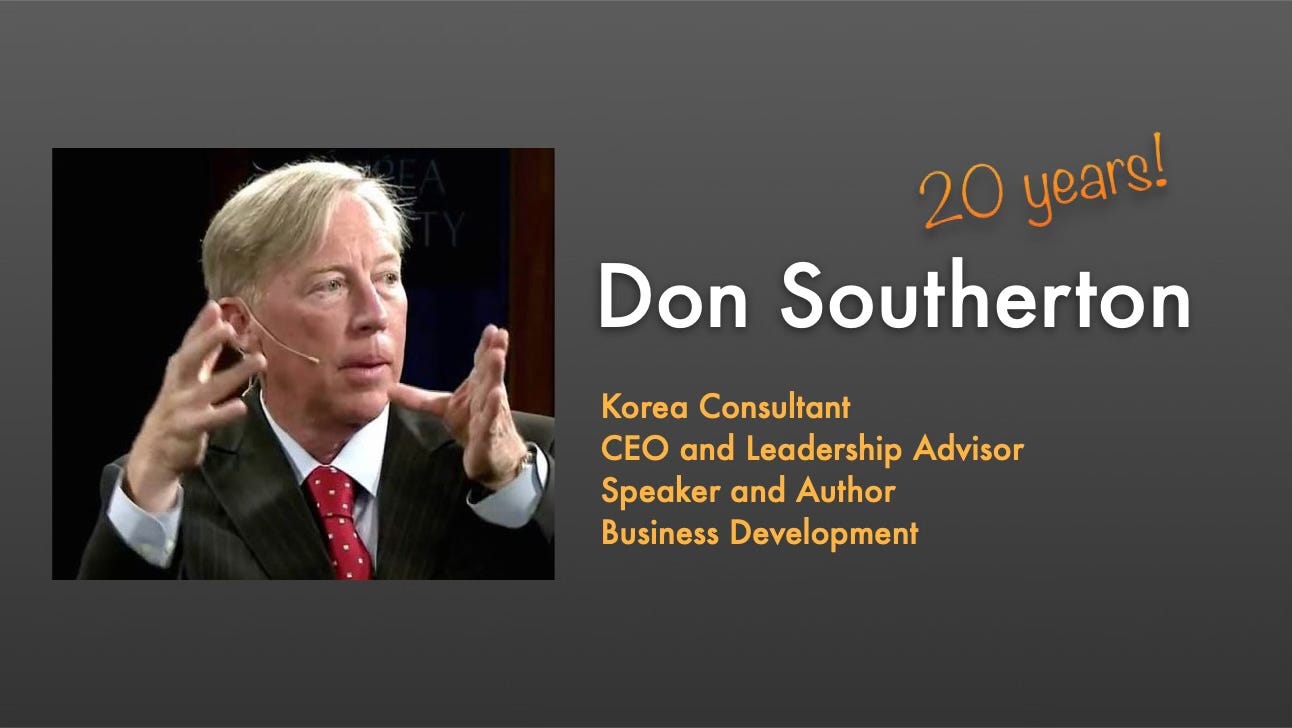
Mr. Southerton provides strategy, consulting, and training to Korea-based global businesses.
This includes long-time support of many of the major Korean Groups including the Hyundai Motor Group, SK Corp., and LG.
He also has supported Korean market entry for several innovative small and medium enterprises (SMEs). Most recently Southerton has been engaged in the mobility, electrification, and the battery sector.
On related issues, Southerton has been a contributor to CNBC, The Economist, Automotive News, the BBC, CNN Fortune, Korea Times, Yonhap, tbs eFM, Wall Street Journal, and Forbes.
[1] Most EVs today use either lithium-ion NMC, NCA (Aluminum), or lithium-ferrous LFP chemistry batteries. There are advantages and disadvantages.LFP: lower cost, lower density, higher discharge cycles; and NMC/NCA: higher cost, higher density, lower discharge cycles. Regardless they all contain ametals that are reclaimable.
I am often asked to assist with Korea-facing business ventures. This can be a North American firm just entering the Korean market or a Western company already with operations in Korea.
Too, I am also asked to support top Korean Groups with their overseas operations.
Most often Korean and Western senior leadership teams did a great job of gaining mutual trust. Both negotiated well. The deal is signed and it’s time to perform.
Sadly, the honeymoon is over. Challenges arise, and what appeared to be clear expectations can now seem murky with poor alignment and weak communications. Why?
There are several reasons. One is that teams that meet, bond, and negotiate are seldom the ones doing the work. The teams on both sides that crafted the deal are better skilled in global business. The teams doing the work are talented, but usually less skilled in local affairs.
Many Westerners have no recent experience working with Koreans, and the Korean teams have limited experience working with North America.
A caveat to this is that many of the Korean teams are bright, but very junior, new to the workplace, and tend to be generalists, while Western teams are comprised of highly specialized industry veterans.
So, what’s the solution?
Frankly, in our experience, the most successful firms show great leadership and vision. They also recognize both sides will need constant ongoing support and training.
Expecting the teams to “get it” seldom works — and if it does it takes time, is costly, and contributes to stress, poor productivity, and even employee turnover. Expecting non-Koreans to understand Korean culture, business models, and workplace expectations is like throwing someone into a pool and assuming they will swim, not sink.
That said, a huge mistake is hiring an industry consulting firm without a full understanding of the specific challenges and cross-cultural issues. In many cases, they fail to get to the root of the problem(s) and expectations are never fully clarified. Issues will surface. Things will get worse.
To conclude,
In dealing with partnerships, I understand the huge stress loads within Korean-based firms. Teams need to perform. Partners will also be expected to perform. Clear, well-communicated expectations and cross-cultural understanding from the beginning are vital, along with a strong business plan and strategy.
Need a solution, I am here on-call with practical workarounds and seasoned experience in overcoming the challenges. Waiting only adds layers and costs.
Year-end organization-wide promotions, restructuring, and new assignments for teams are traditionally a part of Korean corporate culture. Top to bottom within Korean companies they occur sometime between early December and early January, with the changes to senior leadership announced first, and team level changes as a norm made known the week just before or between Christmas and New Year’s Day.
After the Holidays, teams then report back to work. Some assume new roles frequently in departments where they have little experience—requiring employees to acquire new skills—sink or swim.
In the days that follow those shuffled brief their replacements, as staff remaining in their jobs update new management teams on the status of projects and issues.
Meanwhile, others will be en route to assignments in overseas operations; a challenge for those working outside Korea for the first time.
This can also be a challenge for local overseas operations. In particular, it is common for those newly assigned to be unfamiliar or have very limited experience with the many nuances in the localized foreign business, as well as the new role and responsibilities. Not to mention, working outside Korea is in itself a learning curve that can take months and even years.
And I strongly recommend leadership—Western and Korean– have countermeasures in place to mitigate any transitional gaps. They do occur. In fact, over the years I have worked extensively to facilitate smooth transitions.
So, what to look for… The top Chaebol will and have begun to announce key promotions, which can provide some insight into future trends. The Chaebol usually also comment on whether this year’s promotion number is more or less than in the past and the reasons “why.”
On restructuring, top Chaebol have already announced plans. These can range from granting more independence to business units to consolidating control.
In their restructuring, SK Group elevated a number of executives to vice-chairman level and granting independent decision-making authority to their key affiliates that span from semi-conductor chips, batteries to wireless network, energy, and biotech.
In contrast, Samsung Electronics noted as a shake-up they will merge 3 of their business units.
Samsung also announced several changes in its corporate policies. With the new year, they will employ a new personnel management system. Under the new system, Samsung will abolish a set of requirements before an employee gets promoted to a certain level, such as a minimum term of service that lasts roughly eight to 10 years. Instead, top-performing employees will be eligible for their work performance and expertise be taken into account as key factors for promotion over time in grade.
The Hyundai Motor Group, too, has announced its executive reshuffle. To align with the new Chairman E.S. Chung’s future vision, we see a plan to bring younger faces on the C-suite with a focus on future mobility and on technology sectors such as infotainment, ICT, and autonomous driving. This then means many of the current leadership are stepping aside to the advisory posts.
New Years’ Message This said, as in the past, with the new year, we can expect leadership will share their 2022 plans in an annual New Years’ company announcement, too. I monitor closely and as they are in Korean will share when appropriate and upon request.
As a final note, for western global teams, I suggest congratulating those who are promoted but also be sensitive to Korean team members who were passed over… or possibly moved to what may be seen as a less strategic assignment.
BTW Time in grade is just a criteria for promotion, or in some cases if a junior is promoted over a senior it is deemed as their time to retire.
I am excited to share my most recent article that looks at the New Normal market entry for brands and products. As always your comments and thoughts are welcome.
In this post COVID-19 world, we hear the expression the New Normal used frequently with regard to society and business. A timely question then is how will this New Normal apply to commerce and specifically international market entry?
In a Deep Data webinar jointly hosted by the Israel Economic Trade Mission to Korea in Seoul and Cardumen Capital based in Tel Aviv, I spoke to a wide audience of Korean companies on how I saw market entry under post COVID-19.
For one, and as in the past, ‘need and demand’ have always been the drivers for a successful business market entry. Goods or services must match what is lacking in a market and enterprisingly fulfill a need or gap in that local market.
For example, in a market like South Korea with an abundance of pizza and fried chicken eateries introducing either fast food would be an uphill battle. In contrast, with innovative hubs like Israel and South Korea as developers of new AI, robotics, drone, deep learning and mobility technologies, a company offering its unique product or service has a much greater probability of success in that they provide needed cutting-edge solutions. More so, these technologies will drive the transition to the digital economy accelerated by COVID.
Second, for successful market entry selecting the right partners goes without saying. I feel a best practice is to find a partner that has both an industry sector plus international experience working with other cultures and approaches to business. Teams tied to the project must be skilled in a deep understanding of the local culture, norms and expectations. With the new normal of COVID-19, a partner who has also weathered past crises and business disruptions would be a huge bonus, too.
And finally, the third best practice is the need for flexibility. If there is one lesson from COVID-19 it is the need for businesses to be open and flexible. As an example we now see the widespread adoption of video conferencing during the pandemic instead of insisting on in-person meetings.
That said, few market entry projects succeed in a climate of rigid thinking on either side of the partnership. Give and take fosters collaboration, which builds relationships nurtured over time.
Even under adversity, fulfilling a demand, the right partner, and coupled with flexible and adaptive transformative thinking means all parties will see a project through to execution and beyond—to both side’s mutual benefit, as well as the individuals tied to the market entry partnership.
The Culture Puzzle Part 1 and a willingness to change.
Noted Korea expert Don Southerton
When a western company enters an overseas’ market such as Korea, gaps in understanding commonly surface. Most often the western brand and their team bring new ideas and an approach to the market.
This is nothing new. In fact, many of today’s success stories result from looking outside the box.
For example, when Starbucks entered Korea, they encouraged customers to sit and enjoy their drink… as well as converse with a friend, read a book, surf the web or catch up on homework.
Prior, the Korean model was for a quick turnover — customers in and out the door. This “stay” took some time to convince both the local Korean business partner and the customer. Today it is the norm and only limited by seating availability.
Still, when companies change hands, merger or are introduced to international markets, it brings in new or different procedures.
In my experience, it is not unusual for Korean teams to pushback— as most companies might with market entry until they gain insights.
To some extent, local norms, regulations, and laws may dictate how the western brand must adapt and localize. That said, most often with the pushback comes discussions beginning with the phrase, “But, in Korea,…”
Here we can find rigid thinking and risk avoidance overshadowing the openness to change. More so, western teams can feel that without fully embracing their brand or service’s nuances and business model, chances of success in the new market are reduced and may not even succeed.
Now the tricky part…
All said when to localize and adapt to the local tastes, preferences, and trends versus when to hold to the western model requires cultural finesse, an open mind and critical thinking. This needs to unfold over time.
In Part 2 of the Culture Puzzle, I’ll look at Korean companies and their brands’ openness to adapt and localize in their overseas operations outside Korea.– and a willingness to change?
For most of my career I have worked with Korean teams—many based in Korea, many in local overseas operations. I find both exchanges rewarding, but very different and require a varying set of skills. I’d like to offer some best practices.
To begin
We find with Korea facing international operations the primary communication channel between the Korean HQ and local subsidiary is through expatriates—although in some cases this is shifting.
In key positions, Korean expats serve in roles including the CEO who is responsible for managing the local company or region. The CFO and technical support can be expats, too. Most often these Korean expats along with local leadership executive form the core for business operations in the host country.
By the way, the expats below senior management are often referred to as “Executive Coordinators” or “Executive Advisors” in the West. As a caveat, this model does vary some and in some organization we see a mix of “Coordinators” and Korean assigned as line managers. However, the Korean term for these expatiates is ju jae won.
In the larger overseas subsidiaries, the Korean expats are assigned to the major departments.
In many instances, as I mentioned, the expat Coordinators are not assigned a direct managerial role but still hold considerable oversight over the local operations.
Roles vary with each company, but frequently a Coordinator’s primary role is to be a departmental liaison and communication channel between Korea and the local subsidiary.
That said, for westerners unfamiliar with the Korean model, this “oversight” usually translates into the Korean expats requiring sign off on all decisions—trivial to substantial.
This can be a huge challenge when newly assigned expats have little specific background in or knowledge of the host country’s operations and market. More so, when their decisions are motivated by what they feel would please the HQ in Korea.
Cognitively, they do recognize local management skills and expertise, but especially if under pressure to perform and meet expectations may defer to engaging in decision-making.
Of course, this can be a challenge.
New ju jae won are skilled and accomplished in Korean style business operations, norms and practices.
However, they are now assigned to an overseas subsidiary where norms, practices, expectations, and laws differ. Adding to this “Managing westerners” is very different than overseeing a Korean team…
Next, I’ll cover several scenarios with best practices for supporting overseas team. All take finesse and collaboration, plus recognize norms and practices differ… as well as require working “within the Culture.”
To again clarify, my perspective is based on years working with Korea and especially in daily mentoring and providing strategy for their overseas operations—Koreans and Westerners.
Scenario One
It’s common for a Korea expatriate, frequently called a Coordinator, to directly request members of the team to gather information or data on the local operation. Usually, Korea has asked for this information and the Coordinator is executing the request. These always have a sense of urgency.
The Challenge is the local departmental head may be circumvented (often unintentionally)…. and requests disrupt operations and designated priorities. More so, the line of management for the department is blurred—i.e. staff confused on “who is in charge.”
The Workaround centers on an effective working relationship between the Coordinator and the department head. An understanding must be reached that when requests from Korea (or from the senior Korean leadership at the subsidiary), it is first brought to the department head… and they handle who will execute.
In particular, the local western manager is more familiar with their team, individual workloads, any special situations and skill sets. In fact, with a clear communication channel the work will be performed with better results by the individuals tasked with the assignment, and less stress on the Coordinator asked to acquire the data.
As a caveat, one burden on a department can be when a high percentage of work and tasks teams are engaged are to support Korea and not the local operations.
Scenario Two
As noted, a Coordinator’s role is to support the local operation. Local teams and specialists are hired with a high degree of knowledge and experience. A clash occurs when decisions best left to those in the know are deflected.
The Challenge occurs when Coordinators override a decision or unilaterally make the call. This can range from the hiring of new employees to pushing off a much-needed program.
Again, the Workaround is a clear Company-wide defined role for the Coordinator. They are advisors who can provide much-needed input and an HQ / mother company perspective… but not assume line manager responsibilities.
In other words, clarity must be established in regard to as long as they are acting on behalf of the mother company considerable weight must be given to their input. That said, even when they have the company’s best interest in mind, their own personal views must be gauged and moderated.
Scenario Three
Perhaps the most challenging situation is moving Coordinators to make a decision.
The Challenge In most Korean companies leadership decide on direction and major issues. In turn, the working team’s role is to implement or gather needed information. This role/ skillset changes when working level Koreans are assigned as an overseas Coordinator.
Workaround When conducting a meeting where a decision must be made recognize that your Coordinator will have considerable say in the outcome. First, since the topic and subject matter may be new to your Coordinator, I recommend you share prior to the meeting any needed background documents (best provided in PPT format).
In addition, have an informal pre-meeting Q&A with the Coordinator to brief and update them on any specifics. Note: they may need a day to review proposals and agreements, so timing is critical.
Even in the best cases, expect that the Coordinator may want to postpone any decision until they can carefully review and perhaps confer with Korea. I suggest all documents and meeting PPTs be immediately forwarded to the Coordinator.
I’d create a sense of urgency with a timeline for execution and implementation. Regardless, expect some delays and be patient.
Over the years, I’ve found that Coordinators appreciate when their overseas co-workers recognize that the internal approval process takes time and be ready to offer, as needed, additional supportive data or documents.
BTW, if you are a vendor and your firm provides services to a Korea-based partner, it’s best to provide both the western and Korean teams with background information prior to any meetings. Moreover, be prepared to share the meeting’s content in digital format afterward with the Korean team, too.
With the shift to ever-increasing daily interactions with Korean HQs via web and phone conferences, western teams need even deeper practical insights into working within the Culture along with new skill sets.
In particular, the Executive Coordinator/ Advisor model has had its limitations…but the Koreans assigned as expatriates do learn local norms and adapt over time. This means the Coordinators mold to local operations with a little need for many of the local teams to become skilled in Korea workplace norms.
In contrast, working with teams based in Korea takes a different approach. Korea-based teams follow deeply embedded HQ and company norms. They are not likely to model or adapt to their overseas subsidiaries.
This now means 1) becoming acquainted with Korea norms, understanding the Korean workplace “in’s and out’s” and “do’s and don’t.” And, 2) developing strong skills in managing the relationship with effective cross-communication taking on a new heightened significance.
Over the past years, I’ve shared solutions in my books, articles and case studies… that said, I find that each situation requires one having to drill deeper to truly grasp and then provide a solid resolution.
Thoughts?
As always, Stacey stacey@koreabcw.com, my assistant can schedule us a time to meet or chat by phone.






Black Mass and Upcycling
Black mass and upcycling. Once a lithium battery reaches the end of its useful life or becomes damaged, the battery pack can be collected, dismantled, and shredded.
The shredded material is then processed to produce what we in the industry call black mass, not be confused with an astrophysics term, or a dark movie on Netflix.
This black mass can consist of high amounts of lithium, manganese, cobalt, and nickel metals. EV batteries use these metals in ratios which we label as NMC 622 or 811–60% nickel, 20 % manganese, and 20% cobalt, or 80% nickel, 10% manganese, and 10% cobalt. [1]
These metals when sent to a facility can be reclaimed from the black mass and in direct recycling reused in new battery production.
As I wrote in my End-of-Life article, “The Lithium-ion Battery Life Cycle: Mandates, Sustainability, Recycling, Recovery,” compared with the West, Asia — specifically China and Korea have been at the forefront in recovery and re-use — reclaiming batteries’ black mass.
Fast forward…
This trend has shifted with new incentives for North American battery recovery.
For one, the U.S. government has mandates to shore up batteries among the nation’s key strategic interests. Second, the government looks to make the U.S. more competitive in the battery market.
These programs include the Inflation Reduction Act (IRA) and other funding under the Biden Administration such as The Energy Act of 2020, and the Bipartisan Infrastructure Law (BIL), which, together with the IRA, offer billions of dollars to the Department of Energy (DoE) funded government programs.
Specifically, under the Inflation Reduction Act, vehicles that use batteries that contain (i) any “applicable critical minerals” that were extracted, processed, or recycled by an FEOC [ or (ii) any component manufactured or assembled by an FEOC would be ineligible for the $7,500 Section 30D consumer tax credit (Sec. 13401(e)(7)) starting after 2023.
A FEOC is defined as a Foreign Entity of Concern and, with reference, to the IRA, a Chinese company or entity controlled by a Chinese firm.
These prohibitions take effect in 2024 for EV battery components and in 2025 for “applicable critical minerals.”
A Question.
In a recently attended EV battery panel, I raised a question, “Will we, like in the EU, see more regulations for End of Life?” [For example, the new EU regulations will over the next few years, mandate minimum levels of recycled content in batteries, noting end-of-life batteries contain many valuable resources and these critical raw materials must be reused instead of relying on third countries for supplies.]
The panel’s consensus was that unlike the EU and their use of widespread regulations; the thought was for the U.S. to continue to use more of a carrot approach — incentivizing reclaiming battery materials. Something we can see in a range of DOE grants now being offered.
In closing,
One final takeaway the driver for reclaiming black mass is sustainable profitability. The critical metals, NMC, for example in the black mass in this form have a value that may or may not be competitive against new widespread sourcing of the rare materials.
That said, when the reclaimed key materials are further refined and separated from the black mass their value increases 3-fold, and even further new processes increase the value 6 times.
I have also read that these refinements in the reclaiming process can result in improvement in the very EV battery life span, battery density, and range… all of which add considerably to what I see as “Upcycling”.
About the Author.
Mr. Southerton provides strategy, consulting, and training to Korea-based global businesses.
This includes long-time support of many of the major Korean Groups including the Hyundai Motor Group, SK Corp., and LG.
He also has supported Korean market entry for several innovative small and medium enterprises (SMEs). Most recently Southerton has been engaged in the mobility, electrification, and the battery sector.
On related issues, Southerton has been a contributor to CNBC, The Economist, Automotive News, the BBC, CNN Fortune, Korea Times, Yonhap, tbs eFM, Wall Street Journal, and Forbes.
[1] Most EVs today use either lithium-ion NMC, NCA (Aluminum), or lithium-ferrous LFP chemistry batteries. There are advantages and disadvantages.LFP: lower cost, lower density, higher discharge cycles; and NMC/NCA: higher cost, higher density, lower discharge cycles. Regardless they all contain ametals that are reclaimable.