Archive for Don Southerton

New eBooks Share Korea History: Past and Recent

In case you missed,… we’ve recently released 2 new eBooks.

The first eBook provides a concise history of early Hyundai and Kia Motors car production. Models discussed range from Hyundai and Kia’s first production cars to those developed under 2000-1 restructuring.

A second eBook is our latest work on early US and Korea entrepreneurial ties and the accomplishments of Henry Collbran.

Both new eBooks are also now available through Amazon, Google, Kindle, and Apple.
Personally, I like the Apple iBook versions.
The Hyundai Kia eBook
http://itunes.apple.com/us/book/hyundai-kia-motors-early-years/id538393175?ls=1

The Henry Collbran early Korean entrepreneurialism eBook
http://itunes.apple.com/us/book/colorados-henry-collbran-roots/id549027445?mt=11

BTW  We have limited number complimentary PDF versions available upon request.
Request a Copy Link

New Book–Henry Collbran and the Roots of Early Korean Entrepreneurialism

For Immediate Release

August 4, 20102 Belamar /Denver, Colorado and Seoul, South Korea. Author Don Southerton has announced the release of a new publication Colorado’s Henry Collbran and the Roots of Early Korean Entrepreneurialism. The eBook explores the business efforts of British-born Henry Collbran who brought modern technology and innovation to the Korean peninsula.

Stepping back in time Southerton’s latest work tells the fascinating story of Henry Collbran who left Colorado in 1896 and traveled to Korea with hopes of a lucrative gold mining opportunity. Seeing little potential in mining, Collbran successfully constructed the nation’s first railway from Incheon to Seoul. Collbran then secured the franchise from the Korean monarch Kojong to build a modern electric streetcar system. Over the next several years, the entrepreneur added additional business ventures, including the first telephone system, a modern waterworks, a bank, a coin mint, and even a movie theater.

During his later years in Korea and with financial support of Colorado beer baron Adolph Coors and other investors, Collbran turned his effort to highly lucrative gold and copper mining operations before eventually retiring to a life of leisure in London.
Author Don Southerton points out, “Westerners like Collbran provided Korea with capital, technology, and know-how. These efforts contributed to the early development and economic growth of the region, which in turn provided the foundation for Korea’s impressive late twentieth century industrial accomplishments.”

The eBook will be available through Amazon, Google,Kindle, iBook, and most digital media services.

About the Author 

Don Southerton has held a life-long interest in Korea and the rich culture of the country. His previous books center on culture, entrepreneurialism, and early U.S.-Korean business ventures. Southerton also extensively writes and comments on modern Korean business culture and its impact on global organizations. His firm, Bridging Culture Worldwide, provides consulting, training, and strategy on Korea-facing global business.

Author Don Southerton Releases New Publication on Hyundai and Kia Motors

For Immediate Release

Belmar  Lakewood, Colorado June 21, 2012 Author Don Southerton has announced the release of a new publication Hyundai and Kia Motors: The Early Years and Product Development. The eBook provides deep insights into the rise of the South Korean car industry. Southerton’s latest writing weaves  first-hand accounts of the challenges experienced by Korean management during the first years of Korean car production with the development of specific models,  such as Kia’s Brisa, Pride, Sephia, Sportage and Rio plus Hyundai’s Pony, Excel, and Santa Fe

Southerton notes, “Today we are witnessing a remarkable transformation in Hyundai and Kia Motors’ brand image and sales are at record pace. This accomplishment was decades in the making. Hyundai and Kia Motors: The Early Years and Product Development shares the story behind this success.”

The eBook will be available through Amazon, Kindle, iBook, and most digital media services.

Apple link–http://itunes.apple.com/us/book/hyundai-kia-motors-early-years/id538393175?ls=1

About the Author
Don Southerton has held a life-long interest in Korea and the rich culture of the country. His previous books center on culture, entrepreneurialism, and early U.S.-Korean business ventures. Southerton also extensively writes and comments on modern Korean business culture and its impact on global organizations. His firm, Bridging Culture Worldwide, provides consulting, training, and strategy on Korea-facing global business.

###

Special Korea Business Event–World Trade Center San Diego

By Don Southerton, Editor
I’ll be guest speaker on Wednesday May 9, 2012 at the World Trade Center San Diego Asia Desk Business Series: Korea. Also speaking at the event will be Moonsung Kang, Ph.D, from Korea University’s Division of International Studies.

I’ll be sharing insights into how to benefit from the U.S–Korean Free Trade Agreement, including finding the right Korean partner, structuring your market entry strategy, and ways to avoid common pitfalls.

For more information, see http://www.wtcsd.org/events/wtcsd-calendar?eventId=471806&EventViewMode=EventDetails

About Don Southerton

When Fortune 500 companies, top Korean Groups, leading international law firms, and elite consultancies, such as Bain and Monitor, look for Korean-facing business strategy, coaching, and advice—they turn to Bridging Culture Worldwide and Don Southerton. With over 35 years’ experience, Don Southerton is the definitive authority on Korean-facing global business–from automotive, golf, and QSR sectors to New Urbanism and Green technology. When problems and challenges surface in development, launch, or fulfillment, we provide sound solutions and comprehensive strategies.

Initial Consultation
Dsoutherton@ bridgingculture.com
+1-310-866-3777

New Urbanism: Smart Growth?

By Don Southerton, Editor

New Urbanism: Smart, Sustainable Growth — Fantasy Vs. Reality

Guest Post By Don Southerton

As mentioned in a previous Forbes guest article, I live in Belmar, a new urbanism community in Colorado. With today’s global and often virtual workplace, about half my day centers on Korea. Between trips to Seoul and being highly involved in Korea-facing business I’ve long observed Korean trends toward quality of living, green and sustainability. For example, trendy Korean Starbucks asks patrons to separate their trash from hot liquids—not trashing unused coffee with the paper waste—soggy paper is hard to re-cycle.

I also support Korean manufacturers like Hyundai and Kia Motors. I see them striving to produce the next generation of green and sustainable cars: Outside the hybrids, eCars, and Fuel Cell Electric Vehicles (FCEV), the materials now used in the assembly of the vehicles are increasingly eco-friendly along with a bold program for the recycling of obsolete cars and trucks.

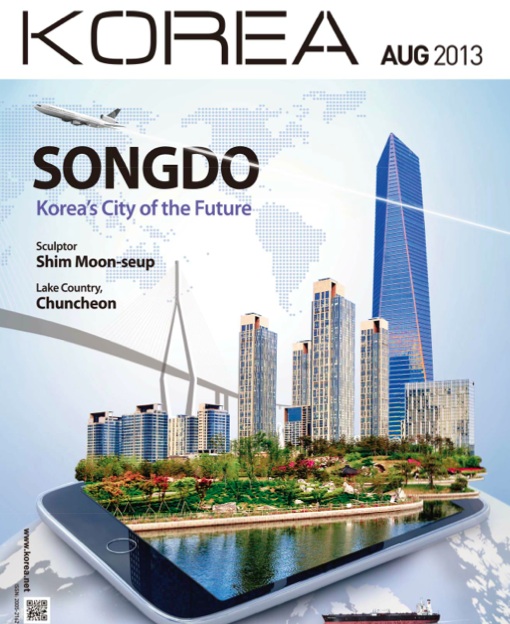
On a broader scale, I’ve been involved in new urban communities like South Korea’s Songdo International Business District—envisioned as a “city of the future” and intended to meet strict environmental building standards amid providing world-class amenities.

My days are also impacted by life in Belmar. The vision of Continuum Partners LLC., a Denver-based real estate development company, for Belmar was born from the belief that there is a connection between long-term, sustained property value, high-quality urban design, and the principles of smart-growth. At its core Belmar strives to offer a balance between a Live, Work, and Play lifestyle.

Between my Korea experiences with projects like Songdo IBD and those in America like Belmar, I see new urban communities—looking to link quality of living and sustainability—facing a number of challenges. Beyond huge development costs, the vision for these communities not only centers on providing a high quality of living amid green tech rooftop solar arrays and LEED-certified buildings that pass US energy-efficiency standards, but for the developers and businesses financial considerations matter, too.

With groundbreaking in October 2002 and most of the construction completed by 2008, Belmar developer Continuum CEO Mark Falcone has sought to maintain a balance between promised deliverables to the public and local governing bodies, and fiscal realities. As Falcone notes, “The key factor which allowed us to manage through all the changing dynamics of the market was the zoning and a highly responsive City [Lakewood, Colorado]. Those factors gave us the flexibility to respond to evolving market realities as they emerged without altering the essential character of the place.”

When questioned on how Belmar adapted, the Denver developer further explained: “As the economy eroded we had to shift to less ambitious development phases. We focused on heavily pre-leased developments and sacrificed density to keep things moving. We also sold land directly to users or other builders. A land sale to Target in early 2010 and KB Home in early 2011, for example.”

That said, I’m drawn to a question—Have high profile new urbanism communities like Belmar met their early vision and expectations? Several key areas deserve reviewing. They include:

Green—Plan to reality. Beyond core values of ecological sustainability, Belmar relied partially on a $200 million green bond for funding the development. (Belmar only ended up using only $8 million of the bond allocation.) Still, Belmar had an incentive to ensure its renewable energy program was implemented and green building practices were followed. Two key programs stand out in Belmar—Solar and LEEDs.  According to Belmar officials, the roof top solar farm and sustainability gets the most attention—renewable energy being a popular topic.
That said, the developers are perhaps prouder of their LEED’s initiative. In 2002-2003, with construction underway for one of America’s first LEED Silver Certification buildings, Belmar gained national attention. In particular, Belmar was unique since it was a mixed-use structure. Sitting in a conference room on the second floor of the three-story LEED building, I found the heat/AC vents of interest—their floor location similar to a water drain, but pushing out warm air on a chilly Denver morning.

Over the next few years of new construction, retailer Target exceeded expectations and met Silver LEEDs standards. Along with the Whole Foods building and interior, in all, four of Belmar’s structures are LEEDs certified.

Housing—Plan to reality. Belmar apartments are currently divided into two groups. The first grouping are those more near the core of the project and spread out into about seven buildings. Currently, these units are over 95% occupied. A 300 unit building to the south of the project is approximately 97% occupied. Belmar upscale condominium units are 100% sold.

Commercial Leasing—Plan to reality As of the end of October 2011, Belmar office space is 96.4 % occupied and 100% leased. The key tenant is The Integer Group, one of the world’s largest promotional, retail, and shopper marketing agencies, and a member of Omnicom Group Inc. Their Belmar offices alone employ over 500 people.

Retail—Plan to reality. As of the end of October 2011, Belmar retail space was 91% occupied and 92.3% leased. Key tenants include: Target, Whole Foods, Best Buy, Dick’s Sporting Goods, and Nordstrom Rack, along with a mix of national and local stores, shops, and services. In particular, the Ohio Center for Broadcasting, Denver and Paul Mitchell, the School adds to the community’s diverse appeal.

Services, Amenities and Community events—Plan to reality. Many in the Denver area find Belmar’s restaurants (PF Chang’s, Ted’s, The Rock, Baker Street) trendy, with shopping and parking convenient. The ice skating rink is a seasonal highlight. (I’m fond of the “skating with Santa” holiday promotion on Saturdays leading up to Christmas.) Furthermore, Summer Sundays also see a thriving Farmer’s Market, and a flourishing local art scene. I have also heard there is interest among locals for a community garden. Count me in on the latter.

Overall, Belmar has made good on its promises and pledges. Still, sustaining the vision over time, like building a sustainable community, will require the embrace and support of local residents, merchants, commercial tenants, and consumers. I see the local art scene and plans for the community garden as very encouraging.  Moreover, it seems that visitors to Belmar appreciate the community’s new urbanism focus and in some cases envy a life style where one can live and walk to work.

Meanwhile, I’ll continue to share my impressions of Korea, Songdo, and Belmar—and wait for the day when in America I will not have to dump my excess coffee in with the recyclables or maybe take a spin around the local community in a EV.

Don Southerton is a consultant, marketing strategist, and researcher for top Korean-based corporations with global business, along with major western firms that have ventures in Korea and Asia Pacific.


Southerton frequently comments in the media on topics including the Korean car market, Green technology, and global business.

Belmar Solar Array Fact Sheet

The Belmar Solar Array began operating in late summer 2008.

The Belmar Solar Array consists of approximately 8,370 panels and is 125,000 square feet in area.

The Belmar Solar Array is a 1.75 mega watt system generating approximately 2.3 million kilowatt hours of electrical energy per year.

The Solar Array power lights in the three structured parking garages on which the panels are mounted. (Technically, the power generated by the solar arrays is routed back to the local XCEL Energy grid, and XCEL sells power back to the Belmar project at a reduced rate.)

Source: Belmar

Cisco, Songdo, and Smart Communities

By Don Southerton, Editor

Cisco has partnered with Sondgo, a city of the future on the west coast of South Korea. Together they share a vision for smart communities.  This video series highlights that vision.


For a history of Songdo check out
Chemulpo to Songdo IBD.

Forbes–New Urbanism Songdo to Belmar

By Don Southerton, Songdo IBD CityTalk Editor,

My article in Forbes…  In a follow-up article,  I plan to look at expectations and reality, plus why Green cars have a role in new urbanism.

New Urbanism: Comparing Songdo, South Korea to Belmar, USA

Songdo, South Korea Master Plan
Guest Post By Don Southerton
I’m a baby boomer. I grew up in a small town of 6,000 in northeastern Pennsylvania—a county seat surrounded by dairy farms. We walked to the elementary school, the neighborhood store for a loaf of bread and maybe a soda, and weekly shopping trips downtown–3 blocks from home. Most backyards displayed gardens with long rows of vegetables, some yards cultivated grape vines, raspberry bushes, or an apple tree. Seasonally, we ate tomatoes, cucumbers and green beans in the summer, then squash, sweet corn, and apples in the fall. Fresh eggs and milk came from local producers. People canned goods for the winter, and most home menus followed the seasons. Long before sustainability, environmentalism, and new urbanism, small town America was rooted in comparable notions.
…Jump forward a few decades; I now live in Belmar, a new urbanism community on the outskirts of Denver, Colorado. New urbanism represents a design movement that promotes walkable neighborhoods where residents live, work, dine, and shop. The communities embrace energy-efficient buildings, smart growth, transit-oriented development, sustainability, and quality of living.
…For Belmar, the developers converted a former 1960s era dying mall into a mixed-use community of 23 city blocks. The community incorporates LEED’s green standards, along with solar farms on the roofs of parking structures, and outdoor street lighting that conforms to the International Dark-Sky Association and limits light pollution. Retail stores like Belmar’s Target were built to meet LEED certification, while corporations including The Integer Group, an international advertising agency, embrace the community’s sustainability and green policies.
What perhaps is most interesting is that my desire to live in Belmar was highly influenced by another high profile new urbanism project—this one on the western coast of South Korea—Songdo International Business District (IBD), a joint venture of New York-based real estate developer Gale International and the engineering and construction arm of South Korea’s steel producer Pohang Iron and Steel Company (POSCO). The urban development is a master planned mixed-use community that set out and conform to rigid international standards for design, sustainability, and, most importantly, an unparalleled quality of life.
…A model for new urbanism, the developer’s vision for Songdo IBD went beyond Green, sustainability, and quality of life with western-style amenities to attract international visitors, residents, and business firms to South Korea. This in turn would pave the way for Koreans to interact more closely with foreigners, and create good jobs for the Korean people.
In both cases the developers set out to transform and reshape communities. For Songdo IBD, the city-size project is built upon reclaimed land and mudflats. For Belmar, it was a greyfield transformation of an aged and dated mall. In both cases, we find extensive master planning, large scale construction, mixed-use development, cultural amenities, and a pedestrian and transit oriented lifestyle with less dependency on automobiles—although I’d like to see the Belmar add some clean energy LPG or electric recharging stations.
….That said, living in Belmar my task at hand is now to look deeper into how closely the developers’ goals and visions for the respective U.S and Korean communities manifests over time. I plan to share my cultural research in future writings. Meanwhile, frequent visits to South Korea and Songdo IBD, along with daily strolls through Belmar will provide first hand impressions of 21st century new urbanism—amid memories on my youth growing up in small town America.
Don Southerton is a consultant, marketing strategist, and researcher for top Korean-based corporations with global business, along with major western firms that have ventures in Korea and Asia Pacific.
Southerton frequently comments in the media on topics including the Korean car market, Green technology, and global business. His work, Chemulpo to Songdo IBD, Korea’s International Gateway was released in August 2009 at the gala opening of the Songdo IBD and the Incheon Global Fair.

Songdo IBD in the News

By Don Southerton, Songdo IBD CityTalk Editor,

Great article in JoongAng Ilbo on Songdo International Business District (IBD) and Gale International Chairman Stan Gale. In the article, Stan points out the strategic position of the Incheon International Airport and Songdo IBD play in the new emerging global commerce communities (aerotropolis) that center around major hub airports. 
http://media.joinsmsn.com/article/925/5220925.html?ctg

개발 주역 스탠 게일 회장

스탠 게일 회장 ( Stan Gale, Chairman)

“2001년 당시로서는 바닷물만 가득한 곳에 국제도시를 개발해 달라는 한국 정부의 요청을 받았을 때 ‘너무 위험한 발상’이라고 생각했습니다.”

송도국제도시의 핵심인 국제업무단지는 미국 동부 보스턴에 본사를 둔 게일 인터내셔널이 개발을 맡고 있다. 이 회사 스탠 게일(61) 회장은 “우여곡절도 많았지만 이제 ‘상전벽해(桑田碧海)’라는 소리를 듣게 되니 보람과 책임감을 함께 느낀다”고 말했다. 그는 최근 미국에서 출간된 에어로트로폴리스(공항도시)서문에 ‘가장 이상적인 공항도시를 개발해 낸 장본인’으로 서술되기도 했다.

-처음부터 송도국제도시를 공항도시로 개발할 생각이었나.

“송도가 당시에는 갯벌에 불과했지만 인천국제공항과 인천대교·경제자유구역이라는 비전을 보고 뛰어들었다. 송도 개발의 핵심은 중국 및 아시아 지역에 거점을 두고 있는 다국적 기업들의 ‘니즈’를 충족시키는 것이다. 따라서 인천공항을 중심으로 글로벌 비즈니스에 필요한 모든 요소들을 적재적소에 배치하는 마스터플랜 아래 최첨단·친환경 공법을 적용해 왔다.”

-외국 기업들은 송도의 에어로트로폴리스 및 콤팩트·스마트시티의 개념에 대해 어떤 반응인가.

“에어로트로폴리스는 아직 해외에서도 생소하지만 e커머스를 통한 글로벌 무역이 대세를 이루면서 기업들의 수요가 크게 높아지고 있다. 외국 기업들은 송도가 최첨단 IT기술과 최고 수준의 정주(定住)환경을 갖춘 데다 동일 공간에 국제공항이 확보돼 글로벌 기업도시로 클 것으로 확신하고 있다.”

-최근 기업유치 등 가시적인 성과가 나타나고 있는데.

"해외에서 먼저 송도의 가치를 알고 시스코 등 최첨단 기업들도 입주하고 있다. 국내 대기업들의 투자도 송도의 비전이 인정받은 결과다. 2016년 최종 완공까지 최선을 다할 것이다.”

(Thanks goes to Steven Bammel for sharing this news item.)


CISCO Forum for Education: Dr. Jorge Nelson Presentation

By Don Southerton, Songdo IBD CityTalk Editor

CISCO

Just had the pleasure of watching Chadwick International School headmaster Dr. Jorge Nelson via Cisco Global Education Forum.

Jorge is a passionate and forward-thinking educator. Like Songdo IBD, Jorge raised the bar for where education needs to be centered.  I suggest you take a few minutes and go to the Cisco Education Forum website.

To view, go to : http://www.inxpo.com/events/ciscoeduforum/ , register, then steer your way to  the  Primary / Secondary Schools Breakout.

For a sneak peak on Dr. Nelson presentation, click here JorgeNelson_Chadwick_International

Songdo IBD–An Aerotropolis, Part 2

By Don Southerton, Songdo IBD CityTalk Editor

Found this in FT.com.
Nice comments by Stan Gale of Gale International, too.

Aerotropolis

By Greg Lindsay

Published: February 25 2011 17:03 | Last updated: February 25 2011 17:03

Ten years ago, Stan Gale was a builder of New Jersey business parks. But in 2001 his fate began to change when he received a phone call from South Korea. The South Korean government had found Gale’s company on the internet, and they made him an offer everyone else had refused. The brief: Gale International would borrow $35bn from Korea’s banks, partner with its biggest steel company and use the money to build from scratch a city the size of downtown Boston – only taller and denser – on a muddy, man-made island in the Yellow Sea. When Gale arrived to see the site, it was miles of open water. He signed anyway.

The proposed settlement, New Songdo, isn’t so much a Korean city as a western one, floating offshore. It was chartered as an “international business district” – a hub for companies working in China. To make US expatriates feel at home, its malls are modelled on those in Beverly Hills, and Jack Nicklaus designed the golf course. But its most salient feature is shrouded in perpetual haze, opposite a 12km bridge. On the far side is Incheon International Airport, which opened in 2001 on reclaimed land and instantly became one of the world’s busiest hubs.

“[The Koreans] tracked us down, wanted us to build a city in the ocean, and no one else was interested. What was going on here?” Gale said. “Their vision scared everyone else away. It wasn’t until I saw the airport that I understood where they wanted to go with this.” The answer: to China. The sales pitch to prospective tenants is simple: move here and you’re only a two-hour flight away from Shanghai or Beijing. You’re four hours away at most from cities you’ve never heard of, such as Changsha, which happens to be larger than Atlanta or Singapore. Nearly one billion people are a day trip away.

“China alone needs 500 cities the size of New Songdo,” Gale told me, and he hopes to break ground on the next one in Chongqing sometime this year. How many will be umbilically connected to the nearest airport? “All of them.”

To the jaundiced western eye, New Songdo and its clones might appear to be fantasies left over from the Bubble. But dismissing them as the product of Asia’s infatuation with all things mega misses the carefully calibrated machinery underneath. It’s a machine the rest of us ignore at our peril as we enter the next phase of globalisation – one marked by the shift from west to east and the trade routes up for grabs in between. The model for cities such as New Songdo even has a name, which Stan Gale pronounced with a flourish: “It’s an aerotropolis.”

It isn’t his word. The man who defined it is John Kasarda, a professor at the University of North Carolina who has made a name for himself with his radical vision of the future: rather than banish airports to the edge of town and then do our best to avoid them, we will build this century’s cities around them. Why? Because people once chose to live in cities for the wealth of connections they offered socially, financially and intellectually. But in the era of globalisation, we choose cities that are drawing closer together themselves, linked by fibre-optic cables and jet aircraft. Stan Gale is simply taking this idea to its conclusion, building a network of instant cities joined by their airports.

Many aerotropoli will evolve out of the cities we already call home – only, their highways and byways will lead us to terminals instead of downtown. For instant cities such as New Songdo, Kasarda has drafted a set of blueprints replete with high-speed trains and six-lane highways connecting prefab neighbourhoods and business districts. They range in size from a few thousand residents to a few million. Aerotropoli designed according to Kasarda’s principles are already under way across China, India, the Middle East and Africa, and on the fringes of cities as desperate as Detroit and as old as Amsterdam. In Kasarda’s opinion, any city has the potential to be one, provided it is willing to build, demolish and rebuild around its airports at its tenants’ behest. The World Trade Center at Amsterdam’s Schiphol Airport boasts some of the highest office rents in the Netherlands. Detroit is borrowing its blueprints.

Looking out over Central Park and the canal at the center of New Songdo City
New Songdo is being built on reclaimed land in South Korea’s Yellow Sea, as an air hub for companies working in China. ‘China needs 500 cities this size,’ says its chief builder

Perhaps the purest example is Dubai, a city feverishly assembled, populated by highly stratified expatriates, and composed of enclaves that have less to do with each other than with like-minded communities thousands of miles away.

The idea of the aerotropolis represents the logic of globalisation made concrete in the form of cities. Whether we consider it to be good or simply inevitable, the global village holds these truths to be self-evident: that customers on the far side of the world may matter more than those next door; that the pace of business, and of life, will always move faster and cover more ground; and that we must pledge our allegiance if we want our iPhones, Amazon orders, Kenyan green beans and Valentine’s day roses at our doors tomorrow morning. If the airport is the mechanism making all of these things possible, Kasarda reasons, then everything else – our factories, offices, homes, schools – will be built accordingly. The aerotropolis, he promises, will be a new kind of city, one native to our era of instant gratification.

I first met Kasarda in his office, surrounded by model planes he had received as gifts from one foreign delegation or another. The only other place I’ve ever seen him in is an airport. He has flown more than three million miles in the past quarter of a century – and he is up in the air two months a year, flying far enough to circle the globe half a dozen times. Twenty years ago, Kasarda looked at the ascending trend lines of global trade and surmised that future growth depended on faster air travel. To that end, he devised a theory in which first factories then entire cities would form around greenfield airports, in order to wring a few extra hours from the day.

“Despite all the talk of the service economy, of healthcare and software as our national industries, the western world’s is still a goods economy,” Kasarda said. “A large and growing proportion of these goods move internationally, as a consequence of trade and modern supply chains. All of this passes through a physical ‘internet’, the network of hubs and planes for trading and transporting goods – and people – almost as quickly as the internet itself. And it’s arguably more important – the web can’t move your box from Amazon.”

The aerotropolis, Kasarda says, is the “urban incarnation of this physical internet; the primacy of air transport makes airports and their hinterlands the places to see how it functions – and to observe the consequences”. They may turn out to be mini-Manhattans like New Songdo or SimCities in the mould of Dubai – effectively an airline with an emirate attached – but they are the first cities in which what’s on the ground is beside the point.

. . .

Humanity is officially an urban species – more than half of us live in cities. The percentage is even higher in the developed world, but Africa and Asia are catching up. The number of city dwellers is expected to almost double by 2050 to more than six billion – our current global population. The number of megacities (those with a population of 10 million or more) will have increased from two in 1950 to 27 by 2025, housing 450 million people between them. China might well need 500 new cities the size of New Songdo, and another 100 cities of one million residents or more.

We have always chosen to live in cities for the wealth of networks they create – the elaborate webs of kinship and commerce. That promise hasn’t changed since the agora and acropolis, but the size and scope of cities have. Cities grew by shrinking the distances within and between them, using technology to expand their grids and cover more ground.

John Kasarda likens the history of cities to a rising tide of breaking waves. Ocean harbours were swept away by river ports, which yielded to railway terminals, which were in turn exploded by highways and suburbia. Transportation is destiny. The fifth wave is now here.

Joel Garreau, the futurist and author of Edge City, declared, “Cities are always created around whatever the state-of-the-art transportation device is at the time.” When the state of the art is shoe leather and donkeys, the result is the hilly paths of Jerusalem. When it’s men on horseback and sailing ships, it’s the ports of Lisbon, Hong Kong, or Boston, and the canals of Venice and Amsterdam. The birth of the railway produced Kansas City, Omaha, and the stockyards of Chicago. And the mass production of the Model T led first to Los Angeles and later to Levittown, Long Island.

Today, the modern combination on the ground is the car and internet, yielding Garreau’s “edge cities”, which are everywhere and nowhere within America, and have since cropped up in Bangalore and beyond. Canary Wharf, Delhi’s Gurgaon and the suburbs of northern Virginia more closely resemble each other than their neighbours. Soaring above them all are jet aircraft – first put into service 60 years ago – collapsing the distance between Dallas and Dubai as effortlessly as the internet nodes connecting them.

But as transport and communication costs fall, and movement and accessibility become easier, cities have become less dense and contiguous and grown more dispersed, networked, fluid. In the internet age, this fluidity promised that those of us who make our living with computers could live anywhere. No one has preached this vision more fervently than the technologist George Gilder, whose utopia of the “telecosm” and infinite bandwidth has us scattering back into the countryside to live like gentlemen farmers, with Facebook serving as the village green.

But total dispersal hasn’t come to pass, and it won’t, no matter how much bandwidth we’re able to route through our iPhones. In fact, the same technologies that were supposed to disaggregate us have only made concentration more useful. We’re becoming more urban at precisely the moment our outlook is growing more global. We keep an eye on the street and a mobile phone to our ears, somehow managing to be in both places at once. The same thing is happening at a macro level, too. The Los Angeles hinterlands, for example, aren’t California’s Central Valley or the high Mojave Desert but the outlands of Seoul, Hong Kong and Mexico City, connected via mobile phones, social networks and satellite offices. The product of the jet age and the internet age is our current instant age, simultaneously favouring both aggregation and dispersal.

This is where John Kasarda comes in. With the aerotropolis, he attempts to answer the question of what the cities of this age should look like. What will their shape and purpose be when the state of the art at the time of their birth is ubiquitous WiFi and jumbo jets? Will they resemble Dubai, which is busy reinventing itself as the Middle East’s entrepôt, Africa’s aerial gateway and a luxury shopping mecca for middle class Chinese? Or will they look more like converging cities of the Pearl River Delta, where a single factory (Foxconn’s) could leverage Hong Kong’s airport to supply every Apple iPad or iPhone in the world?

Implicit in such thinking is a zero-sum world of exponential population increase and cut-throat competition for resources and profits. Kasarda’s vision evokes everything we find terrifying about globalisation – a civilisation cast in quick-drying cement, packed with worker drones. But even if you accept his logic, you have to ask: who are these cities for? The companies that profit from marginally leaner operations? The autocratic leaders who are jockeying to land them? Or the planners, architects and sages given carte blanche to raise islands from oceans and plant tarmac in desert?

Will we consciously choose to live in cities built in globalisation’s image – machines for living linked in great chains? Kasarda believes that we will, that we should, and that we’ll suffer the consequences if we don’t, because these debates have already been settled (one way or another) in places like China and Dubai, which have staked everything on the global triumphing over the local.

China is building an aerotropolis wherever it deems strategic: as outposts in oil-rich Angola and Sudan and in the copper belt of Zambia; in Pakistan, to complement the deep-water port at Gwadar, and most of all in western China, where more than 100 new airports are under construction. The goal is to put one within driving distance of 80 per cent of its population by 2020.

The UN World Tourism Organisation expects the annual number of Chinese tourists abroad to triple by 2020 to 115 million; already, more are leaving to see the world than foreigners are arriving to see China. Where are they heading? I found one clue in Dubai recently, where my hotel was overrun with families toting shopping bags. Tourism from China to the United Arab Emirates has soared since the emirates landed on China’s “approved destination” list in autumn 2009. The number of Chinese visiting Dubai soared 57 per cent in the first half of last year, totalling 81,900 in all.

They’re heading next to the high street near you. Despite a decade’s worth of high oil prices and terrorism fears, we have never flown as far or in greater numbers than we do right now. As recently as 1999, Ryanair had no website, and it was impossible to take a non-stop flight from New York to New Delhi or Beijing. The world may or may not have flattened since then, but there’s a lot less changing planes.

In the end, we won’t stop flying, for the simple reason that quitting now would run counter to our human impulse to roam. Will you be the one to tell 100 million Chinese tourists (and another 100 million Indians) that they will have to stay home?

This is an edited extract from ‘Aerotropolis: The Way We’ll Live Next’, by John Kasarda and Greg Lindsay, published by Penguin, £14.99

…………………………………………..

Flight of fancy?

Someone smart came up with the title of John Kasarda and Greg Lindsay’s book. Aerotropolis – The Way We’ll Live Next is an astute blend of the intriguing, the beguiling and the faintly menacing, writes Pilita Clark. But is it true? Are we really heading for a world where we build our cities around our airports instead of the other way round? That depends on who “we” are. And how we define an aerotropolis.

Airport edge cityOn his website (www.aerotropolis.com), John Kasarda, a US academic who has been putting the economic case for the concept for years, uses a diagram to explain how such a city would look. It shows an airport surrounded by clusters of air transport-related businesses, convention centres, exhibition halls, hotels, malls and homes. These are fed by “aerolanes” or “aerotrains”, pumping in passengers and goods.

By this definition, Schiphol airport, Dallas-Fort Worth, Dubai and many others already share aerotropolistic traits. Even Heathrow has a few. But Heathrow is also a good example of the limits to this vision. It has beenbanned from building a third runway and it took longer to obtain planning permission for terminal five than it took Beijing airport to build its vast new terminal three. The idea that approval would ever be given to flatten swathes of its surrounding suburbs to make way for an aerotropolis is impossible to imagine. The same can be said for dozens of the world’s best-known airports. And yet the model has been embraced in India, China, the Philippines and South Korea.

So if the idea of an aerotropolis is not the way you want to live next, relax if you live in a crowded part of North America or Europe. And stay away from emerging rivals hoping that airport cities will help them become the developed world of tomorrow.

Pilita Clark is the FT’s aerospace correspondent