Tag Archive for LG

Hyundai Raid 

Hyundai Raid 
© Parker Puls/Bloomberg News

I contributed to a Wall Street Journal article on last week’s immigration raid at the Hyundai plant in Georgia. Reporting continues. Don Southerton

The Trump administration wants tougher immigration enforcement. It also wants Asian manufacturing powerhouses to pour investment into U.S. factories.

Those goals are now clashing because Asian companies are having trouble getting enough work visas for personnel needed to get the U.S. plants running, say immigration specialists.

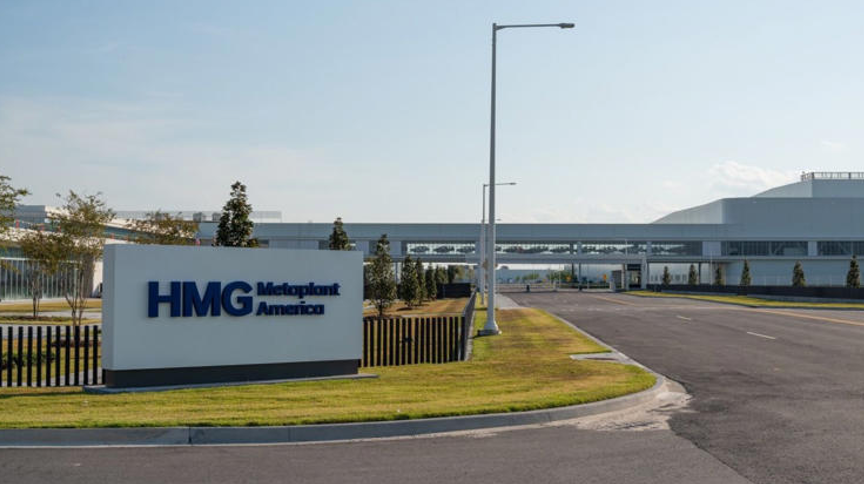
Last week, the contradiction was highlighted when the U.S. carried out an immigration raid in Georgia and arrested some 300 South Koreans helping to build a Hyundai Motor joint-venture battery plant.

Now the South Koreans are expected to head home soon under a diplomatic deal, and experts say it might take longer and cost more for Asian companies to build their U.S. factories without the specialists they need.

President Trump hinted at such concerns when he wrote on social media that his administration “will make it quickly and legally possible” for foreign investors “to LEGALLY bring your very smart people, with great technical talent to build World Class products.”

One cause of the issue is America’s shortage of skilled technical workers, which stems from a long-term decline in manufacturing employment and the offshoring of production. The U.S. lacks the workforce needed to support advanced industries such as semiconductors and biotechnology, according to a July report by the Center for Strategic and International Studies, a Washington think tank.

That is why it is common for hundreds of employees from the home country to descend on big project sites. Companies such as Hyundai and its battery-making partner, LG Energy Solution, often bring along the same contractors they work with at home. Around 250 of the roughly 300 South Koreans arrested worked for contractors, LG Energy said. Japan said Tuesday that three of its citizens working at the site were also detained.

The detainees largely held temporary visas suitable for short-term training and supervising purposes, such as the B-1 visa, and many were working at the site as instructors, according to South Korean officials. Some had arrived in the U.S. through a visa-waiver program that allows entry for up to 60 days for travel and certain limited business activities, they said.

Don Southerton, a consultant who has advised South Korean companies including Hyundai on operating in the U.S., said some Korean firms and their contractors in the past used visa-waiver programs for short-term travel or business visits without triggering scrutiny.

“I don’t think they ever had to worry about it,” he said. “And there has been so much encouragement for these plants to be” in the U.S., he said.

U.S. authorities said those arrested illegally crossed the border, entered through a visa waiver program that prohibited them from working or overstayed their visas.

Hyundai said it was reviewing its processes to ensure that its partners “maintain the high standards of legal compliance that we demand of ourselves.”

Other nonimmigrant employment visa types allow companies to bring in workers for longer periods, but they aren’t easy to get.

The H-1B visa lets companies operating in the U.S. hire foreign workers in specialty jobs such as tech and engineering. The annual cap recently has been under 100,000 visas.

The E-2 visa is designed for specialized workers at U.S. units of companies from regions with commerce treaties with the U.S., a category that includes Taiwan, South Korea and Japan. Approval standards have been getting tougher as applications surge in South Korea, whose firms are overseeing many large projects in the U.S., said Hong Chang-hwan, a lawyer at Seoul-based firm Kookmin Emigration who specializes in U.S. immigration matters.

“The U.S. might say such workers can be hired locally, but Korean firms say such talent is difficult to find and deploy quickly in a plant that you’re trying to get going on schedule,” he said.

In 2023, Taiwan Semiconductor Manufacturing sought to bring in some 500 experienced workers to accelerate construction, igniting a protest by Arizona’s construction unions. TSMC said the workers were there only for short-term support, with no impact on local hiring.

South Korea’s trade and industry minister said last year that visa challenges have made it hard for many South Korean conglomerates to dispatch workers to the U.S. and increase investments there.

In July, Rep. Young Kim (R., Calif.) and others introduced a bill that would allot 15,000 visas for South Koreans with specialized education or expertise. The bill, proposed in varying versions over the past decade, hasn’t moved forward.

Similar visa categories have been created for countries such as Australia and Singapore through free-trade agreements. The U.S. grants more than 10,000 E-3 visas annually to Australian nationals in specialized fields, enabling them to work for up to two years in the U.S., renewable indefinitely.

Wendy Cutler, a former U.S. trade negotiator who is now at the Asia Society Policy Institute, said South Korea pushed hard for special visas like those granted to Australia and Singapore when it negotiated its own free-trade deal with the U.S., which took effect in 2012. Seoul ultimately didn’t get them, although it did get included in the visa-waiver program.With investment a U.S. priority, “a longer-term solution is urgently needed,” Cutler said.

Jiyoung Sohn at jiyoung.sohn@wsj.com and Yang Jie at jie.yang@wsj.com

Questions?  Comments?   Dsoutherton@bridgingculture.com

Korean Business Expert Don Southerton Releases Ground Breaking Book

Korea Perspective offers a road map to avoid common pitfalls while overcoming challenges, addressing issues that frequently surface with Korea.

PR

http://www.prweb.com/releases/2015/01/prweb12479689.htm

Golden, Colorado (PRWEB) February 02, 2015  Korean global business consultant Don Southerton has released his latest publication, titled Korea Perspective. Southerton notes, ” As a result of my interacting with Korea facing business on an almost daily basis, Western overseas teams, as well Korean leadership and teams, have openly shared their challenges and pressing concerns. In turn, I have worked to provide them with a framework, strategy, and solutions. This book is based on these daily interactions.”

The intended audiences, the author points out, are Westerners employed by Korean-based companies outside South Korea, firms providing services or products to a South Korean overseas subsidiary or operations and global companies that have significant business with a Korean company.

Southerton adds, “All in all, this book offers a road map to avoid the pitfalls, navigate around the roadblocks, and thrive.”

Korea Perspective is available through Amazon Kindle, Nook and most popular booksellers.

About the author Don Southerton has a life-long interest in Korea and the rich culture of the country. He has authored numerous publications with topics centering on culture, new urbanism, entrepreneurialism, and early U.S.-Korean business ventures. Southerton also lectures extensively and writes and comments on modern Korean business culture and its impact on global organizations.

He is a frequent contributor to the media (WSJ, Forbes, CNN Fortune, Bloomberg, Automotive News, Korea Times, Korea Herald, Yonhap, Korea Magazine, and FSR) on Korea facing business and culture. He heads Bridging Culture Worldwide, a Golden, Colorado based company that provides strategy, consulting and training to Korea-based global business. An avid martial artist, Southerton has pursued the study and practice of Korean traditional arts for more than forty years.


The author is available for media interviews.

###PR

NEW: Korean Expatriate Global Business eLearning Series

Supporting Korean overseas teams (ju jae won) and their Korean executives is a must for all Korea-based organizations. The assumption that expatriates can bridge cultural gaps through practical on–the–job experience might work with those few highly intuitive individuals with the exceptional ability to assimilate cultures. However, what stands out in numerous studies is the need for training. In particular the need for a training program that can successfully provide insights into new business cultures and values, while fostering sensitivity and teamwork among all members of the company.

An effective eLearning program for Korean expatriates can help bridge gaps while supplying needed skills and knowledge.

Based on years of working with western and Korean expat teams, we have developed an eLearning program to address issues that commonly occur in the American and global workplace.

The benefits of the eLearning program include:

1.  The training is designed to be self-pacing with the ability to go back for a second time to review a specific section. This will result in better comprehension and higher retention of course content.

2. Flexibility–Unlike instructor-led training the course is highly accessible. This allows the participant to fit the training into their schedule.

3. Finally, this eLearning offers an opportunity to grow. The course content will add to the participant’s understanding of the differences in global business, improve communication with local teams, and make them more effective in fulfilling the assignment.


Outcomes

Although there is bound to be some friction between expatriate and host country cultural values, a successful cross-cultural and localization training program accomplishes:

1. Awareness and appreciation of both the home and host country with the ability to gain an insight into one’s own personal traits, strengths, weaknesses, attitudes, and interests.

2. Realization of similarities and shared values, along with an awareness of and respect for cultural differences.

3. The ability to adapt to new cultures, ideas, and challenges on the job and in the home, while adjusting quickly to new conditions and workplace practices.

Next Steps

Further details on the Korean Expatiate Global Business eLearning Series is available upon request. This includes a Table of Content, course outlines, and fee rates.

Call +1-310-866-3777 or email Dsoutherton@bridgingculture.com


Korea Facing: Decision Making

By Don Southerton, Editor

As noted in the 3 previous Korea Facing hierarchy articles, ( see LINK below) power in Korean companies is often very centralized and only people at the highest level have the right to decide on issues. In Korea, the working team’s role is to implement or gather needed information. In other cases where overseas leadership and teams hope to offer a new service or program, local Korean management’s role is to gather information and then share with the appropriate senior team members, who are often in Korea. The local opinion is valued, but review may come from Korea.

My Suggestion…When conducting a meeting where a decision must be made please recognize that your local Korean team(s) will have considerable say in it’s outcome. This may include both the operations and finance teams. First, since the topic and subject matter may be new to your Korean team, I recommend you share prior to the meeting any needed background documents (best provided in PPT format). In addition, have an informal pre-meeting Q&A with the Korean team leader to brief and update them on any specifics. Note: they may need a day to review proposals and agreements, so timing is critical. Even in the best cases, expect that the Korean team may want to postpone any decision until they can carefully review and perhaps confer with Korea. I suggest all documents and meeting PPTs be immediately forwarded to the Korean team. I’d create a sense of urgency with a timeline for execution and implementation. Regardless, expect some delays and be patient. Over the years, I’ve found that Korean teams appreciate when their overseas co-workers recognize that the internal approval process takes time and offer supportive data or documents.

BTW, if your firm provides services to a Korea–based partner, provide both the western and Korean teams with background information prior to any meetings. Moreover, be prepared to share the meeting’s content with the Korean team, too.

Korea Facing LINK http://archive.aweber.com/bcw-clients/L.Vjo