Tag Archive for Incheon

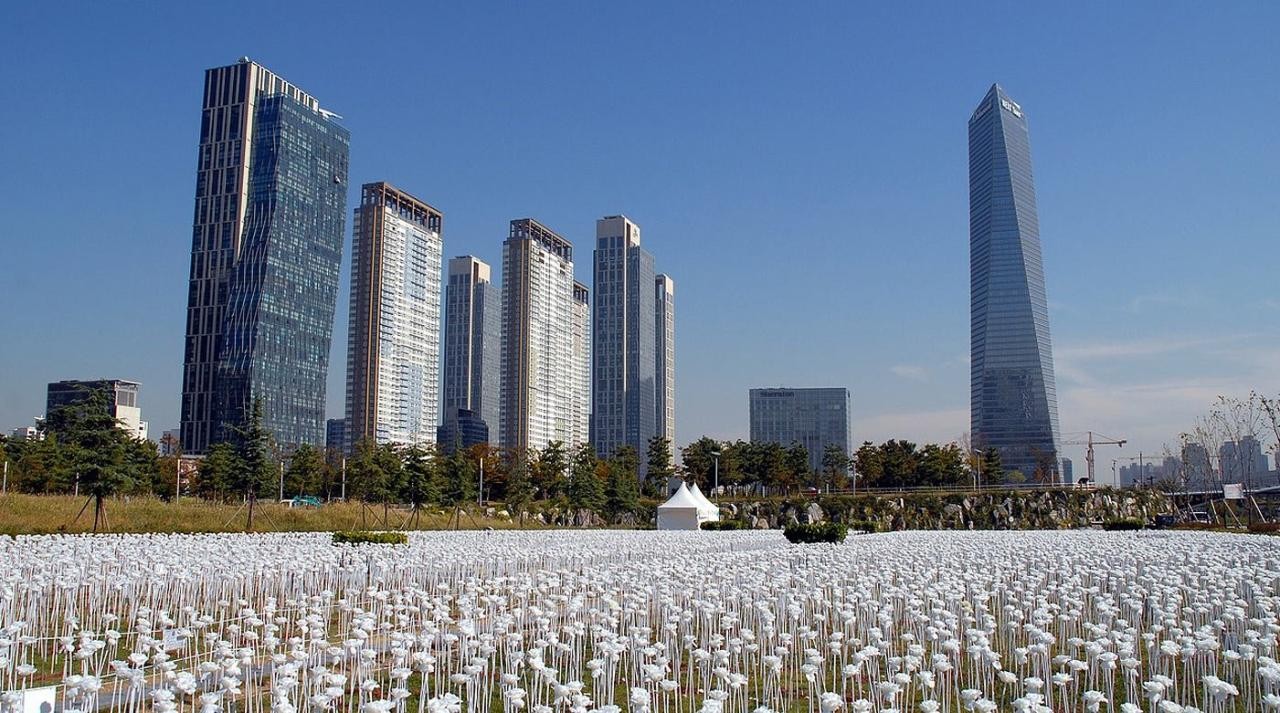
Incheon-IFEZ, From Smart City to AI City: The Next Evolution of Urban Life

incheon, south korea

Incheon, South Korea

CES 2026 drew 148,000 attendees, including nearly 7,000 members of the media, making it the largest CES since the pandemic. Among the 4,100 exhibitors was the Incheon Free Economic Zone Authority (IFEZ), which used the global stage to announce Incheon’s evolution from “Smart City” to “AI City.”

For over 20 years, Incheon has been at the forefront of Korea’s transformation and innovation and is now becoming an “AI City” that integrates AI technologies across the entire urban landscape. 

As Mayor Yoo Jeong-bok stated, “CES 2026 is an important stage for presenting Incheon’s vision for its next growth leap—one that has led Korea’s transformation and innovation for over the past two decades—into an AI City. We will continue to do our utmost so that Incheon can establish itself as a leading global AI city.”

Beyond Smart Cities: The AI City Evolution

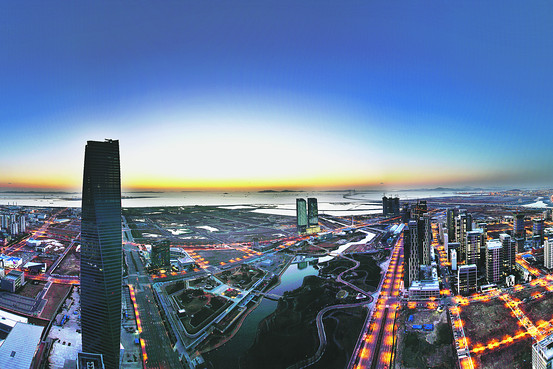
In my 2024 article “Smart Cities: A Tale of Innovation and Collaboration in South Korea,” I examined Songdo’s development within IFEZ, a community of 167,000 residents featuring underground waste tubes, traffic sensor networks, and integrated platforms that create a “15-minute city.”

Two years later, the strategic landscape has shifted. The concept of a “Smart City” has become commoditized. IFEZ’s pivot to an “AI City” signals that the next phase isn’t just about connected infrastructure but about artificial intelligence fundamentally reshaping how cities function. 

Where Songdo laid the Smart City foundation with IoT sensors, the AI City vision layers sophisticated AI across those systems, moving from reactive data collection to predictive urban management.

Incheon has been central to Korea’s economic transformation—the international airport has reshaped global connectivity, and the free economic zone has drawn significant international investment.

The transformation from Smart City to AI City isn’t just about deploying technology; it’s about evolving the narrative. Cities that successfully attract international investment don’t just build infrastructure; they craft compelling stories about why global companies should be part of their future.

don southerton Korea Strategic Services Don Southerton

Foreign Direct Investment an Evolving Ecosystem

By Don Southerton

Foreign direct investment

I’m reposting my recent article in Branding in Asia.

Currently, FDIs in many markets are experiencing a global decline in funding. So, what are the best approaches markets should take for FDI 2024?

Foreign direct investment has become a cornerstone for governments and corporations looking to stimulate and sustain business growth. Foreign direct investment plays an important role on a macroeconomic and microeconomic level. We define foreign direct investment (FDI) as investment made by a company in one country into another country’s business or assets. FDI is a crucial aspect of international commerce, but it is also an evolving ecosystem that continues to change and develop over time.

Some key benefits of foreign direct investment include:

Economic Growth: Countries receiving foreign direct investment often experience higher economic growth by opening up to new markets, as seen in many emerging econom

Job Creation: Most foreign direct investment is designed to create new businesses in the host country, which usually translates to job creation and higher wages.

Technology: Foreign direct investment often introduces innovative technologies and creates hubs for technical expertise.

Stepping back between 2000 and 2008, the world saw an early growth phase in FDI. This was the peak time for global investment in FDI.

An Asia-Pacific (APAC) standout was South Korea’s Songdo International Business District (Songdo IBD). The project was a Joint Venture project I was engaged as a consultant and have continued to follow. Like other FDI of the period in the region, the 1997 Financial Crisis brought to the forefront the need for the APAC nations impacted to broaden their economies beyond domestic export-driven businesses

Economists recommended attracting foreign direct investments as a buffer against the potential impact of recessions and fiscal crises.

The Songdo vision in the early 2000s was to build an international business-friendly hub on the West coast of South Korea. The community with Western amenities was built on reclaimed land and covered roughly 1500 Acres complete with a Central Park, an international school, and a Jack Nichols-designed golf course–all within a short distance of the Incheon shipping port and international airport.

Over the years, Songdo IBD, now Songdo International City, has broadened beyond FDI to include residential, domestic companies, and NGOs. As part of the Incheon Free Economic Zone (IFEZ) which was created in 2003 and designated as Korea’s first free economic zone, today Songdo is one of three districts—along with Cheongna, and the airport’s Yeongjong International City.

Currently, FDIs in many markets are experiencing a global decline in funding. So, what are the best approaches markets should take for FDI 2024?

Over the years, the approach to international foreign direct investment (FDI) has evolved from a model solely focused on incentivizing foreign businesses to a more collaborative, synergistic, and dynamic ecosystem. This is observed in countries such as South Korea, Singapore, Vietnam, and Indonesia, as well as Ireland, the Netherlands, Latin America, and the Caribbean.

And, as noted by the World Bank, an exception to the downturn can be found in Greenfields–projects that require developing a new product or service from the ground up. Data shows this is the top area of FDI growth.

In turn, APAC markets like South Korea, Vietnam, and Singapore seek to position themselves as global hubs. Specifically for future industries such as bio-healthcare, smart manufacturing, high-tech finance and future robots, information and communication (IT), and artificial intelligence (AI) while making great strides in distribution, logistics, tourism, and MICE.

One takeaway does stand out—FDI is an evolving ecosystem that continues to change and develop over time.

https://www.brandinginasia.com/foreign-direct-investment-rooted-in-international-commerce-but-an-evolving-ecosystem

Smart Cities: A Tale of Innovation and Collaboration in South Korea

Smart Cities

Don Southerton takes a look at smart city development in South Korea.

https://www.brandinginasia.com/smart-cities-a-tale-of-innovation-and-collaboration-in-south-korea/

Smart Cities

Over the past nearly 20 years, I have been engaged in Smart Cities. This work has involved various Smart City projects. The first was the Songdo International Business District in Incheon, South Korea, and more recently—cutting-edge Smart City Platforms.

The concept of “Smart City” is an emerging technology that many local governments see as the future; however, few municipalities have a solid roadmap.

The term “Smart City” can be defined differently. Some envision a green and sustainable community that offers a life-work balance and implements cutting-edge technologies to achieve these benefits.

For example, Songdo, on the West coast of South Korea was built on reclaimed land and covers roughly 1500 Acres. Today, Songdo is a community of 167,000 residents located within one of three Free Economic Zones (IFEZ) in Incheon, South Korea. The project has been approximately 86% completed. Aside from residential areas, the location is also home to a Global Campus, Pharma Hub, Startup Center, and international organizations such as the Green Climate Fund.

Songdo’s development aimed to create an integrated 15-minute city, where people can access 90% of their daily activities by bike or public transportation in fifteen minutes or less.

In Songdo, traffic sensor data is utilized to regulate signal timing on the technical front, while household waste is directly transported from homes to waste processing centers through underground tubes.

Additionally, various apps assist residents in managing their daily lives providing them with information on bus schedules or checking on parking availability in the area.

That said, since these innovative systems were first offered, many new smartphone apps are now available across Korea and provide these and other digital services.

Today, there is a continuing effort to foster the development of Songdo as an urban district under the Incheon Free Economic Zone (IFEZ).

Dr. Won Sok Yun, who has been named the new Commissioner of the IFEZ) notes, “Over the next three years, I will aim to attract foreign and domestic investment in pharma and healthcare, tourism and leisure, and high-tech industries to create a ‘world-class city’.”

Smart City Platform

Recently, we are seeing the adoption of Smart City Platforms. These provide an integrated Geographic Information Systems (GIS) and Information and Communication Technology (ICT) platform. Plus, they offer municipalities some innovative urban solutions.

With the help of the Internet of Things (IoT) and AI, cities can enhance their emergency and fire response, traffic management, sanitation services, and facility maintenance. I’d add that it’s a tool for urban development and revitalization, and in some cases can enhance a city’s security.

Seoul, South Korea’s Smart City Platform is an example of successful integration. The system was developed between 2017 and 2019 to provide various services, including sophisticated drone defense monitoring.

The platform has been highlighted at recent Consumer Electronics Shows (CES) and gained global attention when it was modified during the COVID-19 pandemic to track real-time virus outbreaks.

In January 2024, neighboring Incheon’s Mayor Yoo Jeong-bok was quoted, “Building a smart city is a global challenge that all cities worldwide should aspire…. in collaboration with leading global companies and cities that possess state-of-the-art technology related to smart city construction.”

I agree that developing “Smart Cities” will require collaboration between private tech companies and local government. The mayor envisions building “eco-friendly smart cities centered around people’s needs.” This will address concerns about the ambiguous nature of the “Smart City” identity, which may mean different things to different groups.

The bottom line is that in discussions centered on “Smart Cities,” I suggest there is no one exact definition, however, the goal should be improved quality of public services and citizen welfare.

Incheon

Incheon is a city located on the northwest coast of South Korea and is home to a population of about 3 million people. Its suburbs are situated on the outskirts of Seoul.

Moreover, Incheon is home to South Korea’s primary international airport, the Incheon International Airport, serving as a gateway to northeast Asia.

IFEZ

In 2003, the Incheon Free Economic Zone (IFEZ) was designated as Korea’s first free economic zone. Within the Zone are three districts– Songdo, Cheongna, and Yeongjong International City.

Over the past 20 years, IFEZ has grown significantly and developed into a global city currently home to more than 400,000 residents, 3,300 businesses, 14 international organizations, and renowned foreign universities.

Don Southerton takes a look at smart city development in South Korea

https://www.brandinginasia.com/smart-cities-a-tale-of-innovation-and-collaboration-in-south-korea/

South Korea Aerotropolis–Air City and Incheon Free Economic Zone

Site Selection Magazine just posted an article on the Incheon Airport City and the Incheon Free Economic Zone (IFEZ)South Korea Aerotropolis leads the world in the combined magnitude, range, and quality of commercial investment in both its airport city core and peripheral business and urban clusters. Its planning and development epitomize the principles of “thinking big, acting fast, and doing it right.” 

South Korea Aerotropolis--Air City and Incheon Free Economic Zone

International Business Centre 1 (IBC-I) was designed to reinforce air traffic demand, boost airport commercial revenues and improve the operational efficiencies throughout the broader Incheon Aerotropolis. Image courtesy of Incheon International Airport Corporation

Link to Site Selection article https://siteselection.com/issues/2024/mar/incheon-airport-city-is-tops.cfm

Questions? Comments? dsoutherton@bridgingculture.com

South Korea’s Free Economic Zone (IFEZ) Newsletter

South Korea’s Free Economic Zone (IFEZ)
Photo courtesy of IFEZ

South Korea’s Free Economic Zone (IFEZ) Newsletter shares how the district has positioned itself as the global hub for future industries such as bio-healthcare, smart manufacturing, high-tech finance and future robots, information and communication (IT), and artificial intelligence (AI) while making great strides as a hub for distribution, logistics, tourism, and MICE. #songdo

Please check out our Newsletter https://stibee.com/api/v1.0/emails/share/lp9zm4qG0yY9K45_RHds5rRVGh3ppNE

Questions? Please ask…. dsoutherton@bridgingculture.com

310–866–3777

Songdo IBD–An Aerotropolis

By Don Southerton, Songdo IBD CityTalk Editor

A close Korean friend called and shared that the February 26, 2011 Wall Street Journal Saturday edition looked at Songdo IBD among with other top centers of global commerce.  Nice to see Songdo IBD in the news.

Songdo IBD

Songdo International Business District

Cities in the Sky

Welcome to the world of the ‘aerotropolis.’

To arrive at midnight at Terminal 3 of Dubai International Airport, as I did recently, is to glimpse the pulsing, non-stop flow of the new global economy. The airport, which runs full-tilt 24/7, is packed at all hours. Nigerian traders bound for Guangzhou mix with Chinese laborers needed in Khartoum, Indian merchants headed to clinch a deal in Nairobi, and United Nations staff en route to Kabul.

Dubai’s recent financial woes have forced the tiny Gulf state to scrap or scale back some of its more outlandish development schemes, including The World, an artificial archipelago shaped roughly like a world map. But one project has not flagged: the new concourse for Terminal 3. With construction continuing around the clock, the annex to what is already the world’s largest building is desperately needed to accommodate the fleet of 90 Airbus A380s ordered by Emirates, Dubai’s government-owned airline.

Lighting a cigarette in his modest airport office during a meeting two weeks ago, Sheikh Ahmed bin Saeed al-Maktoum, the chairman of Emirates, laughed as he recalled the widespread doubts that Emirates could pay for—and fill—its superjumbo jets. But it can, and it has, and despite the downturn, Dubai has stuck to its plans to develop the world’s largest airline from the world’s busiest hub. In public statements, Sheikh Ahmed has equated the future of Dubai with the future of Emirates, calling his country’s mammoth airport the center of a new Silk Road connecting China to the Middle East, India and Africa.


aero1

Getty ImagesPassengers at the Dubai airport

Thanks to the jet engine, Dubai has been able to transform itself from a backwater into a perfectly positioned hub for half of the planet’s population. It now has more in common with Hong Kong, Singapore and Bangalore than with Saudi Arabia next door. It is a textbook example of an aerotropolis, which can be narrowly defined as a city planned around its airport or, more broadly, as a city less connected to its land-bound neighbors than to its peers thousands of miles away. The ideal aerotropolis is an amalgam of made-to-order office parks, convention hotels, cargo complexes and even factories, which in some cases line the runways. It is a pure node in a global network whose fast-moving packets are people and goods instead of data. And it is the future of the global city.

This may come as a surprise to Americans, many of whom have had it with both flying and globalization and would prefer a life that’s slower and more local. In the wake of the financial crisis, the bywords for the future have often been caution and sustainability. But there is no resisting the relentless, ongoing expansion of the world economy, and the aerotropolis—fast, efficient, far-reaching and filled with generic “world-class” architecture—embodies it. In places like Dubai, China, India and parts of Africa, cities are being built from scratch around air travel, the better to plug into the global trade lanes overhead.

SONGDO_0226jpg

At present more than half of humanity lives in cities. The percentage is higher in the developed world—four in five Americans live in downtowns or suburbia. China’s rate is half that, and India has not yet begun to urbanize in a serious way, with only 29% of its people in cities. Between now and 2030, the McKinsey Global Institute estimates, India must build a new Chicago every year to absorb the millions of villagers streaming from the countryside in search of work. While the number of city dwellers world-wide will nearly double in 40 years to more than six billion people, the size of cities’ footprints is expected to increase twice as fast.

This hasn’t been lost on Paul Romer, the Stanford University economist overseeing the development of an instant city in Honduras. He proposes building “charter cities” in impoverished states with new laws, new infrastructure and foreign investors—free trade zones elevated to the realm of social experiment. Mr. Romer sold Honduran President Porfirio Lobo on the idea in November and has stayed on as an adviser. Last month, the Honduran Congress voted to amend the country’s constitution to allow the pilot project to proceed.

AlamyCargo in Hong Kong

In making his case to the Honduran public, Mr. Romer pitched the city as an aerotropolis. “Honduras could be the hub that brings Central America and Latin America into the world-wide network of air traffic,” he wrote. “Central America will eventually have a major hub. It’s a question of where, not if.” Without air connections to the outside world, his charter city will stagnate. “If you’re going to take the next step from assembling garments to assembling iPads,” he told me, “you’ve got to have a major airport, or you’ll never beat Shenzhen.”

Every aerotropolis is locked in competition with every other one, just as every financial center is jostling for position in the new multi-polar international order. The principle is the same: Everyone wants to be the hub; no one wants to be the spokes. This has made the aerotropolis ripe for experimentation when it comes to governance, whether it’s simple tax-free zones, the charter cities Mr. Romer proposes, or the “state capitalism” practiced by Dubai or Singapore. (The word “aerotropolis,” I should note, was coined by John Kasarda, a business professor at the University of North Carolina and my co-author on the forthcoming book of that title. He is currently working on projects in Indianapolis, Milwaukee and Panama, and has served as a consultant in the past in Detroit, Memphis, Tenn., Dubai, Chongqing and Hyderabad.)

The basic aim of an aerotropolis is to disrupt local incumbents and monopolies using the long arm of air travel. It allows Indian hospitals to entice American heart patients for top-notch surgery at rock-bottom prices. It lets factories move out to the far reaches of western China to manufacture the iPad for lower wages while absorbing millions of urban migrants. Detroit’s leaders are even building an aerotropolis in a Hail Mary bid for Chinese investment.

Floating above it all, meanwhile, are the globe-trotting executives chasing emerging markets. They are the denizens not only of Dubai and Singapore but of new business districts such as the Zuidas on the southern edge of Amsterdam, which was designed to be eight minutes from the airport by train and is home to the Netherlands’ biggest financial service firms.

The World in Flight

2.4 billion
Air travelers in 2010

3.3 billion
Projected air travelers in 2014

9.4%
Projected average annual growth in international passenger demand in the Middle East, 2010-2014

4.9%
Projected average annual growth in international passenger demand in North America, 2010-14

31 million
Metric tons of international cargo traffic in 2010

38 million
Projected metric tons of international cargo traffic in 201

C2 FPO

Kohn Pedersen Fox AssociatesNEW GEOGRAPHY New Songdo is a 20-minute drive from Incheon International Airport, over a 13-mile bridge. The airport is a 3½-hour flight from one-third of the world’s population

The aerotropolis is the city that state capitalism built. In Dubai, Emirates is a wholly owned subsidiary of “Dubai Inc.” An uncle of the country’s ruler, Sheikh Ahmed is not only chairman of Emirates airline; he also oversees the airports, the civil aviation authority and the Supreme Fiscal Committee. From its beginning 25 years ago, the airline was seen as a strategic arm of the state, paying no taxes while importing the foreign labor that built the place.

Using its airline, Dubai feverishly assembled a population from elsewhere—Indian entrepreneurs, British bankers, Russians buying condos with suitcases of cash—thus creating the ethnic enclaves and gated communities that define the place. Americans outsource low-cost production to Chinese workers; in Dubai that labor (and the inequality it creates) is in-sourced. Emirates proved to be the enabler for Dubai Inc.’s competing developers, who wildly overbuilt at their ruler’s behest.

Determined to prevent the world from connecting through Dubai, its oil-rich neighbor Abu Dhabi eventually followed suit, starting its own airline by royal decree in 2003 and eventually supplying it with $51 billion worth of aircraft. That was the precursor to its plan to lure franchise branches of the Guggenheim Museum, the Louvre and New York University, along with an entirely new section of the city in which to put them. Qatar’s rulers have done much the same in Doha, bulking up Qatar Airways and building a new airport ahead of its winning bid for the 2022 FIFA World Cup.

For its part, Saudi Arabia has gone so far as to build six “economic cities” from scratch in the empty desert. The aim is to house and create work for one-third of the 13 million Saudis under the age of 20—a largely uneducated work force. Each of these cities in the middle of nowhere will have its own air hub to recruit foreign investment. Like Mr. Romer’s instant city, they are social experiments, filled with California-style communities where men and women, foreigners and Saudis will mix.

The ultimate state capitalist and player in this game is, of course, China. For all the attention paid to its high-speed railways, the Chinese state is spending as much if not more to build 100 new airports by 2020, with new cities to match.

In the western city of Chongqing, huge swaths of countryside have been paved in preparation for the arrival of China’s electronics manufacturers, which are pulling up stakes along the coast. Led by Hewlett-Packard and Foxconn, the maker of Apple’s iPhones and iPads, Chongqing aspires to produce nearly half the world’s laptops by 2015, all of which will leave the city by air.

As a matter of policy, this strategy is a response to the millions of peasants leaving their farms for the city in search of work. China is building aerotropolises as a means to funnel growth away from the coast. It’s even building them in strategic spots as far away as Angola, Zambia, Sudan and Pakistan in order to airlift the labor required for extracting natural resources.

The aerotropolis is also attracting private developers. In India, where the government hopes to fund a half trillion dollars’ worth of infrastructure with public-private partnerships, airports are at the top of most companies’ wish lists. GMR, one of India’s largest industrial conglomerates, built a new airport in Hyderabad and a new international terminal in Delhi in exchange for land to develop around both. A private consortium—including the government of Singapore—is building new airports and cities near Ludhiana and Durgapur, in an attempt to create India’s answers to the FedEx and UPS cargo hubs in Memphis and Louisville, Ky. Not so long ago, those cities were Southern Rust Belt towns. They have been saved by companies like Amazon and Zappos, which set up shop around the air hubs in exchange for vast swaths of land on which to locate their mammoth warehouses.

aero4

Zuma PressREADY FOR TAKEOFF | Attendants on an Emirates Airbus 380 in Beijing. Dubai has positioned itself as a major airport hub.

Outside Seoul in South Korea, Songdo International Business District bills itself as the world’s smartest, greenest city and the most expensive privately financed real-estate project in history, with a price tag of $35 billion. It was originally commissioned by South Korea’s government to be a magnet for attracting foreign direct investment. The American developer Stan Gale was hired to a build an instant city the size of downtown Boston on a man-made island connected to Seoul’s airport via a 13-mile-long bridge.

What was imagined as a hub for Western expatriates—not a Korean city, but a mini-Manhattan floating off the coast of South Korea, complete with a “Central Park”—has been settled instead by families from Seoul. The city won’t be finished until 2015, at the earliest, but Mr. Gale is convinced that he’s “cracked the code” of urbanism and aims to sell 20 more just like it to mayors across China. Chongqing and Changsha have already expressed an interest.

The aerotropolis arrives at a moment when urban centers seemingly have started to rule the world. Just 100 cities account for nearly one-third of the global economy. “If the 20th century was the era of nations,” South Korean President Lee Myung-bak pronounced at New Songdo’s christening in 2009, “the 21st century is the era of cities.”

In places like China, India, and Dubai, the aerotropolis is the strategy being adopted to challenge the existing economic and political order. Rather than “machines for living” (in Le Corbusier’s famously bloodless formulation), these cities are competitive engines, designed to lure talent and investment or simply to park a growing and restive population. The recent uprisings in the Middle East have driven home the need to create housing and jobs at all costs.

These fast-growing air-based cities are already shaking things up. Emirates’ rise in Dubai has set off alarms in London, Paris and Frankfurt, where the chief executives of flagship air carriers worry that they are being cut out of new trade flows. Canada even triggered a nasty diplomatic spat with the United Arab Emirates over its refusal to let Emirates fly to Calgary and Vancouver.

The aerotropolis is tailor-made for today’s world, in which no nation reliably dominates and every nation must fight for its place in the global economy. It is at once a new model of urbanism and the newest weapon in the widening competition for wealth and security.

—Greg Lindsay is co-author, with John Kasarda, of “Aerotropolis: The Way We’ll Live Next.”

Source:  Wall Street Journal

http://online.wsj.com/article/SB10001424052748703408604576164703521850100.html


Songdo International Business District: A Perspective

Perspectives from a speaker, humanitarian, and businessman who has made “shaping the world’s future” his lifelong passion.

Joseph Chung

Joseph Chung

by Joseph James Chung

Coming straight from my home in Silicon Valley, California, I arrived in Songdo hoping to discover the world’s most compelling city. You may ask, what might such a city look like? I was looking for a city that could support a collaborative international community capable of solving the world’s greatest challenges. An entire city well poised to help shape and implement innovative and practical answers to global issues such as finding a cure for cancer, eliminating extreme poverty, developing capable leaders, or constructing the most efficient educational models for people of all ages, is a compelling city to me.

I arrived in Songdo ready to put this new city to the test. Quite naturally, I applied a three step process. The first step was to identify the true intent of the people involved in its development. The second step was to reach out to the pioneers — the people working on the ground — of this community to see what type of response I received. The third step was to investigate the city’s infrastructure and practical matters such as size compared to demand, support for transportation and information flow, and geographic location.

Steps One and Two are integrally connected:
Identifying the true intent of people backing the city by reaching out and working with the pioneers of the community.

My questions were, “Is this city just a flash in the pan? Another glorified tool to obtain money from investors? A castle in the sky?”

Having worked with leaders from several industries and sectors and some of the top talent and faculty developing in the Harvards, Stanfords, Yales, Johns Hopkins’, and MITs of the educational world, and having built teams, organizations, and companies with these leaders, I felt prepared to begin looking for answers to my questions. My approach to answering questions did not include going straight to the people-at-the-top (Mayors, Directors, and Government Officials), who are often surrounded by the typical political and practical barriers people in their positions face. I figured at this point, there was little relevant information I could learn from them, which I couldn’t read on a website.

Thus, I jumped right toward the people doing the groundwork behind developing this city.

The first leader I met was Don Southerton, an American born and educated historian on South Korean business and culture. Don Southerton wrote the book on Songdo from a historical perspective, leading readers into its future vision. The first conversation I had with him was highly educated, inspiring and authentic. The articles and books he wrote came from a passion that money couldn’t buy. Not only this, but his passion came out in his willingness to point me along my journey to discover what Songdo is really all about. Whoever brought him on board was either very lucky or really cared about doing their homework.

The second leader I met was Dr. Jorge Nelson, an expert educator pushing the envelope in education that should have been pushed several decades ago. Of course, I learned that Dr. Nelson has been pushing the envelope on education for several decades indeed. His passion and abilities clearly shine through in a sector (education) that desperately needs it. With the jaw-dropping, highly qualified faculty team he leads, I would beg to be his next door neighbor and put my children through his school any day. I might even consider going through K-12 (what Dr. Nelson now calls K-100) again with him at the helm. As of now, I consider myself lucky to be teaming up with International School Songdo to develop model workshops led and created by facilitators from top Universities around the world. Whoever brought Dr. Nelson on board to become the Headmaster of International School Songdo was once again either extremely lucky or really did their homework to maintain the high quality touted as being the very fabric of Songdo.

The third leader I met was Michel Ouimet, a multi-faceted and talented visionary well grounded in the arts of wise long term and strategic short term investments. Yet his work does not stop with his immediate role as CFO of the International School, but is powerfully manifested through his passion to build a community. Everyone is invited to play basketball in the school’s state-of-the-art gym on Wednesdays, be a contributing musician during music nights in his apartment building, and many more community oriented events. At this point in my endeavor to find the world’s most compelling city, I began to believe maybe the creators of this city were onto something special. Maybe Songdo would truly grow into its role as a global leader. Or, maybe the people that brought Michel aboard were just really lucky again. But meeting Michel, after discovering Songdo and connecting with Don and Jorge, was like watching a grand slam in the first inning of the World Series. It was like watching a highly practiced and prepared team, coming powerfully together for the big opening.

Michel Ouimet, Dr. Jorge Nelson, Joe Chung

Michel Ouimet, Dr. Jorge Nelson, Joe Chung

Thus, I decided to pull the wild card. There’s no way a city with the slightest hint of inauthenticity could respond positively to this next move. I approached Songdo’s centrally located and first 5-star hotel with a request for a highly integrated, millenium-paced (meaning very fast-paced) partnership to help the city bring several world-class conferences to its doorsteps beginning as early as 2010. I did not think they would agree. Overstaffed and underoccupied given the timing of Songdo’s development, the Sheraton Incheon Hotel had already taken the necessary risks associated with being a first mover in a city that showed great potential. Therefore, either Sheraton’s investors were out of their minds or maybe they really actually knew what they were doing. Either way, if they had over-exerted themselves and weren’t focused on the main objective of a truly fast and successful launch, they would have easily overlooked my request and busied themselves within the much slower and traditional model of growth that all other cities and companies drably inspire from their people. Yet upon meeting with Sheraton’s head of Sales, Mun-Hee Park, and later the General Manager, Alain Rigodin, we began collaborating and I discovered the same common thread of passion-fueled movement integrated with reason-based action-planning truly existed within them, as it had within Don, Jorge, and Michel.

These five instrumental leaders gave me the confidence to wrap up the research completed for steps one and two. But the work was just beginning. In the very nature of conducting my research and being prepared to fully support a worthy endeavor, I was lucky to begin building a working relationship with these leaders and pioneers creating the city on a day-to-day basis. And in my line of work, coming across happy, inspired people working on the city means that the creators of this city have achieved no small feat in putting these teams together and creating these conditions for our success.

Step Three: Investigating the City’s Infrastructure.

Public Transportation and road infrastructure often reveals the first sign of weakness in a city. How fast and efficiently can you get around in this city? Unfortunately, the extremely critical and analytical portion of my research abilities were not able to find any weaknesses here. State of the art, near silent, subway lines, inside of state of the art (glowing light-bubbles included) subway stations, one-way fares equivalent to three US quarters, parks and open space encouraging walking instead of riding, a 20 minute bus ride to an International Airport where you can get to 1/3 of the world’s population within a 3.5 hour flight in any direction, taxi cabs arriving within 3 minutes of calling them (sometimes I think these cabbies have telepathy as they come zooming down the road 100 meters away, shortly after you call them), and my very favorite — the motion-detecting (only moving when you are on them) ultra-green, environmentally friendly escalators. Additionally, in future years there will be a high-speed train launched to transport people between Songdo and Seoul within 20 minutes.

Now onto observing supply as compared to demand in cities that have come from the ground up. With previous development of planned-cities, there have been few parameters in place to stop overbuilding. Some metropolises spread out of control. High supply, such as Dubai’s 70,000 units which came onto the market in late 2009 contributed to the current debt crisis occuring in Dubai today, which some experts estimate at up to $90B USD of troubled debts.

However, with Songdo, I have not observed over-building. The size of land in the main International Business District is limited, tightly knitted together and compact (though spacious with park space). The pre-planning and preparation of this city were unparalleled. Parties involved certainly completed their due diligence as they built Songdo.

Information flow in my version of a compelling, global city, is a must. Thus I will review language and technology.

Considering first the language of Songdo, my experience is that it truly is an English-speaking, International community. Of course Korean will be spoken widely but so far, I have not experienced an immediate need to learn the Korean language while working in Songdo. Other languages that I imagine will be used around the city, given its geographical location between China and Japan, are Mandarin, Japanese, and Cantonese. Once again, this mixture of languages and the International nature of the city, strengthens the necessity and usability of English as the main language used to get around in Songdo.

In terms of the technology backing information flow in Songdo, we are lucky to be sitting on the technological infrastructure created by Korea. People ride around on subways while having video phone conversations with each other or watching television on their handheld phones. This super high speed of data transfer can only mean one thing. Songdo city is extremely well poised to have its roots in Korean technology.

Enter companies such as Cisco. Cisco has developed dedicated lines for communication within the city of Songdo. Currently having implemented its best technology between important locations in the city, Cisco will be opening up the opportunity for people in Songdo to “telepresence” with each other and people and institutions from around the world. This instant form of communication can be likened to Skype Video conferencing x 100,000. These dedicated lines make it possible for data transfer at the speed of light from one point in the city or world to another. The technology behind this allows us to see even the most vivid details of the person you are communicating with and as you extend your boardroom, conference table, or dining table from Asia to Africa, India, Europe, North America, South America, or anywhere else in the world you’re looking to connect to. In Songdo, the world is truly at your fingertips.

Conclusion:

Others might glow red with instant content in a city that is abundant in wealth and profitability through the development of new technologies. But trust me, wealth and technology are just the beginning in a city like Songdo. Songdo is not a flash in the pan, it is not a glorified tool to obtain money from investors, and yet in a special way, it is indeed a castle in the sky. But this, I have found, is a very good thing. As Henry David Thoureau put it, “If you have built castles in the air… that is where they should be. Now put the foundations under them,” and that foundation is exactly what we as people, have the opportunity of becoming in Songdo. Afterall, people should be the very foundation of any community, and the fact that Songdo was built with this purpose in mind (that we have this opportunity to become the foundation of this new city), attains for Songdo’s initial creators my most sincere and appreciative thanks for having the audacity for such a vision and the ability to bring it this far.

I first journeyed here to find out if Songdo might be the “world’s most compelling city.” Call me over the top, but after doing my research “A new hope for humanity” is a much more accurate title for a city like this. You might soon find Songdo replacing San Francisco as my new “current city” on my facebook page (so long as my buddies in Silicon Valley can keep up as Facebook recognizes Songdo as one of the world’s newest major cities).

And, I would encourage anyone with an appreciation for advance, quality, community, true learning, adventure, and forward movement to come out and join me!

CISCO Looks to Korea and Sondgo IBD

By Don Southerton, Songdo IBD CityTalk Editor and Chief Bloggerimages

I had the opportunity to meet and spend time with the Cisco team at the Songdo IBD Grand Opening last week. I also was given a VIP tour of their pavilion at the Incheon Fair.  Songdo IBD fits well with Cisco plans as noted in this PR.  I’ll share more as it unfolds.

INCHEON, SOUTH KOREA — 08/11/09 — Cisco  today announced its intention to expand its relationship with Gale International by bringing together complementary skills, capabilities and solutions to create smart, sustainable cities of the future. The collaboration combines the Cisco®Smart+Connected Communitiesvision with Gale International’s experience as a smart-city builder to provide a connected and sustainable living and working experience to communities worldwide. Cisco shares a common vision with Gale International that in cities of the future urban services will be delivered more innovatively, and cities will be managed more efficiently using technology that enables newer models of managed and hosted services within public-private partnerships.

Highlights / Key Facts:

  • Cisco is building on its collaboration with Gale International in Sondgo International Business District (IBD) and intends to jointly develop and deliver a robust, repeatable platform and transformational solution set that will help customers deploy Smart+Connected Communities solutions globally, including near-term opportunities in China.
  • In April 2009, Cisco signed a framework agreement with Gale International to establish the ‘Cisco Global Center for Smart+Connected Communities’ in Songdo IBD, a 1,500-acre new city being developed off the coast of Incheon by Gale International and POSCO E&C under the auspices of the Incheon Free Economic Authority. The same month, Cisco also announced it would work closely with Incheon Metropolitan City to develop network-enabled innovation and to support sustainable economic development in the Incheon Free Economic Zone (IFEZ).
  • The two companies intend to partner to help accelerate the development of such smart and connected cities, which will be designed to improve economic development, environmental sustainability, and the quality of life for citizens. They will also assemble a broad ecosystem of strategic design, development and technology partners to enable and drive network-enabled city-scale innovation.
  • Cisco and Gale International also today announced that they intend to collaborate on the Meixi Lake District project in Changsha, Hunan Province, China. The Meixi Lake District project will be the first city-scale development in China for Cisco and Gale International.
  • Focused on eight “tracks” within a city, Cisco’s Smart+Connected Communities initiative is designed to provide smart and connected solutions for real estate, safety and security, transportation, utilities, government, education, health care and sports.

Executive Quotes:

  • Wim Elfrink, chief globalisation officer and executive vice president, Cisco Services

“The vision for this new city is truly transformational, giving residents, businesses and government leaders within Songdo the opportunity to experience the city of the future — today. Our collaboration on Songdo IBD with Gale International is a living example of the globally replicable model we are building for Smart+Connected Communities. We are thrilled to be part of such a groundbreaking initiative, working closely with Gale International to develop new business models for managing and delivering urban services using the network as the platform for transforming cities and countries. We look forward to future visionary projects like this one, such as the efforts currently underway in Meixi Lake District in China.”

  • Stan Gale, chairman of Gale International

“We are globalizing the real estate industry by identifying and deploying integrated solutions in a unique replicable model. City-scale development must fit the needs of the visionary communities daring to undertake them. The city of Incheon is to be commended for their vision. More than a decade ago, they believed that Songdo IBD could deliver a better quality of life and deliver economic benefit to the people of Korea. We are excited about this vision and look forward to working closely with IFEZ, Cisco, and other partners to make Songdo IBD and IFEZ the successful model for sustainable cities of the future. Similarly, our next project, China’s Meixi Lake development, seeks to provide an unparalleled quality of life for its inhabitants. Gale International and Cisco, working with other global partners, such as UTC and 3M, intend to deliver sustainable, smart cities of the future that will allow those who live and work there to thrive for generations to come.”

  • The prospect of the partnership was lauded by Mayor Xie Jianhui, vice mayor of Changsha, Hunan Province

“The Meixi Lake project is central to the success of the West Changsha Pioneer Zone. Our vision for the Meixi Lake District is to create a harmonious society that integrates innovative technology with environmental and sustainable design. The involvement of Gale International, a world-class city-scale developer, and Cisco, a leader in intelligent systems, will ensure that the Meixi Lake District will become a world-class city right here in Changsha, the heart of Hunan Province.”

Chemulpo to Songdo IBD Launched in Incheon’s Historic District

Incheon, South Korea August 11, 2009 The global launch of the pictorial history Chemulpo to Songdo IBD: Korea’s International Gateway took place on Thursday August 6 at Incheon Korea’s historic Chemulpo Club. Hosted by author Don Southerton and sponsored by Gale International, the event was attended by notables including Incheon Mayor Ahn Sang-soo, Gale International chairman Stan Gale, and former Ambassador Donald Gregg. Also attending were local officials, Korean and American guests, and the media.

Chemulpo to Songdo IBD: Korea’s International Gateway documents 125 years of life in the port area through first hand accounts and historic photographs. Fittingly, the book’s launch was held at the foreign settlement’s former gentleman’s club, which was built in1901.

After warm opening remarks by Stan Gale, author Southerton shared his inspiration for writing the book—one built on collaboration. In fact, Southerton noted the early trade settlement and surroundings were home to Europeans, Americans, Japanese, Chinese, and Koreans. Likewise, the book was a collaboration of Korean and American teams. Building on this theme Southerton pointed out that today’s nearby Songdo International Business District (IBD) was, too, a diverse international collaboration of firms including Gale International, POSCO E&C, Kohn Pederson Fox, and most recently CISCO.

Joining Southerton on the podium, Mayor Ahn Sang-soo was presented with a copy of the book. The mayor then shared his vision for the city becoming one of the world’s top ten cities.

Following the book presentation, Southerton, conducted a tour for the American VIPs of Jayu Park and the historic Chinatown district.

Plans call for the book to be donated to Korea-focused organizations and universities in the U.S. and Korea. A full schedule of book promotion events is also planned.

An online eBook version of Southerton’s work is now available at http://chemulpotosongdoibd.com

About the Author
Don Southerton has held a life-long interest in Korea and its rich culture. His previous books center on culture, entrepreneurialism, and early U.S.-Korean business ventures. Southerton extensively writes and comments on modern Korean business culture and its impact on global organizations. His firm, Bridging Culture Worldwide, provides consulting and training to Korea-based global business.

About Gale International
Gale International is a premier international real estate investment and development company with headquarters in New York and offices in Boston; Irvine, California; Seoul and Songdo, South Korea.

###

Chemulpo-to-Songdo IBD: Korea’s International Gateway Book Released

Breaking News, Songdo IBD Korea
The August 6, 2009 Korea launch of Chemulpo to Songdo IBD was attended by a huge crowd including including Incheon Mayor Ahn Sang-soo, Stan Gale- Chairman Gale International, former Ambassador Donald Gregg, local officials, Korean and American VIP guests, and media.

The event took place in the historic former Chemulpo Club, a gentleman’s club built in 1901. Following the book presentation, author Don Southerton, conducted a tour for the American VIPs of Jayu Park and the historic Chinatown district.

MORE TO FOLLOW.

Book Preview
http://chemulpotosongdoibd.com