As a trusted friend constantly reminds me, “Don, no one does what you do.”
I strive to ensure success and sustainability in dealing with Korea-facing business partnerships through well-communicated expectations and cross-cultural understanding.
It also requires a unique skill set—groomed over decades of working with an ever-changing Korea.
I like the story that shortly after an engineer retires, a machine at his former factory stops working. They try everything they can do to fix it, to no avail. Finally, the boss calls up the engineer and asks him to come in and fix it.
The engineer agrees to do so as a paid consultant. He comes in, walks around the machine, looks at a few things, takes out a hammer, and whacks the machine. It whirrs into life.
The engineer presents his former boss with a bill for $5,000. The boss says, “This is ridiculous! What did you even do? I need an itemized bill.”
The engineer provides a new invoice that states:
· Hitting machine with a hammer: $5.00
· Knowing where to hit the machine: $4,995
Nuff said…
My work is knowing when and where to use the ‘hammer’, catching issues early, and then as needed providing work-throughs as projects can so easily get sidetracked. Many assume when initial talks and progress seem smooth things will continue to move forward—which is rarely the case.
It’s one thing, too, for those well-experienced in global business who are now engaged in Korean projects to expect experience in the West will be enough to work through what can be escalating challenges—but in fact, what many will find out is that they are poorly suited to adapting and being flexible (a very Korea business approach and norm).
At the very least, working through issues can become a lengthy learning process. Both ways are time-consuming and costly.
My long-time approach when providing work-throughs is to step back and look for underlying concerns and nuances that are easily missed. Then knowing the Korean processes and mindset work for a resolution. Again, this is more art than science.
To summarize, impasses are common in all business—but what may work in the West to overcome issues will take a different approach in Korea.
The best model is to be constantly aware and sensitive to what may unfold. Use less direct and non-confrontational ways to gain deeper insights into any challenges and be open to alternative approaches at work-throughs.
As always, I look forward to discussing any challenges, and any questions you may have.
I’ll have my hammer ready, too. And here, ready for your call or email.
Expanding internationally offers numerous benefits such as access to new markets, customers, workforce, and improved reputation.
I am a strong advocate of global business, as it presents great opportunities. I am also deeply passionate about seeing brands succeed in overseas markets.
Expanding internationally offers numerous benefits such as access to new markets, customers, workforce, and improved reputation. As Wharton Magazine noted, “…expansion provides diversification and additional revenue, it also exposes one to different methods of doing business.”
Frankly, my experience is that global companies looking at market entry for Asia-Pacific countries like Korea, Singapore, the Philippines, or Vietnam, should recognize the potential upfront investment required to enter a new market. Best practices require a company to invest time and resources in “Discovery” and hire a qualified expert or firm to assist in the local mark
It is also common for local entrepreneurs to approach global brands with the hope of securing a memorandum of understanding (MOU) to bring a popular brand to their market. However, these entrepreneurs may not currently have the necessary resources and means to operate the brand. They intend to get the MOU, and then pitch the deal to local business partners.
Sadly, we’ve seen over the years even seasoned international companies realize too late that their well-intentioned partnership was less than qualified. The deal, then, stalled or ended.
Qualifying a local partner can be a challenge, as it requires deeper insights into the local market and identifying key players.
As a benchmark based on recent projects this cost is easily a minimum of US $20,000- $50,000 in international travel and legal fees to secure a partnership. There are, of course, additional costs after an agreement is signed.
There are methods to offset these development costs, which include joint ventures and licensing. Also, a best practice is to ensure you are working with a market entry firm that can
Effectively screen for highly qualified potential partners,
Secure high-level meetings with decision-makers and,
The target company has the required capital, resources, and experience to successfully operate the brand.
Going it alone
In contrast, I have seen firms entering overseas markets who prefer to take a different, more reserved approach and go it alone with their internal staffing. Sadly, the success rate for an international firm successfully entering a new overseas market is poor— or more costly than expected, even with the support of highly dedicated government agencies for local market entry.
To elaborate more, some businesses want to focus on finding a solid, committed overseas partner or client with little investment and need to pay upfront fees to engage a local expert in a market entry — all compensation is contingent upon first finding a potential partner. This rarely (code word–never!) works.
More to the point, a highly qualified market entry firm that has a track record of getting results will rarely shoulder the risk of funding the upfront development costs for a client. Instead, an experienced market entry firm will seek out businesses that expect success and are willing to compensate for the services.
Also, although a company going it alone may have websites, products, and company information (often in need of editing), they however lack what is commonly accepted content for meeting presentations with potential partners, including, but not limited to, a detailed localized, savvy Go to Market Plan—often a high content 20+ pages and a competitive market analysis. These expectations are not options.
And finally, for highly recognized U.S. or global brands, there is less of a barrier in setting up meetings because of the strong international desire for a top brand. For less-known brands entering an overseas market, there is considerably more effort. I most often have to rely on my credentials to begin a dialogue with a potential partner vs. the brand itself, which typically is little known outside Korea and East Asia.
All said I am a strong advocate of global business. I see a great opportunity and am passionate about seeing brands succeed overseas. However, as I have shared, this does require an upfront investment in time and resources, as well as securing local expertise. My advice, too, is to follow best practices for market entry.
Why we need Korean business cultural training. My “no punches pulled” Q and A. Targeted cross-cultural support and coaching are necessary for local teams to succeed in working with overseas Korean business projects.
A. This may be the first time working with a Korean team. This opportunity brings with it great opportunity and the need to better understand the new partner’s culture, workplace norms, and expectations.
In most cases, Western teams will interact with Korean HQ and expatriate teams. Some of the teams will hold a line managerial position with day-to-day responsibilities alongside Western managers, while others will hold key management C-level positions, such as CEO, COO, or CFO. In many, if not most, cases, these teams may operate as a “shadow management” with considerable oversight and operational control over local operations.
With the best of intentions, the Korean teams will look to build strong collaboration and teamwork and try to avoid a sense of us and them. However, they do bring Korean work norms that can conflict with Western work-life balance and Western working methods.
More so, Korean teams may make seemingly one-sided decisions with the company’s best interest in mind but without consulting local teams, causing mistrust.
A solid training and coaching program followed by ongoing support can address differences, such as sharing work styles, hierarchy, and comfort levels, plus providing workarounds.
Q. What are some typical issues that arise, especially without training or coaching?
A. As with all individuals, no two of us are alike –and the same goes for Westerners and Koreans… Each has their unique strengths, skills, experiences, and personalities.
Expecting local teams to “get it” without support and training seldom works. Even if a better understanding of the work culture eventually occurs over time, this “learn as you go” approach is costly, contributing to stress, poor productivity, and even employee turnover. Sadly, the most common mistake I see is waiting to see if tensions rise, and workers quit before acting.
Q. Can you cite an example of misunderstandings resulting in mistrust, loss of time, resources, and profits?
A. A challenge I was recently asked to address was the intervention by the expatriate partners in decisions that are best handled by local Western teams.
Probing the issue, I learned that based on extensive experience in the market and industry, the local Western management felt these decisions were often short-sighted, reactive, and not aligned with their well-thought-out strategy. Some saw it as a “cut twice, measure once” approach and “ready, fire, aim.”
Of even more significant concern were one-sided decisions not resulting from the collaboration. In any case, local management felt their input and expertise were being marginalized. As pressure to meet HQ expectations, avoid any negative news, as well as missing Sales or Production “Targets” they saw increased intervention by the expatriate teams.
In this case, I worked with the Western teams to provide some proven workarounds, particularly tempering the Korean teams’ pressing for immediate results.
Specifically, I shared ten steps.
1. To soften jumping to implement a stop-gap plan with hopes of producing immediate results, look to minimize the anxiety for both the local Korean team and the headquarters team. Please be sure to show confidence that the challenge can be overcome.
2. Acknowledge your team’s high engagement and assure the Korean teams that action will be taken promptly.
3. As a next step upon receiving a directive from Korea, have an informal discussion with local Korean teams to brief them on action steps that enable the team to work through what needs to be explored more deeply.
4. Follow up with email correspondence confirming the verbal discussion.
5. Allow a day or two for the Korean team to review your action plan. In many cases, the Korean teams are not familiar with local practices and the vocabulary used to describe Western technical nuances.
The local expat teams may also want to report back to Korea on progress. HQ leadership is ultimately responsible, so the better informed they are, the more trust they will have in local teams — Korean and Western — that the project will progress.
6. Remember that you may receive only some feedback promptly because of time differences.
7. Conducting informal daily updates to the Korean teams and sharing the steps undertaken with the local Koreans can also be helpful.
8. Even better is reporting positive accomplishments in your review process.
9. It is essential to address the potential trade-offs and risks as action steps leading to solutions and assuring the team that these steps will not impede the project and may, in fact, avoid costly setbacks.
10. Finally, having said all this, maintaining trust through strong relationships between Korean and Western local organizations is essential.
Q. What have Koreans told you about Americans? Work habits, commitment, etc.
A. If you ask Korean expats how they perceive Americans and Westerners in general, responses would be very positive and respectful, especially toward Western work ethics and work habits. Koreans see great value in American and Western teams providing them with new insights, perspectives, and best practices.
A. What might be covered in Korean business culture training?
I see the training as twofold — 1) providing teams with an understanding of the Korean partner’s affiliate company history, heritage ( challenges overcome), trends, and expectations! , and 2) sharing the Korean workplace and its norms, practices, and workarounds. One nuance I share is that Korean overseas operations can differ from those in Korea, something I am most familiar with.
Above all, a best practice is to celebrate similarities and shared values when possible, along with instilling an awareness of and respect for cultural differences.
Addressing the team’s questions and concerns is also vital with issues, such as work-life balance, safety and quality processes and procedures, and Korean partners’ overall expectations.
Q. Anything else?
A. To conclude, the need for cross-cultural training programs for local employees and management is a high priority.
The assumption that local and expatriate teams can bridge cultural gaps through practical on–the–job experience might work with those few highly intuitive individuals with the exceptional ability to assimilate cultures.
What stands out in numerous studies, however, is the need for ongoing multicultural training, that can successfully impact people, especially those who need to quickly adapt to new or changing business culture and values, while fostering sensitivity and teamwork among all company members.
Finally, I have found a tiered service model — training, mentoring, and ongoing strategic support- to be the most effective approach for an organization. For leadership, they most often benefit from one-on-one coaching, too.
Year-end organization-wide promotions, restructuring, and new assignments for teams are traditionally a part of Korean corporate culture. Top to bottom within Korean companies they occur sometime between early December and early January, with the changes to senior leadership announced first, and team level changes as a norm made known the week just before or between Christmas and New Year’s Day.
After the Holidays, teams then report back to work. Some assume new roles frequently in departments where they have little experience—requiring employees to acquire new skills—sink or swim.
In the days that follow those shuffled brief their replacements, as staff remaining in their jobs update new management teams on the status of projects and issues.
Meanwhile, others will be en route to assignments in overseas operations; a challenge for those working outside Korea for the first time.
This can also be a challenge for local overseas operations. In particular, it is common for those newly assigned to be unfamiliar or have very limited experience with the many nuances in the localized foreign business, as well as the new role and responsibilities. Not to mention, working outside Korea is in itself a learning curve that can take months and even years.
And I strongly recommend leadership—Western and Korean– have countermeasures in place to mitigate any transitional gaps. They do occur. In fact, over the years I have worked extensively to facilitate smooth transitions.
So, what to look for… The top Chaebol will and have begun to announce key promotions, which can provide some insight into future trends. The Chaebol usually also comment on whether this year’s promotion number is more or less than in the past and the reasons “why.”
On restructuring, top Chaebol have already announced plans. These can range from granting more independence to business units to consolidating control.
In their restructuring, SK Group elevated a number of executives to vice-chairman level and granting independent decision-making authority to their key affiliates that span from semi-conductor chips, batteries to wireless network, energy, and biotech.
In contrast, Samsung Electronics noted as a shake-up they will merge 3 of their business units.
Samsung also announced several changes in its corporate policies. With the new year, they will employ a new personnel management system. Under the new system, Samsung will abolish a set of requirements before an employee gets promoted to a certain level, such as a minimum term of service that lasts roughly eight to 10 years. Instead, top-performing employees will be eligible for their work performance and expertise be taken into account as key factors for promotion over time in grade.
The Hyundai Motor Group, too, has announced its executive reshuffle. To align with the new Chairman E.S. Chung’s future vision, we see a plan to bring younger faces on the C-suite with a focus on future mobility and on technology sectors such as infotainment, ICT, and autonomous driving. This then means many of the current leadership are stepping aside to the advisory posts.
New Years’ Message This said, as in the past, with the new year, we can expect leadership will share their 2022 plans in an annual New Years’ company announcement, too. I monitor closely and as they are in Korean will share when appropriate and upon request.
As a final note, for western global teams, I suggest congratulating those who are promoted but also be sensitive to Korean team members who were passed over… or possibly moved to what may be seen as a less strategic assignment.
BTW Time in grade is just a criteria for promotion, or in some cases if a junior is promoted over a senior it is deemed as their time to retire.
For most of my career I have worked with Korean teams—many based in Korea, many in local overseas operations. I find both exchanges rewarding, but very different and require a varying set of skills. I’d like to offer some best practices.
To begin
We find with Korea facing international operations the primary communication channel between the Korean HQ and local subsidiary is through expatriates—although in some cases this is shifting.
In key positions, Korean expats serve in roles including the CEO who is responsible for managing the local company or region. The CFO and technical support can be expats, too. Most often these Korean expats along with local leadership executive form the core for business operations in the host country.
By the way, the expats below senior management are often referred to as “Executive Coordinators” or “Executive Advisors” in the West. As a caveat, this model does vary some and in some organization we see a mix of “Coordinators” and Korean assigned as line managers. However, the Korean term for these expatiates is ju jae won.
In the larger overseas subsidiaries, the Korean expats are assigned to the major departments.
In many instances, as I mentioned, the expat Coordinators are not assigned a direct managerial role but still hold considerable oversight over the local operations.
Roles vary with each company, but frequently a Coordinator’s primary role is to be a departmental liaison and communication channel between Korea and the local subsidiary.
That said, for westerners unfamiliar with the Korean model, this “oversight” usually translates into the Korean expats requiring sign off on all decisions—trivial to substantial.
This can be a huge challenge when newly assigned expats have little specific background in or knowledge of the host country’s operations and market. More so, when their decisions are motivated by what they feel would please the HQ in Korea.
Cognitively, they do recognize local management skills and expertise, but especially if under pressure to perform and meet expectations may defer to engaging in decision-making.
Of course, this can be a challenge.
New ju jae won are skilled and accomplished in Korean style business operations, norms and practices.
However, they are now assigned to an overseas subsidiary where norms, practices, expectations, and laws differ. Adding to this “Managing westerners” is very different than overseeing a Korean team…
Next, I’ll cover several scenarios with best practices for supporting overseas team. All take finesse and collaboration, plus recognize norms and practices differ… as well as require working “within the Culture.”
To again clarify, my perspective is based on years working with Korea and especially in daily mentoring and providing strategy for their overseas operations—Koreans and Westerners.
Scenario One
It’s common for a Korea expatriate, frequently called a Coordinator, to directly request members of the team to gather information or data on the local operation. Usually, Korea has asked for this information and the Coordinator is executing the request. These always have a sense of urgency.
The Challenge is the local departmental head may be circumvented (often unintentionally)…. and requests disrupt operations and designated priorities. More so, the line of management for the department is blurred—i.e. staff confused on “who is in charge.”
The Workaround centers on an effective working relationship between the Coordinator and the department head. An understanding must be reached that when requests from Korea (or from the senior Korean leadership at the subsidiary), it is first brought to the department head… and they handle who will execute.
In particular, the local western manager is more familiar with their team, individual workloads, any special situations and skill sets. In fact, with a clear communication channel the work will be performed with better results by the individuals tasked with the assignment, and less stress on the Coordinator asked to acquire the data.
As a caveat, one burden on a department can be when a high percentage of work and tasks teams are engaged are to support Korea and not the local operations.
Scenario Two
As noted, a Coordinator’s role is to support the local operation. Local teams and specialists are hired with a high degree of knowledge and experience. A clash occurs when decisions best left to those in the know are deflected.
The Challenge occurs when Coordinators override a decision or unilaterally make the call. This can range from the hiring of new employees to pushing off a much-needed program.
Again, the Workaround is a clear Company-wide defined role for the Coordinator. They are advisors who can provide much-needed input and an HQ / mother company perspective… but not assume line manager responsibilities.
In other words, clarity must be established in regard to as long as they are acting on behalf of the mother company considerable weight must be given to their input. That said, even when they have the company’s best interest in mind, their own personal views must be gauged and moderated.
Scenario Three
Perhaps the most challenging situation is moving Coordinators to make a decision.
The Challenge In most Korean companies leadership decide on direction and major issues. In turn, the working team’s role is to implement or gather needed information. This role/ skillset changes when working level Koreans are assigned as an overseas Coordinator.
Workaround When conducting a meeting where a decision must be made recognize that your Coordinator will have considerable say in the outcome. First, since the topic and subject matter may be new to your Coordinator, I recommend you share prior to the meeting any needed background documents (best provided in PPT format).
In addition, have an informal pre-meeting Q&A with the Coordinator to brief and update them on any specifics. Note: they may need a day to review proposals and agreements, so timing is critical.
Even in the best cases, expect that the Coordinator may want to postpone any decision until they can carefully review and perhaps confer with Korea. I suggest all documents and meeting PPTs be immediately forwarded to the Coordinator.
I’d create a sense of urgency with a timeline for execution and implementation. Regardless, expect some delays and be patient.
Over the years, I’ve found that Coordinators appreciate when their overseas co-workers recognize that the internal approval process takes time and be ready to offer, as needed, additional supportive data or documents.
BTW, if you are a vendor and your firm provides services to a Korea-based partner, it’s best to provide both the western and Korean teams with background information prior to any meetings. Moreover, be prepared to share the meeting’s content in digital format afterward with the Korean team, too.
With the shift to ever-increasing daily interactions with Korean HQs via web and phone conferences, western teams need even deeper practical insights into working within the Culture along with new skill sets.
In particular, the Executive Coordinator/ Advisor model has had its limitations…but the Koreans assigned as expatriates do learn local norms and adapt over time. This means the Coordinators mold to local operations with a little need for many of the local teams to become skilled in Korea workplace norms.
In contrast, working with teams based in Korea takes a different approach. Korea-based teams follow deeply embedded HQ and company norms. They are not likely to model or adapt to their overseas subsidiaries.
This now means 1) becoming acquainted with Korea norms, understanding the Korean workplace “in’s and out’s” and “do’s and don’t.” And, 2) developing strong skills in managing the relationship with effective cross-communication taking on a new heightened significance.
Over the past years, I’ve shared solutions in my books, articles and case studies… that said, I find that each situation requires one having to drill deeper to truly grasp and then provide a solid resolution.
Thoughts?
As always, Stacey stacey@koreabcw.com, my assistant can schedule us a time to meet or chat by phone.
September 5, 2017StaceyCommentaryComments Off on Everything Korea; September 5 Episode, Korean Business Relationships Amid Acceleration
Korean Business with Don Southerton
Amid disruptive market conditions perhaps the greatest ripple effect challenge to Korean global business is how best to maintain positive and collaborative working relations between Western and Korean teams.
From a cross-cultural perspective Korean commerce is dependent upon relationships and interpersonal interactions. Western business, in contrast, leans toward process and procedure. Therefore when Korea-facing working relations are strained culturally, there is a heightened impact throughout the entire organization.
Without discounting market conditions and intense pressure to meet aggressive sales goals, I see impact of adapting to a rapidly changing and disruptive business landscape at the core of many strained relationships.
As author Thomas L. Friedman points out in Thank You for Being Late:
“As we transition from an industrial-age economy to a computer-Internet-mobile-broadband-driven economy—that is, a supernova-driven economy—we are experiencing the growing pains of adjusting. ”
Drilling deeper, I have found this acceleration has markets and industry sectors ever shifting. For example, the automotive industry is witnessing and adjusting to new consumer preferences, such as collaborative consumption shared ride services of which Uber, Lyft and Maven are examples, self-driving autonomous technology and eco-friendly vehicles.
That said, we as a society are also experiencing the need to adapt more frequently and at a more rapid pace than ever in the past. The good news is we are perhaps adapting faster than anytime in history. Still there is a substantial gap in the high rate of change and speed we adapt. This gap is disorienting and business models that worked in the past have become outdated further adding to stress and frustration.
In my work, this leads to a Korea driven climate of reactive and hopeful second-guess decision-making, or, in some cases, the opposite in stalled action. In both situations, I feel we need to embrace a middle course— a well thought out and responsive plan.
Again Thomas Freidman, too, recognizes this need to ponder. He notes, and I paraphrase:
Patience… space for reflection and thought. We are generating more information and knowledge than ever today, but knowledge is only good if you can reflect on it.
In closing I return to my original point of the vital importance of maintaining relationships amid the current market condition. No matter how challenging the situation we need to take time and work to forge strong collaborative bonds within teams Friedman again remarks:
“And it is not just knowledge that is improved by pausing. So, too, is the ability to build trust, …to form deeper and better connections, not just fast ones, with other human beings, our ability to forge deep relationships—to love, to care, to hope, to trust, and to build voluntary communities based on shared values—is one of the most uniquely human capacities we have.”
In this Part 2 of my “Working with Korea 2017” series, I cover several scenarios with best practices for supporting overseas team.
All take finesse and collaboration, plus recognize norms and practices differ… as well as require working “within the Culture.” To again clarify, my perspective is based on years working with Korea and especially in daily mentoring and providing strategy for their overseas operations—Koreans and Westerners.
Scenario One
It’s common for a Korea expatriate, frequently called a Coordinator, to directly request members of the team to gather information or data on the local operation. Usually, Korea has asked for this information and the Coordinator is executing the request. These always have a sense of urgency.
The Challenge is the local departmental head may be circumvented (often unintentionally)…. and requests disrupt operations and designated priorities. More so, the line of management for the department is blurred—i.e. staff confused on “who is in charge.”
The Workaround centers on an effective working relationship between the Coordinator and the department head. An understanding must be reached that when requests from Korea (or from the senior Korean leadership at the subsidiary), it is first brought to the department head… and they handle who will execute.
In particular, the local western manager is more familiar with their team, individual workloads, any special situations and skill sets. In fact, with a clear communication channel the work will be performed with better results by the individuals tasked with the assignment, and less stress on the Coordinator asked to acquire the data.
As a caveat, one burden on a department can be when a high percentage of work and tasks teams are engaged are to support Korea and not the local operations. Part 3 in the series will provide some thoughts on shifting workload dedicating to Korea requests to actually running the local operation.
Scenario Two
As noted, a Coordinator’s role is to support the local operation. Local teams and specialists are hired with a high degree of knowledge and experience. A clash occurs when decisions best left to those in the know are deflected.
The Challenge occurs when Coordinators override a decision or unilaterally make the call. This can range from the hiring of new employees to pushing off a much-needed program to the next year.
Again, the Workaround is a clear defined role for the Coordinator. They are advisors who can provide much-needed input and an HQ / mother company perspective… but not assume line manager responsibilities.
In other words, clarity must be established in regard to as long as they are acting on behalf of the mother company considerable weight must be given to their input. That said, even when they have the company’s best interest in mind, their own personal views must be gauged and moderated.
Scenario Three
Perhaps the most challenging situation is moving Coordinators to make a decision.
The Challenge- In most Korean companies leadership decide on direction and major issues. In turn, the working team’s role is to implement or gather needed information. This role/ skillset changes when working level Koreans are assigned as an overseas Coordinator.
The Workaround- When conducting a meeting where a decision must be made recognize that your Coordinator will have considerable say in the outcome. First, since the topic and subject matter may be new to your Coordinator, I recommend you share prior to the meeting any needed background documents (best provided in PPT format).
In addition, have an informal pre-meeting Q&A with the Coordinator to brief and update them on any specifics. Note: they may need a day to review proposals and agreements, so timing is critical.
Even in the best cases, expect that the Coordinator may want to postpone any decision until they can carefully review and perhaps confer with Korea. I suggest all documents and meeting PPTs be immediately forwarded to the Coordinator.
I’d create a sense of urgency with a timeline for execution and implementation. Regardless, expect some delays and be patient.
Over the years, I’ve found that Coordinators appreciate when their overseas co-workers recognize that the internal approval process takes time and be ready to offer, as needed, additional supportive data or documents.
BTW, if you are a vendor and your firm provides services to a Korea-based partner, it’s best to provide both the western and Korean teams with background information prior to any meetings. Moreover, be prepared to share the meeting’s content in digital format afterward with the Korean team, too.
Questions, Comments?
Email me at questions@koreabcw.com Your comments, all kept private and confidential.
Other questions? Stacey, stacey@koreabcw.com, my assistant can schedule us a time to meet, or chat by phone. For urgent matters, text me at 310-866-3777.
April 3, 2017StaceyvodcastComments Off on Everything Korea, April 3 Episode –Working with Korean Teams, Part 1
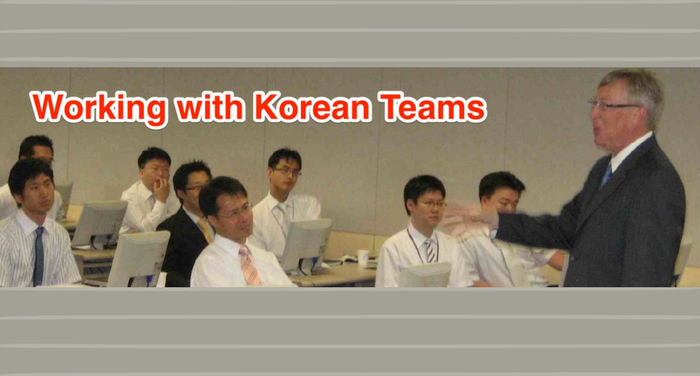
For most of my career I have worked with Korean teams—many based in Korea, many in local overseas operations. I find both exchanges rewarding, but very different and require a varying set of skills.
In this Part 1, I offer some insights into the overseas teams assigned to local subsidiaries. Part 2 will cover my recommendations and best practices for supporting overseas teams, including work-arounds to common issues that surface—for example when department-level expats assigned to “support” local executives begin to assume more direct control over day to day operations. Part 3 will look at working with Korean teams based in Korea. To begin
We find with Korea facing international operations the communication channel between the Korean HQ and local subsidiary is through expatriates– although it is shifting some and I’ll cover more in Part 3.
In key positions, Korean expats serve in roles including the CEO who is responsible for managing the local company or region. The CFO and technical support can be expats, too. Most often these Korean expats along with local leadership executive form the core for business operations in the host country.
By the way, the expats below senior management are often referred to as “Executive Coordinators” or “Executive Advisors” in the West. As a caveat, this model does vary some and in some organization we see a mix of “Coordinators” and Korean assigned as line managers. However, the Korean term for these expatiates is ju jae won.
In the larger overseas subsidiaries, the Korean expats are assigned to the major departments.
In many instances, as I mentioned, the expats Coordinators are not assigned a direct managerial role but still hold considerable oversight over the local operations.
Roles vary with each company, but frequently a Coordinator’s primary role is to be a departmental liaison between Korea and the local subsidiary.
That said, for westerners unfamiliar with the Korean model, this “oversight” usually translates into the Korean expats requiring sign off on all decisions—trivial to substantial.
This can be a huge challenge when newly assigned expats have little specific background in or knowledge of the host country’s operations and market.
Cognitively, they recognize local management skills and expertise, but especially if under pressure to perform and meet expectations may defer to engaging in decision-making.
Of course this can be challenge.
New ju jae won are skilled and accomplished in Korean style business operations, norms and practices.
However, they are now assigned to an overseas subsidiary where norms, practices, expectations, and laws differ. Adding to this “Managing westerners” is very different than overseeing a Korean team…
All said, I do have proven recommendations and workarounds, so look for Part 2 in the series.
In the meantime, I’d like to ask if you could share your experiences working with expat teams. Email me @ questions@koreabcw.com Your comments, all kept private and confidential.
Other questions? Stacey, stacey@koreabcw.com, my assistant can schedule us a time to meet, or chat by phone. For urgent matters, text me at 310-866-3777.
March 27, 2017StaceyvodcastComments Off on Everything Korea March 27 Episode Chaebol Restructuring and Reform 2017
Reform in South Korean reaches back to the Asian Financial (IMF) Crisis of 1997. A bailout package from the International Monetary Fund (IMF) shut down insolvent banks and pushed debt-ridden industrial companies into receiverships. The remaining Groups still standing had little choice but to follow government mandates including restructuring and greater transparency.
In some ways little has changed 20 years later… regulators continue to pressure the leading Korean groups to take on a more transparent corporate governance structure– now in the form of a Holding Company model.
So, what is a holding company?
A holding company is a legal entity that owns other companies’ stock. Holding companies typically do not run these businesses, but they do wield control over their affiliates or subsidiaries. In turn, a holding entity collects fees from operating units for the use of the corporate brand, which is considered an asset.
The Korean government has gone back and forth between tightening and loosening regulations on chaebols over the years, and the trend now is toward tightening.
More so, following the Impeachment and graft scandal involving Former President Park Geun-hye, which pulled in Samsung, Lotte and SK, politicians are calling for even greater reform.
Complicated Steps
In most cases, the Model is for a Group to split itself, often the flagship company, into an ownership company and an operating company as part of a complicated set of steps.
This said, South Korean laws mandate a holding company must own at least 30 percent of its publicly traded affiliates. This poses the challenge.
For example, the Samsung Group were to move towards a holding company model with flagship Samsung Electronics as the entity, it would require the flagship to buy additional shares in some of its affiliate companies at a cost of millions.
All said, Korea’s conglomerates are increasingly being reined in with new laws and taxes that seek to hold family members accountable and to increase the transparency of their organizations.
More significant perhaps is a disruptive public mood and presidential contenders who “pledge to shake up corporate governance as they lay out reform agendas.”







Korean Business Culture Question?
Don Southerton Thought Leader
Do you have a Korean business or cultural question?
Let’s talk. This is an opportunity to discuss over the phone, or through video chat on a pressing Korean business or cultural question.
Always confidential.
Email dsoutherton@bridgingculture.com to set the time. Text or call 310-866-3777.
Looking forward to talking.
Never an obligation. No strings attached 🙂
Don
https://www.bridgingculture.com