Tag Archive for Donald G Southerton author

Two Best Sellers: Korea 101: The Book, Hyundai Way

Two of Our Most Popular Books… Korea 101 and Hyundai Way: Hyundai Speed, The Third Edition

Korea 101: The Book https://a.co/d/4k0nNaQ

For over 20+ years, I have presented Korea 101 programs to more than 10,000 participants across the globe. Korea 101: The Book shares insights and experiences with my ‘boots on the ground’ in the classroom, boardroom, and, more recently, remotely.”

Two Best Sellers: Korea 101: The Book, Hyundai Way

Hyundai Way https://a.co/d/dHJdwYy

Building on the past, this revised edition, too, looks at the transition to Smart Mobility and the corresponding workplace overhaul to become an agile global player.

Two Best Sellers: Korea 101: The Book, Hyundai Way

Have a Korea-facing question?  Just ask dsoutherton@bridgingculture.com

Don Southerton

Korean Business Culture Question?

Korean Business Culture Question

Don Southerton Thought Leader

Do you have a Korean business or cultural question?

Let’s talk. This is an opportunity to discuss over the phone, or through video chat on a pressing Korean business or cultural question.

Always confidential.

Email dsoutherton@bridgingculture.com to set the time. Text or call 310-866-3777.

Looking forward to talking.

Never an obligation. No strings attached 🙂

Don

https://www.bridgingculture.com

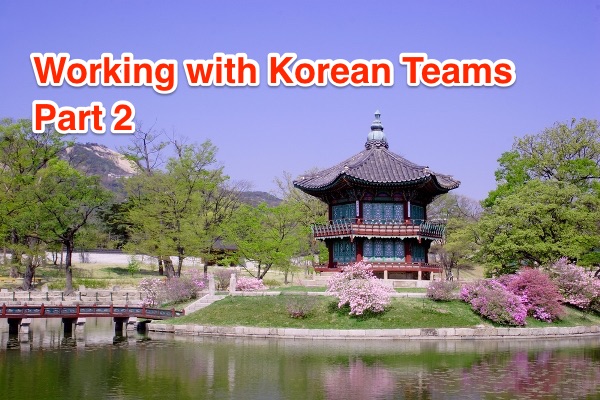
A Korean Culture Lesson: The Hyangwon Pavillion

A Korean Culture Lesson: The Hyangwon Pavillion

The Hyangwon Pavillion ( Photo BCW)

I recently posted a photo of the Hyangwon Pavillion and a number have asked to share on its origin and location. What I noted in the caption was its significance as the 1st building electrified in Korea and possibly Asia.

Early in my ground-breaking 2000s post-graduate academic research, I examined the long-standing technology exchanges between the United States and Korea. Much of this development began in the late 1800s when Korea looked to bring rail, trolley, electrification, telephone, waterworks, and hard-rock gold mining to the country. Some of these infrastructure projects were “a first” for Asia. Specifically, the 1st building electrified! It was fascinating reading the correspondence between Korea and Thomas Edison.

An excerpt from my 2012 publication– HENRY COLLBRAN AND THE ROOTS OF ENTREPRENEURIAL ENTERPRISES IN KOREA

In 1884, King Gojong reached out and contracted the Edison Light Company to electrify Gyeongbok Palace starting with showcasing the Hyangwon Pavilion. The monarch intended to adopt and welcome new technologies from the West.

The 2-story Hyangwon Pavilion had been constructed on an artificial island in the center of the palace lake.

Technicians dispatched from Thomas Edison’s laboratory and installed a small DC water-powered generator on the stream that fed the lake. {The stream is long gone, curious I looked a few years ago].

To King Gojang and the court’s amazement, the building was illuminated.

Several years later, in 1893, a second electric plant was built for the Changdok Palace, and thereafter for the Sundok palace. Reports by Western diplomats of the time told that the incandescent lights were most often used for court meetings held during the evening hours.

It should come as no surprise that 140 years later a robust technological trend continues– today both the U.S. and South Korea’s equal tech partners.

Questions? Here as always.

Why we need Korean business cultural training

Why we need Korean business cultural training. My “no punches pulled” Q and A. Targeted cross-cultural support and coaching are necessary for local teams to succeed in working with overseas Korean business projects.

By Don Southerton

Q. Why do we need Korean cultural training?

A. This may be the first time working with a Korean team. This opportunity brings with it great opportunity and the need to better understand the new partner’s culture, workplace norms, and expectations.

In most cases, Western teams will interact with Korean HQ and expatriate teams. Some of the teams will hold a line managerial position with day-to-day responsibilities alongside Western managers, while others will hold key management C-level positions, such as CEO, COO, or CFO. In many, if not most, cases, these teams may operate as a “shadow management” with considerable oversight and operational control over local operations.

With the best of intentions, the Korean teams will look to build strong collaboration and teamwork and try to avoid a sense of us and them. However, they do bring Korean work norms that can conflict with Western work-life balance and Western working methods. 

More so, Korean teams may make seemingly one-sided decisions with the company’s best interest in mind but without consulting local teams, causing mistrust.

A solid training and coaching program followed by ongoing support can address differences, such as sharing work styles, hierarchy, and comfort levels, plus providing workarounds.

Q. What are some typical issues that arise, especially without training or coaching?

A. As with all individuals, no two of us are alike –and the same goes for Westerners and Koreans… Each has their unique strengths, skills, experiences, and personalities.

Expecting local teams to “get it” without support and training seldom works. Even if a better understanding of the work culture eventually occurs over time, this “learn as you go” approach is costly, contributing to stress, poor productivity, and even employee turnover. Sadly, the most common mistake I see is waiting to see if tensions rise, and workers quit before acting. 

 Q. Can you cite an example of misunderstandings resulting in mistrust, loss of time, resources, and profits?

A. A challenge I was recently asked to address was the intervention by the expatriate partners in decisions that are best handled by local Western teams.

Probing the issue, I learned that based on extensive experience in the market and industry, the local Western management felt these decisions were often short-sighted, reactive, and not aligned with their well-thought-out strategy. Some saw it as a “cut twice, measure once” approach and “ready, fire, aim.” 

Of even more significant concern were one-sided decisions not resulting from the collaboration. In any case, local management felt their input and expertise were being marginalized. As pressure to meet HQ expectations, avoid any negative news, as well as missing Sales or Production “Targets” they saw increased intervention by the expatriate teams.

In this case, I worked with the Western teams to provide some proven workarounds, particularly tempering the Korean teams’ pressing for immediate results.

Specifically, I shared ten steps.

1. To soften jumping to implement a stop-gap plan with hopes of producing immediate results, look to minimize the anxiety for both the local Korean team and the headquarters team. Please be sure to show confidence that the challenge can be overcome.

2. Acknowledge your team’s high engagement and assure the Korean teams that action will be taken promptly.

3. As a next step upon receiving a directive from Korea, have an informal discussion with local Korean teams to brief them on action steps that enable the team to work through what needs to be explored more deeply.

4. Follow up with email correspondence confirming the verbal discussion.

5. Allow a day or two for the Korean team to review your action plan. In many cases, the Korean teams are not familiar with local practices and the vocabulary used to describe Western technical nuances.

The local expat teams may also want to report back to Korea on progress. HQ leadership is ultimately responsible, so the better informed they are, the more trust they will have in local teams — Korean and Western — that the project will progress.

6. Remember that you may receive only some feedback promptly because of time differences.

7. Conducting informal daily updates to the Korean teams and sharing the steps undertaken with the local Koreans can also be helpful.

8. Even better is reporting positive accomplishments in your review process.

9. It is essential to address the potential trade-offs and risks as action steps leading to solutions and assuring the team that these steps will not impede the project and may, in fact, avoid costly setbacks.

10. Finally, having said all this, maintaining trust through strong relationships between Korean and Western local organizations is essential.

Q. What have Koreans told you about Americans? Work habits, commitment, etc.

A. If you ask Korean expats how they perceive Americans and Westerners in general, responses would be very positive and respectful, especially toward Western work ethics and work habits. Koreans see great value in American and Western teams providing them with new insights, perspectives, and best practices.

A. What might be covered in Korean business culture training?

I see the training as twofold — 1) providing teams with an understanding of the Korean partner’s affiliate company history, heritage ( challenges overcome), trends, and expectations! , and 2) sharing the Korean workplace and its norms, practices, and workarounds. One nuance I share is that Korean overseas operations can differ from those in Korea, something I am most familiar with. 

Above all, a best practice is to celebrate similarities and shared values when possible, along with instilling an awareness of and respect for cultural differences.

Addressing the team’s questions and concerns is also vital with issues, such as work-life balance, safety and quality processes and procedures, and Korean partners’ overall expectations.

Q. Anything else?

A. To conclude, the need for cross-cultural training programs for local employees and management is a high priority.

The assumption that local and expatriate teams can bridge cultural gaps through practical on–the–job experience might work with those few highly intuitive individuals with the exceptional ability to assimilate cultures.

What stands out in numerous studies, however, is the need for ongoing multicultural training, that can successfully impact people, especially those who need to quickly adapt to new or changing business culture and values, while fostering sensitivity and teamwork among all company members.

Finally, I have found a tiered service model — training, mentoring, and ongoing strategic support- to be the most effective approach for an organization. For leadership, they most often benefit from one-on-one coaching, too.

Don Southerton

Everything Korea; September 5 Episode, Korean Business Relationships Amid Acceleration


Korean Business with Don Southerton


Amid disruptive market conditions perhaps the greatest ripple effect challenge to Korean global business is how best to maintain positive and collaborative working relations between Western and Korean teams.


From a cross-cultural perspective Korean commerce is dependent upon relationships and interpersonal interactions. Western business, in contrast, leans toward process and procedure.  Therefore when Korea-facing working relations are strained culturally, there is a heightened impact throughout the entire organization.

Without discounting market conditions and intense pressure to meet aggressive sales goals, I see impact of adapting to a rapidly changing and disruptive business landscape at the core of many strained relationships.

As author Thomas L. Friedman points out in Thank You for Being Late:

“As we transition from an industrial-age economy to a computer-Internet-mobile-broadband-driven economy—that is, a supernova-driven economy—we are experiencing the growing pains of adjusting. ”

Drilling deeper, I have found this acceleration has markets and industry sectors ever shifting. For example, the automotive industry is witnessing and adjusting to new consumer preferences, such as collaborative consumption shared ride services of which Uber, Lyft and Maven are examples, self-driving autonomous technology and eco-friendly vehicles.

That said, we as a society are also experiencing the need to adapt more frequently and at a more rapid pace than ever in the past.  The good news is we are perhaps adapting faster than anytime in history.  Still there is a substantial gap in the high rate of change and speed we adapt. This gap is disorienting and business models that worked in the past have become outdated further adding to stress and frustration.

In my work, this leads to a Korea driven climate of reactive and hopeful second-guess decision-making, or, in some cases, the opposite in stalled action. In both situations, I feel we need to embrace a middle course— a well thought out and responsive plan.

Again Thomas Freidman, too, recognizes this need to ponder.  He notes, and I paraphrase:

Patience… space for reflection and thought. We are generating more information and knowledge than ever today, but knowledge is only good if you can reflect on it.

In closing I return to my original point of the vital importance of maintaining relationships amid the current market condition.  No matter how challenging the situation we need to take time and work to forge strong collaborative bonds within teams Friedman again remarks:

“And it is not just knowledge that is improved by pausing. So, too, is the ability to build trust, …to form deeper and better connections, not just fast ones, with other human beings, our ability to forge deep relationships—to love, to care, to hope, to trust, and to build voluntary communities based on shared values—is one of the most uniquely human capacities we have.”


Everything Korea, April 10, Working with Korea 2017, Part 2

In this Part 2 of my “Working with Korea 2017” series, I cover several scenarios with best practices for supporting overseas team.

All take finesse and collaboration, plus recognize norms and practices differ… as well as require working “within the Culture.” To again clarify, my perspective is based on years working with Korea and especially in daily mentoring and providing strategy for their overseas operations—Koreans and Westerners.

Scenario One

It’s common for a Korea expatriate, frequently called a Coordinator, to directly request members of the team to gather information or data on the local operation. Usually, Korea has asked for this information and the Coordinator is executing the request. These always have a sense of urgency.

The Challenge is the local departmental head may be circumvented (often unintentionally)…. and requests disrupt operations and designated priorities. More so, the line of management for the department is blurred—i.e. staff confused on “who is in charge.”

The Workaround centers on an effective working relationship between the Coordinator and the department head. An understanding must be reached that when requests from Korea (or from the senior Korean leadership at the subsidiary), it is first brought to the department head… and they handle who will execute.

In particular, the local western manager is more familiar with their team, individual workloads, any special situations and skill sets. In fact, with a clear communication channel the work will be performed with better results by the individuals tasked with the assignment, and less stress on the Coordinator asked to acquire the data.

As a caveat, one burden on a department can be when a high percentage of work and tasks teams are engaged are to support Korea and not the local operations. Part 3 in the series will provide some thoughts on shifting workload dedicating to Korea requests to actually running the local operation.

Scenario Two

As noted, a Coordinator’s role is to support the local operation. Local teams and specialists are hired with a high degree of knowledge and experience. A clash occurs when decisions best left to those in the know are deflected.

The Challenge occurs when Coordinators override a decision or unilaterally make the call. This can range from the hiring of new employees to pushing off a much-needed program to the next year.

Again, the Workaround is a clear defined role for the Coordinator. They are advisors who can provide much-needed input and an HQ / mother company perspective… but not assume line manager responsibilities.

In other words, clarity must be established in regard to as long as they are acting on behalf of the mother company considerable weight must be given to their input. That said, even when they have the company’s best interest in mind, their own personal views must be gauged and moderated.

Scenario Three

Perhaps the most challenging situation is moving Coordinators to make a decision.

The Challenge- In most Korean companies leadership decide on direction and major issues. In turn, the working team’s role is to implement or gather needed information. This role/ skillset changes when working level Koreans are assigned as an overseas Coordinator.

The Workaround- When conducting a meeting where a decision must be made recognize that your Coordinator will have considerable say in the outcome. First, since the topic and subject matter may be new to your Coordinator, I recommend you share prior to the meeting any needed background documents (best provided in PPT format).

In addition, have an informal pre-meeting Q&A with the Coordinator to brief and update them on any specifics. Note: they may need a day to review proposals and agreements, so timing is critical.

Even in the best cases, expect that the Coordinator may want to postpone any decision until they can carefully review and perhaps confer with Korea. I suggest all documents and meeting PPTs be immediately forwarded to the Coordinator.

I’d create a sense of urgency with a timeline for execution and implementation. Regardless, expect some delays and be patient.

Over the years, I’ve found that Coordinators appreciate when their overseas co-workers recognize that the internal approval process takes time and be ready to offer, as needed, additional supportive data or documents.

BTW, if you are a vendor and your firm provides services to a Korea-based partner, it’s best to provide both the western and Korean teams with background information prior to any meetings. Moreover, be prepared to share the meeting’s content in digital format afterward with the Korean team, too.

Questions, Comments?

Email me at questions@koreabcw.com Your comments, all kept private and confidential.

Other questions? Stacey, stacey@koreabcw.com, my assistant can schedule us a time to meet, or chat by phone. For urgent matters, text me at 310-866-3777.

Everything Korea, April 3 Episode –Working with Korean Teams, Part 1

For most of my career I have worked with Korean teams—many based in Korea, many in local overseas operations. I find both exchanges rewarding, but very different and require a varying set of skills.

In this Part 1, I offer some insights into the overseas teams assigned to local subsidiaries.
Part 2 will cover my recommendations and best practices for supporting overseas teams, including work-arounds to common issues that surface—for example when department-level expats assigned to “support” local executives begin to assume more direct control over day to day operations.
Part 3 will look at working with Korean teams based in Korea.
To begin

We find with Korea facing international operations the communication channel between the Korean HQ and local subsidiary is through expatriates– although it is shifting some and I’ll cover more in Part 3.

In key positions, Korean expats serve in roles including the CEO who is responsible for managing the local company or region. The CFO and technical support can be expats, too. Most often these Korean expats along with local leadership executive form the core for business operations in the host country.

By the way, the expats below senior management are often referred to as “Executive Coordinators” or “Executive Advisors” in the West. As a caveat, this model does vary some and in some organization we see a mix of “Coordinators” and Korean assigned as line managers. However, the Korean term for these expatiates is ju jae won.

In the larger overseas subsidiaries, the Korean expats are assigned to the major departments.

In many instances, as I mentioned, the expats Coordinators are not assigned a direct managerial role but still hold considerable oversight over the local operations.

Roles vary with each company, but frequently a Coordinator’s primary role is to be a departmental liaison between Korea and the local subsidiary.

That said, for westerners unfamiliar with the Korean model, this “oversight” usually translates into the Korean expats requiring sign off on all decisions—trivial to substantial.

This can be a huge challenge when newly assigned expats have little specific background in or knowledge of the host country’s operations and market.

Cognitively, they recognize local management skills and expertise, but especially if under pressure to perform and meet expectations may defer to engaging in decision-making.

Of course this can be challenge.

New ju jae won are skilled and accomplished in Korean style business operations, norms and practices.

However, they are now assigned to an overseas subsidiary where norms, practices, expectations, and laws differ. Adding to this “Managing westerners” is very different than overseeing a Korean team…

All said, I do have proven recommendations and workarounds, so look for Part 2 in the series.

In the meantime, I’d like to ask if you could share your experiences working with expat teams. Email me @ questions@koreabcw.com Your comments, all kept private and confidential.

Other questions? Stacey, stacey@koreabcw.com, my assistant can schedule us a time to meet, or chat by phone. For urgent matters, text me at 310-866-3777.

Everything Korea, March 20 Episode Move Forward Within the Culture.

That’s my message this year in both commentaries and on-site presentations. It captures my work, which is to provide companies, leadership and teams with how best to work effectively… taking into account Culture plays a huge role in their workplaces.

This week we’d like to share 2 publications, too.

Korea Perspective (2015)

http://unbouncepages.com/korea-perspective-launch/

and Korea Facing: Secrets for Success in Korea Global Business (2012)

http://unbouncepages.com/korea-facing/

They compliment each other. One builds upon the other.

Together both explore issues. Together they provide workarounds for challenges that surface.

Follow the links and we’ll forward PDF copies.

All said – I’m passionate about providing needed strategy, skills and mentoring offered in these books as well as programs like Korea 101â„ .

My goal is for Companies, executives and teams to “move forward within the Culture.”

To discuss about more a Korean facing business question, Stacey stacey@koreabcw.com, my assistant can schedule us a time to meet or chat by phone.

For all urgent matters, text me at 310-866-3777

Everything Korea March 13 Episode: Korea 101 Foundation for Understanding Korea Business

When you ask somewhat “what are you most passionate about?” It can be very revealing—family, work, hobbies, sports, and social issues.

For me and my work its sharing Korean business culture and, in particular, strategies to succeed with the Culture.

Since 2004 I have offered programs and mentoring to thousands across America and internationally. A flagship Korea 101 program has served as the core for this Korean business culture mentoring. In turn, this training and coaching builds upon current experiences of the teams, while providing new understandings that lead to solutions.

Both our on-site and web-based programs have been offered to teams not only in America, but also in Canada, UK, Belgium, Germany, Russia, AU, India, South Korea, and the Middle East.

Customized versions have been professionally recorded and distributed worldwide to organizations and incorporated in their in-house programs.

Ideally the program is on-site over 4 to 6 weeks—each class a 1½-hour session. That said, we have a number of options including half and full day immersion programs.

Korea 101 and 201 programs are also an integral part of on-boarding and mentoring for key executives and management.

I like to highlight that we find participants genuinely care about their work and the company, and acquiring the needed skills offered in Korea 101 specifically help them to move forward within the culture.

Finally, the key to the success of our Korea programs has been the strong endorsement of our partner firms’ CEOs, senior American and Korean management, and across their teams. As organizations they realize that their teams need support. Expecting employees to “get it” without training and coaching rarely works. We are proud to work with our partners and their teams.

To chat about Korea 101 or a Korean facing business question, Stacey stacey@koreabcw.com, my assistant can schedule us a time to meet or chat by phone. For all urgent matters, Text me at 310-866-3777

Everything Korea: November 28 Episode, South Korean Impeachment, a Growing Likelihood?

Commenting on the impact of the Trump election on Korean trade for the past weeks—Korea-facing trade an area of my expertise– I have been hesitant as a Westerner to offer my views on the indictments against South Korean President Park.

Nevertheless, impeachment seems a growing likelihood. Politicos now predict the National Assembly will secure the required two-thirds majority vote needed to pass an impeachment bill. To this point, I feel the compelled to share what “next steps” we may see unfold. Pouring over scholarly updates including my longtime friend Professor Steph Haggard’s insightful “ Park Unraveling” series https://piie.com/blogs/north-korea-witness-transformation, I present a number of “If’s,” in short of President Park stepping down and resigning.

The “If’s.”

1. If the National Assembly moves forward and passes an impeachment bill, the Constitutional Court is then responsible for deliberating the case. In addition, President Park’s powers would be suspended with the Prime Minister charged to lead the nation during the interim.

2. The Court then has 180 days to make a ruling on whether charges against the president warrant impeachment. If the Constitutional Court upholds the impeachment bill, the South Korean Constitution stipulates a presidential election must be held within 60 days. That means if the Court takes the full six months to rule on the case, the election would be held in August 2017.

3. If the Court rules in favor of impeachment, President Park would be stripped of her post and could face criminal and civil charges.  Under Korean law, presidents while in office are immune from prosecution short of treason or insurrection.

4. It is worth noting, the next South Korean presidential election is scheduled for December 20, 2017. In the event, the Court rules in favor of President Park, incumbent Korean presidents are limited to a single 5-year term in office, and President Park could not seek re-election.

5. With no clear favorite yet for 2017 presidential election along with if President Park is impeached triggering an earlier election, pundits do feel the current United Nations Secretary-General Ban Ki-moon, a former Korean Prime Minister, positioned well as the front-runner amid a field of opposition party hopefuls.

All noted, with the situation subject to change and fluid, we’ll have to take a wait and see approach to what unfolds next.

Comments and questions welcome.