Tag Archive for Bridging Culture Worldwide

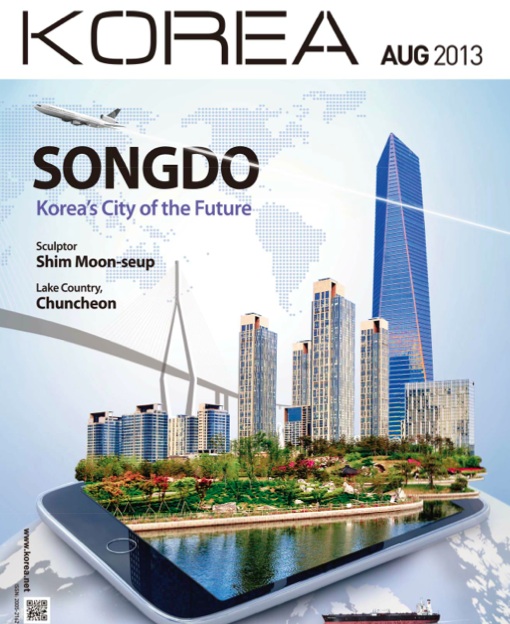
Korea Magazine Shares Songdo’s Vision

The cover story for the August edition of Korea magazine  looks at Songdo and it’s vision for the future.

http://www.scribd.com/doc/157552923/KOREA-2013-VOL-9-No-08

Thanks go the Robert Koehler and his team… As the story’s writer, I appreciate the opportunity to share my views on Songdo.

DS

###


Korea Inc.–Common Misconceptions

Many thanks to my friends at The Korea Society for posting on YouTube segments of recent Korea Inc business discussion.

[embedplusvideo height=”281″ width=”450″ editlink=”http://bit.ly/14iQtpq” standard=”http://www.youtube.com/v/UnAMaDxXwm4?fs=1″ vars=”ytid=UnAMaDxXwm4&width=450&height=281&start=&stop=&rs=w&hd=0&autoplay=1&react=1&chapters=&notes=” id=”ep8145″ /]

To view the full YouTube Working for Korea Inc. series go to:
https://www.youtube.com/playlist?list=PLYTdCvotGB1QKPCB5zVzabQD6NG9I2VkZ

DS

Working for Korea Inc.

An evening discussion with Don Southerton

The Korea Society

Hosted by The Korea Society, NYC

June 27, 2013  5:30 PM

Korean firms operating internationally employ non-Koreans at all
levels. Don Southerton, CEO of Bridging Culture Worldwide and
author of Korea Facing: Secrets for Success in Korean Global
Business, shares insights on working for Korea-based companies and
understanding Korean operational norms for goods and services
providers.

http://www.koreasociety.org/corporate/working_for_korea_inc.html

THE KOREA SOCIETY is a private, nonprofit, nonpartisan organization
with individual and corporate members that is dedicated solely to
the promotion of greater awareness, understanding and cooperation
between the people of the United States and Korea.

In pursuit of its mission, the Society arranges programs that
facilitate discussion, exchanges and research on topics of vital
interest to both countries in the areas of public policy, business,
education, intercultural relations and the arts. Funding for these
programs is derived from contributions, endowments, grants,
membership dues and program fees.

From its base in New York City, the Society serves audiences across
the country through its own outreach efforts and by forging
strategic alliances with counterpart organizations in other cities
throughout the United States as well as in Korea.

For more info dsoutherton@bridgingculture.com

###

Kia Motors America, A Bridging Culture Worldwide Case Study Success Story— A 2013 Revisit

By Don Southerton

As a disclaimer, the viewpoints of this report are solely the opinions of Don Southerton and Bridging Culture Worldwide.

Kia Motors

Kia Motors America

I support a number of Korea-based global organizations. Many are in the automotive sector. This is because the top Korean auto maker (Hyundai and Kia Motors) has a huge overseas operations and the auto sector requires extensive infrastructure and staffing to support their network, including parts, sales, marketing, logistics, manufacturing, finance, R&D, design, legal, and compliance with a myriad of local, state and federal regulations.

Moreover, tier 1 vendors and suppliers now support the carmakers. This creates the need for these third party partners to better understand the mindset and corporate culture of Korea-based firms, such as Hyundai and Kia Motors.

First reported in 2010 and updated again the following year, I prepared a case study sharing how Kia Motors America, a subsidiary of the Hyundai Motor Group, highly proactively provided their team with support. This included Korean culture training for new employees and ongoing Korean cross-cultural workshops for the team.

For over 7 years and in cooperation with KMA’s Human Resource Organizational Development team Bridging Culture Worldwide has offered multiple week sessions of Korea 101 and 201 cross-cultural training. Program lengths vary to accommodate schedules but usually the first 6 weeks focus on history, Kia heritage, and popular culture. A second six weeks program looks at the modern Korean workplace and its norms, practices, and expectations.

In May 2013, we extended the training outside the corporate offices in California to a well-received web-based program offered to Kia Motors’ ever-growing US nationwide team.

Kia has also provides ongoing support and coaching to key management and leadership. This includes Korea culture coaching to new non-Korean executives. Here we share Korea’s heritage, Kia history and corporate culture, workplace expectations, and etiquette, while providing answers to questions that surface day-to-day. We also prepare executives for their first visit to Korea and the norms/ expectations for meeting with senior Korean leadership and high-level meetings at Kia Motors HQ, R&D Center, etc.

Over the years we have supported KMA marketing teams, public relations, service, product planning, HR, legal and strategic developments teams. Our support has been diverse from working with Kia technicians competing in Kia Motors Company’s Global Automotive Technical Skills Competition in Seoul to sharing insights into the Korean workplace with university students working as interns at KMA each summer.

In closing the key to the success of Kia Motors America’s Korean cross cultural training has been the strong endorsement of the firms’ CEOs, senior American and Korean management, and the HR and OD team. As an organization they realize that their teams need support. In turn, we craft programs targeting their needs and flexible enough to meet demanding and ever-changing work schedules. Expecting employees to “ get it” without training and coaching rarely works. We are proud to work with Kia Motors and their team.

If you have questions on implementing a program to support your team, please feel to contact us at dsoutherton@bridgingculture.com or call 1-310-866-3777

Copyright 2013 BCW

Korea Herald: No Two Chaebol Are Alike

Many thanks to Korea Herald and reporter Elaine Ramirez, the
article shares my views on Korea facing global business.

http://www.koreaherald.com/view.php?ud=20130408000691

No Two Chaebol Are Alike, Author says

By Elaine Ramirez
While Koreans’ rising presence on the global stage is hard to
ignore, how to do business with them as a non-Korean is an
increasingly tricky area little covered in English-language
literature. Don Southerton explores the niche with his recently
published book “Korea Facing: Secrets for Success in Korean Global
Business,” which picks apart how to work with a Korean conglomerate
from the ground up, for non-Koreans working in Korean branches
overseas.

“Over the years I witnessed firsthand cross-cultural issues that
surfaced as Korean companies expanded globally. My role has been to
address these issues such as poor trust among the Korean and
Western teams, lack of communication, local employee turnover and
managing expectations,” Southerton said in an email interview with
The Korea Herald.

Although he has long been aware and exposed to the cultural
differences in Western and Korean business settings, he said, it
was when he began working at a Korean subsidiary in the U.S. in the
early 2000s that he witnessed the differences between how U.S. and
Korean teams managed the company.

He noted that the differences in decision-making processes, for
example, had been a particular source of friction between Korean
and Western teams: Key decisions were always deferred to the parent
headquarters in Korea, and Koreans in the overseas branches needed
to scrutinize and approve even the most mundane matters, regardless
of the Western team’s experience in the field.

He discovered, as he writes in “Korea Facing,” that all too many
frustrations were rooted in not knowing how to do things “Korean
style” ― or, for the Korean side, not knowing any other way.

In “Korea Facing” he shares his personal experiences from working
particularly for Hyundai-Kia overseas branches as a coach,
consultant and trainer with those Korean and Western teams, and
offers experience-based advice for overcoming those workplace
challenges.

His chapters explore basic business culture lessons, from the
levels of the Korean managerial hierarchy, to nuances on the right
timing for getting approvals, meeting protocol ― upon meeting
foreign teams, Koreans line up their business cards on the table to
match their seating order, and he advises doing the same ―
identifying and resolving conflicting expectations and ambitions of
Korean and Western teams, and insight on just how much the Korean
chairman’s wife might influence the direction of the company.

But Korean companies are gradually loosening their neckties and
adapting to Western business practices, he notes.

“I feel the Korean groups have seen the need to be flexible and
adapt quickly to changes in global economic fluctuations,” he said.
“For example, in the recent global recession they saw an
opportunity to expand when others pulled back in production, R&D
and marketing. They capitalized on this opportunity to leapfrog
ahead of the competition.”

Additionally, young Korean employees sent overseas have often
attended school or lived abroad, and increasingly more Korean
executives have worked overseas as expats. And as the overseas
businesses are increasingly using English to communicate, so, too,
do they adapt more casual Western business norms and practices, he
added.

Beyond all the differences between Korean and non-Korean working
cultures, Southerton noted, Korean companies deal with many of the
same challenges: How quickly projects can be approved and executed
depends on the individual company; Korean and Western companies
both struggle with generational gaps when trying to create harmony
and cohesiveness within their ranks; and no two Koreans or Korean
companies are alike, nor should they be approached as such.

The last is a theme he drives throughout his book ― affiliates
under the same chaebol and even sub-divisions of affiliates have
entirely different business cultures, and it is important not to
work on assumptions based on experiences with other companies, he
emphasizes.

“One common mistake by Western teams outside Korea is assuming that
because they might have worked for other global companies such as a
Japanese firm that they will have few challenges adapting to a
Korean company,” he said. “Norms, expectations and mindset differ,
even with Korean groups.

“Many Western overseas teams have stereotyped Koreans, often based
on their interactions with the early expats dispatched to the local
operation. Like Westerners, experience, training and skills vary ―
some Korean expats do well while others struggle,” he added. “In
global business we need be mindful of others, and recognize that
Korean teams and leadership vary in their approaches to challenges
and management.”

“Korea Facing: Secrets for Success in Korean Global Business” is
available through iBook, Kindle, Nook, and Google Book.

###

BBC World Service Click Looks at Korea Tech

By Don Southerton,  Editor

In February I hosted BBC World Service journalist Gareth Mitchell in Korea.  This is first of Gareth’s series on Korea cool tech. LINK http://www.bbc.co.uk/programmes/p016tl1t

Gareth Mitchell with Gary Donohue: technology integration specialist for the ‘Village’ School at Chadwick International School in Songdo IBD, South Korea

Questions, Comments?


Historical Novel Looks At Early Twentieth Century Korea’s North Frontier

For Immediate Release

Denver, Mar 18, 2013 — Author Don Southerton announces the release of his latest historical novel set in the early years of the twentieth century in what is now North Korea. The work is titled A Yankee in the Land of the Morning Calm: The Northern Frontier, Book Three 1900–1907. The book weaves key historic events of the era with a fictional account of Yankee trader Josh Gillet.

Southerton notes, “Linking fact and fiction, A Yankee in the Land of the Morning Calm: the Northern Frontier follows Connecticut Yankee Josh Gillet’s adventures in Korea during the early 1900s when American concessionaires and influence were making huge new inroads in Korea. ”

In addition the author points out, “American missionaries and traders formed a core cadre among the foreigners who ventured to what the West called the Hermit Kingdom. The Korean monarch Kojong, looking to thwart ever-growing Japanese imperialism, pursued a strategy of granting trade concessions, including lucrative mining rights, to westerners. By the early 1900s, the Northern Frontier mines were among the richest in Asia. It is here the main character Josh settles and becomes a productive member of the mining community. Meanwhile, growing tensions between Russia and Japan move the region and Korea ever closer to war.

A Yankee in the Land of the Morning Calm: The Northern Frontier will appeal to those interested in better understanding Korea and the role westerners played in the opening of the region to the commerce and modernization.

About the Author
Don Southerton has held a life-long interest in Korea and the rich culture of the country. He has authored numerous publications with topics centering on the Korean auto industry, new urbanism, entrepreneurialism, and early U.S.-Korean business ventures. Southerton is often called upon by the media (the BBC World Service, Bloomberg TV, Korea Times, Yonhap, Wall Street Journal, tbs eFM and Forbes) to comment on modern Korean business culture and its impact on global organizations. His firm Bridging Culture Worldwide provides strategy, consulting and training to Korea-based global business.

This is the author’s third historical novel. The Northern Frontier is the final installment of the A Yankee in the Morning Calm trilogy. The series blends fact with ample amounts of imagination.

A Yankee in the Land of the Morning Calm: The Northern Frontier will be available through iBooks, Kindle, Nook, and Google.

###

Korea Facing–tbs eFM 1013 Main Street Interview

By Don Southerton, Editor
My recent tbs eFM 1013 Main Street interview. eFm is Seoul Korea’s top English language radio station. The interview centered on my new Korea Facing book and insights into global business.

Here’s the link to download.
http://www.mediafire.com/file/147rfbdiivr7mr3/efm_Interview.mp3

Korea Facing book


Questions? Want a complimentary copy of the book? Just email dsoutherton@bridgingculture.com

Collaboration

By Don Southerton, Editor

I’m often asked, “Don we know you work with most of the top Korean
groups, their overseas teams and leadership, but what exactly do
you do?”

One aspect of my work is providing leadership with a cross-
cultural success strategy. Another dimension is conducting training
sessions and workshops when serious issues surface that disrupt
global operations.

In addition, I also work with non-Korean executives of
global companies doing business in Korea, or with businesses
partnered with Korean firms.

But, essentially I teach “collaboration.” This is my message. That
said, implementing and facilitating collaboration is not a quick
and easy task. Expertise is required to discover core issues that
impede operations, along with implementing a long lasting action plan and
sound countermeasures.

BTW I’m always looking for new and engaging client projects. If
you have something in mind just email me, or call and we can
discuss.

1-310-866-3777


Korea Facing 2013 Video

By Don Southerton,  Songdo to Belmar Editor

As we begin a new year, I’d like to share thoughts on Korean facing global business for 2013.

[embedplusvideo height=”365″ width=”450″ standard=”http://www.youtube.com/v/Yfw4_VVeM-U?fs=1″ vars=”ytid=Yfw4_VVeM-U&width=450&height=365&start=&stop=&rs=w&hd=0&autoplay=1&react=1&chapters=&notes=” id=”ep4705″ /]

Questions?

BTW We are always interested in new opportunities, so keep us in mind….

Contact: Dsoutherton@bridgingculture.com

DS