Tag Archive for Bridging Culture Worldwide

Everything Korea, July 6 Episode: An Edgy Korean Counter-culture?

To recap my thoughts in previous posts, a strong Creative Class is seen as key to sustaining a forward-leaning, innovative economy. Going hand in hand with this is workplaces that embrace diversity and openness, are not opposed to self-expression, promote individual recognition for hard work as well as resulting compensation (more than a base pay) for doing what they are good at… and they work in a community offering an engaging and even edgy lifestyle.

So where do I see disconnects between South Korea and America?

For starters in America the old Fordism and Company Man model at least for the creative class has shifted. Workers were once strongly tied to the company, this relationship nicely summed up by Richard Florida, “You were a company man, identifying with the company and often moving largely in the circles created or dictated by it.” Today, creatives value their unique social identity–one able to move intact from firm to firm and well as assuming the risks and absorbing the benefits companies once backed.

In contrast, rooted in Korean norms and collectivism, Korean workers strongly identify with their company—perhaps more so within the major Groups like Samsung, Hyundai, LG, and SK, as well as those working for a high profile global brands in Korea like Nike.

These organizations tend to be highly traditional vertical (and often horizontal) corporations— top-down management hierarchically flowing workload down to teams (most often operating in silos) with the Taylorized expectancy they follow routines and norms long established. In contrast, a creative work culture dies when so regimented as Florida points out, “ like rote work in the old factory or office.” A long hour chained to cubical cranking out Point points is very different than a culture where ideas are conceptualized inside one’s head in a café over a latte or during a trail run.

All said, one could argue Korea may not be wired for fostering a sustainable creative culture.

What I do find as encouraging is many in Korea on a personal level attracted to and appreciate counter-culture. There is an ever growing segment is their society adopting a lifestyle more conducent to creativity. Much of this influence has been Koreans exposed to the global art scene, the influence of expat non-Koreans, plus Koreans embracing their own traditional artisan heritage. In some ways, this movement has taken on a rather edgy Bohemian feel… one I find very cool.

Dylan and 60s

Seoul LP Bars, the 60s and Dylan.

For example, Korean media reports there are a growing number of “dives with DJs and extensive collections of LPs,” many located in ultra-hip neighborhoods…. walls plastered with album covers from the likes of Pink Floyd, Jimi Hendrix and B.B. King. The interiors shrines to Bob Dylan and Neil Young and the cultural revolution of the 1960s.

One more thing,

I have a request for my friends both Korean and non-Korean expats in Korea to share their observations, especially on the emerging counter-culture.

I’ll also be pulling together some example of a budding Korean counter-culture scene and what I see as roadmap for workplaces looking to attract and groom creatives—not only for Korea, but also for their U.S. and global operations.

Until next time…

Schedule a chat?   http://www.meetme.so/southerton

or

Direct Questions? Go to questions@koreabcw.com

Everything Korea, June 29 Episode: the Gap in Norms


Outside my day-to-day support of Korean facing business and clients, I am drawn to ponder on issues and drill deep. I other words research, investigation and then providing commentary on the direction of Korean business from trends inside Korea to Korea-facing international operations.

An example of this process, several years ago I coined the term K-lobalization (Globalization with a K for Korea) as I saw the trend when Korean firms boldly promote their own unique management style and corporate culture internationally and across many markets. A recent manifestation is organization-wide, corporate-directed mandates…. from core value, vision, and management training directives to most recently how they should brand or even target specific consumers in local markets. Usually these programs are expected to be unchallenged and accepted without question by overseas teams—at times not in the best interest of the local operation.

This said, a new topic, which has my interest, was touched upon in May 11 edition of Everything Korea… there I argue a key challenge in Korean success with startups and innovation was “culture.  I would like to expand this perspective more broadly to be the “culture” needed to foster the Creative Process in general. In fact, this is the first of three commentaries on the topic.

Let me explain. What has evolved in America regarding startups, tech, and innovation is they tend to hub in cities with diversity and strong counter-cultures like Boulder, Colorado, San Francisco, Austin, TX, and NYC, although more and more scenes are emerging in Nashville, TN or here in Golden, CO…
Screen Shot 2015-06-29 at 10.25.40 AM

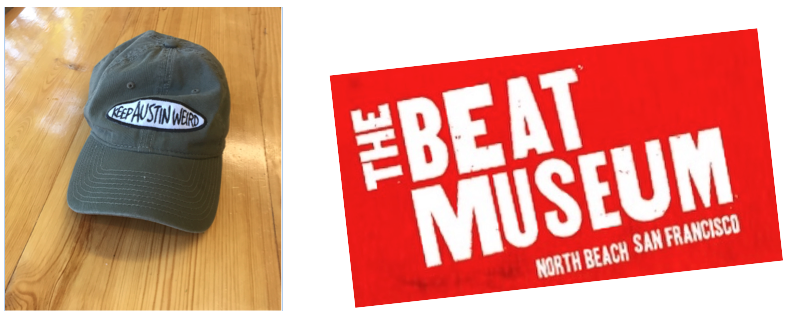
Nuff said…Edgy Austin and Jack Kerouac

Within these communities I have witnessed an amazing synergy not only in day-to-day interactions and dialogue, but also in resources. Actually spending an hour and listening to the chats and even pitches for Angel Funding in edgy Caffe Centro on a South Park Street in San Francisco (the couple of blocks once referred as the Tech Ground Zero and where concepts like Twitter were launched and well as scores of tech companies and startups now call home) one quickly sees why locating in one of these scenes is key. In fact, showing how widespread, I frequently hear similar coffee shop launch pitches in Golden, Colorado.

Let me explain more in detail.

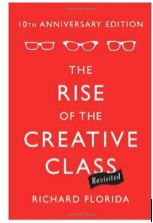
As academic Richard Florida points out in The Rise of the Creative Class, creatives as a group reflects a “powerful and significant shift in values, norms, and attitudes.” He clusters this attitude to be:

1) Individualism

2) Meritocracy

3) Diversity and Openness (which can translate to gender, sexual preference, race and my favorite “personal idiosyncrasies”.)

Of course those familiar with the Korean workplace and by this I don’t mean only the larger organizations but even most progressive firms, recognize there is a huge disparity from these “creative” norms.

For example, in contrast to the individualism within the creative class, in Korea we find deeply rooted collectivism where the group is the primary unit of reality and the ultimate staendard of value.

In collectivistic societies, group goals take precedent over an individual’s objectives. This view does not deny the reality of the individual, but, ultimately, collectivism holds that one’s identity is determined by the group(s) with which one is affiliated.

Collectivistic cultures also require that individuals fit into the group—and “conform.”

Noting this, outside values, norms and attitude, perhaps the gap between US and Korea that also occurs is in “risk mindset.” Today the American entrepreneurs, angel investors and VC who launched Facebook, Twitter, Instagram, Linkedin, Square and now Super continue to look for, invest and provide mentorship and guidance to what they hope will be the next success story…. In most cases they are investing resources in multiple ventures….

This said they know and accept that failure is part of the process…. As Biz Stone (co-founder of Twitter, and an early investor in Square, Medium…and a bunch more) said at SXSW on his most recent work… “the failure of one venture, Jelly, led to success at a venture, Super.me ”

So getting back to Korea the real challenge is not in lack of ideas or topnotch talent, but in allowing and fostering a culture of Diversity and Openness, an acceptance of failure, and tolerating and even embracing non-conformity.

The good news…. I would not give up on Korea and a creative culture. More of my thoughts on this in the next episode of Everything Korea. I even will propose a roadmap for grooming creatives in Korea.

So until next time…

Links

The Rise of the Creative Class http://www.amazon.com/Rise-Creative-Class-Revisited-Anniversary-Revised/dp/0465029930/
Screen Shot 2015-06-29 at 10.27.29 AM

The Beat Museum http://www.kerouac.com

Biz Stone’s Super.me https://super.me

Screen Shot 2015-06-29 at 10.30.01 AM

Questions and Comments?   questions@koreabcw.com
Everything Korea: Episode June 15, On-boarding

I truly enjoy sharing the nuances of Korean business culture—whether through my books, Vodcasts like this one, in media interview and articles, or coaching those new to the Korea facing workplace.

Long part of my core business has been On-boarding. In fact, this week I have a number of engagements scheduled in Southern California with some planned for San Francisco in the next future.

On-boarding or, organizational socialization is where new employees, from C-level staff to entry-level hires, acquire necessary knowledge, skills, and behaviors to be effective in their job. In most cases for my work this means those employed by Korean companies, but it also includes those partners that provide services to Korean global firms

A common false assumption taken by some is those new to the company or project “will get” the cultural nuances without considerable support. Nothing can be more mistaken.

I find the Struggles for non-Koreans can range from team members not dealing with matters feeling it may offend their Korea colleagues to being perplexed and frustrated why approval processes are so complex or why Finance appears to be the making final call in critical operational decisions. The later two situations covered extensively in my books Korea Facing and Korea Perspective. See link below.

All said, my role in On-boarding is to provide context and the reasons behind Korea facing business, while over time mentoring, coaching and steering teams and C-level leadership to solutions.

If coaching and mentoring is like something you and your company can benefit from, I have blocked out some times I’m available to discuss more. Just go to http://www.meetme.so/southerton
Until next time…

Link to Don’s books
http://www.amazon.com/gp/search…

‪#‎onboarding‬ ‪#‎koreanbusinessculture‬ ‪#‎coaching‬ ‪#‎koreanglobalbusiness‬‪#‎culturalnuance‬ ‪#‎mentoring‬ ‪#‎bridgingcultureworldwide‬

Everything Korea, May 18, 2015 Episode: Embrace and Immerse

In this week’s Everything Korea my thoughts again turn to discussing why some Korean businesses do well outside Korea, while others struggle.

A caveat is tied to last week’s episode where although Korea entrepreneurs have and continue to launch some amazing new startup concepts—few ever gain the stellar funding and success achieved by similar startups the US in the past or now with concepts like Periscope, Meerkat or my favorite Super.me.

Frankly what works well in Korea may not work well outside Korea and with regard to the Startup Model even work within Korea. Same thing goes for global brands, what works well in each respective country or region needs some if not substantial localization—localizations a catch phrase that everyone agrees to but few truly embrace.

In particular, I see with Korea brands looking outside Korea to often the same missteps re-occurring. In my recent case study “A Global Approach: For Korea Management Teams” I address many of the challenges. See the link below for a copy of the study.

So what are some steps in my opinion for 1) Korean brands already having a global footprint, or 2) brands that wish to expand outside Korea, or 3) domestic Korea startups, all need to take?

I’ll talk more on this in the next episode, but for a first step–embrace and immerse in the local culture, market norms and success model.

What is a poor idea is for an overseas team modeling practices after the Korea operations. This I know can be difficult–most Korean teams dispatched are most familiar with the Korean model, receive limited support to transition, or are subjected to pressure from their peers and seniors to limit the embracing of local norms over the mother company’s. The later situation a real concern.

Again in the next episode we’ll drill deeper to the core causes of the disconnects.

Oh one more thing…
Those struggling with some of the challenges I’ve mentioned, or have issues within your organization that need to be addressed….I have blocked out my availability to chat and discuss…. Just go tohttp://www.meetme.so/southerton

Until next time, all the best.

Case Study http://unbouncepages.com/case-study-fb/

And a very cool App, please join and follow me https://super.me

‪#‎Koreanculture‬ ‪#‎bridgingculture‬ ‪#‎koreanbusiness‬ ‪#‎globalstartups‬‪#‎Koreanstartups‬ ‪#‎koreanbrands‬ ‪#‎globalbrands‬ ‪#‎localize‬ ‪#‎localization‬‪#‎globalfootprint‬

Listen to Podcast from the Korea Society Corporate Series Featuring Don Southerton

Listen to Podcast Here:

Korea Society Corporate Series Featuring Don Southerton

TKS 2

This Week’s Episode of Everything Korea – Watch Now!

Two topics, first I’ll be working from NYC this week. I’ll be sharing the Korea Society presentation once their very professionally team produces the video series and uploads to YouTube. Please Stay tuned.

That said, much of my professional work is providing strategy and consulting to the top Korean brands globally.

This includes working with non-Korean firms, leadership and audiences to explain the dynamics and nuances in Korean business. During a long day that can often extend into the evening, I tackle client issues.

A common question both in media interview and by clients is “ Don, how did you get interested in Korean business?”

My Korea focus and experience are actually rooted in Korean martial arts. I began martial arts in the early 1970s, receiving my Cho Dan (1st Degree Black Belt) by the mid 1970s, opened my first school in 1976 and tested for Sabom Master Instructor in 1987. In 2013, I was inducted into the Taekwondo Hall of Fame.

Outside my public image today of business consultant, coach, trainer, strategist, social commentator, and author. I’ve continued to be a life-long student of traditional Korean martial arts– now for 43 years.

I have added several complex Chinese forms to my repertoire of over 35 hyung—the traditional sets of combative movements martial artists’ practice to hone their bodies and minds.

I have always seen martial arts as not only a way of staying in shape through a wide range of stretching, kicking, and hand movements, but also a demanding mental regiment.

All said, I attribute my success in Korean business much in part to the discipline, “meditation in motion,” self-control, patience, and focus sharpened over a lifetime in the martial arts—not to mention the strong rooting in the cultural dimension of a traditional Korea art.

Just one more thing, in addition to my Korean facing Facebook pages, I just added a new martial arts Page. It includes some articles I have written for both academic and the martial arts industry.

So until next time, this is Don Southerton wishing you all the best.

As in past Everything Korea, I will share links on topics discussed in the accompanying copy.

1. The Korea Society
http://www.koreasociety.org/corporate/korea_perspective.html

Please Follow and Like:
2. My Facebook Page ( lots of posts I see as timely and relevant)
https://www.facebook.com/dsoutherton

3. Bridging Culture Worldwide Facebook Page (Korea facing)
https://www.facebook.com/BridgingCultureWorldwide

4. My Martial Arts Page (cool videos and articles)
https://www.facebook.com/pages/Don-Southerton/846237712136423

Questions, Comments, Thoughts? Go to questions@koreabcw.com

‪#‎Koreasociety‬ ‪#‎NewYorkCity‬ ‪#‎strategy‬ ‪#‎Korea‬ ‪#‎Koreanbusiness‬‪#‎martialarts‬ ‪#‎personaldevelopment‬ ‪#‎mentaldiscipline‬ ‪#‎patience‬ ‪#‎focus‬‪#‎Koreanculture‬

Everything Korea – Korean Foreign Investment, Tennessee and Car Tires!

In the week’s episode I recommend some books, as well as discuss Korean Foreign Investment, Tennessee and car tires.

A common question I get from Korean executives is “what books are you reading Don?” Two books stand out from my current bookshelf. [Both titles are listed in the video].

Before I share why these two books are on my reading list, I need to step back the past several months. Prior to my March trip to Seoul, I picked up a new iPhone 6 (and yes, I plan to get an iWatch Sport soon). Anyway, while in Korea and to take advance of the high speed Internet I planned to do the software update. Mid download, the phone locked up.

Luckily I was heading back to the US the next day, and would be in-flight for much of the next day, so I “survived” without phone, text and constant email updates. In the meantime, I was re-reading Tim Ferriss’ 4 Hour Workweek, and although cognitive to my addiction of constantly checking email, I finally came to recognize the time chewing up keeping an eye on emails, most all non-urgent, was impacting the quality of my work and life. In particular, my creative thought stream was disrupted with a mix of updates, alerts and promotions. I wouldn’t even mention how many times I would check emails during the night.

So what’s the relevancy, well, after now implementing some rather cool email filter processes, and earmarking times to follow up on emails, I have carved out noticeable blocks of time I am now devote to additional reading and research…. And I’ve found “Those who read, have something to share.”

Moving to my next topic, I’m in NYC at the Korea Society next week. I’d happy to say the presentation will be recorded, available on YouTube and I’ll be posting the links.

BTW I have some time still available while in New York, so let me know if you have some thoughts who I should meet with while in the City.

One more thing-
In late May I will be in Tennessee as part of a panel discussing local foreign investment. Specifically I was asked to discuss Korean foreign investment in regard to Hankook Tire’s new $800 million car tire plant. Frankly, I’ve supported Hyundai and then Kia Motors’ manufacturing plants in Alabama and Georgia as well as teams from their other plants globally. I have also worked with Hyosung, which in their diverse product lines manufactures tire cords—the key component in tires.
I’ve been followed news of the Hankook plant since last fall, and hope to learn more about their plans for the US plant as well as help the local government and community support the new plant.

In turn it’s these experiences that provide the insights I share with you and others—all of us benefitted from this work across and supporting the many legs of Korean business: Manufacturing, Sales and Marketing, research and design.

So until next time…

Quotes

“Those who Read, have something to share.”

Hankook Tire
http://www.hankooktireusa.com/compmed/News_View.aspx?pageNum=5&subNum=4&ChildNum=1&Seq=481

4 Hour Workweek (updated)
http://www.amazon.com/4-Hour-Workweek-Anywhere-Expanded-Updated/dp/0307465357

A Curious Mind
http://www.amazon.com/Curious-Mind-Secret-Bigger-Life/dp/147673075X/

Questions? Go to questions@koreabcw.com

Korea 101 On-line Launched

Building teamwork and cross-cultural understanding is paramount to success. Misunderstandings and stress created by the differences in culture impact productivity and smooth business operations. Cross-cultural education is recognized as the chief solution to cultural challenges in the workplace.

Bridging Culture Worldwide (BCW) provides a wide range of Korea-focused training, coaching, and consulting services beginning with Korea 101.

What is Korea 101?
Korea 101 is a timely overview approach to Korean culture, modern history, norms and business culture. The goal of the program is to foster a better understanding of Korea and its business culture.

What are topics covered?
Business and social etiquette
History and economy of Korea
Culture (music, art and cuisine)
U.S./Korean relations including North Korea
The Korean workplace, management structure, and decision-making
Popular culture
New trends
Cross-cultural insights

Tell me more
For the first time we are offering Korea 101 in an on-demand online learning format. The intent of each of the five lesson sessions is to build upon the current experiences, while providing new knowledge and insights.

Korea 101 has been offered in corporate Live and Webinar sessions both in the United States and internationally for more than a decade. Thousands of participants have benefited from training and the insights it shares.

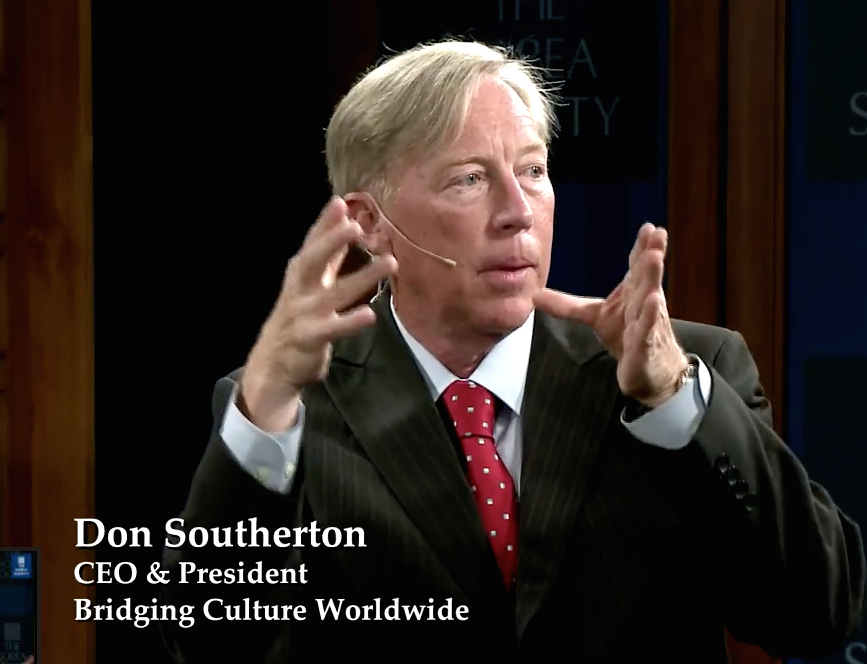
The program is conducted by noted author, strategist and lecturer, Don Southerton CEO and President of Bridging Culture Worldwide. Don works closely with many of Korea’s top Groups such as Hyundai Motor and is an experienced specialist in bridging cultures between Korean and non-Koreans. His firm, Bridging Culture Worldwide, is a Golden, Colorado, Irvine, California, and Seoul, South Korea, which offers programs and consulting to help management and employees appreciate and understand Korean culture and business relations.

Noted Korea expert Don Southerton

Noted Korea expert Don Southerton

Don has authored numerous publications with topics centering on culture, new urbanism, entrepreneurialism and early U.S.-Korean business ventures. Southerton also extensively lectures and writes and comments on modern Korean business culture and its impact on global organizations. He is a frequent contributor to the media (WSJ, Forbes, CNN Fortune, Bloomberg, Automotive News, Korea Times, Korea Herald, Yonhap, Korea Magazine, eFM tbs Koreascape and FSR) on Korea facing business and culture.

Outcomes include:
A strong understanding of Korean cross-cultural differences and their relevance to Korean workplace culture.
Reduce tensions and frustrations rooted in cross-cultural issues.
Better morale and team spirit.
Support for interacting with Korean teams assigned to local operations.

The Cost for the 5 web-based on-demand learning sessions in $495.00.

To learn more, CLICK.


68 Story Songdo NEATT Opens

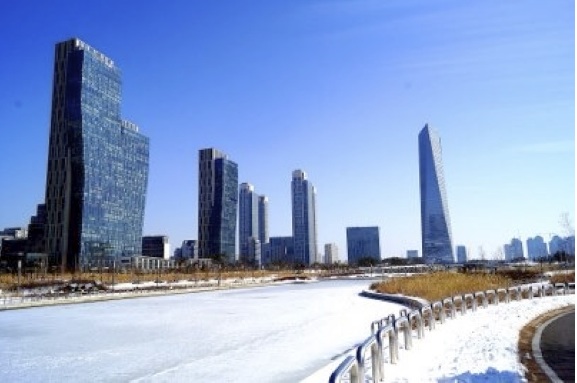
Pleased to see Songdo’s NEATT ( The North East Asia Trade Tower) open. I recall over the years peeking out from floor after floor as construction moved ever upward.  Last time i was in the Tower it was a chilly February morning hosting BBC Click.

Songdo IBD NEATT

NEATT ( on right)


http://www.globest.com/news/12_899/international/office/Korea-Opens-68-floor-Trade-Tower-348124.html

Songdo in the News–Incheon and Songdo: Sub-National Economic Integration Efforts

As a longtime supporter of the Songdo project, we always have seen the Songdo International District ( the core of the greater Songdo FEZ which NY-based Gale International has developed) as a Hub for East Asia business…neat idea the area could be hub for eventually N-S commerce.

Songdo Peterson Institute

North Korea Blog

Incheon and Songdo: Sub-National Economic Integration Efforts
by Marcus Noland | May 13th, 2014

A few years back I was invited to participate in some activities sponsored by Gangwon province in northeastern South Korea, the traditional boundaries of which were split by the division of the peninsula. Officials were hoping that a reconnection of the east coast rail line would give the province an economic shot in the arm.

On the west side of the peninsula, officials have also been eyeing inter-Korean integration and the economic benefits that it could bring. According to a newspaper story passed along by Tom Murcott of Gale International, the developer of the Songdo “smart city,” back in 2008  local officials pushed for a traffic network expansion plan that would connect Incheon International Airport to Gangwha and Gaeseong Industrial Park as part of the Gangwha development plan. That integration would seem to make sense, especially if the October 2007 North-South summit vision of redeveloping Haeju ever came to pass.

With President Park’s renewed emphasis on unification, Incheon officials are dusting off the old plans. According to the report in the Incheon-based Kiho Ilbo, Incheon City has announced it will push ahead with the construction of an expressway from Yeongjong to Haeju of North Korea, the so-called “West Sea Unification Expressway.” Incheon City estimates KRW2.7 trillion of project costs will have to be spent on the 112km-long expressway.

Presumably the city doesn’t have that kind of cash laying around, and one would think that the national government might have something to say about opening up direct transportation links with the North, so don’t hold your breath.  Nevertheless, it’s a reminder that local officials have their own eyes fixed on North-South possibilities, and if North-South relations calm, Incheon and Songdo would be ideally placed to become the hub of North-South exchange.

###