Heads up– I am a keynote speaker at the 2024 Korea’s Sisa Journal-e.com Start-up Conference this week.
My topic–The Ecosystem of Global and Korean Start-ups: Risk, and the Shift in Startup Mindset.
I’m joining an amazing lineup of guest speakers talking on: the electric vehicle market, the Unmanned Exploration Research Institute Space robotics, and The role of climate tech in achieving carbon neutrality.
The event will be held in Seoul at 10 AM, March 20 KST, and shared Live via this YouTube link.
Black mass and upcycling. Once a lithium battery reaches the end of its useful life or becomes damaged, the battery pack can be collected, dismantled, and shredded.
The shredded material is then processed to produce what we in the industry call black mass, not be confused with an astrophysics term, or a dark movie on Netflix.
This black mass can consist of high amounts of lithium, manganese, cobalt, and nickel metals. EV batteries use these metals in ratios which we label as NMC 622 or 811–60% nickel, 20 % manganese, and 20% cobalt, or 80% nickel, 10% manganese, and 10% cobalt. [1]
These metals when sent to a facility can be reclaimed from the black mass and in direct recycling reused in new battery production.
(Image courtesy of Argonne National Laboratory.)
I like to use the term upcycle vs recycle for these materials.
As I wrote in my End-of-Life article, “The Lithium-ion Battery Life Cycle: Mandates, Sustainability, Recycling, Recovery,” compared with the West, Asia — specifically China and Korea have been at the forefront in recovery and re-use — reclaiming batteries’ black mass.
I reported in 2021, “… with strong encouragement from the Korean government, many of the nation’s top groups are actively engaged in some form of end-of-life program. For example, Korean steel producer POSCO, looks to import waste battery scraps concentrated in a powdered form from Europe. Likewise, the Hyundai Motor Group, SK Innovation, and LG Chem all have programs to ensure used batteries have second-life applications, or are recycled and metals such as Lithium, Nickel, and Cobalt are recovered. These programs made lots of sense, as Korea is one of the world’s largest producers and innovators of Lithium-ion EV batteries — with accordingly a high demand for these raw materials.”
Fast forward…
This trend has shifted with new incentives for North American battery recovery.
For one, the U.S. government has mandates to shore up batteries among the nation’s key strategic interests. Second, the government looks to make the U.S. more competitive in the battery market.
These programs include the Inflation Reduction Act (IRA) and other funding under the Biden Administration such as The Energy Act of 2020, and the Bipartisan Infrastructure Law (BIL), which, together with the IRA, offer billions of dollars to the Department of Energy (DoE) funded government programs.
These monies do come with some restrictions.
Specifically, under the Inflation Reduction Act, vehicles that use batteries that contain (i) any “applicable critical minerals” that were extracted, processed, or recycled by an FEOC [ or (ii) any component manufactured or assembled by an FEOC would be ineligible for the $7,500 Section 30D consumer tax credit (Sec. 13401(e)(7)) starting after 2023.
A FEOC is defined as a Foreign Entity of Concern and, with reference, to the IRA, a Chinese company or entity controlled by a Chinese firm.
These prohibitions take effect in 2024 for EV battery components and in 2025 for “applicable critical minerals.”
A Question.
In a recently attended EV battery panel, I raised a question, “Will we, like in the EU, see more regulations for End of Life?” [For example, the new EU regulations will over the next few years, mandate minimum levels of recycled content in batteries, noting end-of-life batteries contain many valuable resources and these critical raw materials must be reused instead of relying on third countries for supplies.]
The panel’s consensus was that unlike the EU and their use of widespread regulations; the thought was for the U.S. to continue to use more of a carrot approach — incentivizing reclaiming battery materials. Something we can see in a range of DOE grants now being offered.
In closing,
One final takeaway the driver for reclaiming black mass is sustainable profitability. The critical metals, NMC, for example in the black mass in this formhave a value that may or may not be competitive against new widespread sourcing of the rare materials.
That said, when the reclaimed key materials are further refined and separated from the black mass their value increases 3-fold, and even further new processes increase the value 6 times.
I have also read that these refinements in the reclaiming process can result in improvement in the very EV battery life span, battery density, and range… all of which add considerably to what I see as “Upcycling”.
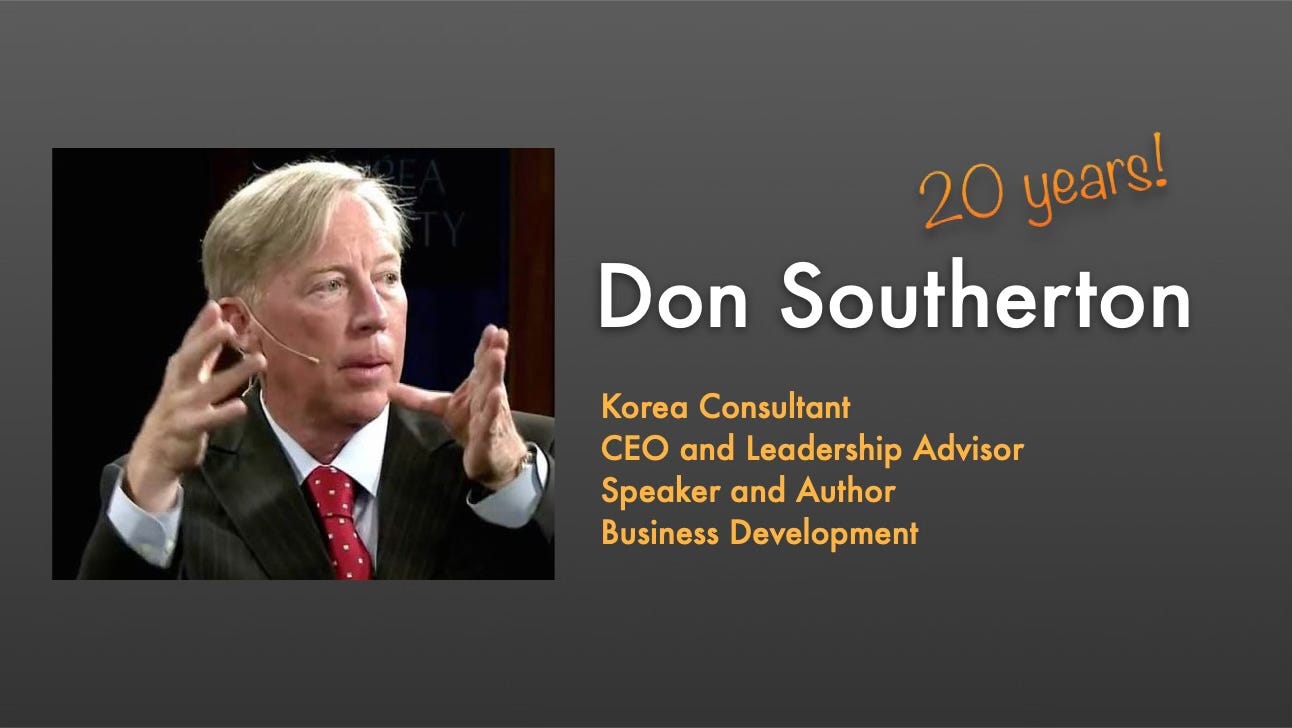
Mr. Southerton provides strategy, consulting, and training to Korea-based global businesses.
This includes long-time support of many of the major Korean Groups including the Hyundai Motor Group, SK Corp., and LG.
He also has supported Korean market entry for several innovative small and medium enterprises (SMEs). Most recently Southerton has been engaged in the mobility, electrification, and the battery sector.
On related issues, Southerton has been a contributor to CNBC, The Economist, Automotive News, the BBC, CNN Fortune, Korea Times, Yonhap, tbs eFM, Wall Street Journal, and Forbes.
[1] Most EVs today use either lithium-ion NMC, NCA (Aluminum), or lithium-ferrous LFP chemistry batteries. There are advantages and disadvantages.LFP: lower cost, lower density, higher discharge cycles; and NMC/NCA: higher cost, higher density, lower discharge cycles. Regardless they all contain ametals that are reclaimable.
I am often asked to assist with Korea-facing business ventures. This can be a North American firm just entering the Korean market or a Western company already with operations in Korea.
Too, I am also asked to support top Korean Groups with their overseas operations.
Most often Korean and Western senior leadership teams did a great job of gaining mutual trust. Both negotiated well. The deal is signed and it’s time to perform.
Sadly, the honeymoon is over. Challenges arise, and what appeared to be clear expectations can now seem murky with poor alignment and weak communications. Why?
There are several reasons. One is that teams that meet, bond, and negotiate are seldom the ones doing the work. The teams on both sides that crafted the deal are better skilled in global business. The teams doing the work are talented, but usually less skilled in local affairs.
Many Westerners have no recent experience working with Koreans, and the Korean teams have limited experience working with North America.
A caveat to this is that many of the Korean teams are bright, but very junior, new to the workplace, and tend to be generalists, while Western teams are comprised of highly specialized industry veterans.
So, what’s the solution?
Frankly, in our experience, the most successful firms show great leadership and vision. They also recognize both sides will need constant ongoing support and training.
Expecting the teams to “get it” seldom works — and if it does it takes time, is costly, and contributes to stress, poor productivity, and even employee turnover. Expecting non-Koreans to understand Korean culture, business models, and workplace expectations is like throwing someone into a pool and assuming they will swim, not sink.
That said, a huge mistake is hiring an industry consulting firm without a full understanding of the specific challenges and cross-cultural issues. In many cases, they fail to get to the root of the problem(s) and expectations are never fully clarified. Issues will surface. Things will get worse.
To conclude,
In dealing with partnerships, I understand the huge stress loads within Korean-based firms. Teams need to perform. Partners will also be expected to perform. Clear, well-communicated expectations and cross-cultural understanding from the beginning are vital, along with a strong business plan and strategy.
Need a solution, I am here on-call with practical workarounds and seasoned experience in overcoming the challenges. Waiting only adds layers and costs.
Why we need Korean business cultural training. My “no punches pulled” Q and A. Targeted cross-cultural support and coaching are necessary for local teams to succeed in working with overseas Korean business projects.
A. This may be the first time working with a Korean team. This opportunity brings with it great opportunity and the need to better understand the new partner’s culture, workplace norms, and expectations.
In most cases, Western teams will interact with Korean HQ and expatriate teams. Some of the teams will hold a line managerial position with day-to-day responsibilities alongside Western managers, while others will hold key management C-level positions, such as CEO, COO, or CFO. In many, if not most, cases, these teams may operate as a “shadow management” with considerable oversight and operational control over local operations.
With the best of intentions, the Korean teams will look to build strong collaboration and teamwork and try to avoid a sense of us and them. However, they do bring Korean work norms that can conflict with Western work-life balance and Western working methods.
More so, Korean teams may make seemingly one-sided decisions with the company’s best interest in mind but without consulting local teams, causing mistrust.
A solid training and coaching program followed by ongoing support can address differences, such as sharing work styles, hierarchy, and comfort levels, plus providing workarounds.
Q. What are some typical issues that arise, especially without training or coaching?
A. As with all individuals, no two of us are alike –and the same goes for Westerners and Koreans… Each has their unique strengths, skills, experiences, and personalities.
Expecting local teams to “get it” without support and training seldom works. Even if a better understanding of the work culture eventually occurs over time, this “learn as you go” approach is costly, contributing to stress, poor productivity, and even employee turnover. Sadly, the most common mistake I see is waiting to see if tensions rise, and workers quit before acting.
Q. Can you cite an example of misunderstandings resulting in mistrust, loss of time, resources, and profits?
A. A challenge I was recently asked to address was the intervention by the expatriate partners in decisions that are best handled by local Western teams.
Probing the issue, I learned that based on extensive experience in the market and industry, the local Western management felt these decisions were often short-sighted, reactive, and not aligned with their well-thought-out strategy. Some saw it as a “cut twice, measure once” approach and “ready, fire, aim.”
Of even more significant concern were one-sided decisions not resulting from the collaboration. In any case, local management felt their input and expertise were being marginalized. As pressure to meet HQ expectations, avoid any negative news, as well as missing Sales or Production “Targets” they saw increased intervention by the expatriate teams.
In this case, I worked with the Western teams to provide some proven workarounds, particularly tempering the Korean teams’ pressing for immediate results.
Specifically, I shared ten steps.
1. To soften jumping to implement a stop-gap plan with hopes of producing immediate results, look to minimize the anxiety for both the local Korean team and the headquarters team. Please be sure to show confidence that the challenge can be overcome.
2. Acknowledge your team’s high engagement and assure the Korean teams that action will be taken promptly.
3. As a next step upon receiving a directive from Korea, have an informal discussion with local Korean teams to brief them on action steps that enable the team to work through what needs to be explored more deeply.
4. Follow up with email correspondence confirming the verbal discussion.
5. Allow a day or two for the Korean team to review your action plan. In many cases, the Korean teams are not familiar with local practices and the vocabulary used to describe Western technical nuances.
The local expat teams may also want to report back to Korea on progress. HQ leadership is ultimately responsible, so the better informed they are, the more trust they will have in local teams — Korean and Western — that the project will progress.
6. Remember that you may receive only some feedback promptly because of time differences.
7. Conducting informal daily updates to the Korean teams and sharing the steps undertaken with the local Koreans can also be helpful.
8. Even better is reporting positive accomplishments in your review process.
9. It is essential to address the potential trade-offs and risks as action steps leading to solutions and assuring the team that these steps will not impede the project and may, in fact, avoid costly setbacks.
10. Finally, having said all this, maintaining trust through strong relationships between Korean and Western local organizations is essential.
Q. What have Koreans told you about Americans? Work habits, commitment, etc.
A. If you ask Korean expats how they perceive Americans and Westerners in general, responses would be very positive and respectful, especially toward Western work ethics and work habits. Koreans see great value in American and Western teams providing them with new insights, perspectives, and best practices.
A. What might be covered in Korean business culture training?
I see the training as twofold — 1) providing teams with an understanding of the Korean partner’s affiliate company history, heritage ( challenges overcome), trends, and expectations! , and 2) sharing the Korean workplace and its norms, practices, and workarounds. One nuance I share is that Korean overseas operations can differ from those in Korea, something I am most familiar with.
Above all, a best practice is to celebrate similarities and shared values when possible, along with instilling an awareness of and respect for cultural differences.
Addressing the team’s questions and concerns is also vital with issues, such as work-life balance, safety and quality processes and procedures, and Korean partners’ overall expectations.
Q. Anything else?
A. To conclude, the need for cross-cultural training programs for local employees and management is a high priority.
The assumption that local and expatriate teams can bridge cultural gaps through practical on–the–job experience might work with those few highly intuitive individuals with the exceptional ability to assimilate cultures.
What stands out in numerous studies, however, is the need for ongoing multicultural training, that can successfully impact people, especially those who need to quickly adapt to new or changing business culture and values, while fostering sensitivity and teamwork among all company members.
Finally, I have found a tiered service model — training, mentoring, and ongoing strategic support- to be the most effective approach for an organization. For leadership, they most often benefit from one-on-one coaching, too.
The Hyundai Motor Group has posted some wonderful images of a 1970s Kia Brisa. Last week in Part 1 of my “Rise of Kia” I shared the launch of the Brisa. Part 2 provides some more details on its success.
In the fall of 1974, the first Kia Brisa S-1000 four-door sedans rolled off the Sohari production line. ( A year earlier they had begun production of the Brisa pickup).
Overall the Brisa sedan was a success with 75,987 sold between 1974 and 1981.
In conjunction with the manufacturing of the Brisa sedan and Brisa pickup, Kia Motors also produced the vehicles’ 1-liter gas engines.
While the competition sourced engines from their foreign partners, this marked the first Korean company to manufacture its engines. In the first year of production, 65 percent of the parts in the Brisa, including the engine, drive shaft, and clutch, were manufactured in Korea. This local sourcing was strongly encouraged by the Korean Government and the ratio of locally produced parts increased steadily over the years.
Kia Motors would grow into Korea’s second-largest carmaker and would experience both international success and its demise under the 1997 financial crash —the latter leading to a “second chance” under parent company Hyundai Motor.
Over the years I have been fortunate to meet with and interview many of the early Korean and Western Hyundai and Kia teams and leadership. Today’s successes were built upon their struggles and can-do perseverance.
Last week the Hyundai Motor Group posted some amazing photos of the Kia T600 circa 1969. I shared some more details such as in early 1962 Kia’s Shiheung production line launched the first in the line-up–the K-360. Production would continue until 1973 with over 25,000 of the sturdy vehicles sold.
I’d add the T600 would signal Kia’s rise … ( Kia= Rising out of Asia).
Kia Motors [Now Kia] Kia Worldwide is one of the world’s fastest-moving global automotive brands. It has earned a reputation as an industry leader in design styling along with a full line of fuel-efficient vehicles that have earned critical acclaim and dramatically increased consumer awareness. Interestingly, the carmaker had early roots as a Korean bicycle and motorcycle manufacturer.
In the early 1960s, the Kia Motors Company moved beyond first bicycle components, then bicycles, and motorcycles to produce a highly practical K360 three-wheel utility truck. Across much of Asia, similar vehicles met a demand for reliable low-cost commercial transportation that could transport goods and products often in tight urban areas.
Based on the Mazda Mazdago design, the K360 also signaled Kia Motors’ long technology alliance with the Japanese automaker with a number of cars and trucks eventually licensed from Mazda.
During this era of budding Korean economic development, strong technology ties with foreign partners were common. For example, other Korean firms entered into partnership arrangements with international carmakers, including Nissan (Datsun), Toyota, Fiat, GM, and Ford. Korean industrial groups desiring to enter the car sector forged these alliances to gain advanced automotive technology and know-how. In addition, the government implemented strong trade protectionism in an effort to build a self-sufficient import substitution economy.
In particular, the Korean Automotive Industry Promotion Law required cars to be manufactured locally versus imported from foreign markets.
When pressured by the government to produce Korea-assembled cars, Kia Motors leveraged its strength as an engineering-based company and chose not to assemble compact cars imported as knockdowns (CKD). Instead, Kia set up a full-scale production plant with considerable local sourcing of parts.
Sohari
In 1973, Kia’s Sohari plant opened with the initial production of a pickup version of the Brisa. Drawing on the ongoing relationship with Mazda, the Brisawas based on the second-generation Mazda 1000, which was marketed as the Familia in Japan.
Brisa
In conjunction with manufacturing the Brisa pickup, Kia Motors also began production of 1-liter gas engines. While the competition sourced engines from their foreign partners, this marked the first Korean company to manufacture its own engines. In the first year of production, 65 percent of the parts in the Brisa, including the engine, drive shaft, and clutch, were manufactured in Korea. This local sourcing was strongly encouraged by the Korean Government and the ratio of locally produced parts increased steadily over the years.
In the fall of 1974, the first Kia Brisa S-1000 four-door sedans rolled off the Sohari production line. Overall the Brisa was a success with 75,987 sold between 1974 and 1981. In 1975 the Brisa pick-up also became the first Kia to be exported when a number were shipped to Qatar in the Middle East.
Brisa Sedan, Sohai Plant
Oil Shock
Notably, what spurred the Brisa’s early success was actually its small 1000cc engine displacement. Starting in 1973, an international oil shortage forced gasoline prices to skyrocket creating a supply shortage in Korea.
Veteran Hyundai and Kia Motors executive Mark Juhn who began his career with Shinjin Motors noted that the oil shock had a devastating impact on Kia’s rival— a newly formed and much larger General Motors Korea, a joint-venture company between GM and Shinjin Motors.
Mr. Juhn shared that with high gas prices Korean consumers favored the Kia Brisa and its smaller more economical engine over GM Korea’s first production model, the Chevrolet 1700 with a larger 1700cc engine.
Mr. Juhn also pointed out, “I could say the oil shock brought good luck to Kia but GM Korea struggled.”
[For those of you long associated with Hyundai, Mr. Juhn would later in his career head up Hyundai Motor America and was the driving force convincing HMC leadership to approve and support the game-changing 10-Year, 100,000 Mile Guarantee program].
Mark Juhn with Don Southerton, Seoul, South Korea
Steady Growth
By 1976 Kia also strengthened its position in the commercial vehicle sector by purchasing Asia Motors based in Kwangju, South Korea. Asia Motors manufactured heavy trucks, buses, and a line of military vehicles. In addition, to meet the growing demand in Korea for cars, Kia even started CKD assembly of the Fiat 132 sedan, along with the Peugeot 604, a larger model sedan.
Government Intervention
Despite Kia’s successes, government intervention imposed new mandates over much of the growing Korean economy. Direct competition was regulated across many sectors of industry. In 1981, Kia Motors was told to stop producing cars and concentrate instead on light commercial vehicles. In turn, more light truck and van models were added, including the 1-ton Bongo, the Ceres pick-up and some larger truck models.
Ford Alliance
By the mid-1980s the Korean Government decided to change policy and relax its restrictions on the car and truck companies. Kia was allowed to return to car production. Working with Mazda’s Ford alliance, Kia Motors began to produce the Festiva (known as the Pride in Korea). Export to the U.S. began in 1988. The venture was extremely successful with 300,000 Festivas being shipped overseas between 1988 and 1993.
Earth Day- Earth Week- Earth Month 2023 By Don Southerton
Reflecting on Earth Day, my ties to Green and Sustainability have reached back in time more than a few years. In fact, it parallels my work with Korea. In the mid-2000s, I was an advisor to developing and building the Incheon, South Korea Songdo International Business District. Under the leadership of Green visionary Stan Gale, the city is the global model for urban sustainability.
Envisioned as a Green, high-technology city of the future — at the time, it was one of the world and Korea’s most significant foreign real estate development projects.
Built on reclaimed land and with partners like Kohn Pederson Fox, Cisco, and United Technology, the forward-leaning project also showcased some of the first LEED-certified buildings in South Korea and Asia.
In conjunction with the Songdo IBD project and my work for Hyundai, around 2007 the Songdo team and I had the opportunity for a VIP visit to Hyundai Motor’s R&D. We even got to fuel their 1st Gen Hydrogen Fuel Cell Electric Vehicles (FCEV), and then test drive the vehicles. At this time, Songdo’s leadership was very interested in FCEV buses for the International Business District powered by hydrogen.
I also hosted a 2013 BBC World Service visit to Songdo IBD, showing off its Green smart city capabilities, capped off by an interview with Cisco’s former Chief Global Strategist Wim Elfrink, an early adopter who popularized the term IoT — the Internet of Things. A day later, we visited Hyundai Motor’s Eco Lab and test-drove their 3rd Gen HCEV, a first-of-its-kind production SUV, which was soon launched in Korea and then California.
In the years that followed, as companies I supported moved to mobility and EVs, I, too, shifted my research and work to these new sectors. Electrification has been and continues to be a major part of my work, leading to an ongoing immersion in the sector supporting Korean startup Grinergy and Green lithium battery technology.
In particular, the focus on Green, Sustainability, and Resilience is this year’s Earth Day, or as one presenter at a recent webinar shared—it’s more of an Earth Week and Earth Month.
Personally, this includes participating in workshops and presentations at the Federal, State, and local levels, including groups like Yale Blue Green (YBG), who are engaged in environmental and sustainability topics and issues, and the Colorado Electric Vehicle Coalition.
This coming week is no different with plans to attend a Live Earth Day event at NREL—the National Renewable Energy Lab headquarters in Golden, Colorado.
Takeaways As a Colorado DOT electrification expert shared, the questions their office received just a year ago centered on “if” EVs and related mobility were a good idea—to now a heightened acceptance and questions on expanding infrastructure and issues like micro-mobility, battery recycling, and end-of-life—to expanding availability from urban centers to rural and less economically served areas.
More so, as noted above and in my previous article American-Made, Limits on Sourcing, Eliminating a Dependence on China there is a need for better sourcing and sustainability of the raw materials and components used in Green tech.
Finally, as we reflect on Earth Day, in both in my work and pursuits, I find a greater embrace of new Green technologies, fueled by government and private funding and with a growing public interest in sustainability.
Questions? Comments? Have a project in mind or need support? Urgent requests Text at 310-866-3777 All other Dsoutherton@bridgingculture.com
For most of my career I have worked with Korean teams—many based in Korea, many in local overseas operations. I find both exchanges rewarding, but very different and require a varying set of skills. I’d like to offer some best practices.
To begin
We find with Korea facing international operations the primary communication channel between the Korean HQ and local subsidiary is through expatriates—although in some cases this is shifting.
In key positions, Korean expats serve in roles including the CEO who is responsible for managing the local company or region. The CFO and technical support can be expats, too. Most often these Korean expats along with local leadership executive form the core for business operations in the host country.
By the way, the expats below senior management are often referred to as “Executive Coordinators” or “Executive Advisors” in the West. As a caveat, this model does vary some and in some organization we see a mix of “Coordinators” and Korean assigned as line managers. However, the Korean term for these expatiates is ju jae won.
In the larger overseas subsidiaries, the Korean expats are assigned to the major departments.
In many instances, as I mentioned, the expat Coordinators are not assigned a direct managerial role but still hold considerable oversight over the local operations.
Roles vary with each company, but frequently a Coordinator’s primary role is to be a departmental liaison and communication channel between Korea and the local subsidiary.
That said, for westerners unfamiliar with the Korean model, this “oversight” usually translates into the Korean expats requiring sign off on all decisions—trivial to substantial.
This can be a huge challenge when newly assigned expats have little specific background in or knowledge of the host country’s operations and market. More so, when their decisions are motivated by what they feel would please the HQ in Korea.
Cognitively, they do recognize local management skills and expertise, but especially if under pressure to perform and meet expectations may defer to engaging in decision-making.
Of course, this can be a challenge.
New ju jae won are skilled and accomplished in Korean style business operations, norms and practices.
However, they are now assigned to an overseas subsidiary where norms, practices, expectations, and laws differ. Adding to this “Managing westerners” is very different than overseeing a Korean team…
Next, I’ll cover several scenarios with best practices for supporting overseas team. All take finesse and collaboration, plus recognize norms and practices differ… as well as require working “within the Culture.”
To again clarify, my perspective is based on years working with Korea and especially in daily mentoring and providing strategy for their overseas operations—Koreans and Westerners.
Scenario One
It’s common for a Korea expatriate, frequently called a Coordinator, to directly request members of the team to gather information or data on the local operation. Usually, Korea has asked for this information and the Coordinator is executing the request. These always have a sense of urgency.
The Challenge is the local departmental head may be circumvented (often unintentionally)…. and requests disrupt operations and designated priorities. More so, the line of management for the department is blurred—i.e. staff confused on “who is in charge.”
The Workaround centers on an effective working relationship between the Coordinator and the department head. An understanding must be reached that when requests from Korea (or from the senior Korean leadership at the subsidiary), it is first brought to the department head… and they handle who will execute.
In particular, the local western manager is more familiar with their team, individual workloads, any special situations and skill sets. In fact, with a clear communication channel the work will be performed with better results by the individuals tasked with the assignment, and less stress on the Coordinator asked to acquire the data.
As a caveat, one burden on a department can be when a high percentage of work and tasks teams are engaged are to support Korea and not the local operations.
Scenario Two
As noted, a Coordinator’s role is to support the local operation. Local teams and specialists are hired with a high degree of knowledge and experience. A clash occurs when decisions best left to those in the know are deflected.
The Challenge occurs when Coordinators override a decision or unilaterally make the call. This can range from the hiring of new employees to pushing off a much-needed program.
Again, the Workaround is a clear Company-wide defined role for the Coordinator. They are advisors who can provide much-needed input and an HQ / mother company perspective… but not assume line manager responsibilities.
In other words, clarity must be established in regard to as long as they are acting on behalf of the mother company considerable weight must be given to their input. That said, even when they have the company’s best interest in mind, their own personal views must be gauged and moderated.
Scenario Three
Perhaps the most challenging situation is moving Coordinators to make a decision.
The Challenge In most Korean companies leadership decide on direction and major issues. In turn, the working team’s role is to implement or gather needed information. This role/ skillset changes when working level Koreans are assigned as an overseas Coordinator.
Workaround When conducting a meeting where a decision must be made recognize that your Coordinator will have considerable say in the outcome. First, since the topic and subject matter may be new to your Coordinator, I recommend you share prior to the meeting any needed background documents (best provided in PPT format).
In addition, have an informal pre-meeting Q&A with the Coordinator to brief and update them on any specifics. Note: they may need a day to review proposals and agreements, so timing is critical.
Even in the best cases, expect that the Coordinator may want to postpone any decision until they can carefully review and perhaps confer with Korea. I suggest all documents and meeting PPTs be immediately forwarded to the Coordinator.
I’d create a sense of urgency with a timeline for execution and implementation. Regardless, expect some delays and be patient.
Over the years, I’ve found that Coordinators appreciate when their overseas co-workers recognize that the internal approval process takes time and be ready to offer, as needed, additional supportive data or documents.
BTW, if you are a vendor and your firm provides services to a Korea-based partner, it’s best to provide both the western and Korean teams with background information prior to any meetings. Moreover, be prepared to share the meeting’s content in digital format afterward with the Korean team, too.
With the shift to ever-increasing daily interactions with Korean HQs via web and phone conferences, western teams need even deeper practical insights into working within the Culture along with new skill sets.
In particular, the Executive Coordinator/ Advisor model has had its limitations…but the Koreans assigned as expatriates do learn local norms and adapt over time. This means the Coordinators mold to local operations with a little need for many of the local teams to become skilled in Korea workplace norms.
In contrast, working with teams based in Korea takes a different approach. Korea-based teams follow deeply embedded HQ and company norms. They are not likely to model or adapt to their overseas subsidiaries.
This now means 1) becoming acquainted with Korea norms, understanding the Korean workplace “in’s and out’s” and “do’s and don’t.” And, 2) developing strong skills in managing the relationship with effective cross-communication taking on a new heightened significance.
Over the past years, I’ve shared solutions in my books, articles and case studies… that said, I find that each situation requires one having to drill deeper to truly grasp and then provide a solid resolution.
Thoughts?
As always, Stacey stacey@koreabcw.com, my assistant can schedule us a time to meet or chat by phone.
September 5, 2017StaceyCommentaryComments Off on Everything Korea; September 5 Episode, Korean Business Relationships Amid Acceleration
Korean Business with Don Southerton
Amid disruptive market conditions perhaps the greatest ripple effect challenge to Korean global business is how best to maintain positive and collaborative working relations between Western and Korean teams.
From a cross-cultural perspective Korean commerce is dependent upon relationships and interpersonal interactions. Western business, in contrast, leans toward process and procedure. Therefore when Korea-facing working relations are strained culturally, there is a heightened impact throughout the entire organization.
Without discounting market conditions and intense pressure to meet aggressive sales goals, I see impact of adapting to a rapidly changing and disruptive business landscape at the core of many strained relationships.
As author Thomas L. Friedman points out in Thank You for Being Late:
“As we transition from an industrial-age economy to a computer-Internet-mobile-broadband-driven economy—that is, a supernova-driven economy—we are experiencing the growing pains of adjusting. ”
Drilling deeper, I have found this acceleration has markets and industry sectors ever shifting. For example, the automotive industry is witnessing and adjusting to new consumer preferences, such as collaborative consumption shared ride services of which Uber, Lyft and Maven are examples, self-driving autonomous technology and eco-friendly vehicles.
That said, we as a society are also experiencing the need to adapt more frequently and at a more rapid pace than ever in the past. The good news is we are perhaps adapting faster than anytime in history. Still there is a substantial gap in the high rate of change and speed we adapt. This gap is disorienting and business models that worked in the past have become outdated further adding to stress and frustration.
In my work, this leads to a Korea driven climate of reactive and hopeful second-guess decision-making, or, in some cases, the opposite in stalled action. In both situations, I feel we need to embrace a middle course— a well thought out and responsive plan.
Again Thomas Freidman, too, recognizes this need to ponder. He notes, and I paraphrase:
Patience… space for reflection and thought. We are generating more information and knowledge than ever today, but knowledge is only good if you can reflect on it.
In closing I return to my original point of the vital importance of maintaining relationships amid the current market condition. No matter how challenging the situation we need to take time and work to forge strong collaborative bonds within teams Friedman again remarks:
“And it is not just knowledge that is improved by pausing. So, too, is the ability to build trust, …to form deeper and better connections, not just fast ones, with other human beings, our ability to forge deep relationships—to love, to care, to hope, to trust, and to build voluntary communities based on shared values—is one of the most uniquely human capacities we have.”
In this Part 2 of my “Working with Korea 2017” series, I cover several scenarios with best practices for supporting overseas team.
All take finesse and collaboration, plus recognize norms and practices differ… as well as require working “within the Culture.” To again clarify, my perspective is based on years working with Korea and especially in daily mentoring and providing strategy for their overseas operations—Koreans and Westerners.
Scenario One
It’s common for a Korea expatriate, frequently called a Coordinator, to directly request members of the team to gather information or data on the local operation. Usually, Korea has asked for this information and the Coordinator is executing the request. These always have a sense of urgency.
The Challenge is the local departmental head may be circumvented (often unintentionally)…. and requests disrupt operations and designated priorities. More so, the line of management for the department is blurred—i.e. staff confused on “who is in charge.”
The Workaround centers on an effective working relationship between the Coordinator and the department head. An understanding must be reached that when requests from Korea (or from the senior Korean leadership at the subsidiary), it is first brought to the department head… and they handle who will execute.
In particular, the local western manager is more familiar with their team, individual workloads, any special situations and skill sets. In fact, with a clear communication channel the work will be performed with better results by the individuals tasked with the assignment, and less stress on the Coordinator asked to acquire the data.
As a caveat, one burden on a department can be when a high percentage of work and tasks teams are engaged are to support Korea and not the local operations. Part 3 in the series will provide some thoughts on shifting workload dedicating to Korea requests to actually running the local operation.
Scenario Two
As noted, a Coordinator’s role is to support the local operation. Local teams and specialists are hired with a high degree of knowledge and experience. A clash occurs when decisions best left to those in the know are deflected.
The Challenge occurs when Coordinators override a decision or unilaterally make the call. This can range from the hiring of new employees to pushing off a much-needed program to the next year.
Again, the Workaround is a clear defined role for the Coordinator. They are advisors who can provide much-needed input and an HQ / mother company perspective… but not assume line manager responsibilities.
In other words, clarity must be established in regard to as long as they are acting on behalf of the mother company considerable weight must be given to their input. That said, even when they have the company’s best interest in mind, their own personal views must be gauged and moderated.
Scenario Three
Perhaps the most challenging situation is moving Coordinators to make a decision.
The Challenge- In most Korean companies leadership decide on direction and major issues. In turn, the working team’s role is to implement or gather needed information. This role/ skillset changes when working level Koreans are assigned as an overseas Coordinator.
The Workaround- When conducting a meeting where a decision must be made recognize that your Coordinator will have considerable say in the outcome. First, since the topic and subject matter may be new to your Coordinator, I recommend you share prior to the meeting any needed background documents (best provided in PPT format).
In addition, have an informal pre-meeting Q&A with the Coordinator to brief and update them on any specifics. Note: they may need a day to review proposals and agreements, so timing is critical.
Even in the best cases, expect that the Coordinator may want to postpone any decision until they can carefully review and perhaps confer with Korea. I suggest all documents and meeting PPTs be immediately forwarded to the Coordinator.
I’d create a sense of urgency with a timeline for execution and implementation. Regardless, expect some delays and be patient.
Over the years, I’ve found that Coordinators appreciate when their overseas co-workers recognize that the internal approval process takes time and be ready to offer, as needed, additional supportive data or documents.
BTW, if you are a vendor and your firm provides services to a Korea-based partner, it’s best to provide both the western and Korean teams with background information prior to any meetings. Moreover, be prepared to share the meeting’s content in digital format afterward with the Korean team, too.
Questions, Comments?
Email me at questions@koreabcw.com Your comments, all kept private and confidential.
Other questions? Stacey, stacey@koreabcw.com, my assistant can schedule us a time to meet, or chat by phone. For urgent matters, text me at 310-866-3777.







Black Mass and Upcycling
Black mass and upcycling. Once a lithium battery reaches the end of its useful life or becomes damaged, the battery pack can be collected, dismantled, and shredded.
The shredded material is then processed to produce what we in the industry call black mass, not be confused with an astrophysics term, or a dark movie on Netflix.
This black mass can consist of high amounts of lithium, manganese, cobalt, and nickel metals. EV batteries use these metals in ratios which we label as NMC 622 or 811–60% nickel, 20 % manganese, and 20% cobalt, or 80% nickel, 10% manganese, and 10% cobalt. [1]
These metals when sent to a facility can be reclaimed from the black mass and in direct recycling reused in new battery production.
As I wrote in my End-of-Life article, “The Lithium-ion Battery Life Cycle: Mandates, Sustainability, Recycling, Recovery,” compared with the West, Asia — specifically China and Korea have been at the forefront in recovery and re-use — reclaiming batteries’ black mass.
Fast forward…
This trend has shifted with new incentives for North American battery recovery.
For one, the U.S. government has mandates to shore up batteries among the nation’s key strategic interests. Second, the government looks to make the U.S. more competitive in the battery market.
These programs include the Inflation Reduction Act (IRA) and other funding under the Biden Administration such as The Energy Act of 2020, and the Bipartisan Infrastructure Law (BIL), which, together with the IRA, offer billions of dollars to the Department of Energy (DoE) funded government programs.
Specifically, under the Inflation Reduction Act, vehicles that use batteries that contain (i) any “applicable critical minerals” that were extracted, processed, or recycled by an FEOC [ or (ii) any component manufactured or assembled by an FEOC would be ineligible for the $7,500 Section 30D consumer tax credit (Sec. 13401(e)(7)) starting after 2023.
A FEOC is defined as a Foreign Entity of Concern and, with reference, to the IRA, a Chinese company or entity controlled by a Chinese firm.
These prohibitions take effect in 2024 for EV battery components and in 2025 for “applicable critical minerals.”
A Question.
In a recently attended EV battery panel, I raised a question, “Will we, like in the EU, see more regulations for End of Life?” [For example, the new EU regulations will over the next few years, mandate minimum levels of recycled content in batteries, noting end-of-life batteries contain many valuable resources and these critical raw materials must be reused instead of relying on third countries for supplies.]
The panel’s consensus was that unlike the EU and their use of widespread regulations; the thought was for the U.S. to continue to use more of a carrot approach — incentivizing reclaiming battery materials. Something we can see in a range of DOE grants now being offered.
In closing,
One final takeaway the driver for reclaiming black mass is sustainable profitability. The critical metals, NMC, for example in the black mass in this form have a value that may or may not be competitive against new widespread sourcing of the rare materials.
That said, when the reclaimed key materials are further refined and separated from the black mass their value increases 3-fold, and even further new processes increase the value 6 times.
I have also read that these refinements in the reclaiming process can result in improvement in the very EV battery life span, battery density, and range… all of which add considerably to what I see as “Upcycling”.
About the Author.
Mr. Southerton provides strategy, consulting, and training to Korea-based global businesses.
This includes long-time support of many of the major Korean Groups including the Hyundai Motor Group, SK Corp., and LG.
He also has supported Korean market entry for several innovative small and medium enterprises (SMEs). Most recently Southerton has been engaged in the mobility, electrification, and the battery sector.
On related issues, Southerton has been a contributor to CNBC, The Economist, Automotive News, the BBC, CNN Fortune, Korea Times, Yonhap, tbs eFM, Wall Street Journal, and Forbes.
[1] Most EVs today use either lithium-ion NMC, NCA (Aluminum), or lithium-ferrous LFP chemistry batteries. There are advantages and disadvantages.LFP: lower cost, lower density, higher discharge cycles; and NMC/NCA: higher cost, higher density, lower discharge cycles. Regardless they all contain ametals that are reclaimable.