For over 20+ years, I have presented Korea 101 programs to more than 10,000 participants across the globe. Korea 101: The Book shares insights and experiences with my ‘boots on the ground’ in the classroom, boardroom, and, more recently, remotely.”
Building on the past, this revised edition, too, looks at the transition to Smart Mobility and the corresponding workplace overhaul to become an agile global player.
I recently posted a photo of the Hyangwon Pavillion and a number have asked to share on its origin and location. What I noted in the caption was its significance as the 1st building electrified in Korea and possibly Asia.
Early in my ground-breaking 2000s post-graduate academic research, I examined the long-standing technology exchanges between the United States and Korea. Much of this development began in the late 1800s when Korea looked to bring rail, trolley, electrification, telephone, waterworks, and hard-rock gold mining to the country. Some of these infrastructure projects were “a first” for Asia. Specifically, the 1st building electrified! It was fascinating reading the correspondence between Korea and Thomas Edison.
In 1884, King Gojong reached out and contracted the Edison Light Company to electrify Gyeongbok Palace starting with showcasing the Hyangwon Pavilion. The monarch intended to adopt and welcome new technologies from the West.
The 2-story Hyangwon Pavilion had been constructed on an artificial island in the center of the palace lake.
Technicians dispatched from Thomas Edison’s laboratory and installed a small DC water-powered generator on the stream that fed the lake. {The stream is long gone, curious I looked a few years ago].
To King Gojang and the court’s amazement, the building was illuminated.
Several years later, in 1893, a second electric plant was built for the Changdok Palace, and thereafter for the Sundok palace. Reports by Western diplomats of the time told that the incandescent lights were most often used for court meetings held during the evening hours.
It should come as no surprise that 140 years later a robust technological trend continues– today both the U.S. and South Korea’s equal tech partners.
There has been an expectation that Korean and other APAC companies would strive to fully localize as they expand overseas business operations in markets like North and South America, the UK, and the EU. With COVID we saw a change from the past with an annual dispatching of teams from Asia-Pacific HQs to a more reduced and limited role for expatriates.
There is a strong argument that local operations are best managed locally with minimal day-to-day oversight from the company’s HQ expatriate team. The exceptions in many cases, are expatriates assigned in a “designated” support capacity often in tech support and engineering.
As a thought leader in global business trends, I suggest a potential shift in global governance.
A limited expatriate support role has been a long-term goal. It’s costly, and the acculturalization for any expat in a new market takes time and an openness to learn and adapt.
This said, one constant is change. What potentially might have been the plan to reduce oversight may be altered to strengthen expat engagement and input in day-to-day business decisions and management. This frankly has been a cycle I have witnessed over the years. The current mode of reduced engagement has been, too, rooted in COVID where new overseas assignments were all but eliminated.
There are justifications and reasonings for the increased local engagement. One possible option for effective communication with APAC HQs is to assign expatriates for daily direct communication during evening hours, considering the time and work hour differences.
Expatriates can provide valuable insights into the HQ strategy, particularly in clarifying recent mandates and initiatives for local management.
Moreover, there is a growing need for broader HQ fiscal oversight during the rapid shift to capital-intensive ventures such as mobility, which requires significant infrastructure investment.
I want to mention that many Western brands, too, have long contemplated the right balance between a centralized company business strategy versus one driven by localization.
Bottom line… In today’s rapidly changing global economy, it is vital to comprehend the intricacies of Korean and Asia Pacific business, including the hows and whys, and to engage with their teams.
For those in the West, it may be the first time working with a team from Korea. This opportunity requires an understanding of the new partner’s culture and expectations.
The assumption that local and expatriate teams can bridge cultural gaps through practical on–the–job experience might work with those few highly intuitive individuals with the exceptional ability to assimilate cultures.
Is a need for ongoing multicultural training, that can successfully impact people, especially those who need to quickly adapt to new or changing business culture and values, while fostering sensitivity and teamwork among all company members.
Finally, best practices have shown that a tiered service model with training, mentoring, and ongoing strategic support is the most effective approach for an organization. Leadership can greatly benefit from one-on-one coaching, too.
To conclude, to answer the question “Is it better to manage local operations locally?” International companies must seek the right balance between global oversight and striving for localization. This includes the best mix of an HQ team’s engagement in day-to-day oversight and decision-making while creating a level of direct communication to ensure expectations are addressed, especially aligning with global strategies and fiscal concerns.
And, above all get support, winging it rarely works….
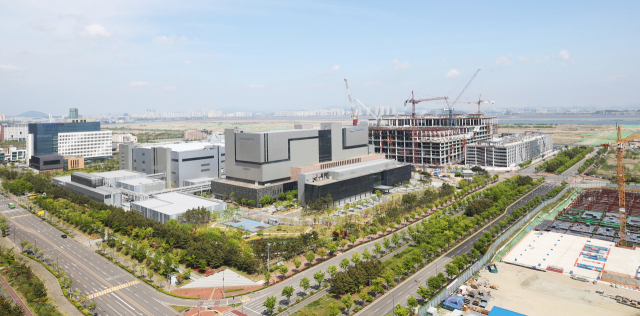
A bird’s-eye view of the Global Genome Center provided by the Incheon Free Economic Zone
The Incheon Free Economic Zone (IFEZ) has the groundbreaking for Macrogen’s Songdo Global Genome Center at the Advanced Industrial Cluster in Songdo International City.
Dr. Won-seok Yun, head of the Incheon Free Economic Zone Authority, said, “We expect Macrogen to take a leap forward as a global precision medicine leader and Incheon Free Economic Zone to advance its bio-industry structure further.”
IFEZ Songdo is home to South Korea’s growing biopharmaceutical production capacity and increasingly making the country an attractive investment destination for global life science companies.
Founded in 1997, Macrogen is a company specializing in dielectric analysis. They are South Korea’s leader with the world’s fifth-largest capacity next-generation sequencing. Macrogen provides services to more than 18,000 customers in 153 countries.
The Songdo Global Genome Center will serve as a global genomic big data hub that accelerates the digital transformation of healthcare by combining big data including genomic information and artificial intelligence (AI).
IFEZ expects Macrogen’s dielectric analysis research facility to greatly contribute to the diversification of the bio-industry structure of the Songdo Biocluster.
Expanding internationally offers numerous benefits such as access to new markets, customers, workforce, and improved reputation.
I am a strong advocate of global business, as it presents great opportunities. I am also deeply passionate about seeing brands succeed in overseas markets.
Expanding internationally offers numerous benefits such as access to new markets, customers, workforce, and improved reputation. As Wharton Magazine noted, “…expansion provides diversification and additional revenue, it also exposes one to different methods of doing business.”
Frankly, my experience is that global companies looking at market entry for Asia-Pacific countries like Korea, Singapore, the Philippines, or Vietnam, should recognize the potential upfront investment required to enter a new market. Best practices require a company to invest time and resources in “Discovery” and hire a qualified expert or firm to assist in the local mark
It is also common for local entrepreneurs to approach global brands with the hope of securing a memorandum of understanding (MOU) to bring a popular brand to their market. However, these entrepreneurs may not currently have the necessary resources and means to operate the brand. They intend to get the MOU, and then pitch the deal to local business partners.
Sadly, we’ve seen over the years even seasoned international companies realize too late that their well-intentioned partnership was less than qualified. The deal, then, stalled or ended.
Qualifying a local partner can be a challenge, as it requires deeper insights into the local market and identifying key players.
As a benchmark based on recent projects this cost is easily a minimum of US $20,000- $50,000 in international travel and legal fees to secure a partnership. There are, of course, additional costs after an agreement is signed.
There are methods to offset these development costs, which include joint ventures and licensing. Also, a best practice is to ensure you are working with a market entry firm that can
Effectively screen for highly qualified potential partners,
Secure high-level meetings with decision-makers and,
The target company has the required capital, resources, and experience to successfully operate the brand.
Going it alone
In contrast, I have seen firms entering overseas markets who prefer to take a different, more reserved approach and go it alone with their internal staffing. Sadly, the success rate for an international firm successfully entering a new overseas market is poor— or more costly than expected, even with the support of highly dedicated government agencies for local market entry.
To elaborate more, some businesses want to focus on finding a solid, committed overseas partner or client with little investment and need to pay upfront fees to engage a local expert in a market entry — all compensation is contingent upon first finding a potential partner. This rarely (code word–never!) works.
More to the point, a highly qualified market entry firm that has a track record of getting results will rarely shoulder the risk of funding the upfront development costs for a client. Instead, an experienced market entry firm will seek out businesses that expect success and are willing to compensate for the services.
Also, although a company going it alone may have websites, products, and company information (often in need of editing), they however lack what is commonly accepted content for meeting presentations with potential partners, including, but not limited to, a detailed localized, savvy Go to Market Plan—often a high content 20+ pages and a competitive market analysis. These expectations are not options.
And finally, for highly recognized U.S. or global brands, there is less of a barrier in setting up meetings because of the strong international desire for a top brand. For less-known brands entering an overseas market, there is considerably more effort. I most often have to rely on my credentials to begin a dialogue with a potential partner vs. the brand itself, which typically is little known outside Korea and East Asia.
All said I am a strong advocate of global business. I see a great opportunity and am passionate about seeing brands succeed overseas. However, as I have shared, this does require an upfront investment in time and resources, as well as securing local expertise. My advice, too, is to follow best practices for market entry.
A sector near Samsung Biologics’ Bio Campus 1 within the Songdo Bio Cluster in Incheon (IFEZ)
South Korea’s Songdo is leading the way in bio-pharma…The Korea Herald notes…” Songdo Bio Cluster in Incheon, where the biopharmaceutical production capacity has reached 1.2 million liters, the world’s largest followed by Massachusetts, San Francisco and Singapore, according to officials from the
South Korea’s growing biopharmaceutical production capacity is increasingly making the country an attractive investment destination for global life science companies, industry sources said Thursday.
Songdo has successfully created an ecosystem for the bio-industry over the past few years, and it is now home to numerous international bio companies, with Korean biopharmaceutical giant Samsung Biologics being the key driving factor.
I have been fortunate throughout my career to receive extensive media coverage in both Korean and Western publications. I feel a major contributing factor is that as a consultant I cover and am engaged in Korean business.
I have a lot to say, and many people seek out my perspective. In fact, in just the past 6 months, I’ve contributed to Korea Times, CNBC, Branding in Asia, Haps Magazine, and Sisajournal-e.com, not to mention releasing a new book and multiple press releases.
Topics often vary — Hyundai, Startup Ecosystems, EV and Critical Minerals, Smart Cities, and insights into the ever-changing Korean business culture.
So why “Tip of the Iceberg?” As a prolific writer, I enjoy sharing my perspective, but only a fraction of my insights are shared, like the tip of an iceberg.
It’s in my consulting work that I explore the difficulties that companies and teams encounter in greater detail. I have decades of experience providing solutions and workarounds.
All said, for those who follow my commentaries and writings as well as acquaintances — Have a request for an article? — please let me know. Have a question or opportunity… let’s talk.
Over the past nearly 20 years, I have been engaged in Smart Cities. This work has involved various Smart City projects. The first was the Songdo International Business District in Incheon, South Korea, and more recently—cutting-edge Smart City Platforms.
The concept of “Smart City” is an emerging technology that many local governments see as the future; however, few municipalities have a solid roadmap.
The term “Smart City” can be defined differently. Some envision a green and sustainable community that offers a life-work balance and implements cutting-edge technologies to achieve these benefits.
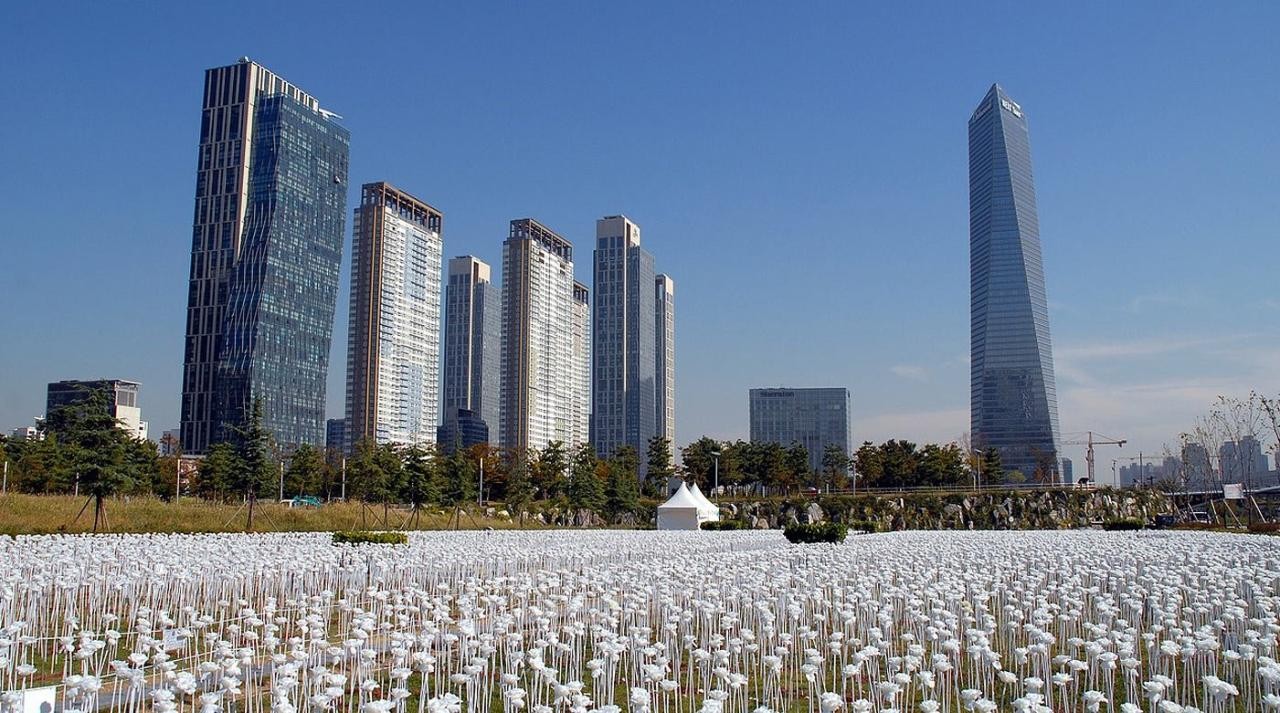
For example, Songdo, on the West coast of South Korea was built on reclaimed land and covers roughly 1500 Acres. Today, Songdo is a community of 167,000 residents located within one of three Free Economic Zones (IFEZ) in Incheon, South Korea. The project has been approximately 86% completed. Aside from residential areas, the location is also home to a Global Campus, Pharma Hub, Startup Center, and international organizations such as the Green Climate Fund.
Songdo’s development aimed to create an integrated 15-minute city, where people can access 90% of their daily activities by bike or public transportation in fifteen minutes or less.
In Songdo, traffic sensor data is utilized to regulate signal timing on the technical front, while household waste is directly transported from homes to waste processing centers through underground tubes.
Additionally, various apps assist residents in managing their daily lives providing them with information on bus schedules or checking on parking availability in the area.
That said, since these innovative systems were first offered, many new smartphone apps are now available across Korea and provide these and other digital services.
Today, there is a continuing effort to foster the development of Songdo as an urban district under the Incheon Free Economic Zone (IFEZ).
Dr. Won Sok Yun, who has been named the new Commissioner of the IFEZ) notes, “Over the next three years, I will aim to attract foreign and domestic investment in pharma and healthcare, tourism and leisure, and high-tech industries to create a ‘world-class city’.”
Smart City Platform
Recently, we are seeing the adoption of Smart City Platforms. These provide an integrated Geographic Information Systems (GIS) and Information and Communication Technology (ICT) platform. Plus, they offer municipalities some innovative urban solutions.
With the help of the Internet of Things (IoT) and AI, cities can enhance their emergency and fire response, traffic management, sanitation services, and facility maintenance. I’d add that it’s a tool for urban development and revitalization, and in some cases can enhance a city’s security.
Seoul, South Korea’s Smart City Platform is an example of successful integration. The system was developed between 2017 and 2019 to provide various services, including sophisticated drone defense monitoring.
The platform has been highlighted at recent Consumer Electronics Shows (CES) and gained global attention when it was modified during the COVID-19 pandemic to track real-time virus outbreaks.
In January 2024, neighboring Incheon’s Mayor Yoo Jeong-bok was quoted, “Building a smart city is a global challenge that all cities worldwide should aspire…. in collaboration with leading global companies and cities that possess state-of-the-art technology related to smart city construction.”
I agree that developing “Smart Cities” will require collaboration between private tech companies and local government. The mayor envisions building “eco-friendly smart cities centered around people’s needs.” This will address concerns about the ambiguous nature of the “Smart City” identity, which may mean different things to different groups.
The bottom line is that in discussions centered on “Smart Cities,” I suggest there is no one exact definition, however, the goal should be improved quality of public services and citizen welfare.
Incheon
Incheon is a city located on the northwest coast of South Korea and is home to a population of about 3 million people. Its suburbs are situated on the outskirts of Seoul.
Moreover, Incheon is home to South Korea’s primary international airport, the Incheon International Airport, serving as a gateway to northeast Asia.
IFEZ
In 2003, the Incheon Free Economic Zone (IFEZ) was designated as Korea’s first free economic zone. Within the Zone are three districts– Songdo, Cheongna, and Yeongjong International City.
Over the past 20 years, IFEZ has grown significantly and developed into a global city currently home to more than 400,000 residents, 3,300 businesses, 14 international organizations, and renowned foreign universities.
Don Southerton takes a look at smart city development in South Korea







Two Best Sellers: Korea 101: The Book, Hyundai Way
Two of Our Most Popular Books… Korea 101 and Hyundai Way: Hyundai Speed, The Third Edition
Korea 101: The Book https://a.co/d/4k0nNaQ
For over 20+ years, I have presented Korea 101 programs to more than 10,000 participants across the globe. Korea 101: The Book shares insights and experiences with my ‘boots on the ground’ in the classroom, boardroom, and, more recently, remotely.”
Hyundai Way https://a.co/d/dHJdwYy
Building on the past, this revised edition, too, looks at the transition to Smart Mobility and the corresponding workplace overhaul to become an agile global player.
Have a Korea-facing question? Just ask dsoutherton@bridgingculture.com
Don Southerton