Tag Archive for Korea consulting

Songdo in the News–Incheon and Songdo: Sub-National Economic Integration Efforts

As a longtime supporter of the Songdo project, we always have seen the Songdo International District ( the core of the greater Songdo FEZ which NY-based Gale International has developed) as a Hub for East Asia business…neat idea the area could be hub for eventually N-S commerce.

Songdo Peterson Institute

North Korea Blog

Incheon and Songdo: Sub-National Economic Integration Efforts
by Marcus Noland | May 13th, 2014

A few years back I was invited to participate in some activities sponsored by Gangwon province in northeastern South Korea, the traditional boundaries of which were split by the division of the peninsula. Officials were hoping that a reconnection of the east coast rail line would give the province an economic shot in the arm.

On the west side of the peninsula, officials have also been eyeing inter-Korean integration and the economic benefits that it could bring. According to a newspaper story passed along by Tom Murcott of Gale International, the developer of the Songdo “smart city,” back in 2008  local officials pushed for a traffic network expansion plan that would connect Incheon International Airport to Gangwha and Gaeseong Industrial Park as part of the Gangwha development plan. That integration would seem to make sense, especially if the October 2007 North-South summit vision of redeveloping Haeju ever came to pass.

With President Park’s renewed emphasis on unification, Incheon officials are dusting off the old plans. According to the report in the Incheon-based Kiho Ilbo, Incheon City has announced it will push ahead with the construction of an expressway from Yeongjong to Haeju of North Korea, the so-called “West Sea Unification Expressway.” Incheon City estimates KRW2.7 trillion of project costs will have to be spent on the 112km-long expressway.

Presumably the city doesn’t have that kind of cash laying around, and one would think that the national government might have something to say about opening up direct transportation links with the North, so don’t hold your breath.  Nevertheless, it’s a reminder that local officials have their own eyes fixed on North-South possibilities, and if North-South relations calm, Incheon and Songdo would be ideally placed to become the hub of North-South exchange.

###

Korea Herald: Author Southerton calls for new growth approach from Hyundai Motor


Southerton Korea Herald

[HERALD INTERVIEW] AUTHOR CALLS FOR NEW GROWTH APPROACH FROM HYUNDAI MOTOR

2014-04-30 20:51

“Speed” is the key to explaining Hyundai Motor Group’s stunning growth over the past decade. The rapid decision-making under the charismatic leadership of chairman Chung Mong-koo has been crucial for its global expansion.

But Don Southerton, author of the recent book “Hyundai Way: Hyundai Speed,” says a more cross-cultural approach is now needed for the Korean auto giant to keep going at its current speed.

He recalled a 2005 training session he held at Hyundai Motor’s newest plant in Montgomery, Alabama, where tensions were mounting between the American and Korean teams ahead of the production of their first vehicles at the facility.

“The problem was ‘cultural’ ― Koreans not understanding and Americans vice versa,” Southerton, who is also leading a Denver-based consulting firm, Bridging Cultural Worldwide, wrote in an email interview with The Korea Herald.

According to him, many of the new American managers had been searching in earnest for the “Hyundai Way” ― documented policies and procedures that would guide them in decision-making and day-to-day work.

But not finding a set “Hyundai Way” resulted in some Americans feeling that there might be a communication and language issue. “More concerning, a few hinted strongly at trust issues and that Koreans were deliberately withholding vital information,” he said.

He wouldn’t say this cultural issue was limited to Hyundai. Other multinational companies like Coca-Cola and IBM that have a long history of dispatching expatriates worldwide have always experienced such difficulties.

“But unlike American companies like Ford, GM and Chrysler that have highly standardized and documented policies and procedures, at Hyundai these were acquired on the job and over time, shared informally through mentoring,” he said.

He pointed out even some Korean employees experience this issue.

“In the past … an employee joined the group as their first job and moved up through the ranks. Today, greater numbers of Korean team members are joining the group after years of employment with other firms. Like Westerners, it takes time for them,” he said.

“As more and more Hyundai operations and sales have shifted globally, the need to localize to each market has been crucial. I feel Hyundai is constantly evaluating what works best for each market. In some markets leadership is Korean, in others leadership is local.”

He suggested that what works best is when both the Korean and local leadership are strong collaborators. As for the hiring of non-Koreans for local leadership roles, like in any international operation, or in the case of Peter Schreyer, the group’s design chief, the decision would be based on the individual’s experience and reputation.

“I also feel one management change occurring is a shift from the top-down management to one of collaboration,” he said of the ongoing leadership transition from the current chairman to his son Eui-sun, the vice chairman.

By Lee Ji-yoon (jylee@heraldcorp.com)

See LINK

Hyundai Way: Hyundai Speed, New Book Looks at Korean Corporate Culture

Global business expert Don Southerton has authored a new eBook, Hyundai Way: Hyundai Speed, which shares insights into the one of the world’s top automakers.


Korea global business expert Don Southerton has released his latest publication, titled Hyundai Way: Hyundai Speed. Southerton notes, “In the wake of the recent accomplishments of the Hyundai Motor Group and specifically the Hyundai Motor and Kia Motors brands a question is often raised, ‘What makes Hyundai so successful?’ I tackle this question from a cultural perspective.”

The author points out his objective for Hyundai Way: Hyundai Speed is to share insights into the Hyundai Motor Group—a unique inside view of a unique corporate culture.

In addition to the growing number of Hyundai and Kia Motors enthusiasts wishing to learn more about the carmaker, Southerton sees several target audiences for the book. First for the global teams working for the Hyundai Motor Group and its affiliates, Hyundai Way: Hyundai Speed will build upon their current experiences, while providing new understandings.

A second audience is firms and vendors providing services or products to the Hyundai Motor Group. This book will be beneficial in strengthening and maintaining the relationship.

A third readership is companies with significant Korea-based business. Although the book offers specific insights into Hyundai Motor, the broader content can apply to many Korean firms in sectors outside automotive.

The eBook is available through iBook, Kindle, Nook, and Amazon.

About the author

With over 35 years’ experience, Don Southerton is the definitive authority on Korean-facing global business, strategy, branding and market entry–from automotive, golf, retail, and QSR/ food sectors to New Urbanism and Green technology.

Building on a life-long interest in Korea and the rich culture of the country, Southerton writes extensively and provides commentary to the media on modern Korean business culture and its impact on global organizations. This is his thirteenth publication. 

LINK  PRWEB Press Release 

###

New For 2014: Strategic Services

A Note from Don Southerton

While my services have been well received and highly valued over the past decade, in 2013, I began shifting focus from training programs and coaching leadership to a deeper role with a few select clients.

In other words, rather than standing outside the organization and giving advice, counsel and perspective, I actively facilitated and supervised projects that addressed the companies’ pressing needs. This approach, built upon my understanding the nuances of Korean-based business and their companies, has proven to be extremely successful for my clients.

This new role was driven from ten years’ of listening to teams and leadership share (and, at times, vent) challenges. Frankly, after listening to this dialogue, I felt that this expanded value-added approach—one clearly within my skill sets —would serve my clients well.

As we begin 2014, I look forward to supporting you and would like to discuss how this new service can help you meet your firm’s strategic challenges.

Don Southerton Korea consulting


Dsoutherton@bridgingculture.com


###

Golf, Songdo, Mad For Garlic, Cars and New Media

By Don Southerton, Editor
From my previous post, I’m back from attending the PGA’s President Cup in Ohio. In 2015, the Jack Nicklaus Golf Club Korea will host the event. Look for updates as they unfold.

Over the years, I have worked closely with the developers of Jack Nicklaus Golf Club, NY-based Gale International on their Songdo, city of the future. My cover story on Songdo was recently highlighted in Korea magazine. I see Songdo as ever evolving and becoming a knowledge-based forward thinking hub of East Asia.

Songdo Don Southerton

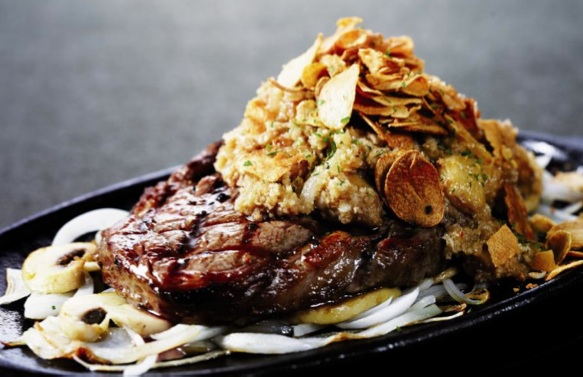
Over the past two years I have also advised top North America golf retailer Golfsmith International on entering the Korean market, plus I am working closely with Korea’s Mad for Garlic on opening in the US and the ME.

Don Southerton Mad For Garlic

Tasty !

What stands out is…US brands and concepts do well in Korea, and Korean brands do well here in North America.

Hyundai Motor Don Southeton

BTW I still work extensively across the Hyundai Motor Group supporting Hyundai, Kia Motors, Hyundai Capital, Hyundai Glovis—to name but a few. In addition, I support a number of key digital and media partners, which over the years has become one of my areas of expertise. Take Note: I see digital and new media work culture as edgy and very cool.

That said, regardless if its golf, forward leaning Songdo, garlic inspired cuisine, cars or new media–Culture– plays an incredible role. Sharing and communicating the nuances in workplace culture allow projects to move forward smoothly with no delays. In the worst cases, and without a strategy, coaching and support, expectations are not met, projects stall, deadline come and go, and often employee turnover is high with costs escalating.

When needed, my role is to provide support, strategy, coaching and training.

+1-310-866-3777
Dsoutherton@bridgingculture.com
Pretty much here 24-5

###

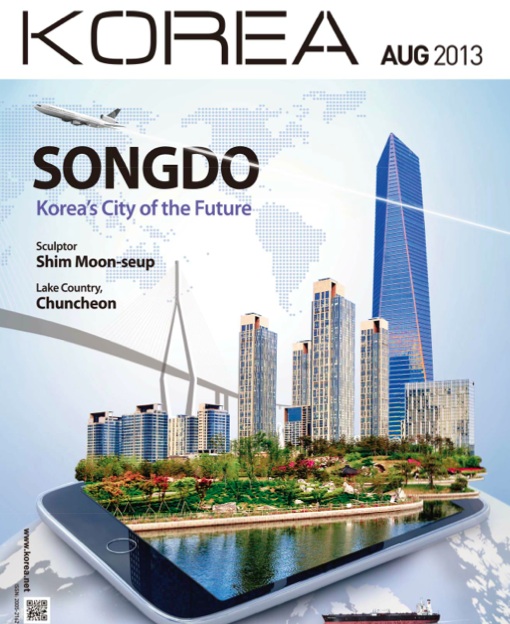
Korea Magazine Shares Songdo’s Vision

The cover story for the August edition of Korea magazine  looks at Songdo and it’s vision for the future.

http://www.scribd.com/doc/157552923/KOREA-2013-VOL-9-No-08

Thanks go the Robert Koehler and his team… As the story’s writer, I appreciate the opportunity to share my views on Songdo.

DS

###


Korea Inc.–Common Misconceptions

Many thanks to my friends at The Korea Society for posting on YouTube segments of recent Korea Inc business discussion.

[embedplusvideo height=”281″ width=”450″ editlink=”http://bit.ly/14iQtpq” standard=”http://www.youtube.com/v/UnAMaDxXwm4?fs=1″ vars=”ytid=UnAMaDxXwm4&width=450&height=281&start=&stop=&rs=w&hd=0&autoplay=1&react=1&chapters=&notes=” id=”ep8145″ /]

To view the full YouTube Working for Korea Inc. series go to:
https://www.youtube.com/playlist?list=PLYTdCvotGB1QKPCB5zVzabQD6NG9I2VkZ

DS

Working for Korea Inc.

An evening discussion with Don Southerton

The Korea Society

Hosted by The Korea Society, NYC

June 27, 2013  5:30 PM

Korean firms operating internationally employ non-Koreans at all
levels. Don Southerton, CEO of Bridging Culture Worldwide and
author of Korea Facing: Secrets for Success in Korean Global
Business, shares insights on working for Korea-based companies and
understanding Korean operational norms for goods and services
providers.

http://www.koreasociety.org/corporate/working_for_korea_inc.html

THE KOREA SOCIETY is a private, nonprofit, nonpartisan organization
with individual and corporate members that is dedicated solely to
the promotion of greater awareness, understanding and cooperation
between the people of the United States and Korea.

In pursuit of its mission, the Society arranges programs that
facilitate discussion, exchanges and research on topics of vital
interest to both countries in the areas of public policy, business,
education, intercultural relations and the arts. Funding for these
programs is derived from contributions, endowments, grants,
membership dues and program fees.

From its base in New York City, the Society serves audiences across
the country through its own outreach efforts and by forging
strategic alliances with counterpart organizations in other cities
throughout the United States as well as in Korea.

For more info dsoutherton@bridgingculture.com

###

Kia Motors America, A Bridging Culture Worldwide Case Study Success Story— A 2013 Revisit

By Don Southerton

As a disclaimer, the viewpoints of this report are solely the opinions of Don Southerton and Bridging Culture Worldwide.

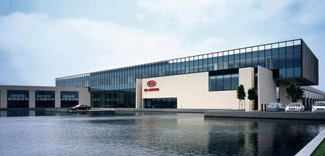
Kia Motors

Kia Motors America

I support a number of Korea-based global organizations. Many are in the automotive sector. This is because the top Korean auto maker (Hyundai and Kia Motors) has a huge overseas operations and the auto sector requires extensive infrastructure and staffing to support their network, including parts, sales, marketing, logistics, manufacturing, finance, R&D, design, legal, and compliance with a myriad of local, state and federal regulations.

Moreover, tier 1 vendors and suppliers now support the carmakers. This creates the need for these third party partners to better understand the mindset and corporate culture of Korea-based firms, such as Hyundai and Kia Motors.

First reported in 2010 and updated again the following year, I prepared a case study sharing how Kia Motors America, a subsidiary of the Hyundai Motor Group, highly proactively provided their team with support. This included Korean culture training for new employees and ongoing Korean cross-cultural workshops for the team.

For over 7 years and in cooperation with KMA’s Human Resource Organizational Development team Bridging Culture Worldwide has offered multiple week sessions of Korea 101 and 201 cross-cultural training. Program lengths vary to accommodate schedules but usually the first 6 weeks focus on history, Kia heritage, and popular culture. A second six weeks program looks at the modern Korean workplace and its norms, practices, and expectations.

In May 2013, we extended the training outside the corporate offices in California to a well-received web-based program offered to Kia Motors’ ever-growing US nationwide team.

Kia has also provides ongoing support and coaching to key management and leadership. This includes Korea culture coaching to new non-Korean executives. Here we share Korea’s heritage, Kia history and corporate culture, workplace expectations, and etiquette, while providing answers to questions that surface day-to-day. We also prepare executives for their first visit to Korea and the norms/ expectations for meeting with senior Korean leadership and high-level meetings at Kia Motors HQ, R&D Center, etc.

Over the years we have supported KMA marketing teams, public relations, service, product planning, HR, legal and strategic developments teams. Our support has been diverse from working with Kia technicians competing in Kia Motors Company’s Global Automotive Technical Skills Competition in Seoul to sharing insights into the Korean workplace with university students working as interns at KMA each summer.

In closing the key to the success of Kia Motors America’s Korean cross cultural training has been the strong endorsement of the firms’ CEOs, senior American and Korean management, and the HR and OD team. As an organization they realize that their teams need support. In turn, we craft programs targeting their needs and flexible enough to meet demanding and ever-changing work schedules. Expecting employees to “ get it” without training and coaching rarely works. We are proud to work with Kia Motors and their team.

If you have questions on implementing a program to support your team, please feel to contact us at dsoutherton@bridgingculture.com or call 1-310-866-3777

Copyright 2013 BCW

US Korea Connect–Trade in Ideas: A Hidden Benefit of KORUS FTA

Don Southerton US Korea Connect

by Don Southerton April 30, 2013
I have long followed and supported both successful market entry of Korean business into the US and American firms to Korea. This mutual success has centered on product, retail and quick service restaurants, with limited opportunities in the service sectors. The KORUS FTA will make a huge change in this exchange. In the area of services, I see KORUS FTA as a game changer.

A few weeks ago, United States Secretary of State John Kerry visited Korea and spoke about the importance of trade between our two nations. This month, President Park will visit the White House to reaffirm our countries’ mutual commitment and celebrate the 60th anniversary of the U.S.-Korea strategic alliance. Since its implementation last year, the KORUS FTA has given that alliance a new dynamic. One area of the agreement that should receive more attention is trade in services.
At its core, trade in services is trade in ideas. Whether legal, financial, technical, or in the tourism industry, the services exchanged between the U.S. and Korea expand mutual access to highly skilled talent. That talent is vital in generating the ideas that will define our economies tomorrow. In fact, today’s leaders in the U.S. service industries are using the KORUS FTA to recruit and nurture that talent.

Unlike the banking and insurance sectors, non-Korean legal and accounting firms faced entry barriers prior to the KORUS FTA. Today, American law firms like Cleary, Gottlieb, Steen & Hamilton are able to open offices in Korea under the KORUS agreement. Law firm Ropes and Gray, Another U.S. Korea Connect success story, sees their new ability to open physical locations in Korea as a way to show their dedication to Korean clients.

Outside the obvious benefits to service related firms, under the KORUS FTA, U.S. businesses are generating and exchanging ideas more freely. But the best is yet to come. American companies have expressed the need to hire additional Korean professionals to help them navigate the Korean marketplace. Professional visa reforms under consideration by the U.S. Congress will fulfill that still unmet need, allowing companies to take greater advantage of the KORUS FTA.

As the pace of business quickens, service providers need a regulatory framework that provides them maximum flexibility. A fluid business mechanism that promotes and enhances innovative ideas is essential for prosperity in both countries. That’s precisely what the KORUS FTA does for the service industry.

About Don Southerton
Don Southerton has held a life-long interest in Korea and the rich culture of the country. He has authored numerous publications with topics centering on the Korean auto industry, new urbanism, entrepreneurialism, and early U.S.-Korean business ventures. Southerton is often called upon by the media (the BBC World Service, CNN Fortune, Bloomberg TV, Korea Herald, Korea Times, Yonhap, Wall Street Journal, Forbes) to comment on modern Korean business culture and its impact on global organizations. His firm Bridging Culture Worldwide provides strategy, consulting and training to Korea-based global business.

Link to Article
http://www.uskoreaconnect.org/blog/2013/04/trade-in-ideas-a-hidden-benefit-of-korus-fta/