Tag Archive for Korea consulting

Everything Korea, June 29 Episode: the Gap in Norms


Outside my day-to-day support of Korean facing business and clients, I am drawn to ponder on issues and drill deep. I other words research, investigation and then providing commentary on the direction of Korean business from trends inside Korea to Korea-facing international operations.

An example of this process, several years ago I coined the term K-lobalization (Globalization with a K for Korea) as I saw the trend when Korean firms boldly promote their own unique management style and corporate culture internationally and across many markets. A recent manifestation is organization-wide, corporate-directed mandates…. from core value, vision, and management training directives to most recently how they should brand or even target specific consumers in local markets. Usually these programs are expected to be unchallenged and accepted without question by overseas teams—at times not in the best interest of the local operation.

This said, a new topic, which has my interest, was touched upon in May 11 edition of Everything Korea… there I argue a key challenge in Korean success with startups and innovation was “culture.  I would like to expand this perspective more broadly to be the “culture” needed to foster the Creative Process in general. In fact, this is the first of three commentaries on the topic.

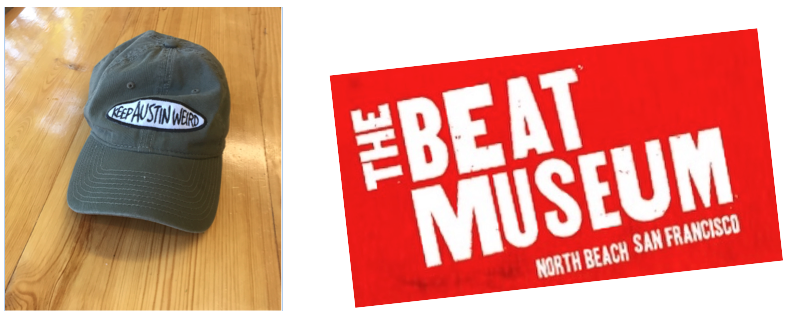
Let me explain. What has evolved in America regarding startups, tech, and innovation is they tend to hub in cities with diversity and strong counter-cultures like Boulder, Colorado, San Francisco, Austin, TX, and NYC, although more and more scenes are emerging in Nashville, TN or here in Golden, CO…
Screen Shot 2015-06-29 at 10.25.40 AM

Nuff said…Edgy Austin and Jack Kerouac

Within these communities I have witnessed an amazing synergy not only in day-to-day interactions and dialogue, but also in resources. Actually spending an hour and listening to the chats and even pitches for Angel Funding in edgy Caffe Centro on a South Park Street in San Francisco (the couple of blocks once referred as the Tech Ground Zero and where concepts like Twitter were launched and well as scores of tech companies and startups now call home) one quickly sees why locating in one of these scenes is key. In fact, showing how widespread, I frequently hear similar coffee shop launch pitches in Golden, Colorado.

Let me explain more in detail.

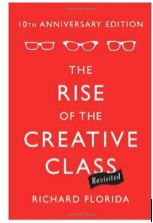
As academic Richard Florida points out in The Rise of the Creative Class, creatives as a group reflects a “powerful and significant shift in values, norms, and attitudes.” He clusters this attitude to be:

1) Individualism

2) Meritocracy

3) Diversity and Openness (which can translate to gender, sexual preference, race and my favorite “personal idiosyncrasies”.)

Of course those familiar with the Korean workplace and by this I don’t mean only the larger organizations but even most progressive firms, recognize there is a huge disparity from these “creative” norms.

For example, in contrast to the individualism within the creative class, in Korea we find deeply rooted collectivism where the group is the primary unit of reality and the ultimate staendard of value.

In collectivistic societies, group goals take precedent over an individual’s objectives. This view does not deny the reality of the individual, but, ultimately, collectivism holds that one’s identity is determined by the group(s) with which one is affiliated.

Collectivistic cultures also require that individuals fit into the group—and “conform.”

Noting this, outside values, norms and attitude, perhaps the gap between US and Korea that also occurs is in “risk mindset.” Today the American entrepreneurs, angel investors and VC who launched Facebook, Twitter, Instagram, Linkedin, Square and now Super continue to look for, invest and provide mentorship and guidance to what they hope will be the next success story…. In most cases they are investing resources in multiple ventures….

This said they know and accept that failure is part of the process…. As Biz Stone (co-founder of Twitter, and an early investor in Square, Medium…and a bunch more) said at SXSW on his most recent work… “the failure of one venture, Jelly, led to success at a venture, Super.me ”

So getting back to Korea the real challenge is not in lack of ideas or topnotch talent, but in allowing and fostering a culture of Diversity and Openness, an acceptance of failure, and tolerating and even embracing non-conformity.

The good news…. I would not give up on Korea and a creative culture. More of my thoughts on this in the next episode of Everything Korea. I even will propose a roadmap for grooming creatives in Korea.

So until next time…

Links

The Rise of the Creative Class http://www.amazon.com/Rise-Creative-Class-Revisited-Anniversary-Revised/dp/0465029930/
Screen Shot 2015-06-29 at 10.27.29 AM

The Beat Museum http://www.kerouac.com

Biz Stone’s Super.me https://super.me

Screen Shot 2015-06-29 at 10.30.01 AM

Questions and Comments?   questions@koreabcw.com
Everything Korea: Episode June 15, On-boarding

I truly enjoy sharing the nuances of Korean business culture—whether through my books, Vodcasts like this one, in media interview and articles, or coaching those new to the Korea facing workplace.

Long part of my core business has been On-boarding. In fact, this week I have a number of engagements scheduled in Southern California with some planned for San Francisco in the next future.

On-boarding or, organizational socialization is where new employees, from C-level staff to entry-level hires, acquire necessary knowledge, skills, and behaviors to be effective in their job. In most cases for my work this means those employed by Korean companies, but it also includes those partners that provide services to Korean global firms

A common false assumption taken by some is those new to the company or project “will get” the cultural nuances without considerable support. Nothing can be more mistaken.

I find the Struggles for non-Koreans can range from team members not dealing with matters feeling it may offend their Korea colleagues to being perplexed and frustrated why approval processes are so complex or why Finance appears to be the making final call in critical operational decisions. The later two situations covered extensively in my books Korea Facing and Korea Perspective. See link below.

All said, my role in On-boarding is to provide context and the reasons behind Korea facing business, while over time mentoring, coaching and steering teams and C-level leadership to solutions.

If coaching and mentoring is like something you and your company can benefit from, I have blocked out some times I’m available to discuss more. Just go to http://www.meetme.so/southerton
Until next time…

Link to Don’s books
http://www.amazon.com/gp/search…

‪#‎onboarding‬ ‪#‎koreanbusinessculture‬ ‪#‎coaching‬ ‪#‎koreanglobalbusiness‬‪#‎culturalnuance‬ ‪#‎mentoring‬ ‪#‎bridgingcultureworldwide‬

Everything Korea: Episode June 8—The Short Answer

I was on a conference call last week when asked how best to describe my work—and do I provide consulting for CEO and C-level management—her organization’s international development committee made up of a number of CEOs.

My short answer was that a client and long friend, then a CMO for a major company best described my practice to others as Everything Korea… I also like having been introduced as “ a high power consultant” or Don is “the guru, the guy CEOs want to have their voice heard with, “ the later shared on Seoul’s eFM tbs Koreascape.

Pondering over the weekend on the question from the conference call much of what I do is provide context and a strategy to decision-makers involved in Korean facing business projects that range into the hundreds of million of Dollars.

In particular, I provide counsel and solutions based on my years working with Korean business—a good part in the international expansion into new markets and the challenges that surface and as a client once asked “ where are the landmines he needs to be aware of and avoid.”

So this gets to why I post weekly Vodcasts, frequent media commentaries, case studies as well as books on Korea facing topics.   They all serve as channels to support and educate.

This said, in my consultancy each engagement needs to be approached on a case-by-case basis—no two situations identical.

If you feel you might benefit from my C-level insights, I’ve blocked out my availability to chat and discuss…. Just go to http://www.meetme.so/southerton

In closing:

A great book on the reshaping of the American economy and the New Order… check out Richard Florida’s The Rise of the Creative Class, Revised Edition.  I prefer the Hardcover.

And the music on Repeat Song listened to while drafting this week’s episode—Pink Floyd, “Wishing You Were Here” Re-mastered Available on iTunes.

Links

Seoul eFM Koreascape http://www.tbs.seoul.kr/efm/koreaScape/

The Rise of the Creative Class

http://www.amazon.com/Rise-Creative-Class-Revisited-Anniversary-Revised/dp/0465029930/

Pink Floyd, “Wishing You Were Here”

https://itunes.apple.com/us/album/wish-you-were-here-remastered/id704223460

Everything Korea: May 25 Episode: Diverse Sub-cultures

Coming off the Memorial Day Weekend Holiday here.  I use holidays as a time to write, read, recharge and re-focus. This means opting out perusing Facebook and Twitter, as well as checking emails.  I’m happy this year both the American holiday and Buddha’s Birthday (a legal holiday in Korea) fall together.
I was again asked what’s been on my reading list.  I recommend for starters, Brian Grazer’s (the Hollywood producer and with creative partner Ron Howard founded Imagine Entertainment) new book A Curious Mind
A second Book:  The start-up of YOU, by Reid Hoffman, co-founder and Chairman of Linkedin
And, Hatching Twitter, by Nick Bilton
All three give some great insights into the varying aspect of American business–behind the scenes and sub-cultures.
This brings us to today’s topic—these recognizing diverse sub-cultures.  To often like an iceberg what is seen on the surface only shares a potion of a business and in particular for that business model in a respective market or region.
What is truly deceptive is that on the surface business is business, and all can appear similar.  Where the challenge emerges is that each business sectors can vary considerably in the West, and the three books I mention highlight just how different.
For example Brian Grazer, as a Hollywood insider and successful TV and film producer talks about expectations within filmmaking and specifically Hollywood that require special mindset— which at the core is “creating ideas.”
Building on this, the other two books look at recent trends and sub-cultures that exist within…
As the Linkedin Chairman points out that in contrast to an old model embodied by the once great Detroit, we find the entrepreneurial mojo of Silicon Valley embracing a willingness to take bold risks and accept failure, coupled with a network of alliances to work in collective action.
More revealing to inner workings, we find in Hatching Twitter that can things vary lots even across startups.  Cited in the book one of the Twitter co-founders Biz Stone willingly went to a startup which would become Twitter from  “unlimited free meals, free snacks, free buses to work, and a free inexhaustible everything at Google  and replaced with a office where homeless people slept in stairway, the only free transportation was his two feet, and the only free food and drink was a beer after work if EV [his boss] picked up the tab.”
This said, the author notes, “ The cultural difference was incalculable. The sterile, robotic culture of Google, with its know-it –all engineers and bossy bosses, was now replaced with tattooed hackers with a do-what-you-want mentality.”
So what am I saying…
To my friends and clients in Korea, I’d share these are just several examples of the diversity in Western work culture and norms—a deep understanding required to be effective in the local market.
In contrast, although no two Korean Groups are entirely alike in their mindset and even Divisions and sister companies within a Group can vary some—workplace culture, norms and process are very relatively similar.  For example, hierarchical titles, role of Finance, a team focus, a junior’s deference to seniors, pressure to take action over considerable upfront critical thinking, as well as top down oversight and decision making.
All said, I am often asked about a pet project of mine over the past year Mad For Garlic.  My Korean friends and the expat community in Korea know the brand well. In short…. Mad For Garlic is known for its unique and innovative menu with garlic-specialized Italian cuisine.
I was asked to assist the team in US market entry. A rare and very smart move by the Korean team who recognized the need for local support. Our first round was getting the word out to the FSR industry.  This is summed up nice in a PDF study. Link below.
As if often the best case, our original strategy to find a master developer for the US market has evolved to now finding a VC or Angel to invest in the International development of the brand.  This makes considerable sense with a recent  $48 MM investment by Standard Chartered Private Equity (SCPE) in the now 40 plus domestic Korea Mad For Garlic operations. This new partnership with SCPE will accelerate Mad for Garlic’s Korea expansion.  Working with the Korean team we seek to accelerate the International development though a similar partnership.  Questions, thoughts or an interest, please contact me directly and we’d love to discuss more.
Oh and one more thing…. I am off to Nashville, Tenn. area this week and more specifically as speaker a panel on international development held in Clarksville-Montgomery County, soon be home to a $180MM Hankook Tire plant.
So until next time….
Links


Everything Korea, May 18, 2015 Episode: Embrace and Immerse

In this week’s Everything Korea my thoughts again turn to discussing why some Korean businesses do well outside Korea, while others struggle.

A caveat is tied to last week’s episode where although Korea entrepreneurs have and continue to launch some amazing new startup concepts—few ever gain the stellar funding and success achieved by similar startups the US in the past or now with concepts like Periscope, Meerkat or my favorite Super.me.

Frankly what works well in Korea may not work well outside Korea and with regard to the Startup Model even work within Korea. Same thing goes for global brands, what works well in each respective country or region needs some if not substantial localization—localizations a catch phrase that everyone agrees to but few truly embrace.

In particular, I see with Korea brands looking outside Korea to often the same missteps re-occurring. In my recent case study “A Global Approach: For Korea Management Teams” I address many of the challenges. See the link below for a copy of the study.

So what are some steps in my opinion for 1) Korean brands already having a global footprint, or 2) brands that wish to expand outside Korea, or 3) domestic Korea startups, all need to take?

I’ll talk more on this in the next episode, but for a first step–embrace and immerse in the local culture, market norms and success model.

What is a poor idea is for an overseas team modeling practices after the Korea operations. This I know can be difficult–most Korean teams dispatched are most familiar with the Korean model, receive limited support to transition, or are subjected to pressure from their peers and seniors to limit the embracing of local norms over the mother company’s. The later situation a real concern.

Again in the next episode we’ll drill deeper to the core causes of the disconnects.

Oh one more thing…
Those struggling with some of the challenges I’ve mentioned, or have issues within your organization that need to be addressed….I have blocked out my availability to chat and discuss…. Just go tohttp://www.meetme.so/southerton

Until next time, all the best.

Case Study http://unbouncepages.com/case-study-fb/

And a very cool App, please join and follow me https://super.me

‪#‎Koreanculture‬ ‪#‎bridgingculture‬ ‪#‎koreanbusiness‬ ‪#‎globalstartups‬‪#‎Koreanstartups‬ ‪#‎koreanbrands‬ ‪#‎globalbrands‬ ‪#‎localize‬ ‪#‎localization‬‪#‎globalfootprint‬

Everything Korea: May 11 Episode, Startup Culture


Summary and Links:
Just back from NYC, so I wanted to share the link to The Korea Society presentation. Nikita Desai and the team did a wonderful job hosting and then professionally producing and uploading the event. You’ll want to set aside some time to watch the recorded session. I have included the YouTube link in week’s copy.

The topic of Korean startups seemed to come up lots last week. We touched upon it in The Korea Society interview, but it was a subject of discussion in several of my high level meetings while in the City.

I feel it is a “talking point” that I will be elaborating more on in the next few weeks, but frankly Entrepreneurship and the roots of Korean style Entrepreneurship has long been a subject of my study, writing and work.

In fact, my first book was titled, The Filleys: 350 Years of American Entrepreneurial Spirit

A second book Intrepid Americans: Bold Koreans—Early Korean Trade, Concessions, and Entrepreneurship

As well as Chemulpo to Songdo IBD: Korea’s International Gateway, and Hyundai Way: Hyundai Speed all approach Entrepreneurship from different perspectives, historically and culturally.

So today, just as an introduction to the topic of Korean startups, I see the major challenge with Korean startup is culture. Let me explain, what has evolved in America regarding startups is they tend to hub in cities like Boulder, Colorado, San Francisco, Austin, TX, and NYC, although more and more scenes are emerging like here in Golden, CO…

Within these communities I have witnessed an amazing synergy not only in day-to-day interactions and dialogue, but also in resources. Actually spending an hour and listening to the chats and even pitches for funding in edgy Caffe Centro on a South Park Street in San Francisco (the couple of blocks once referred as Ground Zero of the dot.com, where concepts like Twitter were launched and scores of tech companies and startups now call home ) one quickly sees why locating in one of these scenes is key ….

Noting this, where the gap between US and Korea occurs is primarily in mindset. Today the entrepreneurs, angel investors and VC who launched Facebook, Twitter, Instagram, Linkedin and Shopify continue to look for, invest and provide mentorship and guidance to what they hope will be the next success story…. In most cases they are investing resources in multiple ventures….

This said they know and accept that failure is part of the process…. As Biz Stone (Twitter, Square, Xanga, Medium…and a bunch more) said at SXSW… “the failure of one venture, Jelly, led to success at a venture, Super.”

So getting back to Korea the real challenge is not in lack of ideas, innovation, and talent, but in allowing and fostering a culture for an acceptance of failure. And this is where I will take up in the next episode of Everything Korea and share some an exciting developments, which may be the very answer…so stay tuned.

Until next time….

Link to The Korea Society
https://youtu.be/oDo6y1RD3s8

Link to Don’s Books
http://www.amazon.com/gp/search?field-author=Donald+Southerton&index=books

For some fun with your iPhone
https://super.me/

Questions? Go to questions@koreabcw.com
Korea Perspective

Listen to Podcast from the Korea Society Corporate Series Featuring Don Southerton

Listen to Podcast Here:

Korea Society Corporate Series Featuring Don Southerton

TKS 2

Everything Korea – Korean Foreign Investment, Tennessee and Car Tires!

In the week’s episode I recommend some books, as well as discuss Korean Foreign Investment, Tennessee and car tires.

A common question I get from Korean executives is “what books are you reading Don?” Two books stand out from my current bookshelf. [Both titles are listed in the video].

Before I share why these two books are on my reading list, I need to step back the past several months. Prior to my March trip to Seoul, I picked up a new iPhone 6 (and yes, I plan to get an iWatch Sport soon). Anyway, while in Korea and to take advance of the high speed Internet I planned to do the software update. Mid download, the phone locked up.

Luckily I was heading back to the US the next day, and would be in-flight for much of the next day, so I “survived” without phone, text and constant email updates. In the meantime, I was re-reading Tim Ferriss’ 4 Hour Workweek, and although cognitive to my addiction of constantly checking email, I finally came to recognize the time chewing up keeping an eye on emails, most all non-urgent, was impacting the quality of my work and life. In particular, my creative thought stream was disrupted with a mix of updates, alerts and promotions. I wouldn’t even mention how many times I would check emails during the night.

So what’s the relevancy, well, after now implementing some rather cool email filter processes, and earmarking times to follow up on emails, I have carved out noticeable blocks of time I am now devote to additional reading and research…. And I’ve found “Those who read, have something to share.”

Moving to my next topic, I’m in NYC at the Korea Society next week. I’d happy to say the presentation will be recorded, available on YouTube and I’ll be posting the links.

BTW I have some time still available while in New York, so let me know if you have some thoughts who I should meet with while in the City.

One more thing-
In late May I will be in Tennessee as part of a panel discussing local foreign investment. Specifically I was asked to discuss Korean foreign investment in regard to Hankook Tire’s new $800 million car tire plant. Frankly, I’ve supported Hyundai and then Kia Motors’ manufacturing plants in Alabama and Georgia as well as teams from their other plants globally. I have also worked with Hyosung, which in their diverse product lines manufactures tire cords—the key component in tires.
I’ve been followed news of the Hankook plant since last fall, and hope to learn more about their plans for the US plant as well as help the local government and community support the new plant.

In turn it’s these experiences that provide the insights I share with you and others—all of us benefitted from this work across and supporting the many legs of Korean business: Manufacturing, Sales and Marketing, research and design.

So until next time…

Quotes

“Those who Read, have something to share.”

Hankook Tire
http://www.hankooktireusa.com/compmed/News_View.aspx?pageNum=5&subNum=4&ChildNum=1&Seq=481

4 Hour Workweek (updated)
http://www.amazon.com/4-Hour-Workweek-Anywhere-Expanded-Updated/dp/0307465357

A Curious Mind
http://www.amazon.com/Curious-Mind-Secret-Bigger-Life/dp/147673075X/

Questions? Go to questions@koreabcw.com

Korea 101 On-line Launched

Building teamwork and cross-cultural understanding is paramount to success. Misunderstandings and stress created by the differences in culture impact productivity and smooth business operations. Cross-cultural education is recognized as the chief solution to cultural challenges in the workplace.

Bridging Culture Worldwide (BCW) provides a wide range of Korea-focused training, coaching, and consulting services beginning with Korea 101.

What is Korea 101?
Korea 101 is a timely overview approach to Korean culture, modern history, norms and business culture. The goal of the program is to foster a better understanding of Korea and its business culture.

What are topics covered?
Business and social etiquette
History and economy of Korea
Culture (music, art and cuisine)
U.S./Korean relations including North Korea
The Korean workplace, management structure, and decision-making
Popular culture
New trends
Cross-cultural insights

Tell me more
For the first time we are offering Korea 101 in an on-demand online learning format. The intent of each of the five lesson sessions is to build upon the current experiences, while providing new knowledge and insights.

Korea 101 has been offered in corporate Live and Webinar sessions both in the United States and internationally for more than a decade. Thousands of participants have benefited from training and the insights it shares.

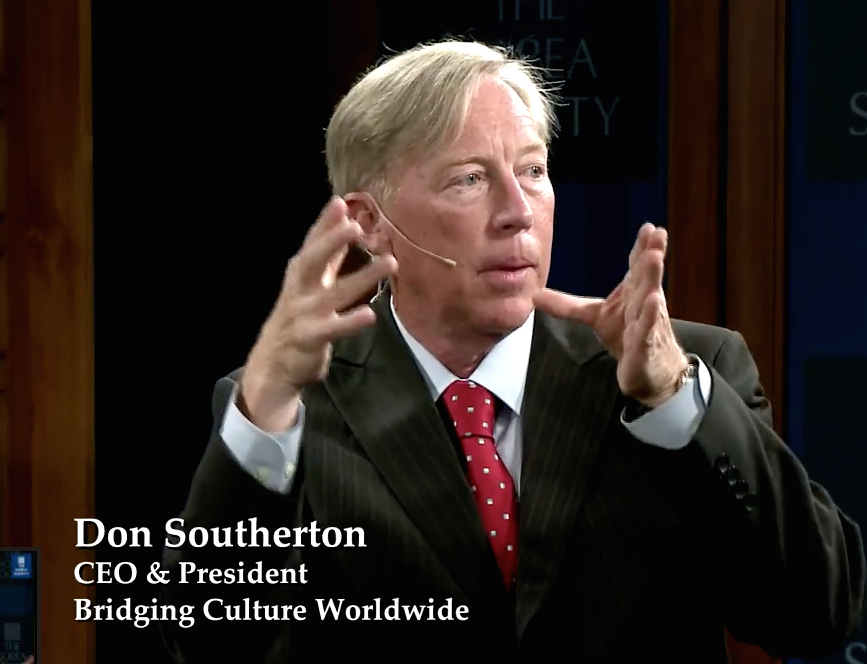
The program is conducted by noted author, strategist and lecturer, Don Southerton CEO and President of Bridging Culture Worldwide. Don works closely with many of Korea’s top Groups such as Hyundai Motor and is an experienced specialist in bridging cultures between Korean and non-Koreans. His firm, Bridging Culture Worldwide, is a Golden, Colorado, Irvine, California, and Seoul, South Korea, which offers programs and consulting to help management and employees appreciate and understand Korean culture and business relations.

Noted Korea expert Don Southerton

Noted Korea expert Don Southerton

Don has authored numerous publications with topics centering on culture, new urbanism, entrepreneurialism and early U.S.-Korean business ventures. Southerton also extensively lectures and writes and comments on modern Korean business culture and its impact on global organizations. He is a frequent contributor to the media (WSJ, Forbes, CNN Fortune, Bloomberg, Automotive News, Korea Times, Korea Herald, Yonhap, Korea Magazine, eFM tbs Koreascape and FSR) on Korea facing business and culture.

Outcomes include:
A strong understanding of Korean cross-cultural differences and their relevance to Korean workplace culture.
Reduce tensions and frustrations rooted in cross-cultural issues.
Better morale and team spirit.
Support for interacting with Korean teams assigned to local operations.

The Cost for the 5 web-based on-demand learning sessions in $495.00.

To learn more, CLICK.


Korean Business Expert Don Southerton Releases Ground Breaking Book

Korea Perspective offers a road map to avoid common pitfalls while overcoming challenges, addressing issues that frequently surface with Korea.

PR

http://www.prweb.com/releases/2015/01/prweb12479689.htm

Golden, Colorado (PRWEB) February 02, 2015  Korean global business consultant Don Southerton has released his latest publication, titled Korea Perspective. Southerton notes, ” As a result of my interacting with Korea facing business on an almost daily basis, Western overseas teams, as well Korean leadership and teams, have openly shared their challenges and pressing concerns. In turn, I have worked to provide them with a framework, strategy, and solutions. This book is based on these daily interactions.”

The intended audiences, the author points out, are Westerners employed by Korean-based companies outside South Korea, firms providing services or products to a South Korean overseas subsidiary or operations and global companies that have significant business with a Korean company.

Southerton adds, “All in all, this book offers a road map to avoid the pitfalls, navigate around the roadblocks, and thrive.”

Korea Perspective is available through Amazon Kindle, Nook and most popular booksellers.

About the author Don Southerton has a life-long interest in Korea and the rich culture of the country. He has authored numerous publications with topics centering on culture, new urbanism, entrepreneurialism, and early U.S.-Korean business ventures. Southerton also lectures extensively and writes and comments on modern Korean business culture and its impact on global organizations.

He is a frequent contributor to the media (WSJ, Forbes, CNN Fortune, Bloomberg, Automotive News, Korea Times, Korea Herald, Yonhap, Korea Magazine, and FSR) on Korea facing business and culture. He heads Bridging Culture Worldwide, a Golden, Colorado based company that provides strategy, consulting and training to Korea-based global business. An avid martial artist, Southerton has pursued the study and practice of Korean traditional arts for more than forty years.


The author is available for media interviews.

###PR