Cultural differences can create misunderstandings and stress, impacting productivity and smooth business operations. Cross-cultural education is recognized as the chief solution to workplace challenges.
We have a long history of training executives and teams in a wide range of Korea-focused mentoring, coaching, and strategy services.
We offer a six-week Korea 101 Korean Business Culture program for teams. The theme is “Working within the Cultures.” The cost is US $4800.00.
Additionally, we provide situational mentoring and coaching as needed on issues that surface, focusing on negotiations and meeting expectations.
The workshops and mentoring aim to build upon the team’s experiences while providing new understandings.
We invite you to schedule a time to discuss the details using our Calendar.
Again, this is Don Southerton wishing you all the best.
A client recently shared the content and deep understanding I had shared on Korea, specifically on working with Hyundai.
The term “Hyundai Whisperer” has been used to describe my consultancy both for working with teams and in the media.
This continues, and more recently, in my work and interviews with Korea Times, CNBC, and Branding in Asia, where I have focused on the “big picture” of transforming the Hyundai Motor Group from a fast follower to a game changer.
I see my role as supporting those new to Hyundai and those engaged but with little insight into “working with culture,” its processes, expectations, and ever-changing norms.
I will continue to provide “knowledge of the tribe, ”insights, and client support worthy of the title — the “Hyundai Whisperer.”
Would you be interested in learning more? Let’s chat.
A game-changer introduces something with such significant added value that it stands out from the competition. Game-changers transcend traditional business boundaries, dominate their niche, and become the preferred choice for customers, clients, or followers. They become the go-to company, service, expert, or influencer.
Crucially, a first mover gains a competitive advantage by being the first to bring a new product or service to the market and establish strong brand recognition and customer loyalty.
Over the past few years, South Korean companies, from startups to conglomerates, have aspired to be game changers, often to break out of their secure and well-earned niches.
In the rapidly evolving global automotive industry, Hyundai Motor Group has emerged as a luminary, breaking away from its traditional role as a fast follower to become a trailblazing innovator.
In 1974 Hyundai tapped Giorgetto Giugiaro to design the Pony.
This transformation, marked by a bold pivot towards electric vehicles (EVs), autonomous driving technologies, and a wider range of mobility solutions, has positioned the South Korean giant at the forefront of an industry facing unprecedented disruption.
“Hyundai has made significant strides in elevating its design language, moving from functional and conservative aesthetics to bold, distinctive, and forward-thinking designs.”
The evolution of design by Hyundai has been a key factor in its transformation from a fast follower to an industry innovator as it has steadily reason through the ranks of the global automotive industry.
Over the past decade, Hyundai has made significant strides in elevating its design language, moving from functional and conservative aesthetics to bold, distinctive, and forward-thinking designs.
Hyundai initiated this shift by introducing the ‘Fluidic Sculpture‘ design philosophy in the late 2000s, which brought more dynamic and expressive forms to Hyundai vehicles. Originally conceived in 2007 by M.K. Chung and Oh Suk Geun, Fluidic Sculpture was a much-needed design platform that brought consistency among the brand’s models.
The company further refined its approach with “Fluidic Sculpture 2.0” and later, the “Sensuous Sportiness” design identity, which emphasizes harmonious proportions, dynamic silhouettes, and unique details that set Hyundai vehicles apart in the market.
Hyundai’s design evolution has not been limited to just the exterior of its vehicles. The company has also made significant advancements in interior design, focusing on creating spaces that are not only aesthetically pleasing but also highly functional and technologically advanced.
This holistic approach to design has been particularly evident in Hyundai’s electric vehicle lineup, such as the IONIQ series, where the absence of traditional powertrain components has allowed for more innovative and spacious interior layouts.
By integrating cutting-edge technologies seamlessly into their designs, Hyundai has managed to create vehicles that are both visually striking and highly intuitive to use, further solidifying its position as a design leader in the automotive industry.
Furthermore, Hyundai has revamped its overall design capabilities. The new division will spearhead the Group’s efforts to design all-electric vehicles and future mobility solutions, including purpose-built vehicles (PBVs), robotics, and advanced air mobility (AAM).
Leading Innovation
At the core of Hyundai’s success is a strategic metamorphosis. The Group has redefined its brand identity by venturing beyond traditional automotive manufacturing.
Its investments in Boston Dynamics robotics, Supernal urban air mobility, and Motional autonomous driving demonstrate a commitment to leading innovation across multiple technological frontiers. This approach challenges conventional industry paradigms and positions Hyundai at the forefront of future mobility solutions.
Generally, a fast follower closely watches and tracks a brand leader and then quickly emulates. This eliminates many risks. Significantly, fast followers benefit from substantial economic savings that game changers and the first movers must invest in new technologies, such as development costs and investments running into the billions.
“At the core of Hyundai’s success is a strategic metamorphosis. The Group has redefined its brand identity by venturing beyond traditional automotive manufacturing.”
On a more practical level, fast followers wait for a concept to be proven and issues to be worked out. Then, they can spare their customers from recalls, downtime, and inconvenience.
We also see Hyundai as a significant first mover. In highly competitive industries like automotive, the first mover brand leader holds a significant advantage and will be seen by customers as offering something new and exciting. This advantage can translate into new vehicle sales, which are the drivers for any OEM, as we have seen with Tesla.
While some manufacturers are content with a fast-follower approach, others are recognizing the potential benefits of being first movers in key technological areas. Companies that take the lead in these areas can potentially shape industry standards, capture early market share, and establish strong brand associations with innovation.
In the less occupied field of game changers, Hyundai looks to command a market-leading position as a first mover. One of the ways they are doing this is by implementing changes faster through a ‘Software-defined Everything’ (SDx) strategy, which involves redefining vehicles, fleets, and transportation systems with software and AI. The plan is to incorporate software development methods into the vehicle development process and mobility at a time when the industry is being disrupted.
This strategic shift has the potential to redefine how we interact with vehicles and reshape the entire mobility ecosystem.
As Hyundai continues to push the boundaries of innovation, the world watches with anticipation to see how this vision will unfold.
Heading into a new week the term first surfaced as I was introduced by a Hyundai creative agency SVP to a team of media executives new to the Brand…. Don is our Hyundai Whisperer.
Soon after it went ‘viral,’ a week later in NYC, I was surprised to be introduced as the “Hyundai Whisper” while onboarding a new digital AOR for Kia.
The term “Hyundai Whisperer” has been used to describe my consultancy. On one level, it illustrates the importance of one’s reputation. On another level, it underscores the significance of dedicating one’s work to a niche.
This continues and more recently my work and interviews with Korea Times and CNBC have focused “big picture” of transforming the Hyundai Motor Group from a fast follower to a game changer.
Frankly, I see my role as less on details of Hyundai and other Korean brands’ operations — and more on providing support to those new to Hyundai, “working with culture,” its processes, expectations, and ever-changing norms.
I will continue to provide “knowledge of the tribe”, insights, and client support worthy of the title — the “Hyundai Whisperer.”
Year-end organization-wide promotions, restructuring, and new assignments for teams are traditionally a part of Korean corporate culture. Top to bottom within Korean companies they occur sometime between early December and early January, with the changes to senior leadership announced first, and team level changes as a norm made known the week just before or between Christmas and New Year’s Day.
After the Holidays, teams then report back to work. Some assume new roles frequently in departments where they have little experience—requiring employees to acquire new skills—sink or swim.
In the days that follow those shuffled brief their replacements, as staff remaining in their jobs update new management teams on the status of projects and issues.
Meanwhile, others will be en route to assignments in overseas operations; a challenge for those working outside Korea for the first time.
This can also be a challenge for local overseas operations. In particular, it is common for those newly assigned to be unfamiliar or have very limited experience with the many nuances in the localized foreign business, as well as the new role and responsibilities. Not to mention, working outside Korea is in itself a learning curve that can take months and even years.
And I strongly recommend leadership—Western and Korean– have countermeasures in place to mitigate any transitional gaps. They do occur. In fact, over the years I have worked extensively to facilitate smooth transitions.
So, what to look for… The top Chaebol will and have begun to announce key promotions, which can provide some insight into future trends. The Chaebol usually also comment on whether this year’s promotion number is more or less than in the past and the reasons “why.”
On restructuring, top Chaebol have already announced plans. These can range from granting more independence to business units to consolidating control.
In their restructuring, SK Group elevated a number of executives to vice-chairman level and granting independent decision-making authority to their key affiliates that span from semi-conductor chips, batteries to wireless network, energy, and biotech.
In contrast, Samsung Electronics noted as a shake-up they will merge 3 of their business units.
Samsung also announced several changes in its corporate policies. With the new year, they will employ a new personnel management system. Under the new system, Samsung will abolish a set of requirements before an employee gets promoted to a certain level, such as a minimum term of service that lasts roughly eight to 10 years. Instead, top-performing employees will be eligible for their work performance and expertise be taken into account as key factors for promotion over time in grade.
The Hyundai Motor Group, too, has announced its executive reshuffle. To align with the new Chairman E.S. Chung’s future vision, we see a plan to bring younger faces on the C-suite with a focus on future mobility and on technology sectors such as infotainment, ICT, and autonomous driving. This then means many of the current leadership are stepping aside to the advisory posts.
New Years’ Message This said, as in the past, with the new year, we can expect leadership will share their 2022 plans in an annual New Years’ company announcement, too. I monitor closely and as they are in Korean will share when appropriate and upon request.
As a final note, for western global teams, I suggest congratulating those who are promoted but also be sensitive to Korean team members who were passed over… or possibly moved to what may be seen as a less strategic assignment.
BTW Time in grade is just a criteria for promotion, or in some cases if a junior is promoted over a senior it is deemed as their time to retire.
Trying to not doze off and miss a late evening phone or Facebook Message call.
Responding early morning to a previous evening’s urgent Text.
This week we look at some of the new challenges as we’re finding more open and direct communications between Korean HQ and local teams. This is more and more commonly surfacing for teams.
Waking up to a rather lengthy request for revisions on a multi-page document that the Korean team needs to finalize as is due that day in Korea.
Don Southerton
By its very nature, Korean facing business is the interaction of worldwide teams operating in different zones—with Korea and North America—their working days beginning as our ends and visa versa.
Beyond the different cultures globally working together on a daily basis, which I speak of often, we have seen the advancements in telecommunications as well as more open communications between working-level teams in the West and Korea.
(BTW I can recall a time when an international call between the US and Korea was not only costly but few Korean office landlines even had international access.)
That said, it’s now common for Staff in Korea to now pick up their mobile phone and reach out via an app for a one on one with a western team member. This contrasts with the old model where all communication between HQ and local subsidiaries went through and was screened by the local expatriate team.
The new model is not without its challenges.
For one, email requests often need clarification and even a message received in the AM in the West with hopes that by the end of day (morning in Korea) there will be substantial progress—without some clarity—little may have been accomplished.
More so, even if a request is made—local teams are often stretched thin—and any new workload can be seen as overwhelming.
Also common are End of Day requests—again sent at the beginning of the day in Korea—but received as the day is wrapping up in the West. In contrast for an expat team their “second day” often begins around 4-5 PM as the Korean HQ is back on-line and their work often running late into the evening—but for western employees working late is most often not an option.
I do have a number of work-arounds—most the result of nearly 20 years working directly with teams and leadership in Korea.
Here I share two among my long list many proven cross-culture approaches and solutions.
Hint 1
In the case of a last-minute request or a request that may require more clarity and/or substantial research….
As I learned from a senior Korean executive, in many cases Korea often requests local input so teams and leadership can finalize an important decision. They are aware of time restraints and that a comprehensive response could take days. Noting that they are looking for some input, even input limited in scope, that may help sway their decision—pro or con.
Hint 2
In the case of a request and not wishing to seem uncooperative—but unable to respond as requested due to commitments and workload….
Given my experience in dealing with urgent HQ request as noted in Hint 1, I suggest sharing with the Korean team that you’d be happy to assist but you’ll need additional time due to current deadlines, end of day, etc.
As a caveat, I always ask for their timeline and then share some options on when you may be able to assist. I have found what is assumed to be an urgent request often does have flexibility.
In closing, I feel the move to more open and direct communications between HQ and the local team is quite positive. It is not without its challenges as we learn to adapt, build relationships and work within the restraints in time difference, life balance and work hours.
I look forward to your thoughts and comments. Again, if needed I can share more regarding proven cross-culture approaches and solutions.
Today is an exciting day for me. I just launched my Patreon page.
Staying on top of Korea facing business issues and breaking news that impacts you makes a large demand on my time.
Don Southerton
The research, analysis, writing, and delivering the best content possible to you every week has become a full-time job.
In order to continue providing the very best content I can, I could really use your help. I feel Patreon is a great option to offset the costs. If you aren’t familiar with Patreon, it’s an easy way for those interested in my work to see new exclusive content and have access to a range of my services.
100% of all funds contributed through Patreon will be used to cover my bandwidth, so I can focus on creating great content. As a friend, I wanted to share the news with you before promoting more widely.
So, if it feels right to you, anything you or the company contribute is most appreciated. With each tier there are some cool benefits, too.
North Korea and a Measured Displeasure?. There is always some concern among Western teams when North Korea saber rattles… I will try to give some perspective.
I see no need for alarm even amidst a new round of missile launches and an alert by the North for “full-combat posture.”
Having followed North Korea since 1989 including a mix of academic work, friendships with some of the top experts on North Korea, as well as watching the more recent Trump-Kim talks… I’ve always felt any negotiations with the North seem like two steps forward, and one step back — not to mention North Korea is skilled at brinkmanship.
My take on the latest missile launches is that the North appears to be demonstrating measured displeasure with the breakdown in talks following the February Hanoi summit between leader Kim Jong-un and Donald Trump.
The North also seems to be determined to put pressure on South Korea and Washington for the resumption of dialogue. Missle launches do get our attention.
For North Korea resumption of high-level Trump- Kim talks are the key to getting sanctions lifted, which is much needed for North Korea’s struggling economy.
And finally, resumption would help Kim show his leadership — many feel his failed efforts in Hanoi were damaging…including loss of face.
This Part 2 Korea Q & A looks at how to offset the unexpected.
In many cases, leadership and team do need direct support. I want to strongly encourage you to reach out to me. At least for a neutral second opinion. Best, too, to engage early, and not put off until issues escalate or go sideways. Waiting rarely makes things better.
In this Part 2 of my “Working with Korea 2017” series, I cover several scenarios with best practices for supporting overseas team.
All take finesse and collaboration, plus recognize norms and practices differ… as well as require working “within the Culture.” To again clarify, my perspective is based on years working with Korea and especially in daily mentoring and providing strategy for their overseas operations—Koreans and Westerners.
Scenario One
It’s common for a Korea expatriate, frequently called a Coordinator, to directly request members of the team to gather information or data on the local operation. Usually, Korea has asked for this information and the Coordinator is executing the request. These always have a sense of urgency.
The Challenge is the local departmental head may be circumvented (often unintentionally)…. and requests disrupt operations and designated priorities. More so, the line of management for the department is blurred—i.e. staff confused on “who is in charge.”
The Workaround centers on an effective working relationship between the Coordinator and the department head. An understanding must be reached that when requests from Korea (or from the senior Korean leadership at the subsidiary), it is first brought to the department head… and they handle who will execute.
In particular, the local western manager is more familiar with their team, individual workloads, any special situations and skill sets. In fact, with a clear communication channel the work will be performed with better results by the individuals tasked with the assignment, and less stress on the Coordinator asked to acquire the data.
As a caveat, one burden on a department can be when a high percentage of work and tasks teams are engaged are to support Korea and not the local operations. Part 3 in the series will provide some thoughts on shifting workload dedicating to Korea requests to actually running the local operation.
Scenario Two
As noted, a Coordinator’s role is to support the local operation. Local teams and specialists are hired with a high degree of knowledge and experience. A clash occurs when decisions best left to those in the know are deflected.
The Challenge occurs when Coordinators override a decision or unilaterally make the call. This can range from the hiring of new employees to pushing off a much-needed program to the next year.
Again, the Workaround is a clear defined role for the Coordinator. They are advisors who can provide much-needed input and an HQ / mother company perspective… but not assume line manager responsibilities.
In other words, clarity must be established in regard to as long as they are acting on behalf of the mother company considerable weight must be given to their input. That said, even when they have the company’s best interest in mind, their own personal views must be gauged and moderated.
Scenario Three
Perhaps the most challenging situation is moving Coordinators to make a decision.
The Challenge- In most Korean companies leadership decide on direction and major issues. In turn, the working team’s role is to implement or gather needed information. This role/ skillset changes when working level Koreans are assigned as an overseas Coordinator.
The Workaround- When conducting a meeting where a decision must be made recognize that your Coordinator will have considerable say in the outcome. First, since the topic and subject matter may be new to your Coordinator, I recommend you share prior to the meeting any needed background documents (best provided in PPT format).
In addition, have an informal pre-meeting Q&A with the Coordinator to brief and update them on any specifics. Note: they may need a day to review proposals and agreements, so timing is critical.
Even in the best cases, expect that the Coordinator may want to postpone any decision until they can carefully review and perhaps confer with Korea. I suggest all documents and meeting PPTs be immediately forwarded to the Coordinator.
I’d create a sense of urgency with a timeline for execution and implementation. Regardless, expect some delays and be patient.
Over the years, I’ve found that Coordinators appreciate when their overseas co-workers recognize that the internal approval process takes time and be ready to offer, as needed, additional supportive data or documents.
BTW, if you are a vendor and your firm provides services to a Korea-based partner, it’s best to provide both the western and Korean teams with background information prior to any meetings. Moreover, be prepared to share the meeting’s content in digital format afterward with the Korean team, too.
Questions, Comments?
Email me at questions@koreabcw.com Your comments, all kept private and confidential.
Other questions? Stacey, stacey@koreabcw.com, my assistant can schedule us a time to meet, or chat by phone. For urgent matters, text me at 310-866-3777.


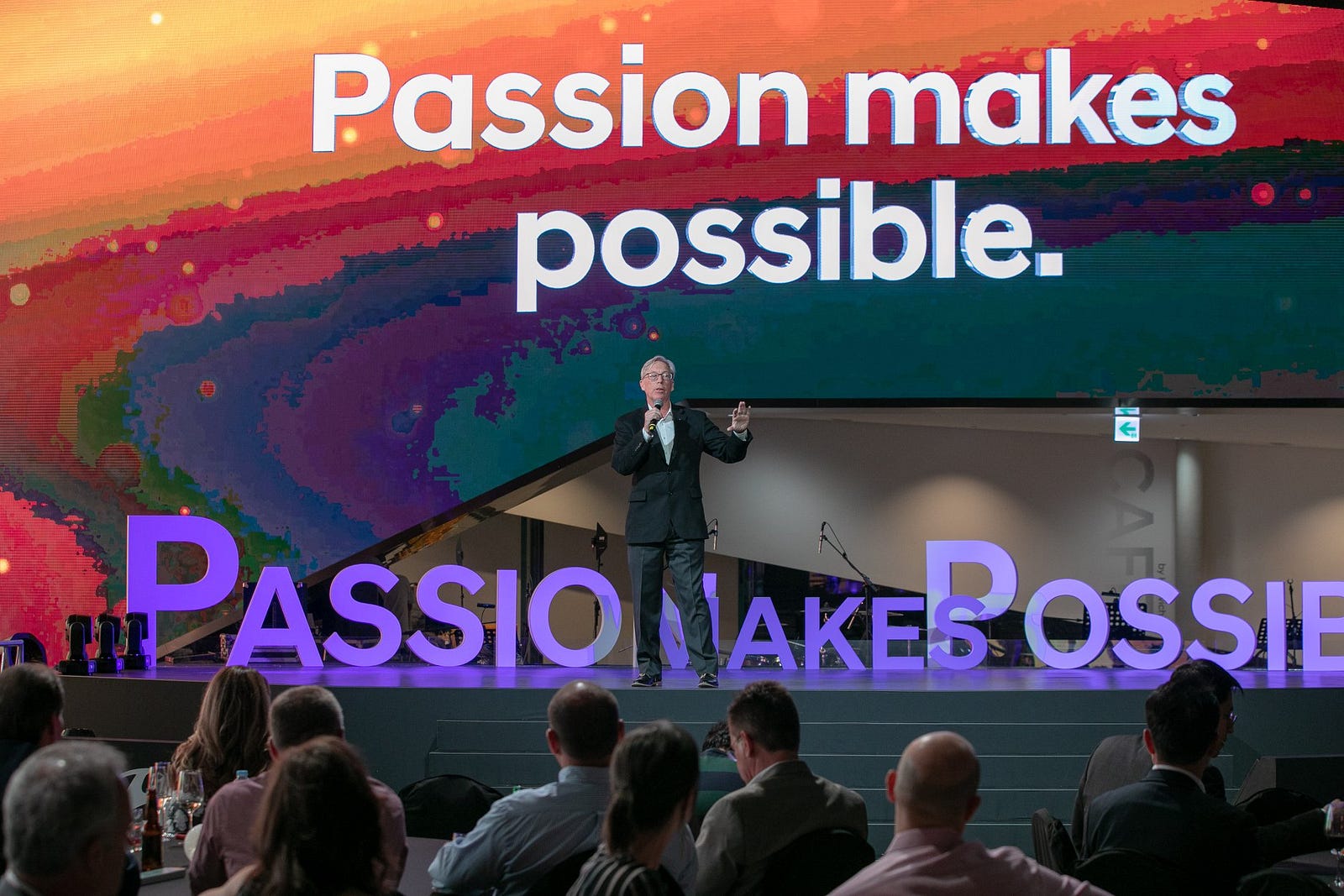





Korean Design in Focus: Hyundai–From Fast Follower to Game Changer
By Don Southerton August 19, 2024
I am honored and humbled that my work is showcased in the Branding in Asia series on Design Korea.
It will run about 30 articles over the next two weeks.
https://www.brandinginasia.com/hyundai-from-fast-follower-to-game-changer
A game-changer introduces something with such significant added value that it stands out from the competition. Game-changers transcend traditional business boundaries, dominate their niche, and become the preferred choice for customers, clients, or followers. They become the go-to company, service, expert, or influencer.
Crucially, a first mover gains a competitive advantage by being the first to bring a new product or service to the market and establish strong brand recognition and customer loyalty.
Over the past few years, South Korean companies, from startups to conglomerates, have aspired to be game changers, often to break out of their secure and well-earned niches.
In the rapidly evolving global automotive industry, Hyundai Motor Group has emerged as a luminary, breaking away from its traditional role as a fast follower to become a trailblazing innovator.
In 1974 Hyundai tapped Giorgetto Giugiaro to design the Pony.
This transformation, marked by a bold pivot towards electric vehicles (EVs), autonomous driving technologies, and a wider range of mobility solutions, has positioned the South Korean giant at the forefront of an industry facing unprecedented disruption.
The evolution of design by Hyundai has been a key factor in its transformation from a fast follower to an industry innovator as it has steadily reason through the ranks of the global automotive industry.
Over the past decade, Hyundai has made significant strides in elevating its design language, moving from functional and conservative aesthetics to bold, distinctive, and forward-thinking designs.
Hyundai initiated this shift by introducing the ‘Fluidic Sculpture‘ design philosophy in the late 2000s, which brought more dynamic and expressive forms to Hyundai vehicles. Originally conceived in 2007 by M.K. Chung and Oh Suk Geun, Fluidic Sculpture was a much-needed design platform that brought consistency among the brand’s models.
The company further refined its approach with “Fluidic Sculpture 2.0” and later, the “Sensuous Sportiness” design identity, which emphasizes harmonious proportions, dynamic silhouettes, and unique details that set Hyundai vehicles apart in the market.
Hyundai’s design evolution has not been limited to just the exterior of its vehicles. The company has also made significant advancements in interior design, focusing on creating spaces that are not only aesthetically pleasing but also highly functional and technologically advanced.
This holistic approach to design has been particularly evident in Hyundai’s electric vehicle lineup, such as the IONIQ series, where the absence of traditional powertrain components has allowed for more innovative and spacious interior layouts.
By integrating cutting-edge technologies seamlessly into their designs, Hyundai has managed to create vehicles that are both visually striking and highly intuitive to use, further solidifying its position as a design leader in the automotive industry.
Furthermore, Hyundai has revamped its overall design capabilities. The new division will spearhead the Group’s efforts to design all-electric vehicles and future mobility solutions, including purpose-built vehicles (PBVs), robotics, and advanced air mobility (AAM).
Leading Innovation
At the core of Hyundai’s success is a strategic metamorphosis. The Group has redefined its brand identity by venturing beyond traditional automotive manufacturing.
Its investments in Boston Dynamics robotics, Supernal urban air mobility, and Motional autonomous driving demonstrate a commitment to leading innovation across multiple technological frontiers. This approach challenges conventional industry paradigms and positions Hyundai at the forefront of future mobility solutions.
Generally, a fast follower closely watches and tracks a brand leader and then quickly emulates. This eliminates many risks. Significantly, fast followers benefit from substantial economic savings that game changers and the first movers must invest in new technologies, such as development costs and investments running into the billions.
On a more practical level, fast followers wait for a concept to be proven and issues to be worked out. Then, they can spare their customers from recalls, downtime, and inconvenience.
We also see Hyundai as a significant first mover. In highly competitive industries like automotive, the first mover brand leader holds a significant advantage and will be seen by customers as offering something new and exciting. This advantage can translate into new vehicle sales, which are the drivers for any OEM, as we have seen with Tesla.
While some manufacturers are content with a fast-follower approach, others are recognizing the potential benefits of being first movers in key technological areas. Companies that take the lead in these areas can potentially shape industry standards, capture early market share, and establish strong brand associations with innovation.
In the less occupied field of game changers, Hyundai looks to command a market-leading position as a first mover. One of the ways they are doing this is by implementing changes faster through a ‘Software-defined Everything’ (SDx) strategy, which involves redefining vehicles, fleets, and transportation systems with software and AI. The plan is to incorporate software development methods into the vehicle development process and mobility at a time when the industry is being disrupted.
This strategic shift has the potential to redefine how we interact with vehicles and reshape the entire mobility ecosystem.
As Hyundai continues to push the boundaries of innovation, the world watches with anticipation to see how this vision will unfold.
https://www.brandinginasia.com/kdif