Tag Archive for Songdo IBD

Songdo and Bioclusters are Standouts

Songdo and Bioclusters are Standouts

Branding in Asia / Image by Edward Jenner

Hubs offers R&D and Manufacturing resources, expertise, and talent.

Always great to see media picking up. The topic centers on Foreign Direct Investment, which I craft content on Songdo, South Korea.

I’ve been asked how I support businesses… the short answer is I bring solutions to Korean global business, as well as, global firms working with Korea.

I, too, look for exciting opportunities, and challenges, so here if you have an impasse, stalled work, or a potential issue that needs to be resolved.

All said, here is this week’s look at global business with a Korean twist–as seen in Branding in Asia.

Globally biopharmaceutical companies look to advance the development of a molecule from the laboratory to the clinic and then the market as soon as possible. This must unfold without sacrificing product quality, process efficiency, or patient safety.

To achieve this goal, companies must navigate the complexities of business planning, cell line development, process development, technology, and regulatory and risk assessment. This takes the right mix of resources, expertise, and talent.

In this context, APAC nations South Korea and Singapore are standouts. Specifically, their biopharma hubs aim to provide essential research and development activities in the biopharmaceutical industry.

In many cases, this may be a biopharma scale-up lab with separate areas for cell-line development, media screening, clone selection, upstream and downstream process development, and small-scale production for 200L pre-clinical studies.

The hubs also include large-scale manufacturing facilities and the ability to provide end-to-end biopharmaceutical manufacturing services. This enables domestic and foreign companies to quickly enter the global biologics and biosimilars market while reducing the time it takes to bring their products to market.

Bioclusters offers world-class biopharmaceutical production capacity.

For example, as cited by Invest Korea industry-leading pharmaceutical companies like Saint-Gobain, Janssen Pharmaceutical, Celltrion, Samsung Biologics, Dong-a Socio Group, and Binex are all located in the Songdo Biocluster.

In turn, as noted by the Singapore Economic Development Board, pharmaceutical industry leaders like Pfizer, Novartis, MSD, Sanofi, AbbVie, and Amgen have established global manufacturing hubs in Singapore, where they develop a wide range of products.

Many are engaged in a range of services including Contract Manufacturing Organization (CMO) of biopharmaceuticals, or developing and producing biosimilars based on their proprietary technologies.

Contract Manufacturing Organization (CMO).

A contract manufacturing organization, or CMO, helps pharmaceutical and biotechnology companies manufacture innovative drug substances. Their offerings include commercial production, drug development, formal stability, formulation development, method development, pre-formulation, and registration batches.

The strength of these bioclusters, too, lies in their production capacity. The biopharmaceutical production capacity of Songdo is 560,000 liters going head-to-head with San Francisco (440,000 liters), Singapore (270,000 liters), and Ireland (230,000 liters).

Finally, as biopharmaceuticals are made from cell cultures, it is critical to import and export products before products deteriorate during the storage and transportation process.

This means there is a need for a nearby airport and port for transporting chilled goods and frozen logistics.

And we find again standouts–Korea with the Incheon International Airport and Singapore home to the Changi Airport—both with their state-of-the-art logistics.

Meanwhile, local government efforts are being made for Greenfield sites to create additional biocluster facilities.

What is a Greenfield?

The term greenfield refers to buildings constructed on undeveloped lands where there was no previous development–  that was, literally, green. The word green is also synonymous with the word new, which alludes to new construction projects. These greenfield developments are generally made by multinational companies that begin a new venture from the ground up.

To conclude, it is expected that within the next decade, the clusters in Korea, Singapore, and APAC will double to meet the growing global demand. Additionally, local governments will provide new support and incentives for domestic and international partnerships.

Many thanks go to Branding in Asia

https://www.brandinginasia.com/apac-bioclusters-are-standouts-in-biopharma-innovation-and-synergy

Songdo, An Urban Business Community

Songdo, An Urban Business Community
Photo by Don Southerton April 2018

Songdo International City

I have a long history supporting Songdo, an urban business community on the West Coast of South Kore

I recall an early visit to Incheon and what would be Songdo and looking out at acres of land reclaimed from the sea. Over time buildings, parks, and infrastructure soon emerged from the sand. The photo was a view from my Songdo office in 2018.

Stepping back some… the community, now called Songdo International City, was developed with Western amenities and covers roughly 1500 Acres complete with a Central Park, an international school, and a Jack Nichols-designed golf course–all within a short distance of the Incheon shipping port and the international airport.

It was also an early adopter of buildings with LEED certification, which provides a framework for healthy, highly efficient, and cost-saving green buildings. Plus, Songdo was seen as a frontrunner as a Smart City innovator. Today, it is one of 3 districts of the Incheon Free Economic Zone and home to the Incheon Global Campus.

Today, I am happy to continue to share and highlight Songdo

Question? Just ask. dsoutherton@bridgingculture.com

Korean Business Culture Question?

Korean Business Culture Question

Don Southerton Thought Leader

Do you have a Korean business or cultural question?

Let’s talk. This is an opportunity to discuss over the phone, or through video chat on a pressing Korean business or cultural question.

Always confidential.

Email dsoutherton@bridgingculture.com to set the time. Text or call 310-866-3777.

Looking forward to talking.

Never an obligation. No strings attached 🙂

Don

https://www.bridgingculture.com

June Session of Korea 101: The Intensive

Register today for the June Session of Korea 101: The Intensive

Space is limited.  Register at https://buy.stripe.com/7sI03M8q17vJgLubIJ

$495.00 Credit cards accepted.

or to register, go to https://www.bridgingculture.com to register.

Dsoutherton@bridgingculture.com or Text/ Call  310-866-3777

Weekly online classes will cover topics including…

1.     Working with the Korean Business Culture

2.     Developing and Maintaining Korean Business Relations

3.     Do’s and Don’ts for Korea Business

4.     Korean Decision-making

5.     Managing Expectations

6.     Legal Agreements–Subject to Change and Revision

7.     What to expect in 2024

8. Weekly current events and Q & A Discussion

June Session of Korea 101: The Intensive

Songdo and the University of Utah

“Much like the Salt Lake campus, the Incheon campus is located right in the heart of a bustling city.”

Songdo and the University of Utah

Photo IFEZ

Nice mention of Songdo in The Daily Utah Chronicle. 

Songdo has many large businesses and it is very convenient to students, holding the popular term “Smart City” for being efficient in technology use. Business consultant Don Southerton wrote “Songdo’s development aimed to create an integrated 15-minute city, where people can access 90% of their daily activities by bike or public transportation in fifteen minutes or less.

As part of the Incheon Global Campus, Utah, is joined by SUNY, George Mason, GHENT and Stanford.  https://www.igc.or.kr

The article goes on to share… In addition to the University of Utah’s main Salt Lake City campus, there is a campus located in Incheon, South Korea. The U’s Asia Campus is conveniently located in Songdo, the business district. This provides students with not only a comprehensive learning experience but is also great for future career opportunities and internships.

Source: https://dailyutahchronicle.com/2024/04/25/gordon-study-at-the-us-asia-campus/

###

Macrogen holds for Songdo Global Genome Center Groundbreaking

Edited by Don Southerton

Macrogen holds for Songdo Global Genome Center Groundbreaking

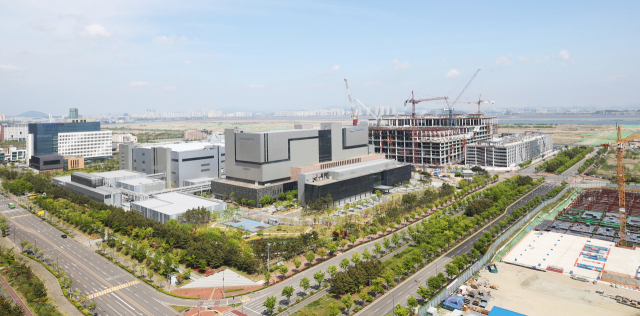
A bird’s-eye view of the Global Genome Center provided by the Incheon Free Economic Zone

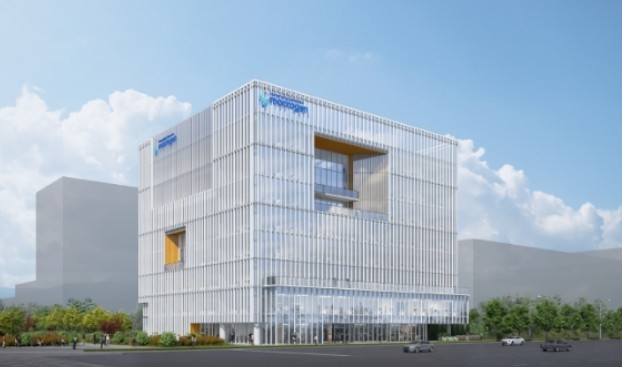
The Incheon Free Economic Zone (IFEZ) has the groundbreaking for Macrogen’s Songdo Global Genome Center at the Advanced Industrial Cluster in Songdo International City.

Dr. Won-seok Yun, head of the Incheon Free Economic Zone Authority, said, “We expect Macrogen to take a leap forward as a global precision medicine leader and Incheon Free Economic Zone to advance its bio-industry structure further.”

IFEZ Songdo is home to South Korea’s growing biopharmaceutical production capacity and increasingly making the country an attractive investment destination for global life science companies.

Founded in 1997, Macrogen is a company specializing in dielectric analysis. They are South Korea’s leader with the world’s fifth-largest capacity next-generation sequencing. Macrogen provides services to more than 18,000 customers in 153 countries.

The Songdo Global Genome Center will serve as a global genomic big data hub that accelerates the digital transformation of healthcare by combining big data including genomic information and artificial intelligence (AI).

IFEZ expects Macrogen’s dielectric analysis research facility to greatly contribute to the diversification of the bio-industry structure of the Songdo Biocluster.

Source https://www.mk.co.kr/en/business/10998661

Incheon City Road Network Hub for Level 4 Road for Level 4 Autonomous Testing

Level 4 Road for Level 4 Autonomous Testing

Hyundai MOBIS to promote the commercialization of self-driving vehicles.

Edited by Don Southerton

Hyundai MOBIS, a global leader in future mobility, will begin testing Level 4 autonomous driving in South Korea Incheon City’s Songdo and Yeongjong districts. These test rides aim to promote the commercialization of self-driving vehicles.

According to a Hyundai MOBIS article in the media, MOBIS, the Incheon Free Economic Zone (IFEZ), and the Incheon Technopark have signed a memorandum of understanding for Level 4 testing as well as plans to collaborate on nurturing startups that can innovate smart mobility.

The smart mobility project will engage 20 startups, partner firms, research institutes, and universities that will participate in the test-driving project. The expectation is that this will spur further regional IFEZ and Technopark smart mobility testing and R&D.

I see this as a smart move by Hyundai, MOBIS, local officials, and shareholders engaged in the project– as someone who has followed autonomous technology development, supported MOBIS teams, been a backer of IFEZ initiatives, and has considerable first-hand experience of the urban, bridge, and highway road network.

For example, in the 2000s, we built the Songdo IBD (today Songdo International City) smart road system to address future transportation needs… wide lanes to reduce congestion and traffic sensor data capture technology.  Songdo, too, is designated by the City of Incheon and IFEZ as a  “Smart City” and innovation hub.  And, so frankly, it’s a great venue to be at the forefront of smart mobility. ( See my article on Songdo).

https://www.brandinginasia.com/smart-cities-a-tale-of-innovation-and-collaboration-in-south-korea

Under the memorandum, the test vehicle will be able to drive on a 60 KM/ 37 miles course. In addition to Songdo, the nearby Yeongjeong area is home to the Incheon International Airport.

Hyundai MOBIS noted that the Incheon municipal government had given its permission for test drives that include inner-city routes. This is a rare chance to test autonomous driving technologies under city traffic conditions versus exclusively highway drives.

Industry experts categorize autonomous driving into six levels, ranging from 0 to 5. Level 4 autonomous driving requires the vehicle to perform the majority of driving tasks independently.  For example, and still a little unclear, a Level 4 does not require a human driver to remain engaged and ready to take over, though they’re limited by geographic and weather conditions, where human drivers need to take over.

http://m.theinvestor.co.kr/view.php?ud=20240415050743&np=1

Best International Market Entry Practices 

Best International Market Entry Practices 
https://www.brandinginasia.com/best-international-market-entry-practices-for-brands-in-2024

Expanding internationally offers numerous benefits such as access to new markets, customers, workforce, and improved reputation.

I am a strong advocate of global business, as it presents great opportunities. I am also deeply passionate about seeing brands succeed in overseas markets.

Expanding internationally offers numerous benefits such as access to new markets, customers, workforce, and improved reputation. As Wharton Magazine noted, “…expansion provides diversification and additional revenue, it also exposes one to different methods of doing business.”

Frankly, my experience is that global companies looking at market entry for Asia-Pacific countries like Korea, Singapore, the Philippines, or Vietnam, should recognize the potential upfront investment required to enter a new market. Best practices require a company to invest time and resources in “Discovery” and hire a qualified expert or firm to assist in the local mark

It is also common for local entrepreneurs to approach global brands with the hope of securing a memorandum of understanding (MOU) to bring a popular brand to their market. However, these entrepreneurs may not currently have the necessary resources and means to operate the brand. They intend to get the MOU, and then pitch the deal to local business partners.

Sadly, we’ve seen over the years even seasoned international companies realize too late that their well-intentioned partnership was less than qualified.  The deal, then, stalled or ended.

Qualifying a local partner can be a challenge, as it requires deeper insights into the local market and identifying key players.

As a benchmark based on recent projects this cost is easily a minimum of US $20,000- $50,000 in international travel and legal fees to secure a partnership. There are, of course, additional costs after an agreement is signed.

There are methods to offset these development costs, which include joint ventures and licensing. Also, a best practice is to ensure you are working with a market entry firm that can

  1. Effectively screen for highly qualified potential partners,
  2. Secure high-level meetings with decision-makers and,
  3. The target company has the required capital, resources, and experience to successfully operate the brand.

Going it alone

In contrast, I have seen firms entering overseas markets who prefer to take a different, more reserved approach and go it alone with their internal staffing. Sadly, the success rate for an international firm successfully entering a new overseas market is poor— or more costly than expected, even with the support of highly dedicated government agencies for local market entry.

To elaborate more, some businesses want to focus on finding a solid, committed overseas partner or client with little investment and need to pay upfront fees to engage a local expert in a market entry — all compensation is contingent upon first finding a potential partner. This rarely (code word–never!) works.

More to the point, a highly qualified market entry firm that has a track record of getting results will rarely shoulder the risk of funding the upfront development costs for a client. Instead, an experienced market entry firm will seek out businesses that expect success and are willing to compensate for the services.

Also, although a company going it alone may have websites, products, and company information (often in need of editing), they however lack what is commonly accepted content for meeting presentations with potential partners, including, but not limited to, a detailed localized, savvy Go to Market Plan—often a high content 20+ pages and a competitive market analysis. These expectations are not options.

And finally, for highly recognized U.S. or global brands, there is less of a barrier in setting up meetings because of the strong international desire for a top brand. For less-known brands entering an overseas market, there is considerably more effort. I most often have to rely on my credentials to begin a dialogue with a potential partner vs. the brand itself, which typically is little known outside Korea and East Asia.

All said I am a strong advocate of global business. I see a great opportunity and am passionate about seeing brands succeed overseas. However, as I have shared, this does require an upfront investment in time and resources, as well as securing local expertise. My advice, too, is to follow best practices for market entry.

Don southerton

Don Southerton provides strategy, consulting, and training to Korea-based global businesses. See https://www.bridgingculture.com

Incheon Global Campus’s New York State University and General Motors Sign MOU

Incheon Global Campus's New York State University and General Motors Sign MOU

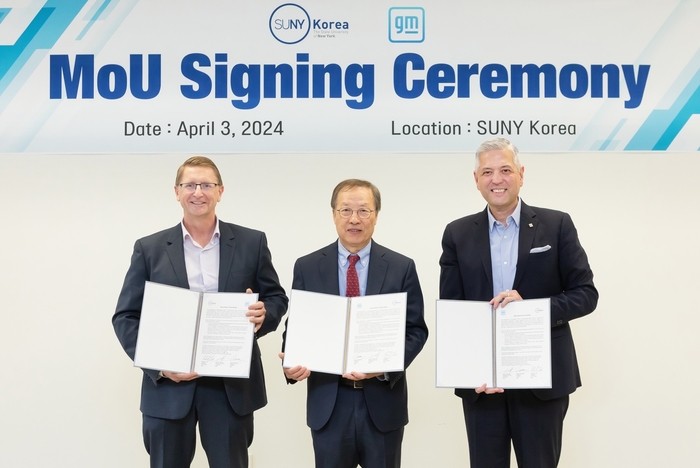
New York State University President Arthur Lee, GM Korea President Hector Vizarreal and GM R&D Corporation President Brian McMurray (Photo IFEZ)

The Incheon Free Economic Zone Authority Incheon Free Economic Zone(IFEZ) under Commissioner Dr. Peter Wonsok Yun has announced New York State University and General Motors (GM), both with operations within the Incheon Global Campus, have signed a business agreement to foster future talent

I’ve noted in previous posts how IFEZ specifically Songdo is home to a community of foreign and domestic academic institutions, companies, and NGOs.

See https://www.brandinginasia.com/foreign-direct-investment-rooted-in-international-commerce-but-an-evolving-ecosystem/

See https://www.brandinginasia.com/smart-cities-a-tale-of-innovation-and-collaboration-in-south-korea/

As noted in Maeil Business Newspaper Co., Ltd. the NY State Univerity and GM signed the MOU on April 3, 2024. GM operates an R&D center within IFEZ.

Attending the signing ceremony were Arthur Lee, president of New York State University, Hector Vizarreal, president of GM Korea, and Brian McMurray, president of GM R&D.

On this day, the two sides agreed to join forces to provide various educational programs for the growth of students at New York State University in Korea, including mentoring, seminars, and internships, to plan and promote job training and joint research and development (R&D) for GM employees, to visit both institutions and to contribute to the local community.

“We are happy that our students, who have strengths in engineering and management, will have the opportunity to strengthen the capabilities needed in global companies and grow into future talents,” President Lee said. “We will contribute to student growth and community development by promoting various programs with GM.”

President Vizarreal said, “STEM (Science, Technology, Engineering, Mathematics) education is an indispensable keyword in GM that leads future mobility,” adding, “I am happy to have an opportunity to cooperate with New York State University in Korea, which has strengths.” He said, “We will discover more innovative and creative programs and support fostering talents who will lead the rapidly changing future industry.”

“We are happy to have various collaborations with potential students and excellent faculty at New York State University in Korea through this partnership,” said McMurray.

“The high student recruitment rate (of IGC resident universities) means that IGC meets the purpose of creating new growth engines and creating a global education hub,” said Yoon Won-seok, head of the Incheon Economic Office.

New York State University Korea, which opened in 2012, is the first U.S. university in Korea with undergraduate and master’s, and doctoral courses. It operates an excellent department at Stony Brook University, which has the best science and engineering education programs in North America, and Fashion Technology University (FIT), the world’s top fashion school. All classes are the same as the faculty at New York State University in Korea through this partnership,” said McMurray.

Questions on IFEZ? Songdo? Korea? FDI?

Just ask dsoutherton@bridgingculture.com

South Korea’s Songdo leading the way in bio-pharma

South Korea's Songdo leading the way in bio-pharma

A sector near Samsung Biologics’ Bio Campus 1 within the Songdo Bio Cluster in Incheon (IFEZ)

South Korea’s Songdo is leading the way in bio-pharma…The Korea Herald notes…” Songdo Bio Cluster in Incheon, where the biopharmaceutical production capacity has reached 1.2 million liters, the world’s largest followed by Massachusetts, San Francisco and Singapore, according to officials from the 

South Korea’s growing biopharmaceutical production capacity is increasingly making the country an attractive investment destination for global life science companies, industry sources said Thursday.

Songdo has successfully created an ecosystem for the bio-industry over the past few years, and it is now home to numerous international bio companies, with Korean biopharmaceutical giant Samsung Biologics being the key driving factor.

Full article Korea’s CMO ramp-up lures biotech investors