The Incheon Free Economic Zone Authority (IFEZ) announced on Oct. 12 that it has achieved $553.5 million in foreign direct investment (FDI) declarations for the third quarter of 2025.
This fulfills 92.3% of this year’s target ($600 million), with quarterly declaration amounts recorded at $309.61 million for the first quarter and $184.09 million for the second quarter.
Notably, significant progress was made in core strategic industries such as biotech and semiconductors. In the first half of the year, investment declarations were completed by Sartorius Korea Operations ($250 million), Lotte Biologics ($28.7 million), TOK Advanced Materials ($24.6 million), Orsted ($119.6 million), and Costco Cheongna ($61.4 million). The third quarter saw an additional investment from Starfield Cheongna ($52.5 million).
The FDI arrival amount reached $391.2 million, exceeding the target of $350 million and surpassing last year’s figure by 2.8 times. Consequently, IFEZ’s cumulative FDI declaration amount has reached $16.72 billion.
IFEZ Commissioner Yun Won-sok stated, “Despite uncertainties in domestic and international economies and tariff risks, IFEZ’s proactive IR activities and expansion of foreign resident infrastructure have led to these achievements.”
IFEZ maintains its goals of $600 million in FDI declarations and $350 million in arrivals for this year, actively pursuing investments in sectors such as medical and biotech, advanced strategic industries, and tourism and cultural content industries.
Yun added, “In my second year as head, we expect to exceed the FDI declaration target of $600 million again this year, following last year’s success. We anticipate visible results from new large-scale investment projects in biotech and semiconductor fields, as well as the Kessler Group’s Asian Hollywood investment project, which is being pursued as part of the K-Con Land project.”
I often comment in the media and to support client inquiries about foreign direct investment (FDI), market entry, and establishing Korean business partnerships. I’ve seen my share of successes and, sadly, costly mistakes, too. Even the best-experienced brands are often steered into poor arrangements from self-serving local advisors to contracting big-name firms.
This said, entering the Korean market can be a great opportunity. Here are my key considerations:
Business Culture Factors
1. Market research: Understanding your industry’s 2025 Korean consumer behavior, preferences, and trends.
2. Regulatory compliance: Familiarizing with Korean laws and regulations, such as labeling requirements, certification processes, and tax laws.
3. Partnerships: Considering selection and partnering with local companies or distributors to navigate the market and build relationships.
4. Cultural adaptation: Be prepared to adapt your product or service to Korean culture and language.
Costs
The cost of entering international markets can vary widely depending on several factors, including the project’s size, industry, target market, and entry strategy.
Here’s a general overview of the costs associated with different market entry strategies:
Market research and analysis: $10,000 – $50,000
Partner identification and negotiation: $10,000 – $50,000
LOI, MOU, and Joint Venture agreements: $5,000 – $20,000
Establishing a local presence- TM, IP, Legal entity: $10,000 – $50,000
Hiring local staff: $20,000 – $100,000
The bottom line is that experience matters. As always, you pay for what you receive in value and services. My initial focus is always strategy and brand fit.
South Koreans are entitled to 16 holidays per year, making South Korea one of the countries with the most holidays. The month of May has several holidays
The number of holidays may be partly due to the country’s traditionally long workday, often exceeding 40 hours. In recent years, the government has implemented policies to reduce working hours. However, the actual implementation and workplace culture regarding shorter hours and taking breaks can vary significantly between companies and industries.
Labor Day or Workers’ Day (May 1st)
Not an official holiday in Korea, but most employers make it a day off within the company’s employment rules. Banking institutions and most commercial businesses are closed that day.
Buddha’s Birthday (May 5th)
Buddha’s Birthday is an annual holiday in South Korea. The date varies from year to year on the Gregorian Calendar, but it tends to come in late April or early May, like this year.
On the traditional Korean calendar, it is always the eighth day of the year’s fourth month.
With around 10 million Buddhists living in South Korea, it is unsurprising that Buddha’s Birthday is a public holiday.
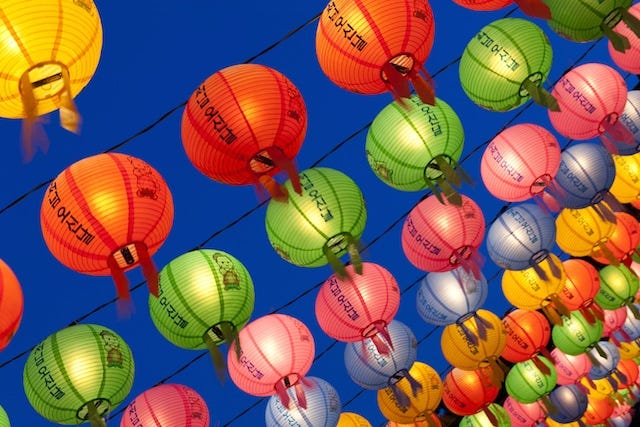
The most telltale indication that Buddha’s Birthday has approached in South Korea is the sight of lantern festivals throughout the country. The gigantic lantern parade in Seoul occurs on the Saturday before the actual holiday and features thousands of participants carrying lit paper lanterns through the streets.
Children’s Day (May 5th )
Children’s Day is a national public holiday in South Korea that reflects the importance families in Korea place on children. This year it is celebrated on May 6th.
Koreans attend special events in public parks, fairs, zoos, and other locations. Children also play traditional games, receive presents from parents and others, and have a fun day out. Popular destinations include Lotte World, Everland Resort, and new attractions like Legoland.
Parent’s Day ( May 8)
Koreans highly value traditions, family values, and respect for the elderly. Family activities aim to honor their parents.
As May 8th approaches, students make red carnations, and kids usually write a letter of thanks to go with their carnations. As Korea is aging, older families look to spend time with their parents and have a meal with them, too.
In this Part 2 Korean norms, I provide insights for Western executives, and in Part 3, I will share more with teams interacting with Korea.
As noted for global teams, steering the norms and expectations of the Korean workplace can be challenging. Furthermore, failing to meet expectations and, in many cases, misinterpreting situations is concerning. Although individuals may be very confident in their positions and way of doing things, they may never see their demise coming and will be blindsided.
Seasoned Korean executives are highly intuitive and sensitive to everything around them. They read situations and adapt. Little gets by them. In fact, few ever reach an executive level without such a skillset.
To share a couple of takeaways…
First, a Western executive is hired for two reasons based on their background and experience. 1) To do the job you were hired. And 2), to develop solutions, ideas, and workarounds. These solutions should include several options to present to leadership and, at times, ideas “out of the box.”
Next, I strongly recommend Western executives receive ongoing and frequent updates on Korea and the workplace, as well as coaching and mentoring. On-demand and weekly sessions can address questions and issues impacting your company and issues that surface.
As always, I am here to discuss… Let’s set a time to talk.
The Incheon-IFEZ Promotion Booth to showcase innovative South Korean Incheon startups.
Special guest Incheon Mayor Yoo Jeong-bok will share his smart city vision and future strategies, showcasing innovative technologies and urban plans to the world.
The city of Incheon and the Incheon Free Economic Zone Authority (IFEZ) will participate in the 2025 Consumer Electronics Show (CES) in Las Vegas.
Of particular interest and a not to miss event, on Tuesday, January 7, from 10:30 to 11:30 AM, at North Hall #9037, Incheon and IFEZ will host their “Unveiled Incheon” reveal: “Urban Renaissance: Building Tomorrow’s Smart Cities Today,” featuring special guest Mayor Yoo Jeong-bok.
Mayor Yoo will spotlight his vision, highlighting Incheon and IFEZ’s global leadership by presenting its smart city vision and future strategies, showcasing innovative technologies and urban plans to the world.
We are currently scheduling a limited number of media interviews with the visionary Mayor for January 7, 2025. (See media contact below to arrange an interview and RSVP).
“On behalf of the City of Incheon and IFEZ, we invite you to visit us in LVCC North. Booth # 9037 to learn more about our technology partners, our Innovation Award Honorees, and the opportunities we offer within the Incheon Startup and Tech Park ecosystem. I look forward to meeting you at CES 2025, as we enter the Renaissance of the Smart City.” Mayor Yoo Jeong-bok
Products and technology to be introduced and showcased at CES 2025:
Verses- A music-tech startup that develops user-driven music experience services. A 2025 CES Innovation Award Honoree.
Sheco- A maritime and inland water clean-up robot.
PABLO AIR- at the forefront of drone innovation, developing proprietary autonomous swarming technology and swarm control platform.
Motov- Based on real-time urban data collected and Edge AI technology, operates an Alot advertising and data-driven AI business.
ILias AI- a digital sniffer dog drug detection scanner utilizing olfactory AI technology. A 2025 CES Innovation Award Honoree.
PurrSong- dedicated to improving the “lives of cats” through an AI-enabled Internet of Things (IoT) healthcare ecosystem.
ZipShowKorea- A smart content production company that produces innovative content including online exhibition halls, VR, AR, media walls, artificial intelligence (AI) content, ultra-high resolution 8K content, realistic experience zones, and entertainment fields.
Nine Watt- A key player in urban energy savings, its flagship platform, Watti, uses geographic information system data and simulation tools to diagnose the energy efficiency of buildings and factories across cities.
Future Sense- Leveraging blockchain-based data-driven food safety and supply chain management to create an efficient manufacturing and distribution ecosystem.
Deep Fusion AI-Providing 4D image radar applications for the real environment.
Additionally, Twelve companies supported by the City of Incheon have received Innovation Awards.
Don’t hesitate to contact us to learn more about our partner companies and schedule one-on-one meetings.
Incheon has become a global business hub boasting an ideal international business environment. It includes Incheon International Airport, the rapidly growing Incheon Port, world-class foreign universities located in the Songdo Global Campus, and an international business and bio-hub. The Incheon-IFEZ is where everything from bio to logistics, medical care, education, and high-tech industries can be enjoyed.
It is no small effort to stay current on key issues with the many moving parts within a Korean Group and with Korea in general.
Knowing there are gaps in communications, I do my best to keep teams and leadership updated. I’d like to share some thoughts ….
From time to time, there are concerns in the overseas workplace over communications.
This can range from a perception of disconnect and being the last to know as global announcements are made or finding out important news second-hand.
This information gap can include working teams but is also felt by local leadership.
Team members may even feel that information was being deliberately withheld.
While there may be some truth in the disconnection, the feeling that Koreans are withholding information deliberately is most often not reality. What may be a surprise for Western overseas teams is that Korean staff in their home offices must make quite an effort to stay informed.
As one entry-level employee of a major Korean group lamented,
“If I did not spend an hour daily networking with fellow workers, I would be in the dark on issues major and minor that could have a significant impact on my work assignment and projects.”
For my work with Korea-based companies, nightly chats, frequent emails, and Kakao texts are required, or I too, would be “in the dark.” Still, I often find breaking news issues when checking my Kakao or running an early AM Google search. It is common when I ask a Korean colleague and even leadership on the news, their response is one of surprise—not in me asking, but this may be the first they had heard about, too.
This implies that silos within the company limit the sharing of information. More so, those not well connected are out of the loop or rarely given an advance heads up.
I find it interesting that colleagues within a company often remark and see me as well-connected—a very positive trait. As a caveat, teams try to keep their trusted friends, colleagues, and management well informed—even on sensitive and confidential issues. Savvy management continually seeks news on issues, projects, and forthcoming announcements from their colleagues and networks. This is not only to stay informed but to avoid being caught off guard or blindsided.
This network can play a critical role in one’s career and advancement. That said, for most Koreans facing international operations, the communication channel—informal and formal—between the Korean HQ and local subsidiaries is through expatriates.(The same goes for Western companies located in Korea, as Westerners there serve as expats.)
Roles vary within each company, but most frequently with Korean global business an expat’s primary role is to be the liaison between Korea and the local subsidiary.
Frankly, some expats are more open to sharing information than others.
Regardless, I feel this is less a deliberate withholding of news than a “filtering”—that is, a review of communications from the mother company and then a doling out of appropriate information. Filtering becomes an issue when information is withheld until the last moment, whether for clarity, to avoid confrontation, or to decide to best address a delicate situation.
Delaying communication often forces local operations to drop everything and deal with an issue that would have been less demanding and disruptive for the teams if conveyed promptly. In other situations, I found that information is often held back until a 100% certainty is reached on an outcome or upcoming event.
What appears to be silence on important news is often an attempt based on their years of experience working with the mother company to spare local teams from concerns that could and probably would change over time.
So instead of constantly having to return to the local team with a shift in plans, an expat may stay quiet until the last moment and have a firm confirmation.
This can mean little advance notification, as it is common for announcements first to need legal, PR, and then leadership’s “final” approval.
Workarounds
There are workarounds, and one needs to recognize that much is strongly rooted in a company’s culture. Culture matters.
For starters, my best practices include: 1) Building a strong professional network—including colleagues local and overseas. Have set times to chat even nightly with Korea… I suggest by Kakao.
2) Maintain a reputation as one who can share and be shared information—with a high degree of trust and confidentiality when appropriate
All said, outside issues deemed as private, sensitive, and confidential, few will dispute the need for strong internal communications and updates—shared across the organization. Here as always.
If you have a question or inquiry on this topic or another, let’s set a time to chat.
I’m also available by Kakao at 310-866-3777 and Don Southerton, so join me…
(Kakaotalk is free, and best to download the app on your phone and access it).
(Center L) Gregory Washington, President of George Mason University, (Center R) Dr. Wonsok Yun, Commissioner of IFEZ w/ George Mason and IFEZ officials Photo: BusinessKorea
Agreement to promote industry-academia cooperation including biotechnology, bio-manufacturing, cybersecurity, artificial intelligence (AI), and information and communication technology (ICT).
On June 13, 2024, the Incheon Free Economic Zone Authority and George Mason University signed an MOU to promote mutual industry-academia cooperation.
The signing was attended by Dr. Wonsok Yun, Commissioner of the Incheon Economic Zone (IFEZ), Gregory Washington, President of George Mason University, and Robert Matz, President of George Mason University Korea.
The agreement will promote education and research projects in important fields such as biotechnology, bio-manufacturing, cybersecurity, artificial intelligence (AI), and information and communication technology (ICT).
The plan is also to establish additional programs at Mason Korea, which is located in the Incheon Global Campus in Songdo. These new classes will target job and talent development–in cooperation with George Mason University in the United States.
The collaboration will, too, support IFEZ’s plan for the Global Campus partners to serve as a channel providing highly skilled talent to top American and international companies.
President Washington said, “This year, in celebration of the 10th anniversary of the opening of George Mason University Korea, we have decided to expand cooperation with the Incheon Economic Office,” adding, “We will provide opportunities for education for students and cooperation with companies through cooperation in various fields, including support for the Incheon region.” “We plan to expand,” he said.
Mason Korea opened its doors in 2014 and is celebrating its 10th anniversary this spring semester. From our initial offering of two undergraduate programs and 34 students, they have grown to offer six undergraduate and two graduate disciplines, with over 1000 students.
Regarding the MOU, Commissioner Yun said, “We are pleased to be able to solidify our cooperation based on the growth of George Mason University Korea over the past 10 years while expanding our scope to the U.S. campus,” adding, “This agreement will help the development of both George Mason University and the Incheon region.”
He continued, “I am pleased to expand and develop cutting-edge fields through industry-academia cooperation, and to build a foundation for cooperation between various students and startups between Incheon and Virginia through George Mason University.”
Mason University Korea is one of the five foreign universities within Songdo’s Incheon Global Campus (IGC).
###
Incheon Free Economic Zone Media Release, June 2024
Just us in Part 2 of Korea’s Money Today’s interview with Dr. Peter Wonsok Yun, Commissioner of the Incheon Free Economic Zone Authority, and his Q and A.
I provided the translation and editorial review. Please check it out. Few grasp global developments as well as Dr. Yun.
Dr. Wonsok Yun, Commissioner of Incheon Free Economic Zone Authority, (Photo provided by Incheon Free Economic Zone Authority)
The following is a Money Today Q&A with Commissioner Yun. In Part 2 of the interview, Dr. Yun shared his insights, thoughts, and plans.
Q. Please briefly explain IFEZ
IFEZ was designated “Korea’s first free economic zone” on August 11, 2003. At the time, no one could have imagined reclaiming the desolate West Sea mudflats and turning them into a global city.
Over the past 20 years, IFEZ has successfully transformed ‘Songdo, Yeongjong, and Cheongna’ into international cities with exceptional innovation and lifestyle.
Above all, we are proud of what we have achieved — our original goal of ‘attracting foreign investment’.
Last year, the environment for attracting domestic and foreign investment contracted due to the war between Russia and Ukraine, but we achieved $432 million in FDI, a 10.7% increase compared to 2022.
Large multinational corporations and research institutions were established, fostering a global startup ecosystem where international talents, including overseas Koreans, congregate and collaborate.
The role of IFEZ is crucial for the success of Incheon City’s 8th popularly elected core policies, ‘Global Top 10 Cities (New Hong Kong City)’ and ‘Jemulporn Renaissance’.
It is now time to lay the foundation for long-term, sustainable growth in the future.
Q. What needs to change to lay the foundation for sustainable growth?
So far, IFEZ has adopted the ‘linked development’ approach, which involves constructing profit-making facilities alongside public facilities. The profits generated from the development and land for private apartments and businesses have been channeled for public facilities such as parks and social infrastructure (SOC) for the city.
Significant progress has been achieved in developing infrastructure for smart and international cities through this interconnected method. However, the development is highly residential, which limits its ability to attract domestic and foreign companies for business and job creation.
Now that IFEZ is 20 years old, we aim to develop a new model that integrates linked development and investment attraction.
We will attract strategic industries to fulfill the core function of the free economic zone as a ‘global business hub’ and to advance in name and reality.
We need to provide a driving force for new industries, such as start-ups, and foster the AI industry.
Q. The target for foreign investment attraction this year is set at $600 million. What is the strategy?
This year, we plan to expand our strategy to attract “global IR companies” and bring in more cutting-edge companies.
In addition, we will achieve this year’s target of $600 million by establishing a ‘Day Station Incheon Strategy’ where companies gather in Incheon.
We will take the lead in balancing development within the existing industrial complexes in the original city center of Incheon. To this end, we plan to strengthen our network by collaborating with the Korea Trade-Investment Promotion Agency (KOTRA) and the World Federation of Overseas Korean Traders Associations (World OKTA).
During the first half of this year, we are putting every effort into our high-tech industrial complex strategy in the bio-pharma sector.
We believe that Songdo, which already possesses world-class biopharmaceutical production capabilities, is the perfect match.
We are putting our efforts into attracting a bio-specialized complex to build a ‘Bio-Triangle’ connecting the Songdo-Namdong-Yeongjong region.
As the companies in Songdo possess advanced strategic biotechnologies, as noted by the Ministry of Trade, Industry, and Energy, I believe it is the most suitable region for the government’s industrial development.
Q. Why are you pursuing additional FEZ lands, including the southern end of Ganghwa and Incheon Inner Port?
Twenty years have passed since IFEZ was launched. As we enter maturity, investment demand is increasing, but available land is in short supply.
For a specialized bio hub complex to be constructed within IFEZ, like Songdo, additional land must be made accessible.
Currently, IFEZ’s development rate exceeds 90%. There is a lack of space to attract the four major high-tech industries that Incheon pursues.
In many cases, other countries and their competitive cities have available land and rival clusters. IFEZ must also be able to compete in high-tech industries, future mobility, cultural tourism, green bio, and smart cities. To achieve this, additional FEZ designation is essential.
Q. A red light has been turned on for large-scale projects that have stalled, including the Golden Terra City (formerly Midan City) casino project. How are you going to solve it?
I am aware of the concerns shared by the residents of Incheon. We are focusing our efforts on getting things back to normal.
Last March, the Ministry of Culture, Tourism and Sports did not extend the casino project development period applied for by RFKR, the Korean subsidiary of China’s Furi Group, the operator of the Midan City complex resort.
We will seek to develop alternatives to meet the expectations of residents.
In addition, the ‘Icore City Project’, which involves constructing landmark buildings in Zones 6 and 8 of Songdo and has been in consideration for 17 years since announced in 2006, has seen repeated delays. These delays have been due to financial crises, changes in local governments, and the ups and downs of the global economy.
We are currently discussing options and plans to resolve, for example, the height restriction issue with the relevant ministries.
Q. Inaugurated as the 8th Commissioner of IFEZ last February, what activities have you undertaken since taking office, and what kind of organization are you aiming to create in the future?
First, for over a month since taking office, I have spent my time reviewing major work in progress, and visiting the central Incheon City ministries, business sites, and related organizations. I have dedicated considerable time to communicating with shareholders to understand the current business issues better.
Internally, we are promoting the establishment of the ‘IFEZ Vision and Strategy 2040 Project’ that will drive future leaps forward.
We will, too, strive to create a productive and happy IFEZ organizational culture.
In the future, the goal is to make IFEZ a world-class global city that surpasses Dubai and Hong Kong. To this end, we will do our best to attract corporate investment, for example, by conducting ‘visiting investment IR’.
In addition, we will increase the city’s competitiveness so that IFEZ becomes a top free economic zone, creates good jobs, revitalizes the local economy, and serves as a model for a new growth engine for our country.
A Brief Bio, Dr. Wonsok Yun
Born in Chungcheongnam-do in 1960.
Graduated from Sungkyunkwan University, English Language and Literature, a Master’s degree from Seoul National University Graduate School, and a Doctor of Business Administration, from Sungkyunkwan University Graduate School.
Director of Economic and Trade Cooperation Division, Korea Trade-Investment Promotion Agency (KOTRA)
CEO, International Business, Hangul and Computer Group
Chairman of Global Industrial Competitiveness Forum
This article was originally published in the Korean language in the June issue of Leader’s Money Today, a legislative affairs magazine. Sang-gu Yoon, head of Incheon headquarters, Reporter Se-mi Hong.
Dr. Wonsok Yun, Commissioner of Incheon Free Economic Zone Authority, Photo provided by IFEZ
This article was originally published in the Korean language for the June issue of Leader’s Money Today, a legislative affairs magazine. It has been translated and edited.
“We will raise $600 million in FDI through new business models such as AI,” Dr. Wonsok Yun
On August 11, 2003, the government initiated an ambitious plan to attract foreign investment. Songdo, Cheongna, and Yeongjong in Incheon were designated as South Korea’s first Free Economic Zone (FEZ). A free economic zone is an area designed to attract foreign investment, capital, and technology by offering incentives such as tax reductions and deregulation.
The goal was to establish a prominent business hub city in Northeast Asia, similar to Shanghai, Hong Kong, and Singapore. In the same year, the ‘Act on Designation and Operation of Free Economic Zones’ was established. Nine FEZs were soon operated nationwide, starting with Incheon, Busan, Jinhae, and the Gwangyang Bay Area.
Much of IFEZ was constructed on the former West Sea mud flats and has developed into a bustling international city with modern high-rise buildings.
The growth of IFEZ can be observed through its indicators. From 2003 to July of last year, the total foreign direct investment (FDI) reached $14.756 billion. This figure represents approximately 70% of the $20.8 billion reported by the country’s nine FEZs.
When IFEZ was opened, the number of businesses in the Incheon Free Economic Zone was only 673, but the number has now increased to 3,400. Initially, there were only 3 foreign-invested businesses, but there are currently 206 businesses.
Dr. Wonsok Yun, the current 8th Commissioner of the Incheon Free Economic Zone Authority, took office last February 2024. In this interview with Money Today, he emphasized that the area’s growth resulted from the ‘linked development’ strategy.
Linked development is a business model that connects profit-making sectors with public use. The development profits generated when private businesses build and sell apartments are used to underwrite parks and social infrastructure (SOC) that are essential to the city.
Commissioner Yun said, “So far, IFEZ has chosen the ‘linked development’ method of building profitable residential facilities and public facilities together,” and added, “The model has funded the construction of infrastructure such as smart city and international city amenities. It has made considerable progress.”
However, the Commissioner said that the interconnected development method that has been in place for 20 years cannot lead to the future and sustained growth of IFEZ.
He said, “In the case of interconnected development, the proportion of housing is high, so there is a lack in terms of business revitalization and job creation by attracting domestic and foreign companies.” “We need to discover new businesses such as AI and build innovative business models so that we can move forward as a city,”.
IFEZ has set this year’s target for attracting foreign investment at $600 million (approximately KRW 802.5 billion).
This is an increase of approximately $200 million (KRW 267.5 billion) from last year’s target of $400 million (approximately KRW 535 billion). Commissioner Yun announced that he will achieve this goal this year by attracting high-tech international companies, expanding global investment IR, and the ‘Destination Incheon’ strategy.
Commissioner Yun said, “Foreign direct investment (FDI) was less than expected last year with the war between Russia and Ukraine stalling domestic and foreign investment.” “Nevertheless, IFEZ achieved $432 million, a 10.7% increase compared to 2022.”
He continued, “This year, we will pursue new business opportunities, strengthen our appeal to global companies, and spearhead the development of the city center to reach our target revenue.”
IFEZ Expansion
Of the three IFEZ districts, Songdo International City is responsible for international business, IT (information technology), BT (biotechnology), The Incheon Global Campus (education), and startup research and development. Yeongjong, home to the Incheon International Airport, is focused on logistics and tourism, and Cheongna looks to build on finance and leisure.
In addition, IFEZ plans to attract the lucrative biopharma high-tech industry hub development, in the first half of this year and turn parts of Songdo into a ‘bio-specialized hub complex.’
Commissioner Yun explained, “Songdo has regional geographical competitiveness due to its proximity to the airport and port, and also has the advantage of already having several leading biopharmaceutical companies.”
Currently, IFEZ’s development rate exceeds 90%. There is, however, a lack of space to attract new high-tech industries. It was announced that the southern end of Ganghwa and Incheon Inner Port should be designated as a new FEZ to expand the space.
Commissioner Yun said, “As the IFEZ enters its maturity, investment demand is increasing, but available land is lacking.” Adding, “designation and expansion of new FEZs in the southern part of Ganghwa and Incheon Inner Port are badly needed. “I will do my best to marshal all my capabilities and ensure that they are designated within my term.”
Commissioner Yun plans to develop alternative projects and explore other more viable plans.
K-POP Culture City/Casino business runs aground… “We will develop alternative projects”
Last year, IFEZ planned to create a ‘K-Pop Content City’ within Songdo’s R2, B1, and B2 blocks (a total of 210,000 m2) but the plan was scrapped under land use issues.
In addition, the Ministry of Culture, Sports and Tourism canceled the long-delayed project to build a foreigner-only casino at the Golden Terra City (formerly Midan City) in Yeongjong Island, near the airport.
Commissioner Yun plans to develop alternative projects and explore other more viable plans.
For example, in Songdo R2 Block where the construction of ‘K-Pop Content City’ was canceled, Commissioner Yun said, “This is a site owned by Incheon Urban Development Corporation,” and “We plan to form a task force (TF) with their team to discuss how to develop the land.”
He added, “The former Golden Terra City will also form a ‘Midan City Revitalization TF’ with Incheon City and the Incheon Urban Development Corporation to target another integrated resort.”
“We will strengthen internal organizational competitiveness by establishing IFEZ Vision and Strategy 2040”
Commissioner Yun’s background is well-suited for the 20240 vision and goals.
As an academic, Dr. Yun graduated from Sungkyunkwan University’s Department of English, obtained a master’s degree in business administration from Seoul National University Graduate School, and earned then a doctorate in business administration from Sungkyunkwan University Graduate School.
His career included joining the Korea Trade-Investment Promotion Agency (KOTRA) in 1986 and serving as the head of the Vancouver Trade Center, the Busan Trade Center, and the KBC Center in Los Angeles, as well as the Planning and Coordination and Economic and Trade Cooperation offices at the KOTRA headquarters.
After decades of service, he has served as a special professor at Sookmyung Women’s University and in the private sector as CEO of the international business division of a Hangeul and Computer Group.
Commissioner Yun, who took office last February, will serve a three-year term. His goal is to develop Incheon into a global city, including the “IFEZ Vision/Strategy 2040 Project.”
The project will take a deep dive into the internal and external environment, develop practical measures, and create a vision and strategy aimed at positioning the city as a top-tier destination by 2040, thus achieving sustainable growth.
We will build a system that links performance and rewards
Finally, Commissioner Yun highlighted his commitment to retaining IFEZ public officials by addressing organizational culture and a correlation between performance and compensation.
“We will build a system that links performance and rewards where you can collaborate in a free atmosphere and be treated well if you work hard. We will strengthen the competitiveness of our organization by establishing a system that fosters creative talent while generating results.”
This article was originally published in the Korean language in the June issue of Leader’s Money Today, a legislative affairs magazine. Sang-gu Yoon, head of Incheon headquarters, Reporter Se-mi Hong.
Currently, FDIs in many markets are experiencing a global decline in funding. So, what are the best approaches markets should take for FDI 2024?
Foreign direct investment has become a cornerstone for governments and corporations looking to stimulate and sustain business growth. Foreign direct investment plays an important role on a macroeconomic and microeconomic level. We define foreign direct investment (FDI) as investment made by a company in one country into another country’s business or assets. FDI is a crucial aspect of international commerce, but it is also an evolving ecosystem that continues to change and develop over time.
Some key benefits of foreign direct investment include:
Economic Growth: Countries receiving foreign direct investment often experience higher economic growth by opening up to new markets, as seen in many emerging econom
Job Creation: Most foreign direct investment is designed to create new businesses in the host country, which usually translates to job creation and higher wages.
Technology: Foreign direct investment often introduces innovative technologies and creates hubs for technical expertise.
Stepping back between 2000 and 2008, the world saw an early growth phase in FDI. This was the peak time for global investment in FDI.
An Asia-Pacific (APAC) standout was South Korea’s Songdo International Business District (Songdo IBD). The project was a Joint Venture project I was engaged as a consultant and have continued to follow. Like other FDI of the period in the region, the 1997 Financial Crisis brought to the forefront the need for the APAC nations impacted to broaden their economies beyond domestic export-driven businesses
Economists recommended attracting foreign direct investments as a buffer against the potential impact of recessions and fiscal crises.
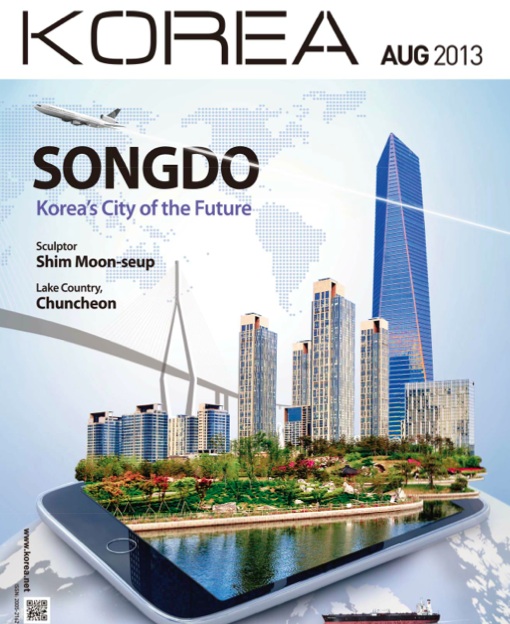
The Songdo vision in the early 2000s was to build an international business-friendly hub on the West coast of South Korea. The community with Western amenities was built on reclaimed land and covered roughly 1500 Acres complete with a Central Park, an international school, and a Jack Nichols-designed golf course–all within a short distance of the Incheon shipping port and international airport.
Over the years, Songdo IBD, now Songdo International City, has broadened beyond FDI to include residential, domestic companies, and NGOs. As part of the Incheon Free Economic Zone (IFEZ) which was created in 2003 and designated as Korea’s first free economic zone, today Songdo is one of three districts—along with Cheongna, and the airport’s Yeongjong International City.
Currently, FDIs in many markets are experiencing a global decline in funding. So, what are the best approaches markets should take for FDI 2024?
Over the years, the approach to international foreign direct investment (FDI) has evolved from a model solely focused on incentivizing foreign businesses to a more collaborative, synergistic, and dynamic ecosystem. This is observed in countries such as South Korea, Singapore, Vietnam, and Indonesia, as well as Ireland, the Netherlands, Latin America, and the Caribbean.
And, as noted by the World Bank, an exception to the downturn can be found in Greenfields–projects that require developing a new product or service from the ground up. Data shows this is the top area of FDI growth.
In turn, APAC markets like South Korea, Vietnam, and Singapore seek to position themselves as global hubs. Specifically for future industries such as bio-healthcare, smart manufacturing, high-tech finance and future robots, information and communication (IT), and artificial intelligence (AI) while making great strides in distribution, logistics, tourism, and MICE.
One takeaway does stand out—FDI is an evolving ecosystem that continues to change and develop over time.




Korea Market Entry 2025: A Commentary
I often comment in the media and to support client inquiries about foreign direct investment (FDI), market entry, and establishing Korean business partnerships. I’ve seen my share of successes and, sadly, costly mistakes, too. Even the best-experienced brands are often steered into poor arrangements from self-serving local advisors to contracting big-name firms.
This said, entering the Korean market can be a great opportunity. Here are my key considerations:
Business Culture Factors
1. Market research: Understanding your industry’s 2025 Korean consumer behavior, preferences, and trends.
2. Regulatory compliance: Familiarizing with Korean laws and regulations, such as labeling requirements, certification processes, and tax laws.
3. Partnerships: Considering selection and partnering with local companies or distributors to navigate the market and build relationships.
4. Cultural adaptation: Be prepared to adapt your product or service to Korean culture and language.
Costs
The cost of entering international markets can vary widely depending on several factors, including the project’s size, industry, target market, and entry strategy.
Here’s a general overview of the costs associated with different market entry strategies:
Market research and analysis: $10,000 – $50,000
Partner identification and negotiation: $10,000 – $50,000
LOI, MOU, and Joint Venture agreements: $5,000 – $20,000
Establishing a local presence- TM, IP, Legal entity: $10,000 – $50,000
Hiring local staff: $20,000 – $100,000
The bottom line is that experience matters. As always, you pay for what you receive in value and services. My initial focus is always strategy and brand fit.
Don Southerton
https://www.bridgingculture.com