Archive for Uncategorized

The Signature Paradox

The Signature Paradox

Photo by Scott Graham on Unsplash

Over my 20 years working with Korean companies, I’ve repeatedly encountered what I call “the signature paradox.” Korean partners are enthusiastic about a collaboration, have invested months building the relationship, and clearly see the mutual benefit. Yet when it comes time to sign even basic documents, NDAs, non-binding MOUs, letters of intent, they hesitate or simply don’t sign.

This pattern perplexes Western companies. From their perspective, these preliminary agreements are routine steps that protect everyone and demonstrate good faith. They’re often caught off guard when Korean partners who seemed eager suddenly go quiet once paperwork arrives.

I assume it’s risk avoidance, though the reluctance isn’t about the relationship or the project’s commitment.

Rather, it reflects deeply ingrained attitudes about written agreements. In Korean business culture, signing any document—even one explicitly labeled “non-binding”—creates a sense of obligation and potential exposure that executives prefer to avoid until absolutely necessary. There’s an unspoken belief that once something is written and signed, it becomes leverage in future disputes, regardless of what the agreement actually says.

Western legal teams find this especially frustrating. In their framework, unsigned preliminary agreements create MORE risk, not less. The cultural disconnect runs deep: Americans reduce risk through documentation; Koreans often see documentation itself as the risk.

I’ve watched promising partnerships stall for months over reluctance to sign basic NDAs. I’ve seen Western executives question whether their Korean counterparts were genuinely serious about the collaboration. Meanwhile, the Korean side doesn’t understand why Americans won’t simply proceed on the basis of verbal understanding and trust in the relationship. 

Even after agreements are signed, getting Korean partners to return the signed copies can take weeks or months. Not to mention, Korean management is very hierarchical; working-level staff who negotiate the terms often lack the authority to sign, and securing approval from senior leadership adds layers of delay. 

These issues often need to be formally addressed in quarterly Board of Directors meetings, elevating what Western companies view as routine administrative matters to executive-level agenda items.

The challenge becomes how to continue building the relationship while still pressing for the agreements Western companies need. This requires patience, cultural translation in both directions, and often a staged approach where informal understandings gradually transition to written terms as trust deepens.


Big take-away

The hierarchical point explains “why the delays happen,” authority sits higher up the chain than Westerners expect.
CES 2026

CEs2026

Join Don Southerton

CES 2026 Exclusive Support

Maximize your CES 2026 impact with dedicated pre-show, on-site, and post-show support exclusively for brands, government agencies, and startups.

Our Services

  • Pre & Post-Show Promotion and PR – Build momentum before the show and sustain it after.
  • Media Support – Strategic media outreach and relationship management
  • Client Relations – Connect with new customers.

Successfully supported clients at CES 2020, 2021, 2022, 2024, and 2025 with measurable results in media coverage, customer acquisition, and partnership development.

Why Work With Us

We understand the market and culture

  • Deep CES experience – Proven success across multiple years
  • Dedicated to excellence – Elevating innovation on the global stage

Take Action

FINAL SPOTS AVAILABLE

I will be on-site starting January 4. Contact me immediately to secure your slot.

https://calendly.com/dsoutherton-bridgingculture/30min

Dsoutherton@bridgingculture.com

www.bridgingculture

Text or Call +1-310-866-3777

Incheon Free Economic Zone Authority Achieves $553.5 Million in FDI for Q3 2025

https://www.businesskorea.co.kr/news/articleView.html?idxno=253886


The Incheon Free Economic Zone Authority (IFEZ) announced on Oct. 12 that it has achieved $553.5 million in foreign direct investment (FDI) declarations for the third quarter of 2025.

This fulfills 92.3% of this year’s target ($600 million), with quarterly declaration amounts recorded at $309.61 million for the first quarter and $184.09 million for the second quarter.

Notably, significant progress was made in core strategic industries such as biotech and semiconductors. In the first half of the year, investment declarations were completed by Sartorius Korea Operations ($250 million), Lotte Biologics ($28.7 million), TOK Advanced Materials ($24.6 million), Orsted ($119.6 million), and Costco Cheongna ($61.4 million). The third quarter saw an additional investment from Starfield Cheongna ($52.5 million).

The FDI arrival amount reached $391.2 million, exceeding the target of $350 million and surpassing last year’s figure by 2.8 times. Consequently, IFEZ’s cumulative FDI declaration amount has reached $16.72 billion.

IFEZ Commissioner Yun Won-sok stated, “Despite uncertainties in domestic and international economies and tariff risks, IFEZ’s proactive IR activities and expansion of foreign resident infrastructure have led to these achievements.”

IFEZ maintains its goals of $600 million in FDI declarations and $350 million in arrivals for this year, actively pursuing investments in sectors such as medical and biotech, advanced strategic industries, and tourism and cultural content industries.

Yun added, “In my second year as head, we expect to exceed the FDI declaration target of $600 million again this year, following last year’s success. We anticipate visible results from new large-scale investment projects in biotech and semiconductor fields, as well as the Kessler Group’s Asian Hollywood investment project, which is being pursued as part of the K-Con Land project.”

Jung Min-hee pr@businesskorea.co.kr

Edited by Don Southerton Don Southerton author


Insights: Korea’s Perspective on the 2025 Trump Trade Agreement

Korea’s Perspective on the 2025 Trump Trade Agreement

Hyundai Motor vehicles bound for export are driven on to a Hyundai Glovis cargo ship. (Automotive News and BLOOMBERG…photo credit)

By Don Southerton

The core of this agreement hinges on how the newly formed Lee Jae Myung government managed the 25% tariff guideline without compromising national interests. The outcome compares favorably with deals reached by Japan and the EU, reflecting notably successful negotiations.

One of the most significant achievements was excluding highly sensitive agricultural imports, such as beef and rice. Farmers had voiced strong concerns, and any concessions here could have caused substantial socio-economic friction. This cautious stance exemplifies wise and skillful diplomacy.

Beyond trade, the agreement includes significant investment commitments:

$150B in shipbuilding

$200B toward semiconductors, nuclear power, and strategic industries

These investments are expected to make a substantial contribution to Korea’s economic growth.

However, skepticism remains about the $100B LNG purchase commitment, as questions linger regarding whether the U.S. can realistically meet these volumes within four years—primarily since this period extends beyond the Trump administration, limiting its immediate impact.

While Korea’s commitments may seem disproportionate relative to GDP, a closer look suggests that the agreement is not disadvantageous overall.

Future Challenges for Korea in Implementing Agreement Investment Commitments

Korea will likely face several challenges in implementing the agreement’s large-scale investment commitments, particularly in sectors like shipbuilding, semiconductors, nuclear power, and LNG. These challenges are expected to have both immediate and long-term future implications:

1. Regulatory and Legal Barriers
Korea’s investment projects—especially those involving fund facilities and cross-border activities—must comply with complex regulations, such as the Financial Services Commission and Markets Act (FSCMA). This increases the difficulty of using uncalled capital commitments as collateral and can slow investment mobilization. Securing investor commitment is complicated by both legal and cultural business practices, making it harder to marshal large-scale coordinated investments.

2. Geopolitical and Economic Uncertainty
Ongoing tensions—especially between the U.S. and China—may affect global supply chains and Korea’s ability to safely pursue international investments, particularly in strategic sectors like semiconductors and energy. Political shifts in either Korea or the U.S. could disrupt long-term policy stability required for such investments. Uncertainty about future U.S. trade and energy policy, especially with LNG commitments extending beyond a single U.S. administration, looms large.

3. Increased Costs and Competitive Pressures
The deal includes tariff changes and possible compliance costs, raising the cost of exporting and potentially reducing profit margins for Korean firms. Investments in the U.S. may expose Korean companies to stronger competition from domestic and other foreign firms, requiring persistent innovation and strategic adaptation to maintain competitiveness.

4. Domestic Policy and Economic Structure
Korea’s economic system presents internal challenges, such as regulatory opacity, rigid labor policies, unpredictable tax enforcement, powerful conglomerates (chaebol), and consumer protection requirements that complicate foreign direct investment and long-term project management.

5. Technology and Supply Chain Adaptation
Massive investments in high-tech sectors demand constant R&D and supply chain adjustments. Firms will need to manage supply chain realignments, address new compliance requirements, and ensure that they remain competitive in rapidly evolving technology markets. Failure to continuously adapt risks leaving Korea behind in critical global industries.6. Political and Public Consensus
Public support can fluctuate,.

Questions dsouthrton@bridgingculture.com

Breaking News: Metacube Square

Metacube Square success drivers

Rising Demand: The global immersive media market is surging, driven by consumer appetite for interactive entertainment and technology-enabled experiences. 

K-Culture Leadership: Supported by Korean national and regional policies, Korea is making significant investments in K-Content, Over-the-top (OTT) platforms that stream content via internet-connected devices, and global cultural projects—establishing itself as a leader in this arena space. These initiatives, backed by substantial government funding and incentives including the Incheon Free Economic Zone, highlight Korea’s strategic commitment

As in…

Breaking News: Metacube Square

See https://www.isstories.com/2025/06/10/introducing-the-metacube-square/

Golden, Colorado Jun 12, 2025 (Issuewire.com) — Metacube Global is proud to announce The Metacube Square — a bold new venture at the convergence of immersive technology, art, and experiential entertainment.

Strategically located in Songdo International City, one of Asia’s premier smart cities within South Korea’s Incheon Free Economic Zone (IFEZ), The Metacube Square offers a transformative environment where audiences, creators, artists, and technology seamlessly converge. At its center is The Metacube, a six-sided high-resolution digital cube designed to host immersive storytelling, multi-sensory experiences, and real-time audience interaction.

Investment Highlights: Why Now, Why Metacube?

– Surging Market Demand: The global immersive media market is growing rapidly, driven by consumer appetite for interactive entertainment and tech-enabled experiences.

– K-Culture for Global: We are welcoming a new era. National policies are focusing on K-Culture, and projects in K-Content, OTT, and platforms will be leading the global market.

– Prime Location: Songdo is a government-backed innovation hub with world-class infrastructure, global accessibility, and institutional support for tech and culture.

– Proprietary Platform: Our media cube-based, fully immersive experience framework is scalable and customizable for multiple global deployments.

– Innovative: The Songdo Metacube will be the first multi-purpose mega platform for participative and experimental entertainment purpose in South Korea.

– Visionary concept: The Metacube established Songdo as the center of Art & EnterTech hub and will host the largest International Art & EnterTech festival in collaboration with its partners.

– Strategic Partnerships: We are forging international alliances and contracted partnerships with leaders across the entertainment, technology, art, and e-sports sectors. (French, Swiss, and Canadian museums, and a Channel for e-sports ESVT )

– Strong Finances: Return on business (after tax) 28%.

– Scalable model: High-margin IP, long-term space rentals.

Funding Opportunity

We are currently raising seed capital to accelerate:

– Final development and engineering of The Metacube platform

– Expansion of proprietary and partner-generated content

– Recruitment of key personnel across tech, operations, and business development

– Deployment of our first flagship installation in Songdo

This round offers early investors a first-mover advantage in a venture designed for global scalability, recurring revenue streams, and high-impact cultural relevance.

Call to Action

We are scheduling one-on-one investor briefings to discuss partnership opportunities, business model scalability, and our phased global rollout strategy. Now is the time to be part of a paradigm shift in how the world experiences art, entertainment, and digital environments.

Contact Us to Learn More 

Metacube Global Representative

Don Southerton

Bridging Culture Worldwide 

dsoutherton@bridgingculture.com

+1–310–866–3777

…you really are a Hyundai whisperer

you really are a Hyundai whisperer
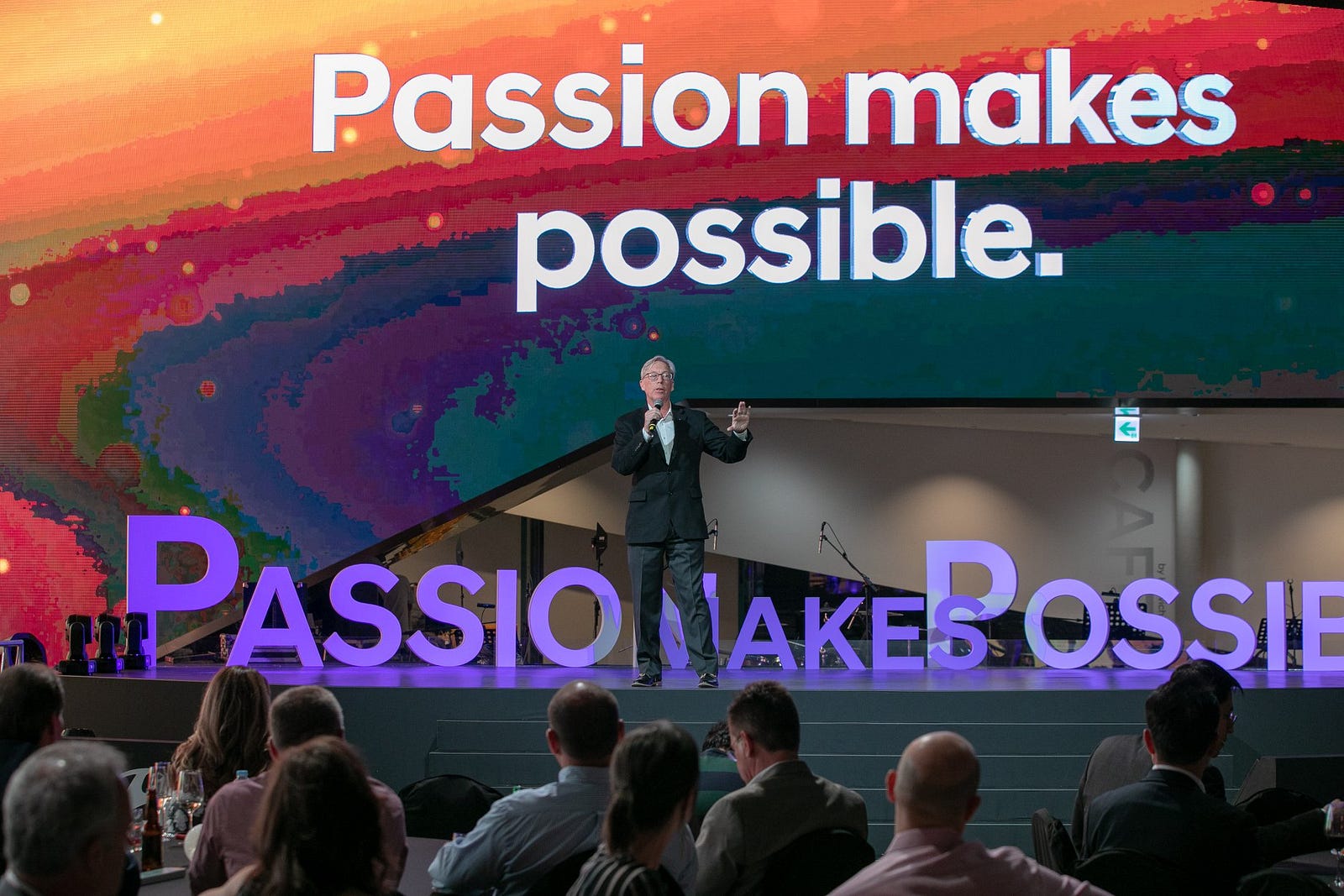
Keynote Seoul 2018 Hyundai Dealer Show

By Don Southerton

A client recently shared the content and deep understanding I had shared on Korea, specifically on working with Hyundai.

The term “Hyundai Whisperer” has been used to describe my consultancy both for working with teams and in the media.

This continues, and more recently, in my work and interviews with Korea Times, CNBC, and Branding in Asia, where I have focused on the “big picture” of transforming the Hyundai Motor Group from a fast follower to a game changer.

I see my role as supporting those new to Hyundai and those engaged but with little insight into “working with culture,” its processes, expectations, and ever-changing norms.

I will continue to provide “knowledge of the tribe, ”insights, and client support worthy of the title — the “Hyundai Whisperer.”

Would you be interested in learning more? Let’s chat.

Text or call 310–866–3777

Dsoutherton@bridgingculture.com

or Message

https://www.bridgingculture.com

The ‘Hyundai Way’ is Shaping Automotive Innovation

The Hyundai Way

By Don Southerton

Repost from Branding in Asia

https://www.brandinginasia.com/how-the-hyundai-way-is-shaping-automotive-innovation

September 9, 2024

On the recent 2024 CEO Invest Day, Hyundai Motor Company revealed its new “Hyundai Way” strategy and outlined its mid-to-long term goals.

For almost 20 years, I have explored and articulated ‘The Hyundai Way’ in my publications, media, and lectures. Early on, I realized that it was an innate quality and required a deep understanding of company and workplace culture gained through hands-on experience.

The Investor Day event outlined strategies, action steps, and timelines. Hyundai Motor leadership presented a flexible response to market conditions and a focus on electrification, as well as an expanded lineup of vehicles through its “Hyundai Way” strategy.

As Jaehoon Chang, President and CEO of Hyundai Motor Company, said, “Under the Hyundai Way, we will respond to the market with agility thanks to Hyundai’s unique flexible response system.”

In the following commentary, I look at the evolving but grounded “how” of the “Hyundai Way” and the methods Hyundai has used to achieve past successes, which I will strategically build upon.

“Can do Spirit”

First, and at the core, Hyundai has always been embodied with a “Can do Spirit” despite the odds—and this heritage is doing what others have said is impossible.

This “Can do” attitude means attacking challenges with 110% commitment through strong will to overcome obstacles.

In Korean, this is referred to as Ha myeon dwaen da, which translated means,  “Even if it’s impossible, it’s still possible.”   Then, I’d add “Move with Speed.”

For example, regarding “Can do Spirit,” in my work, I often share Korean core values, norms, and expectations with teams globally—those long associated with Korea would agree—a shared drive to tackle the impossible with a “Can-do Spirit.”

Even those entering the ranks in Korea soon acculturate and embrace these values… seeing what the company has achieved over the past decades.

Innovative thinking

Hyundai has a rich heritage of entrepreneurial innovation. This is forward-leaning, innovative thinking, especially when faced with challenges. Hyundai, the name adopted in the 1940s when an entrepreneurial startup, means “Modern,” showing forward-leaning origins, heritage, and DNA.

“Hyundai, the name adopted in the 1940s when an entrepreneurial startup, means “Modern,” showing forward-leaning origins, heritage, and DNA.”

In the rapidly evolving global automotive industry, Hyundai Motor has emerged as a trailblazing innovator, breaking away from its traditional role as a fast follower.

At the core of Hyundai’s future success will be its strategic metamorphosis. Its commitment to leading innovation, exemplified by its ventures into Boston Dynamics robotics, Supernal urban air mobility, and Motional autonomous driving, has redefined its brand identity and challenged the conventional paradigms of automotive manufacturing and design in many areas. I’d layer on the move to developing Software Developed Vehicles (SDV) equipped with High-Performance Vehicle Computers (HPVC).

Risk-taking

This means taking bold action. They seek opportunity and then act while assuming ownership and responsibility. Hyundai has transitioned from a Fast Follower to a Game-changer and first mover.

Generally, a fast follower closely watches and tracks a brand leader and then quickly emulates. This eliminates many risks.

Most significantly, fast followers can capitalize on profound economic savings that game changers and the first movers must invest in new technologies, such as development costs and investments running into the billions.

On a more practical level, fast followers wait for a concept to be proven and “bugs” to be worked out. Then, they can spare their customers from recalls, downtime, and inconvenience.

In highly competitive industries like automotive, Hyundai, now a first-mover brand leader, holds an advantage and will be seen by customers as offering something new and exciting.

This advantage can translate into new vehicle sales, which are the drivers for any OEM.

Bold Challenges

With that, I want to layer on a long-time intrinsic observation. Hyundai teams and leadership have embraced challenges over the years. This includes becoming a top automaker and now new targets such as 5.55 million annual global sales, selling 2 million EVs per year, offering a full lineup of EV models ranging from affordable to luxury and high-performance, launching Software Developed Vehicles, and bolstering corporate value and shareholder return.

In a Seoul meeting with several former executives, I discussed the Korean company’s move to Mobility. I mentioned that some in the West feel that Korean car makers still need to sell many ICE (internal combustion engine) cars and SUVs—the ICE vehicle profits as an offset required to fund the new projects.

Still, somewhat surprisingly, a senior Korean paused and, with conviction, pointed out, “They always needed a farsighted goal—best if it seemed impossible!”

Significantly, embracing bold challenges means that what others will doubt and may see as unreachable can and will be achievable—frankly, that has always been “The Hyundai Way.”

Questions? Comments dsoutherton@bridgingculture.com

Hyundai Game Changer

Hyundai Game Changer

Photo: Hyundai Motor Group

Reflecting on this, my most recent article, Hyundai, deserves some credit. Over the past several years, it has been trendy for Korean companies to tout themselves as Game Changers, but “few walking the talk.”

Hyundai is one of the few brands that aspire to be a mobility Game Changer with a significant forward-leaning commitment.

Game Changer—First Mover By Don Southerton

A Game Changer introduces something with so much added value that it sets them apart.
Game changers break beyond the traditional confines of business, dominate their niche, and become the go-to company, service, expert, or influencer.

A First Mover gains a competitive advantage by being the first to bring a new product or service to the market and establish strong brand recognition and customer loyalty.

Over the past few years, Korean companies, big and small, have sought to become Game Changers, often to break out of their secure and well-earned niches.

In the rapidly evolving global automotive industry, Hyundai Motor Group has emerged as a luminary, breaking away from its traditional role as a fast follower to become a trailblazing innovator. This transformation, marked by a bold pivot towards electric vehicles (EVs), autonomous driving technologies, and a wider range of mobility solutions, has positioned the South Korean giant at the forefront of an industry facing unprecedented disruption.

At the core of Hyundai’s success is a strategic metamorphosis. The Group’s commitment to leading innovation, exemplified by its ventures into Boston Dynamics robotics, Supernal urban air mobility, and Motional autonomous driving, has redefined its brand identity and challenged the conventional paradigms of automotive manufacturing and design in many areas.

Generally, a Fast Follower closely watches and tracks a brand leader and then quickly emulates. This eliminates many risks. Most significantly, Fast Followers can capitalize on profound economic savings that Game Changers and the First Movers must invest in new technologies, such as development costs and with investments running into the billions.

On a more practical level, fast followers wait for a concept to be proven and “bugs” to be worked out. Then, they can spare their customers from recalls, downtime, and inconvenience.

We also see Hyundai as a First Mover. In highly competitive industries like automotive, the First Mover brand leader holds an advantage and will be seen by customers as offering something new and exciting. This advantage can translate into new vehicle sales, which are the drivers for any OEM, as we have seen with Tesla.

Notwithstanding Hyundai Motor Group’s new ventures in robotics, urban air mobility, H2, and robot taxis’ autonomous driving technology, I feel Hyundai, Kia, and Genesis have set themselves apart from the competition in their e-vehicles and the ramping up of hybrid rollouts—especially in showcasing exciting new designs.

Finally, and tied to being a Game Changer, Hyundai looks to command a market-leading position as a First Mover by implementing changes faster through a ‘Software-defined Everything’ (SDx) strategy, redefining vehicles, fleets, and transportation systems with software and AI. The plan is to incorporate software development methods into the vehicle development process and mobility at a time when the industry is being disrupted.

Many feel, and justifiably, it’s a great time to be a Hyundai…

https://bridgingculture.com

Korea-facing Questions, Issues, or Project

Korea-facing Questions, Issues, or Project

I have a long history as a trusted advisor offering Korean business strategy and consulting services to firms across the globe. This includes major Korean groups, international brands, and government agencies.

Many see me as the “go-to” expert on all Korean business matters.

Have a Korea-facing question, issue, or project. Let’s talk.

Don Southerton

dsoutherton@bridgingculture.com

+1-310-866-3777

https://www.bridgingculture.com

APAC Cross-Cultural Insights: Is it Better to Manage Local Operations Locally?

It’s important to seek the right balance between global oversight and striving for localization writes Don Southerton

APAC Cross-Cultural Insights

Repost of my article in Branding in Asia LINK

There has been an expectation that Korean, Vietnamese, and other APAC companies would strive to fully localize as they expand overseas business operations in markets like North and South America, the UK, and the EU. With COVID we saw a change from the past with an annual dispatching of teams from Asia-Pacific HQs to a more reduced and limited role for expatriates.

There is a strong argument that local operations are best managed locally with minimal day-to-day oversight from the company’s HQ expatriate team. The exceptions in many cases, are expatriates assigned in a “designated” support capacity often in tech support and engineering.

As a thought leader in global business trends, I suggest a potential shift in global governance.

A limited expatriate support role has been a long-term goal. It’s costly, and the acculturalization for any expat in a new market takes time and an openness to learn and adapt.

This said, one constant is change. What potentially might have been the plan to reduce oversight may be altered to strengthen expat engagement and input in day-to-day business decisions and management. This frankly has been a cycle I have witnessed over the years. The current mode of reduced engagement has been, too, rooted in COVID where new overseas assignments were all but eliminated.

There are justifications and reasonings for the increased local engagement. One possible option for effective communication with APAC HQs is to assign expatriates for daily direct communication during evening hours, considering the time and work hour differences.

Expatriates can provide valuable insights into the HQ strategy, particularly in clarifying recent mandates and initiatives for local management.

Moreover, there is a growing need for broader HQ fiscal oversight during the rapid shift to capital-intensive ventures such as mobility, which requires significant infrastructure investment.

I want to mention that many Western brands, too, have long contemplated the right balance between a centralized company business strategy versus one driven by localization.

Bottom line… In today’s rapidly changing global economy, it is vital to comprehend the intricacies of Asia Pacific business, including the hows and whys, and to engage with local APAC teams.

Some suggestions:

For those in the West, it may be the first time working with a team from Korea, Vietnam, the Philippines, or Singapore. This opportunity requires an understanding of the new partner’s culture and expectations.

The assumption that local and expatriate teams can bridge cultural gaps through practical on–the–job experience might work with those few highly intuitive individuals with the exceptional ability to assimilate cultures.

What stands out in numerous studies, such as Forbes however, is the need for ongoing multicultural training, that can successfully impact people, especially those who need to quickly adapt to new or changing business culture and values, while fostering sensitivity and teamwork among all company members.

Finally, best practices have shown that a tiered service model with training, mentoring, and ongoing strategic support is the most effective approach for an organization. Leadership can greatly benefit from one-on-one coaching, too.

To conclude, to answer the question “Is it better to manage local operations locally?” International companies must seek the right balance between global oversight and striving for localization. This includes the best mix of an HQ team’s engagement in day-to-day oversight and decision-making while creating a level of direct communication to ensure expectations are addressed, especially aligning with global strategies and fiscal concerns.

Don Southerton

###