For over twenty years, I have helped leaders, teams, and global brands navigate Korea’s fast-changing and often nuanced business environment.
Much of my work focuses on bridging perspectives, sharing how Koreans think and operate in their workplace compared to practices overseas. I have seen firsthand what sets successful people apart: deep knowledge, cultural understanding, and strategic insight.
Our comprehensive Korea Business Mastery Intensive Course equips professionals with the cultural intelligence and strategic insights needed to thrive.
Perfect for:
Professionals entering Korean markets
Teams managing Korea partnerships
What’s Included: Deep dive into Korean business etiquette, negotiation styles, and decision-making processes. Learn to navigate hierarchy, build trust with Korean partners, and adapt your communication style for maximum impact. Stay ahead with insights on how geopolitical and economic trends influence Korean business landscapes.
URGENT: $795 (50% off regular $1,595 pricing)
Program Details: 6 weeks of expert-led virtual sessions with interactive workshops, case study analysis, and peer networking opportunities.
Flexible scheduling designed for working professionals—we’ll arrange times that work with your calendar after enrollment.
Start immediately upon registration and begin building the expertise that sets you apart in one of Asia’s most important markets.
It’s now a single resource packed with links for insights, strategies, and practical support in Korea-facing global business. Hundreds of YouTube’s, thousands of Blog posts, and a sample 6-week cross-cultural program PPT.
Open to new opportunities, too. Text/ call 310–866-3777 Don Southerton
Trusted Korea business advisor, culture coach, mentor, and consultant. Hyundai Whisperer…Incheon-IFEZ- Enter-tech… LTO Battery consultant
June 16, 2025
From sold-out K-Pop concerts to Korean dramas dominating global streaming charts, South Korea’s Korean Wave, or Hallyu, continues to gain momentum worldwide. At its core is a powerful blend of K-Pop, cinema, and television, supported by national policy and driven by a broader strategy: leveraging soft power to shape global culture and perception. The Korean Wave is no longer just a media trend—it’s a platform for international engagement, brand diplomacy, and cultural innovation.
K-Con’s Cultural Influence
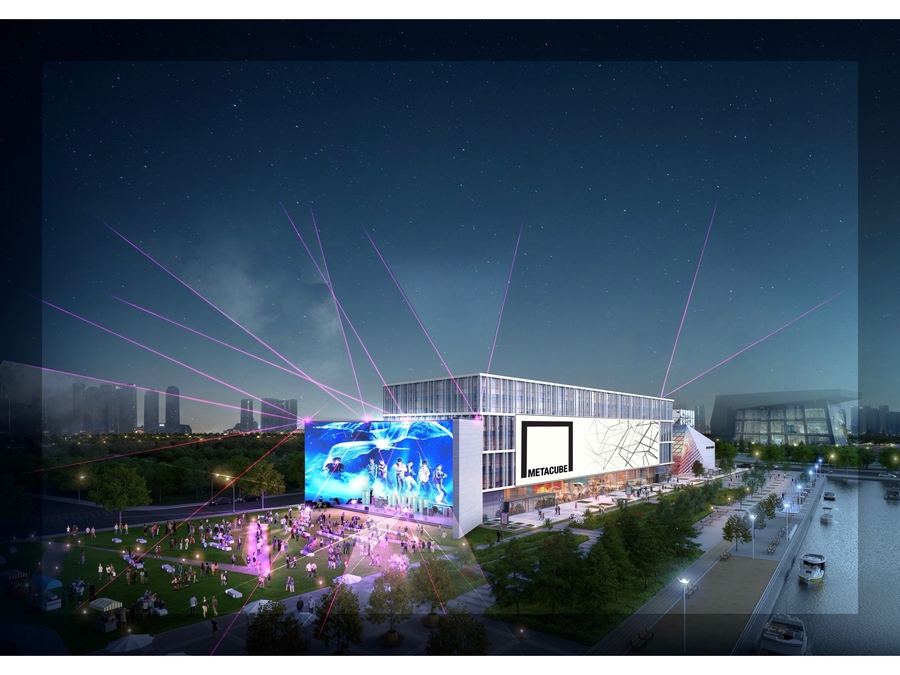
Among the most influential cultural initiatives is K-Con, a series of global events connecting fans with Korean pop culture, music, fashion, and digital entertainment. But beyond fanfare, K-Con is proving to be a catalyst—inspiring the next generation of K-content infrastructure and immersive cultural spaces. One such example is Metacube Square , a bold new project in Songdo, within the Incheon Free Economic Zone (IFEZ). Drawing inspiration from the energy and engagement of K-Con events, Metacube Square is being developed as a enter-tech platform for immersive, new media art and interactive cultural content. It reflects how Korea is evolving beyond traditional concerts and fan gatherings to design technology-driven environments that merge performance, storytelling, and digital innovation.
While K-Con offers a physical gathering point for global fans, Metacube Square aims to extend that engagement into a permanent, next-generation experience hub—a place where culture, technology, and content innovation converge.
IFEZ: Building a Global K-Content Capital
The Incheon Free Economic Zone not only looks to back projects like Metacube Square- it is actively positioning itself as a global headquarters for K-Content innovation. Through policy tools, investment incentives, and international outreach, IFEZ is considering the development of a dedicated cultural district that integrates:
· Media production facilities
· Immersive tech and metaverse labs
· New media art dedicated space
· Cultural content startups
· International education and training centers
· Hosting infrastructure for global events like K-Con
IFEZ officials are also exploring partnerships with global streaming platforms, production studios, and event organizers to anchor major cultural content businesses in Songdo and the greater Incheon region. The goal is to make IFEZ a magnet for next-generation storytelling, leveraging Korea’s creative talent and digital infrastructure to build a new global enter-tech media city. As reported in the Korea JoongAng Daily , IFEZ’s long-term vision includes becoming a “K-Con Land” of sorts—an integrated destination for both creators and audiences, where cultural content is not just produced but experienced in new and immersive ways.
Culture as National Strategy
Korea’s cultural momentum is not only about popularity—it’s about strategy. Through content that resonates emotionally and visually, Korea is building influence and recognition on the global stage. Culture becomes an engine for diplomacy, commerce, and national branding. From digital concerts to immersive storytelling, K-Con and its offshoot inspirations like Metacube Square represent the evolution of Korea’s cultural exports. They transform fans into participants—and entertainment into interactive, scalable experiences. In this age of digital transformation, Korea is showing the world how to blend culture – entertainment and technology—not just for entertainment, but for long-term global impact.
SONGDO SOUTH KOREA and GOLDEN, CO, June 10, 2025 /24-7PressRelease/ — Metacube Global is proud to announce The Metacube Square—a bold new venture at the convergence of immersive technology, art, and experiential entertainment.
Strategically located in Songdo International City, one of Asia’s premier smart cities within South Korea’s Incheon Free Economic Zone (IFEZ), The Metacube Square offers a transformative environment where audiences, creators, artists, and technology seamlessly converge. At its center is The Metacube, a six-sided high-resolution digital cube designed to host immersive storytelling, multi-sensory experience, and real-time audience interaction.
Investment Highlights: Why Now, Why Metacube? – Surging Market Demand: The global immersive media market is growing rapidly, driven by consumer appetite for interactive entertainment and tech-enabled experiences.
– K-Culture for Global: We are welcoming a new era. National policies are focusing on K-Culture, and projects in K-Content, OTT, and platforms will be leading the global market.
– Prime Location: Songdo is a government-backed innovation hub with world-class infrastructure, global accessibility, and institutional support for tech and culture.
– Proprietary Platform: Our media cube-based, fully immersive experience framework is scalable and customizable for multiple global deployments.
– Innovative: The Songdo Metacube will be the first multi-purpose mega platform for participative and experimental entertainment purpose in South Korea.
– Visionary concept: The Metacube established Songdo as the center of Art & EnterTech hub and will host the largest International Art & EnterTech festival in collaboration with its partners.
– Strategic Partnerships: We are forging international alliances and contracted partnerships with leaders across the entertainment, technology, art, and e-sports sectors. (French, Swiss, and Canadian museums, and a Channel for e-sports ESVT )
– Strong Finances: Return on business (after tax) 28%.
– Scalable model: High-margin IP, long-term space rentals.
Funding Opportunity We are currently raising seed capital to accelerate: – Final development and engineering of The Metacube platform
– Expansion of proprietary and partner-generated content
– Recruitment of key personnel across tech, operations, and business development
– Deployment of our first flagship installation in Songdo
This round offers early investors a first-mover advantage in a venture designed for global scalability, recurring revenue streams, and high-impact cultural relevance.
Call to Action We are scheduling one-on-one investor briefings to discuss partnership opportunities, business model scalability, and our phased global rollout strategy. Now is the time to be part of a paradigm shift in how the world experiences art, entertainment, and digital environments.
I often comment in the media and to support client inquiries about foreign direct investment (FDI), market entry, and establishing Korean business partnerships. I’ve seen my share of successes and, sadly, costly mistakes, too. Even the best-experienced brands are often steered into poor arrangements from self-serving local advisors to contracting big-name firms.
This said, entering the Korean market can be a great opportunity. Here are my key considerations:
Business Culture Factors
1. Market research: Understanding your industry’s 2025 Korean consumer behavior, preferences, and trends.
2. Regulatory compliance: Familiarizing with Korean laws and regulations, such as labeling requirements, certification processes, and tax laws.
3. Partnerships: Considering selection and partnering with local companies or distributors to navigate the market and build relationships.
4. Cultural adaptation: Be prepared to adapt your product or service to Korean culture and language.
Costs
The cost of entering international markets can vary widely depending on several factors, including the project’s size, industry, target market, and entry strategy.
Here’s a general overview of the costs associated with different market entry strategies:
Market research and analysis: $10,000 – $50,000
Partner identification and negotiation: $10,000 – $50,000
LOI, MOU, and Joint Venture agreements: $5,000 – $20,000
Establishing a local presence- TM, IP, Legal entity: $10,000 – $50,000
Hiring local staff: $20,000 – $100,000
The bottom line is that experience matters. As always, you pay for what you receive in value and services. My initial focus is always strategy and brand fit.
After more than twenty years working directly with executives and teams, I have developed workarounds and tactics for challenging Korea-facing business issues.
South Koreans are entitled to 16 holidays per year, making South Korea one of the countries with the most holidays. The month of May has several holidays
The number of holidays may be partly due to the country’s traditionally long workday, often exceeding 40 hours. In recent years, the government has implemented policies to reduce working hours. However, the actual implementation and workplace culture regarding shorter hours and taking breaks can vary significantly between companies and industries.
Labor Day or Workers’ Day (May 1st)
Not an official holiday in Korea, but most employers make it a day off within the company’s employment rules. Banking institutions and most commercial businesses are closed that day.
Buddha’s Birthday (May 5th)
Buddha’s Birthday is an annual holiday in South Korea. The date varies from year to year on the Gregorian Calendar, but it tends to come in late April or early May, like this year.
On the traditional Korean calendar, it is always the eighth day of the year’s fourth month.
With around 10 million Buddhists living in South Korea, it is unsurprising that Buddha’s Birthday is a public holiday.
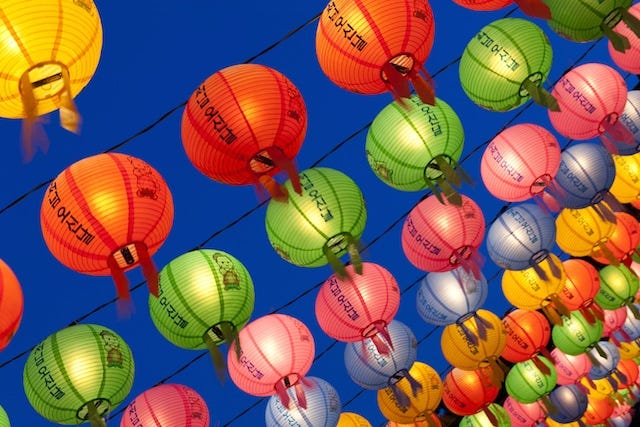
The most telltale indication that Buddha’s Birthday has approached in South Korea is the sight of lantern festivals throughout the country. The gigantic lantern parade in Seoul occurs on the Saturday before the actual holiday and features thousands of participants carrying lit paper lanterns through the streets.
Children’s Day (May 5th )
Children’s Day is a national public holiday in South Korea that reflects the importance families in Korea place on children. This year it is celebrated on May 6th.
Koreans attend special events in public parks, fairs, zoos, and other locations. Children also play traditional games, receive presents from parents and others, and have a fun day out. Popular destinations include Lotte World, Everland Resort, and new attractions like Legoland.
Parent’s Day ( May 8)
Koreans highly value traditions, family values, and respect for the elderly. Family activities aim to honor their parents.
As May 8th approaches, students make red carnations, and kids usually write a letter of thanks to go with their carnations. As Korea is aging, older families look to spend time with their parents and have a meal with them, too.
In this Part 2 Korean norms, I provide insights for Western executives, and in Part 3, I will share more with teams interacting with Korea.
As noted for global teams, steering the norms and expectations of the Korean workplace can be challenging. Furthermore, failing to meet expectations and, in many cases, misinterpreting situations is concerning. Although individuals may be very confident in their positions and way of doing things, they may never see their demise coming and will be blindsided.
Seasoned Korean executives are highly intuitive and sensitive to everything around them. They read situations and adapt. Little gets by them. In fact, few ever reach an executive level without such a skillset.
To share a couple of takeaways…
First, a Western executive is hired for two reasons based on their background and experience. 1) To do the job you were hired. And 2), to develop solutions, ideas, and workarounds. These solutions should include several options to present to leadership and, at times, ideas “out of the box.”
Next, I strongly recommend Western executives receive ongoing and frequent updates on Korea and the workplace, as well as coaching and mentoring. On-demand and weekly sessions can address questions and issues impacting your company and issues that surface.
As always, I am here to discuss… Let’s set a time to talk.
I am a strong advocate for Korean global business. I see tremendous opportunities and am passionate about helping Korean brands succeed overseas and enabling international brands to thrive in the Korean market.
As I have shared, Korean and global companies must recognize the considerable upfront support and investment required to enter markets outside their home countries.
I want to share what I see as best practices for 2025.
Step 1: Do your homework
Invest time and resources in discovering the local market. Seek an expert knowledgeable about the local market and business sector to conduct an objective, detailed competitive analysis. The report should identify the strengths and weaknesses of the competition within the market, strategies that will give you a distinct advantage, the barriers that may hinder your entry into the market, and vulnerabilities in the competition that can be exploited.
Too often, I see a company scratch the surface of its market discovery. Sometimes, this controls initial investment costs by assigning in-house teams to work remotely and conducting research via a Google search.
In other cases, the headquarters staff dispatches a team to do “field work,” attend trade shows and perhaps arrange to visit a few potential partners.
These fall short of a legitimate competitive analysis.
Step 2: Get in front of the right people
For highly recognized U.S. or global brands, setting up meetings is less of a barrier because product or service name recognition does open doors. This recognition at least generates enough interest for a potential partner to want to learn more.
Korean brands entering an overseas market need significant effort to establish credibility upfront.
Arranging solid introductions involves an upfront cost and can be very time-consuming for both international and Korean market entry.
Furthermore, anyone with the skills, savvy, and reputation to facilitate introductions, especially with decision-makers, should not be expected to do so as a favor.
Step 3: Present the brand, product, and service as if it were a first date.
Although this was best done in person in the past, I recognize that introductions and first contacts today are often “virtual.” Any content presented at this stage should be high-quality and well-localized.
I often see repurposed PDF and PPT presentations — not unique, custom-tailored content.
Then, double-check the grammar, spelling, and punctuation of a native speaker and ensure the pages are free of format glitches.
At the very least, interested parties will Google a company—and often you personally—before any meeting, so it’s advisable to have a professional website. Even better are postings by third parties, such as press releases and media articles, that showcase the company as a legitimate business.
Step 4: Share the Vision
During their screening and selection process, global companies will select a top candidate among potential partners based on criteria, the foremost of which is the partner’s solid vision and business plan in the market. They will ask if the local partner has performed a detailed competitive analysis (see Step 1) and then ask for a comprehensive Go-to-Market Business Plan. As a best practice, the Business Plan needs to be detailed, not a three—or four-page company overview.
Like the PDFs or PPTs shared during introductions, the Plan must be free of glitches, poor grammar, and spelling errors. The documents should present an appealing and solid business opportunity.
By the way, a Company PDF highlighting your brand is fantastic, but most potential partners are primarily interested in a solid business and go-to-market plan.
These four steps are best practices that can lead to a successful Letter of Understanding, clarifying in writing the terms that may have been discussed via email and in conversation.
These steps require time, resources, and commitment — there are upfront costs, unlike past and current practices in Korea that traditionally required less investment or were absorbed by the company.
Experts like BCW, with a proven track record, rarely work on a contingency basis. They seek a retainer to cover their time and expenses, with a bonus when a deal is signed or a development fee transaction occurs.
Regarding local market legal support, navigating the cultural and legal nuances of contract negotiations and drafting, and regulatory frameworks, “A little money carefully spent at the front end of market analysis, and during initial negotiations will always save a lot more money later in the process.” — as a trusted legal colleague has noted.
Frankly, global business presents challenges and risks. The effort requires embracing a new model and taking bold actions by committing resources to a project that leads them into uncharted waters, even when a more practical approach seems to involve tackling each stage as it unfolds.
I am open to talking with you about any questions.
I’m also happy to steer you in the right direction.
Plus, we can provide the support and resources needed for your market entry.
It’s common for a Korean company’s leadership to decide on direction and major issues. These can range from a shift to Smart Manufacturing to greater SWP (software-based production) or a new business line. In turn, they can request a TFT (task force) and local teams to gather and prepare needed information.
Then, if approved, the dedicated staff will report back to HQ on implementation and progress.
In cases where overseas leadership and teams hope to offer an idea, new service, or program, local Korean and Western management’s role is to prepare—gathering supporting information, the reasoning behind, and ROI, then sharing it with the appropriate senior team members, who are often in Korea.
The local opinion is valued, but review and final approval may come from Korea.
My suggestion…
When conducting a meeting where a decision must be made, please know that your local Korean team(s) will have a significant say in the outcome. This may include both the operations and finance teams. Their primary concern will be risk.. so do your best to mitigate.
Since the topic and subject matter may be new to your Korean team, I recommend you share the needed background documents (best provided in PPT format) before any meetings.
In addition, have an informal pre-meeting Q&A with the Korean team leader to brief and update them on any specifics. Note: they may need a day to review proposals and agreements, so timing is critical.
Even in the best cases, expect that the Korean team may want to postpone any decision until they can carefully review and perhaps confer with Korea. I suggest all documents and meeting PPTs be immediately forwarded to the Korean team. I’d create a sense of urgency with a timeline for execution and implementation.
Regardless, expect some delays and be patient. Over the years, I’ve found that Korean teams appreciate when their overseas co-workers recognize that the internal approval process takes time and be ready to offer as-needed supportive data or documents.
In our next edition, we will examine the 2024 Approvals. So stay tuned and follow our Newsletter and YouTube videos.
Are you engaged in high-priority projects or business proposals?
I can give you some perspective to make sure it works well. Let’s talk.






Korea’s Cultural Content and the Soft Power Surge
From K-Pop to Immersive Innovation
By Don Southerton
Trusted Korea business advisor, culture coach, mentor, and consultant. Hyundai Whisperer…Incheon-IFEZ- Enter-tech… LTO Battery consultant
June 16, 2025
From sold-out K-Pop concerts to Korean dramas dominating global streaming charts, South Korea’s Korean Wave, or Hallyu, continues to gain momentum worldwide. At its core is a powerful blend of K-Pop, cinema, and television, supported by national policy and driven by a broader strategy: leveraging soft power to shape global culture and perception. The Korean Wave is no longer just a media trend—it’s a platform for international engagement, brand diplomacy, and cultural innovation.
K-Con’s Cultural Influence
Among the most influential cultural initiatives is K-Con, a series of global events connecting fans with Korean pop culture, music, fashion, and digital entertainment. But beyond fanfare, K-Con is proving to be a catalyst—inspiring the next generation of K-content infrastructure and immersive cultural spaces. One such example is Metacube Square , a bold new project in Songdo, within the Incheon Free Economic Zone (IFEZ). Drawing inspiration from the energy and engagement of K-Con events, Metacube Square is being developed as a enter-tech platform for immersive, new media art and interactive cultural content. It reflects how Korea is evolving beyond traditional concerts and fan gatherings to design technology-driven environments that merge performance, storytelling, and digital innovation.
While K-Con offers a physical gathering point for global fans, Metacube Square aims to extend that engagement into a permanent, next-generation experience hub—a place where culture, technology, and content innovation converge.
IFEZ: Building a Global K-Content Capital
The Incheon Free Economic Zone not only looks to back projects like Metacube Square- it is actively positioning itself as a global headquarters for K-Content innovation. Through policy tools, investment incentives, and international outreach, IFEZ is considering the development of a dedicated cultural district that integrates:
· Media production facilities
· Immersive tech and metaverse labs
· New media art dedicated space
· Cultural content startups
· International education and training centers
· Hosting infrastructure for global events like K-Con
IFEZ officials are also exploring partnerships with global streaming platforms, production studios, and event organizers to anchor major cultural content businesses in Songdo and the greater Incheon region. The goal is to make IFEZ a magnet for next-generation storytelling, leveraging Korea’s creative talent and digital infrastructure to build a new global enter-tech media city. As reported in the Korea JoongAng Daily , IFEZ’s long-term vision includes becoming a “K-Con Land” of sorts—an integrated destination for both creators and audiences, where cultural content is not just produced but experienced in new and immersive ways.
Culture as National Strategy
Korea’s cultural momentum is not only about popularity—it’s about strategy. Through content that resonates emotionally and visually, Korea is building influence and recognition on the global stage. Culture becomes an engine for diplomacy, commerce, and national branding. From digital concerts to immersive storytelling, K-Con and its offshoot inspirations like Metacube Square represent the evolution of Korea’s cultural exports. They transform fans into participants—and entertainment into interactive, scalable experiences. In this age of digital transformation, Korea is showing the world how to blend culture – entertainment and technology—not just for entertainment, but for long-term global impact.
###