
Outside my day-to-day support of Korean facing business and clients, I am drawn to ponder on issues and drill deep. I other words research, investigation and then providing commentary on the direction of Korean business from trends inside Korea to Korea-facing international operations.
An example of this process, several years ago I coined the term K-lobalization (Globalization with a K for Korea) as I saw the trend when Korean firms boldly promote their own unique management style and corporate culture internationally and across many markets. A recent manifestation is organization-wide, corporate-directed mandates…. from core value, vision, and management training directives to most recently how they should brand or even target specific consumers in local markets. Usually these programs are expected to be unchallenged and accepted without question by overseas teams—at times not in the best interest of the local operation.
This said, a new topic, which has my interest, was touched upon in May 11 edition of Everything Korea… there I argue a key challenge in Korean success with startups and innovation was “culture. I would like to expand this perspective more broadly to be the “culture” needed to foster the Creative Process in general. In fact, this is the first of three commentaries on the topic.
Let me explain. What has evolved in America regarding startups, tech, and innovation is they tend to hub in cities with diversity and strong counter-cultures like Boulder, Colorado, San Francisco, Austin, TX, and NYC, although more and more scenes are emerging in Nashville, TN or here in Golden, CO…
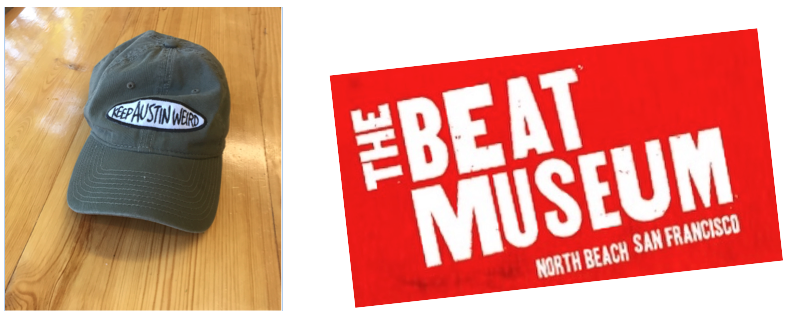
Nuff said…Edgy Austin and Jack Kerouac
Within these communities I have witnessed an amazing synergy not only in day-to-day interactions and dialogue, but also in resources. Actually spending an hour and listening to the chats and even pitches for Angel Funding in edgy Caffe Centro on a South Park Street in San Francisco (the couple of blocks once referred as the Tech Ground Zero and where concepts like Twitter were launched and well as scores of tech companies and startups now call home) one quickly sees why locating in one of these scenes is key. In fact, showing how widespread, I frequently hear similar coffee shop launch pitches in Golden, Colorado.
Let me explain more in detail.
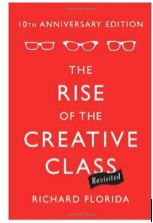
As academic Richard Florida points out in The Rise of the Creative Class, creatives as a group reflects a “powerful and significant shift in values, norms, and attitudes.” He clusters this attitude to be:
1) Individualism
2) Meritocracy
3) Diversity and Openness (which can translate to gender, sexual preference, race and my favorite “personal idiosyncrasies”.)
Of course those familiar with the Korean workplace and by this I don’t mean only the larger organizations but even most progressive firms, recognize there is a huge disparity from these “creative” norms.
For example, in contrast to the individualism within the creative class, in Korea we find deeply rooted collectivism where the group is the primary unit of reality and the ultimate staendard of value.
In collectivistic societies, group goals take precedent over an individual’s objectives. This view does not deny the reality of the individual, but, ultimately, collectivism holds that one’s identity is determined by the group(s) with which one is affiliated.
Collectivistic cultures also require that individuals fit into the group—and “conform.”
Noting this, outside values, norms and attitude, perhaps the gap between US and Korea that also occurs is in “risk mindset.” Today the American entrepreneurs, angel investors and VC who launched Facebook, Twitter, Instagram, Linkedin, Square and now Super continue to look for, invest and provide mentorship and guidance to what they hope will be the next success story…. In most cases they are investing resources in multiple ventures….
This said they know and accept that failure is part of the process…. As Biz Stone (co-founder of Twitter, and an early investor in Square, Medium…and a bunch more) said at SXSW on his most recent work… “the failure of one venture, Jelly, led to success at a venture, Super.me ”
So getting back to Korea the real challenge is not in lack of ideas or topnotch talent, but in allowing and fostering a culture of Diversity and Openness, an acceptance of failure, and tolerating and even embracing non-conformity.
The good news…. I would not give up on Korea and a creative culture. More of my thoughts on this in the next episode of Everything Korea. I even will propose a roadmap for grooming creatives in Korea.
So until next time…
Links
The Rise of the Creative Class http://www.amazon.com/Rise-Creative-Class-Revisited-Anniversary-Revised/dp/0465029930/
The Beat Museum http://www.kerouac.com
Biz Stone’s Super.me https://super.me

Questions and Comments? questions@koreabcw.com
Everything Korea: Episode July 27 Insightful Feedback and Resources
I’ve just begun compiling feedback from the new case study. Contributions from readers, like you, show highly engagement in the study as well as many dealing with some common issues.
One that surfaced was although they have achieved much success Korean brands in their overseas operation need to adopt MORE to local norms including accepting failure and missteps. If not, and as a consequence growth will stall and be unsustainable–something of recent concern that we see occurring globally amid strong competition by rivals and changing markets.
To paraphrase one well thought out response that nailed it dead center with this profound statement. With regard to their local Korean business operations “[a] company needs to foster innovation rather than just be a fast follower.
Adding, “The challenge is with ‘Acceptance of mistakes’, which as you noted [ in the case study] is one of the foundations for American’s success. Culturally, failure [for Koreans] is not an option. Until they realize that it can serve as a foundation for success, they won’t be able to go much further.”
Again, in the next few episodes look for a more well thought out feedback, which I share on the case study.
Meanwhile, changing the topic slightly, but sharing as solutions…I’ve offered considerable content over the past several years in video format—first are a series of 5 concise videos, and second a more recent 2015 presentation—all captured in high resolution and quality audio. I strongly encourage you to view.
For the 1st five videos they run 2-3 minutes, and the last video about 26 minutes.
Opportunities and Challenges
https://www.youtube.com/watch?v=s6uWpHkj2zc&list=PLYTdCvotGB1QKPCB5zVzabQD6NG9I2VkZ&index=1
Common Misconceptions
https://www.youtube.com/watch?v=UnAMaDxXwm4&list=PLYTdCvotGB1QKPCB5zVzabQD6NG9I2VkZ&index=2
Lesson in Localization
https://www.youtube.com/watch?v=5iDgfWYnA_4&index=3&list=PLYTdCvotGB1QKPCB5zVzabQD6NG9I2VkZ&spfreload=10
Competitive Advantage
https://www.youtube.com/watch?v=k3bdbCKdF0E&list=PLYTdCvotGB1QKPCB5zVzabQD6NG9I2VkZ&index=4
A Shift in Korean Management Styles
https://www.youtube.com/watch?v=OHilmaWZVUw&index=5&list=PLYTdCvotGB1QKPCB5zVzabQD6NG9I2VkZ
Korea Perspective
http://www.koreasociety.org/corporate/korea_perspective.html
As always I’m happy to answer questions, please direct them to questions@koreabcw.com
Until next time…