Top story: Korea’s chaebol went all-in on domestic AI, mobility and defense, a 312 trillion won ($204B) wave of investment landed on top of a settled 15% tariff regime, while Hyundai posted its best-ever June in the US.
The week’s throughline: Korean top groups are building at home and on American soil at the same time.
Chips & AI, Korea doubles down at home
President Lee opened the week unveiling a $576 billion semiconductor and AI investment drive, anchored by Samsung and SK Hynix’s combined ~800 trillion won for new southwest fabs.
Midweek, SK Hynix moved to list an ADR on Nasdaq (SKHY) around July 10, raising up to ~$29B to fund chip infrastructure tied to US demand, the clearest signal yet of Korea buying US capital access. An ADR represents shares of a foreign company and allows international stocks to be easily bought and traded on U.S. exchanges like the NYSE or Nasdaq.
Trade & tariffs
The 15% reciprocal rate held all week, with Seoul citing US reassurance it will go no higher.
Battery makers (LG Energy Solution, Samsung SDI, SK On) are pursuing tariff refunds after February’s Supreme Court ruling, while Hyundai is staying cautious on refund claims to avoid friction with the Trump administration.
We are watching the Section 122 10% tariff, set to lapse around July 24.
Autos, Hyundai’s record run
Hyundai posted its best-ever June in the US (77,555 units, +11% YoY), capping record Q2 and first-half results and putting it on pace for a fourth straight annual US sales record.
Kia also set a June record.
The run is hybrid- and crossover-led, winning share on product mix, not price.
Hyundai’s bet in future mobility
Capping the week, Hyundai and Hanwha unveiled a combined 97 trillion won investment for southeastern Korea, part of a 312 trillion won conglomerate wave announced Friday in Jinju.
Hyundai committed 42 trillion won over 10 years to turn the Gyeongsang region into a hub for AI-defined vehicles, advanced manufacturing, aerospace and clean energy, centered on a new Ulsan EV plant, Level 4+ autonomy, Mobis/Wia EV-component lines, advanced air mobility (Supernal), lunar rovers, SMRs and hydrogen.
As a friend shared, “I believe the next wave of space hardware will be landers but right after that will be ground vehicles.”
That said, Hanwha added 55 trillion won for integrated AI space infrastructure.
The BCW Take
This was the week Korea’s strategy came fully into view: with the 15% tariff floor now a planning constant, the action is positioning.
Korea’s chaebol are pouring capital into home-soil AI, chips, mobility and defense while simultaneously planting flags on American ground, SK Hynix’s Nasdaq listing and Hanwha’s Philadelphia yard on one side, and the 312 trillion won domestic build-out on the other.
For clients with Korea exposure, this is the moment to lock US-side capacity and supply-chain footing while Korean balance sheets stay aggressive.
Headline: Seoul unveils a $576 billion semiconductor and AI investment drive as Samsung and SK Hynix commit to massive new domestic fabs.
Top Story
President Lee Jae Myung laid out a sweeping industrial strategy built around chips and AI, with over $576 billion in planned investment to secure global leadership.
Samsung and SK Hynix anchor it with a combined 800 trillion won (about $518 billion) for new fabrication sites in the southwest, alongside regional and packaging-cluster funding.
The signal: Korea is doubling down on home-soil capacity even as it manages US tariff and investment pressure.
Trade & Tariff
Korea’s 15% reciprocal rate continues to hold under the bilateral deal, with Seoul’s industry minister citing US reassurance it will go no higher.
Watch the USTR forced-labor proposal that could add 12.5% on goods from 54 economies, Korea among them.
Metals face Section 232 at a 15% cap as of June 8.
Sector Watch
Semiconductors: the $576B drive dominates. SK Hynix is set to list ADRs on Nasdaq (ticker SKHY) around July 10, raising up to $29.4 billion, one of the largest recent US listings by a foreign firm.
Automotive and biopharma are quiet today.
Hanwha Watch
Hanwha Philly Shipyard delivered Acadia, a first-of-its-kind subsea rock installation vessel, to Great Lakes Dredge & Dock on June 25.
The yard continues two MARAD vessels and three Matson containerships, part of a $5 billion plan to scale toward 20 ships a year.
BCW Take
Korea is hedging Washington with scale at home: the $576B build-out and SK Hynix’s Nasdaq listing give Seoul leverage and capital flexibility even as tariff terms stay fluid.
New:The Hyundai Way is now available in Kindle, paperback, and hardcover.
Inside the culture, leadership, and strategy that built a global automaker, the work-funneling model, the chaebol timeline, and the five transformation vectors reshaping Hyundai’s next decade.
Year-end organization-wide promotions, restructuring, and new assignments for teams are traditionally a part of Korean corporate culture. Top to bottom within Korean companies they occur sometime between early December and early January, with the changes to senior leadership announced first, and team level changes as a norm made known the week just before or between Christmas and New Year’s Day.
After the Holidays, teams then report back to work. Some assume new roles frequently in departments where they have little experience—requiring employees to acquire new skills—sink or swim.
In the days that follow those shuffled brief their replacements, as staff remaining in their jobs update new management teams on the status of projects and issues.
Meanwhile, others will be en route to assignments in overseas operations; a challenge for those working outside Korea for the first time.
This can also be a challenge for local overseas operations. In particular, it is common for those newly assigned to be unfamiliar or have very limited experience with the many nuances in the localized foreign business, as well as the new role and responsibilities. Not to mention, working outside Korea is in itself a learning curve that can take months and even years.
And I strongly recommend leadership—Western and Korean– have countermeasures in place to mitigate any transitional gaps. They do occur. In fact, over the years I have worked extensively to facilitate smooth transitions.
So, what to look for… The top Chaebol will and have begun to announce key promotions, which can provide some insight into future trends. The Chaebol usually also comment on whether this year’s promotion number is more or less than in the past and the reasons “why.”
On restructuring, top Chaebol have already announced plans. These can range from granting more independence to business units to consolidating control.
In their restructuring, SK Group elevated a number of executives to vice-chairman level and granting independent decision-making authority to their key affiliates that span from semi-conductor chips, batteries to wireless network, energy, and biotech.
In contrast, Samsung Electronics noted as a shake-up they will merge 3 of their business units.
Samsung also announced several changes in its corporate policies. With the new year, they will employ a new personnel management system. Under the new system, Samsung will abolish a set of requirements before an employee gets promoted to a certain level, such as a minimum term of service that lasts roughly eight to 10 years. Instead, top-performing employees will be eligible for their work performance and expertise be taken into account as key factors for promotion over time in grade.
The Hyundai Motor Group, too, has announced its executive reshuffle. To align with the new Chairman E.S. Chung’s future vision, we see a plan to bring younger faces on the C-suite with a focus on future mobility and on technology sectors such as infotainment, ICT, and autonomous driving. This then means many of the current leadership are stepping aside to the advisory posts.
New Years’ Message This said, as in the past, with the new year, we can expect leadership will share their 2022 plans in an annual New Years’ company announcement, too. I monitor closely and as they are in Korean will share when appropriate and upon request.
As a final note, for western global teams, I suggest congratulating those who are promoted but also be sensitive to Korean team members who were passed over… or possibly moved to what may be seen as a less strategic assignment.
BTW Time in grade is just a criteria for promotion, or in some cases if a junior is promoted over a senior it is deemed as their time to retire.
It’s hard not to be a watchdog for Korean facing issues that grow in concern and could potential have a global impact on the organizations and clients I support.
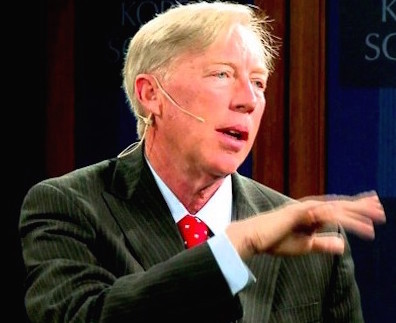
In an interview for an upcoming segment for the Korean media show “Koreascape” on globalization, I was also asked for my opinion on the recent drama within Lotte, Korea 5th largest chaebol over control of the Group. The host Kurt Achin, a seasoned journalist, shared concern over the bold move by one of the Founder’s son to take control of the Group, which has drawn considerable media and popular notice to the ongoing issue of succession among the chaebol. This media attention has not only been limited to Korea, but showed up on Page 1 of the WSJ as well as AP and the other leading wire and new service. [BTW Lotte is Korea’s largest retail, distribution, tourism and construction Group with a growing international presence and annual sales estimated at more than $100 billion. Also, Chaebol is a common South Korean term for their conglomerates, often multinational, global enterprises led by a Chairman and in most instances family controlled.]
This brings us to a media summary on the topic of Korean Family Succession, as well as a FAQ sharing my thoughts.
To prefix my comments, in her book, How to tell your story so the world listens, Bobette Buster author and USC Adjunct Professor notes:
“It has been said that Industrial Age ended after the end of World War Two. Then, it was superseded by the Age of Information via the computer, the 1960s boom in Madison Avenue advertising…and television. Then with the Internet boom of the 1990s, there followed in 2003 with viral explosion of the social media. With this a new deceiving conceit arose: anything worth knowing is available at our fingertips. This immediacy has curiously, made people less curious about discovering the world, at least to any depth.” The author then points out; we often “… know the facts, but not the context in which they happen.”
Let’s start with what we know and specifically fueling so much concern, and then I will share some context in a FAQ.
An editorial on the Lotte controversy in Yonhap, the Korean newswire service, writer sums up popular sentiment:
“Koreans are sick and tired of these internecine fights when the managerial control of a chaebol moves between generations.” More so, “who will succeed a family decision, rather than a formal shareholders’ meeting.”
Fuel to the fire… In July, amid considerable media attention, Samsung C&T and Cheil Industries agreed to an $8 billion merger that essentially consolidated the Samsung Group’s Lee family sway over Samsung Electronics, the Group’s flagship. This move sparked the ire of activist shareholder Paul Singer, CEO of U.S. hedge fund Elliott Associates. The American firm publically felt the deal would undervalued their substantial stock holdings in Samsung C&T while overvaluing Cheil to the benefit of the Lee family successor. Samsung rallied their supporters to win over Elliott in a heated vote.
Noting, I have prepared a three point FAQ look at context behind Korean succession, past and present.
1. What’s driving Korean family succession?
Looking back, Korea’s chaebol model is strongly rooted in their past. Neo-Confucianism, the dominant secular ideology of the nation going back to 1392, required all government officials and bureaucrats to pass rigid civil service examination for local, provincial or court positions. The Korean monarchy was the exception, male primogeniture used to determine the next ruler. Likewise, within Korean families, the eldest son and his descendants take precedence over siblings and their descendants. Elder sons took precedence not only over younger sons, but all sons took precedence over daughters—even elder daughters.
With the modern era and end of Japanese Colonial Rule, Korean business groups emerged. Family run, they gained considerable momentum during the 1960s, 1970s, and 1980s under the state-run policies mandated by the government.
At times this was a love/ hate relationship between the Groups and Government—with transfer of family wealth becoming an issue as the first generation of Founders handed over control to their children.
It is here we also see the first controversies surface. Following Korean traditional Confucian norms that dictated the eldest son be granted control over the family holdings as the next patriarch in some cases as with Samsung and Hyundai, a sibling or relative other than the eldest was selected by the Founder. In some instances, the elder sibling(s) fell out of favor of Founder, while in other cases a younger son assumed the role following the death of an elder son or if there was no son, a relative would take control.
2. How is the recent merger at Samsung associated with succession?
A second set of issues with wealth transfer centers on inheritance taxation—a tax levied up to 50% of the patriarch’s assets. To avoid the hefty tax, defacto holding companies allowed the second generation to gain control over the Groups with a marginal investment and little direct inheritance of the patriarch’s holdings.
As we move into a 3rd Gen of family control Groups like Samsung and Hyundai Motor have been engaged in similar lengthy and well orchestrated fiscal moves to transfer wealth and control. Much of this is through merging smaller companies, which the future successor has a substantial interest, with a larger Group’s firm, gaining control with no investment of monies. i.e. Samsung C&T and Cheil Industries.
A second method is work funneling.
In this process, Korean chaebol families have considerable ownership stakes in many of the privately held sister companies.
Next, the other subsidiaries give these smaller companies a huge amount of business to increase their revenue. Finally, these smaller companies grow considerably over time and can move to an IPO or sell some of their holdings to outside investors. i.e. Hyundai Glovis and Innocean Worldwide.
The families can then use the revenue stream to buy stock in other key publically traded subsidiaries and their chaebol’s defacto holding company.
In both cases, ownership stake along with circular, cross and pyramid (radiant) shareholdings give them direct and indirect control over the entire Group.
3. Noting public sentiment regarding succession, how likely is it for the South Korean President Park Geun-hye to toughen corporate laws?
As I note above, there has been a longtime Love/ Hate relationship between the chaebol and the Government. Despite the chaebols’ dominance and influence, they are increasingly coming under pressure from new laws and regulations designed to increase financial transparency and accountability of family members.
For instance, the government recently enacted a “deemed inheritance tax,” so that family members can’t get around South Korea’s inheritance tax laws, and has revised commercial laws to tighten requirements for reporting internal transactions.
This said, at time when addressing Korea’s sluggish economy is a priority for the current administration, few feel President Park Geun-hye will lash out at against the Groups. I see pressure being exerted on Lotte to resolve their family differences. I also see succession plans by Samsung and Hyundai continuing, with the reins of control and ownership transferred as planned—with hope to draw as little attention as possible.
To conclude, as a colleague expressed recently that for succession plans still in the works, their transition will come late in the cycle. As others bring attention to the issue, transitions that must and will occur from the current and aging leadership to the next generation will gets more a legal focus and public scrutiny.
I’d add this means focus and resources the Group’s leadership should have on running their business will be re-directed to dealing with succession. Decisions impacting their global operation could be delayed as well as the approval process, which require a high level sign off.
Building teamwork and cross-cultural understanding is paramount to success. Misunderstandings and stress created by the differences in culture impact productivity and smooth business operations. Cross-cultural education is recognized as the chief solution to cultural challenges in the workplace.
Bridging Culture Worldwide (BCW) provides a wide range of Korea-focused training, coaching, and consulting services beginning with Korea 101.
What is Korea 101? Korea 101 is a timely overview approach to Korean culture, modern history, norms and business culture. The goal of the program is to foster a better understanding of Korea and its business culture.
What are topics covered? Business and social etiquette History and economy of Korea Culture (music, art and cuisine) U.S./Korean relations including North Korea The Korean workplace, management structure, and decision-making Popular culture New trends Cross-cultural insights
Tell me more For the first time we are offering Korea 101 in an on-demand online learning format. The intent of each of the five lesson sessions is to build upon the current experiences, while providing new knowledge and insights.
Korea 101 has been offered in corporate Live and Webinar sessions both in the United States and internationally for more than a decade. Thousands of participants have benefited from training and the insights it shares.
The program is conducted by noted author, strategist and lecturer, Don Southerton CEO and President of Bridging Culture Worldwide. Don works closely with many of Korea’s top Groups such as Hyundai Motor and is an experienced specialist in bridging cultures between Korean and non-Koreans. His firm, Bridging Culture Worldwide, is a Golden, Colorado, Irvine, California, and Seoul, South Korea, which offers programs and consulting to help management and employees appreciate and understand Korean culture and business relations.
Noted Korea expert Don Southerton
Don has authored numerous publications with topics centering on culture, new urbanism, entrepreneurialism and early U.S.-Korean business ventures. Southerton also extensively lectures and writes and comments on modern Korean business culture and its impact on global organizations. He is a frequent contributor to the media (WSJ, Forbes, CNN Fortune, Bloomberg, Automotive News, Korea Times, Korea Herald, Yonhap, Korea Magazine, eFM tbs Koreascape and FSR) on Korea facing business and culture.
Outcomes include: A strong understanding of Korean cross-cultural differences and their relevance to Korean workplace culture. Reduce tensions and frustrations rooted in cross-cultural issues. Better morale and team spirit. Support for interacting with Korean teams assigned to local operations.
The Cost for the 5 web-based on-demand learning sessions in $495.00.
Golden, Colorado (PRWEB) February 02, 2015 Korean global business consultant Don Southerton has released his latest publication, titled Korea Perspective. Southerton notes, ” As a result of my interacting with Korea facing business on an almost daily basis, Western overseas teams, as well Korean leadership and teams, have openly shared their challenges and pressing concerns. In turn, I have worked to provide them with a framework, strategy, and solutions. This book is based on these daily interactions.”
The intended audiences, the author points out, are Westerners employed by Korean-based companies outside South Korea, firms providing services or products to a South Korean overseas subsidiary or operations and global companies that have significant business with a Korean company.
Southerton adds, “All in all, this book offers a road map to avoid the pitfalls, navigate around the roadblocks, and thrive.”
Korea Perspective is available through Amazon Kindle, Nook and most popular booksellers.
About the author Don Southerton has a life-long interest in Korea and the rich culture of the country. He has authored numerous publications with topics centering on culture, new urbanism, entrepreneurialism, and early U.S.-Korean business ventures. Southerton also lectures extensively and writes and comments on modern Korean business culture and its impact on global organizations.
He is a frequent contributor to the media (WSJ, Forbes, CNN Fortune, Bloomberg, Automotive News, Korea Times, Korea Herald, Yonhap, Korea Magazine, and FSR) on Korea facing business and culture. He heads Bridging Culture Worldwide, a Golden, Colorado based company that provides strategy, consulting and training to Korea-based global business. An avid martial artist, Southerton has pursued the study and practice of Korean traditional arts for more than forty years.
By Don Southerton, Editor My recent tbs eFM 1013 Main Street interview. eFm is Seoul Korea’s top English language radio station. The interview centered on my new Korea Facing book and insights into global business.
Korea Facing: Secrets for Success in Korean Global Business By Donald G. Southerton Publication Date: Late December 2012
Over the years, book projects like Korea Facing along with the required research have played an important and synergic role in Bridging Culture Worldwide coaching, consultancy, and training programs. This includes sharing topics such as working with Korean expats, managing business partnership expectations, and understanding the Korean decision making and thought process.
About the new book This book differs from most books on Korean business. Frankly, the target audience is not those working or looking to be employed in South Korea, although they will benefit from its content.
The focus is instead on the ever-growing number of people employed by Korean-based companies outside of South Korea. This book will provide you with a strategy and skills to succeed.
Likewise, if your firm provides services or products to a South Korean overseas subsidiary this book will be beneficial and offer tactics to strengthen and maintain the relationship.
Finally, if your company has significant business in Korea, but leadership and headquarters are located in the West, we offer key management with suggestions on how best to deal with pressing issues and challenges that surface.
About the author When Fortune 500 companies, top Korean Groups, leading international law firms, the media, and elite consultancies like Bain and Monitor look for Korean-facing branding, business strategy, coaching, market-entry, and advice-they turn to Don Southerton.
With over 35 years experience, Don Southerton is the definitive authority on Korean-facing global business and branding–from automotive, golf, and QSR/food sectors to New Urbanism and Green technology. When questions surface in development, launch, or fulfillment, we provide sound research, solutions, and comprehensive strategies.
Building on a life-long interest in Korea and the rich culture of the country, Southerton has authored numerous publications with topics centering on culture, new urbanism, entrepreneurialism, and early U.S.-Korean business ventures.
Southerton extensively writes and comments on modern Korean business culture and its impact on global organizations.
Supporting Korean overseas teams (ju jae won) and their Korean executives is a must for all Korea-based organizations. The assumption that expatriates can bridge cultural gaps through practical on–the–job experience might work with those few highly intuitive individuals with the exceptional ability to assimilate cultures. However, what stands out in numerous studies is the need for training. In particular the need for a training program that can successfully provide insights into new business cultures and values, while fostering sensitivity and teamwork among all members of the company.
An effective eLearning program for Korean expatriates can help bridge gaps while supplying needed skills and knowledge.
Based on years of working with western and Korean expat teams, we have developed an eLearning program to address issues that commonly occur in the American and global workplace.
The benefits of the eLearning program include:
1. The training is designed to be self-pacing with the ability to go back for a second time to review a specific section. This will result in better comprehension and higher retention of course content.
2. Flexibility–Unlike instructor-led training the course is highly accessible. This allows the participant to fit the training into their schedule.
3. Finally, this eLearning offers an opportunity to grow. The course content will add to the participant’s understanding of the differences in global business, improve communication with local teams, and make them more effective in fulfilling the assignment.
Outcomes
Although there is bound to be some friction between expatriate and host country cultural values, a successful cross-cultural and localization training program accomplishes:
1. Awareness and appreciation of both the home and host country with the ability to gain an insight into one’s own personal traits, strengths, weaknesses, attitudes, and interests.
2. Realization of similarities and shared values, along with an awareness of and respect for cultural differences.
3. The ability to adapt to new cultures, ideas, and challenges on the job and in the home, while adjusting quickly to new conditions and workplace practices.
Next Steps
Further details on theKorean Expatiate Global Business eLearning Series is available upon request. This includes a Table of Content, course outlines, and fee rates.
After posting weekly Korea Facing updates over the past few months, I thought a short resource recap was timely. In part, with many readers demanding schedules and oceans of daily emails, some topics of interest may have come and gone unread. We have also added a substantial number of new readers since Korea Facing’s launch.
Here are the topics and direct links to each of the articles.





Everything Korea: August 17 Korean Succession, A Commentary and FAQ
It’s hard not to be a watchdog for Korean facing issues that grow in concern and could potential have a global impact on the organizations and clients I support.
In an interview for an upcoming segment for the Korean media show “Koreascape” on globalization, I was also asked for my opinion on the recent drama within Lotte, Korea 5th largest chaebol over control of the Group. The host Kurt Achin, a seasoned journalist, shared concern over the bold move by one of the Founder’s son to take control of the Group, which has drawn considerable media and popular notice to the ongoing issue of succession among the chaebol. This media attention has not only been limited to Korea, but showed up on Page 1 of the WSJ as well as AP and the other leading wire and new service. [BTW Lotte is Korea’s largest retail, distribution, tourism and construction Group with a growing international presence and annual sales estimated at more than $100 billion. Also, Chaebol is a common South Korean term for their conglomerates, often multinational, global enterprises led by a Chairman and in most instances family controlled.]
This brings us to a media summary on the topic of Korean Family Succession, as well as a FAQ sharing my thoughts.
To prefix my comments, in her book, How to tell your story so the world listens, Bobette Buster author and USC Adjunct Professor notes:
“It has been said that Industrial Age ended after the end of World War Two. Then, it was superseded by the Age of Information via the computer, the 1960s boom in Madison Avenue advertising…and television. Then with the Internet boom of the 1990s, there followed in 2003 with viral explosion of the social media. With this a new deceiving conceit arose: anything worth knowing is available at our fingertips. This immediacy has curiously, made people less curious about discovering the world, at least to any depth.”


The author then points out; we often “… know the facts, but not the context in which they happen.”
Let’s start with what we know and specifically fueling so much concern, and then I will share some context in a FAQ.
An editorial on the Lotte controversy in Yonhap, the Korean newswire service, writer sums up popular sentiment:
“Koreans are sick and tired of these internecine fights when the managerial control of a chaebol moves between generations.” More so, “who will succeed a family decision, rather than a formal shareholders’ meeting.”
Fuel to the fire…
In July, amid considerable media attention, Samsung C&T and Cheil Industries agreed to an $8 billion merger that essentially consolidated the Samsung Group’s Lee family sway over Samsung Electronics, the Group’s flagship. This move sparked the ire of activist shareholder Paul Singer, CEO of U.S. hedge fund Elliott Associates. The American firm publically felt the deal would undervalued their substantial stock holdings in Samsung C&T while overvaluing Cheil to the benefit of the Lee family successor. Samsung rallied their supporters to win over Elliott in a heated vote.
Noting, I have prepared a three point FAQ look at context behind Korean succession, past and present.
1. What’s driving Korean family succession?
Looking back, Korea’s chaebol model is strongly rooted in their past. Neo-Confucianism, the dominant secular ideology of the nation going back to 1392, required all government officials and bureaucrats to pass rigid civil service examination for local, provincial or court positions. The Korean monarchy was the exception, male primogeniture used to determine the next ruler. Likewise, within Korean families, the eldest son and his descendants take precedence over siblings and their descendants. Elder sons took precedence not only over younger sons, but all sons took precedence over daughters—even elder daughters.
With the modern era and end of Japanese Colonial Rule, Korean business groups emerged. Family run, they gained considerable momentum during the 1960s, 1970s, and 1980s under the state-run policies mandated by the government.
At times this was a love/ hate relationship between the Groups and Government—with transfer of family wealth becoming an issue as the first generation of Founders handed over control to their children.
It is here we also see the first controversies surface. Following Korean traditional Confucian norms that dictated the eldest son be granted control over the family holdings as the next patriarch in some cases as with Samsung and Hyundai, a sibling or relative other than the eldest was selected by the Founder. In some instances, the elder sibling(s) fell out of favor of Founder, while in other cases a younger son assumed the role following the death of an elder son or if there was no son, a relative would take control.
2. How is the recent merger at Samsung associated with succession?
A second set of issues with wealth transfer centers on inheritance taxation—a tax levied up to 50% of the patriarch’s assets. To avoid the hefty tax, defacto holding companies allowed the second generation to gain control over the Groups with a marginal investment and little direct inheritance of the patriarch’s holdings.
As we move into a 3rd Gen of family control Groups like Samsung and Hyundai Motor have been engaged in similar lengthy and well orchestrated fiscal moves to transfer wealth and control. Much of this is through merging smaller companies, which the future successor has a substantial interest, with a larger Group’s firm, gaining control with no investment of monies. i.e. Samsung C&T and Cheil Industries.
A second method is work funneling.
In this process, Korean chaebol families have considerable ownership stakes in many of the privately held sister companies.
Next, the other subsidiaries give these smaller companies a huge amount of business to increase their revenue. Finally, these smaller companies grow considerably over time and can move to an IPO or sell some of their holdings to outside investors. i.e. Hyundai Glovis and Innocean Worldwide.
The families can then use the revenue stream to buy stock in other key publically traded subsidiaries and their chaebol’s defacto holding company.
In both cases, ownership stake along with circular, cross and pyramid (radiant) shareholdings give them direct and indirect control over the entire Group.
3. Noting public sentiment regarding succession, how likely is it for the South Korean President Park Geun-hye to toughen corporate laws?
As I note above, there has been a longtime Love/ Hate relationship between the chaebol and the Government. Despite the chaebols’ dominance and influence, they are increasingly coming under pressure from new laws and regulations designed to increase financial transparency and accountability of family members.
For instance, the government recently enacted a “deemed inheritance tax,” so that family members can’t get around South Korea’s inheritance tax laws, and has revised commercial laws to tighten requirements for reporting internal transactions.
This said, at time when addressing Korea’s sluggish economy is a priority for the current administration, few feel President Park Geun-hye will lash out at against the Groups. I see pressure being exerted on Lotte to resolve their family differences. I also see succession plans by Samsung and Hyundai continuing, with the reins of control and ownership transferred as planned—with hope to draw as little attention as possible.
To conclude, as a colleague expressed recently that for succession plans still in the works, their transition will come late in the cycle. As others bring attention to the issue, transitions that must and will occur from the current and aging leadership to the next generation will gets more a legal focus and public scrutiny.
I’d add this means focus and resources the Group’s leadership should have on running their business will be re-directed to dealing with succession. Decisions impacting their global operation could be delayed as well as the approval process, which require a high level sign off.
Question? Comments?
Why not schedule a chat? http://www.meetme.so/
Or, Direct Questions to questions@koreabcw.com
Links
How to tell your story so the world listens, Bobette Buster
http://www.amazon.com/