Tag Archive for Korea Facing

Plan Now for 2026: Navigating Year-End Differences in Korean Business Culture

Don’t Wait Until January: Why Your Korea Strategy Needs Immediate Attention.

Getting ahead in 2026: Leveraging Korea’s Year-End Work Cycle

Overseas Korean companies’ teams often go into holiday mode; plants close for routine end-of-year maintenance; offices shut down; and employees take vacations.

In Korea, we observe restructuring, end-of-year team meetings, annual reports to leadership, and some members taking on new assignments.

That said, we should remember that most Korean expats still go to work every day…

In fact, I recall meeting with senior leadership on December 31, when the HQ parking lot and building halls were mostly empty—except for the Korean CEO and most of the expats.

Additionally, throughout the morning, newly assigned Korean expats visited the CEO’s office to introduce themselves, and colleagues joined during these visits.

My recommendation is to develop a strategy now so we can get a head start for early 2026—the Korean teams will be prepared. www.bridgingculture.com

Don Southerton

CES 2026 Update

CES 2026 Korea-Exclusive Support

Time running out, act now

Maximize your CES 2026 impact with dedicated pre-show, on-site, and post-show support exclusively for Korean brands, government agencies, and startups.

Our Services

• Pre & Post-Show Promotion and PR – Build momentum before the show and sustain it after.

• Media Support – Strategic media outreach and relationship management

• Client Relations – Connect with new customers.

Successfully supported Korean clients at CES 2020, 2021, 2022, and 2025 with measurable results in media coverage, customer acquisition, and partnership development.

Why Work With Us

• Korea-exclusive focus – We understand your market and culture

• Deep CES experience – Proven success across multiple years

• Dedicated to excellence – Elevating Korean innovation on the global stage

Take Action

I have only a few slots remaining for the CES January 2026 Show.

Dsoutherton@bridgingculture.com

Text or Call

+1-310-866-3777

www.bridgingculture.com

Why Western Executives Need More Than Experience to Succeed in Korea Business

This is the third in my “Executive Briefing” series.

When examining Korean global business, we first need to recognize that no two of us are alike, and the same applies to Westerners and Koreans. Each of us has our own unique cultural strengths, skills, and work experience.

I am often reminded of the false assumption that Western executives and teams doing business in Korea believe they will “get it” and “learn as they go.” Without continuous coaching, this common default rarely succeeds. Even more problematic is that some team members, without support and mentoring, may “never get it.”

Arguments that such support can wait often come with a price tag, missteps along the way, poor productivity, and miscommunications.

A push back attributed to the costs for support is often cited, too, as well as what appears to be dismissing or delaying any action until there is a real, unavoidable need. 

The latter can range from denial with hopes that things will work out, to concealing these issues because they might reflect poorly on local Korean management. Again, regardless of such hopes to dismiss and not engage fail to recognize what I see as decades of history to the contrary.


Most non-Korean executives hired to lead Korean business divisions are industry veterans. They understand business well and are experts. Unfortunately, they often know little about Korean business practices or feel their previous experience is sufficient.

Even more significant, I found that some feel that given time, they will get Koreans to do business their way and follow the model and methods they polished and acquired working for other firms, often Japanese or German.

Contrary to this hope and recognizing the considerable work practices and corporate structure changes underway in Korea, such as dress codes, fewer hierarchical titles, and a more balanced workday, I do not see overseas Korean firms changing much in their core and deeply rooted business values and processes. Moreover, American, German, or Japanese business practices like those in Korea are rooted in their own respective intrinsic cultures.

My suggestion for Western executives eager to bring change is to become fully versed in Korean methods. Learn about the company and its partners. Learn how Koreans manage. Drill deep.

This learning does not occur without considerable insight, mentoring, and coaching. In turn, once this groundwork is completed, they can offer some sound approaches for introducing new business methods and practices without pushback.

In both cases…
Ongoing support of non-Korean management is a must for all Korea-facing organizations. Mentoring and coaching are the keys. Experience and skills vary, so support must be tailored to address individual needs.

More significantly, mentoring requires a deep mutual understanding of both Korean and Western business, not to mention the specific Western and Korea-based firms and the industry in general.

About Don Southerton

Don is a long-time C-suite advisor providing strategy, consulting, and mentoring to Korea-based global businesses. He writes and speaks frequently on Korea and Korean business-related topics.

More About US

https://bridgingculture.com

https://bridgingculture.com/wp-content/uploads/2025/09/cover-v1.pdf

Executive Briefing #2: Why we need Korean business cultural training 

By Don Southerton

Q. Why do we need Korean cultural training

A. This may be the first time working with a Korean team. This opportunity brings with it a great opportunity and the need to better understand the new partner’s culture, workplace norms, and expectations.

In most cases, Western teams will interact with Korean HQ and expatriate teams. Some of the teams will hold a line managerial position with day-to-day responsibilities alongside Western managers, while others will hold key management C-level positions, such as CEO, COO, or CFO. In many, if not most, cases, these teams may operate as a “shadow management” with considerable oversight and operational control over local operations.

With the best of intentions, the Korean teams will look to build strong collaboration and teamwork and try to avoid a sense of us and them. However, they do bring Korean work norms that can conflict with Western work-life balance and Western working methods. 

More so, Korean teams may make seemingly one-sided decisions with the company’s best interest in mind but without consulting local teams, causing mistrust.

A solid training and coaching program followed by ongoing support can address differences, such as sharing work styles, hierarchy, and comfort levels, plus providing workarounds.

Q. What are some typical issues that arise, especially without training or coaching?

A. As with all individuals, no two of us are alike –and the same goes for Westerners and Koreans… Each has their unique strengths, skills, experiences, and personalities.

Expecting local teams to “get it” without support and training seldom works. Even if a better understanding of the work culture eventually occurs over time, this “learn as you go” approach is costly, contributing to stress, poor productivity, and even employee turnover. Sadly, the most common mistake I see is waiting to see if tensions rise, and workers quit before acting. 

 Q. Can you cite an example of misunderstandings resulting in mistrust, loss of time, resources, and profits?

A. A challenge I was recently asked to address was the intervention by the expatriate partners in decisions that are best handled by local Western teams.

Probing the issue, I learned that based on extensive experience in the market and industry, the local Western management felt these decisions were often short-sighted, reactive, and not aligned with their well-thought-out strategy. Some saw it as a “cut twice, measure once” approach and “ready, fire, aim.” 

Of even more significant concern were one-sided decisions not resulting from the collaboration. In any case, local management felt their input and expertise were being marginalized. As pressure to meet HQ expectations, avoid any negative news, as well as missing Sales or Production “Targets” they saw increased intervention by the expatriate teams.

In this case, I worked with the Western teams to provide some proven workarounds, particularly tempering the Korean teams’ pressing for immediate results.

Specifically, I shared ten steps.

1. To soften jumping to implement a stop-gap plan with hopes of producing immediate results, look to minimize the anxiety for both the local Korean team and the headquarters team. Please be sure to show confidence that the challenge can be overcome.

2. Acknowledge your team’s high engagement and assure the Korean teams that action will be taken promptly.

3. As a next step upon receiving a directive from Korea, have an informal discussion with local Korean teams to brief them on action steps that enable the team to work through what needs to be explored more deeply.

4. Follow up with email correspondence confirming the verbal discussion.

5. Allow a day or two for the Korean team to review your action plan. In many cases, the Korean teams are not familiar with local practices and the vocabulary used to describe Western technical nuances.

The local expat teams may also want to report back to Korea on progress. HQ leadership is ultimately responsible, so the better informed they are, the more trust they will have in local teams — Korean and Western — that the project will progress.

6. Remember that you may receive only some feedback promptly because of time differences.

7. Conducting informal daily updates to the Korean teams and sharing the steps undertaken with the local Koreans can also be helpful.

8. Even better is reporting positive accomplishments in your review process.

9. It is essential to address the potential trade-offs and risks as action steps leading to solutions and assuring the team that these steps will not impede the project and may, in fact, avoid costly setbacks.

10. Finally, having said all this, maintaining trust through strong relationships between Korean and Western local organizations is essential.

Q. What have Koreans told you about Americans? Work habits, commitment, etc.

A. If you ask Korean expats how they perceive Americans and Westerners in general, responses would be very positive and respectful, especially toward Western work ethics and work habits. Koreans see great value in American and Western teams providing them with new insights, perspectives, and best practices.

Q. What might be covered in Korean business culture training?

I see the training as twofold — 1) providing teams with an understanding of the Korean partner’s affiliate company history, heritage ( challenges overcome), trends, and expectations! , and 2) sharing the Korean workplace and its norms, practices, and workarounds. One nuance I share is that Korean overseas operations can differ from those in Korea, something I am most familiar with. 

Above all, a best practice is to celebrate similarities and shared values when possible, along with instilling an awareness of and respect for cultural differences.

Addressing the team’s questions and concerns is also vital with issues, such as work-life balance, safety and quality processes and procedures, and Korean partners’ overall expectations.

Q. Anything else?

A. To conclude, the need for cross-cultural training programs for local employees and management is a high priority.

The assumption that local and expatriate teams can bridge cultural gaps through practical on–the–job experience might work with those few highly intuitive individuals with the exceptional ability to assimilate cultures.

What stands out in numerous studies, however, is the need for ongoing multicultural training, that can successfully impact people, especially those who need to quickly adapt to new or changing business culture and values, while fostering sensitivity and teamwork among all company members.

Finally, I have found a tiered service model — training, mentoring, and ongoing strategic support- to be the most effective approach for an organization. For leadership, they most often benefit from one-on-one coaching, too.

C-Suite, Executives, and Teams

Complimentary Digital Copy of our new book

https://bridgingculture.com/wp-content/uploads/2025/09/25-Korean-Business-Hints-v2-2.pdf

Executive Briefing #1

https://bridgingculture.com/executive-briefing-1-understanding-decision-making-in-korean-business-culture

More About US- check it out

https://bridgingculture.com

https://bridgingculture.com/wp-content/uploads/2025/09/cover-v1.pdf

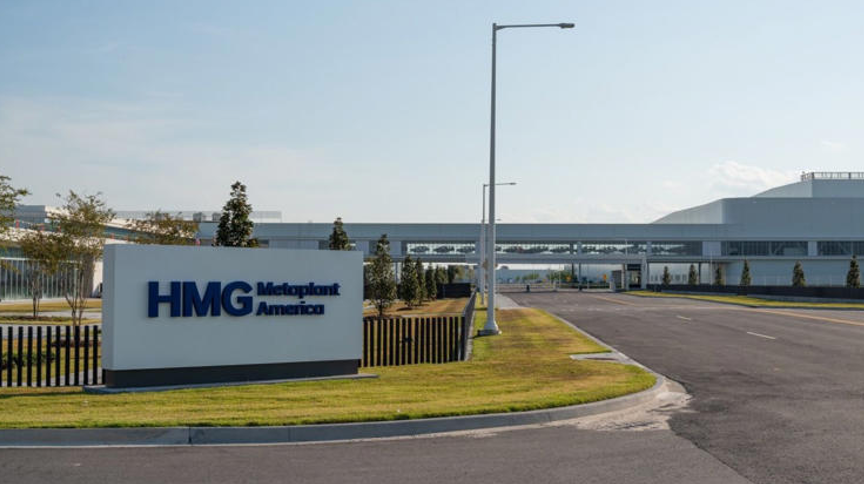
Hyundai Raid 

Hyundai Raid 
© Parker Puls/Bloomberg News

I contributed to a Wall Street Journal article on last week’s immigration raid at the Hyundai plant in Georgia. Reporting continues. Don Southerton

The Trump administration wants tougher immigration enforcement. It also wants Asian manufacturing powerhouses to pour investment into U.S. factories.

Those goals are now clashing because Asian companies are having trouble getting enough work visas for personnel needed to get the U.S. plants running, say immigration specialists.

Last week, the contradiction was highlighted when the U.S. carried out an immigration raid in Georgia and arrested some 300 South Koreans helping to build a Hyundai Motor joint-venture battery plant.

Now the South Koreans are expected to head home soon under a diplomatic deal, and experts say it might take longer and cost more for Asian companies to build their U.S. factories without the specialists they need.

President Trump hinted at such concerns when he wrote on social media that his administration “will make it quickly and legally possible” for foreign investors “to LEGALLY bring your very smart people, with great technical talent to build World Class products.”

One cause of the issue is America’s shortage of skilled technical workers, which stems from a long-term decline in manufacturing employment and the offshoring of production. The U.S. lacks the workforce needed to support advanced industries such as semiconductors and biotechnology, according to a July report by the Center for Strategic and International Studies, a Washington think tank.

That is why it is common for hundreds of employees from the home country to descend on big project sites. Companies such as Hyundai and its battery-making partner, LG Energy Solution, often bring along the same contractors they work with at home. Around 250 of the roughly 300 South Koreans arrested worked for contractors, LG Energy said. Japan said Tuesday that three of its citizens working at the site were also detained.

The detainees largely held temporary visas suitable for short-term training and supervising purposes, such as the B-1 visa, and many were working at the site as instructors, according to South Korean officials. Some had arrived in the U.S. through a visa-waiver program that allows entry for up to 60 days for travel and certain limited business activities, they said.

Don Southerton, a consultant who has advised South Korean companies including Hyundai on operating in the U.S., said some Korean firms and their contractors in the past used visa-waiver programs for short-term travel or business visits without triggering scrutiny.

“I don’t think they ever had to worry about it,” he said. “And there has been so much encouragement for these plants to be” in the U.S., he said.

U.S. authorities said those arrested illegally crossed the border, entered through a visa waiver program that prohibited them from working or overstayed their visas.

Hyundai said it was reviewing its processes to ensure that its partners “maintain the high standards of legal compliance that we demand of ourselves.”

Other nonimmigrant employment visa types allow companies to bring in workers for longer periods, but they aren’t easy to get.

The H-1B visa lets companies operating in the U.S. hire foreign workers in specialty jobs such as tech and engineering. The annual cap recently has been under 100,000 visas.

The E-2 visa is designed for specialized workers at U.S. units of companies from regions with commerce treaties with the U.S., a category that includes Taiwan, South Korea and Japan. Approval standards have been getting tougher as applications surge in South Korea, whose firms are overseeing many large projects in the U.S., said Hong Chang-hwan, a lawyer at Seoul-based firm Kookmin Emigration who specializes in U.S. immigration matters.

“The U.S. might say such workers can be hired locally, but Korean firms say such talent is difficult to find and deploy quickly in a plant that you’re trying to get going on schedule,” he said.

In 2023, Taiwan Semiconductor Manufacturing sought to bring in some 500 experienced workers to accelerate construction, igniting a protest by Arizona’s construction unions. TSMC said the workers were there only for short-term support, with no impact on local hiring.

South Korea’s trade and industry minister said last year that visa challenges have made it hard for many South Korean conglomerates to dispatch workers to the U.S. and increase investments there.

In July, Rep. Young Kim (R., Calif.) and others introduced a bill that would allot 15,000 visas for South Koreans with specialized education or expertise. The bill, proposed in varying versions over the past decade, hasn’t moved forward.

Similar visa categories have been created for countries such as Australia and Singapore through free-trade agreements. The U.S. grants more than 10,000 E-3 visas annually to Australian nationals in specialized fields, enabling them to work for up to two years in the U.S., renewable indefinitely.

Wendy Cutler, a former U.S. trade negotiator who is now at the Asia Society Policy Institute, said South Korea pushed hard for special visas like those granted to Australia and Singapore when it negotiated its own free-trade deal with the U.S., which took effect in 2012. Seoul ultimately didn’t get them, although it did get included in the visa-waiver program.With investment a U.S. priority, “a longer-term solution is urgently needed,” Cutler said.

Jiyoung Sohn at jiyoung.sohn@wsj.com and Yang Jie at jie.yang@wsj.com

Questions?  Comments?   Dsoutherton@bridgingculture.com

Your Ultimate Website Guide to Thriving in Korea’s Global Business Arena

Your Ultimate Website Guide to Thriving in Korea’s Global Business Arena

Ready to conquer Korea’s vibrant and fast-paced market?

Start now: Visit www.bridgingculture.com

The Bridging Culture website is your all-in-one destination for mastering Korea-facing global business. Discover expert insights, proven strategies, and hands-on support to elevate your success.


What’s in it for you? Start now: Visit www.bridgingculture.com

Hundreds of YouTube Videos: Engaging, expert-led content to navigate Korea’s business landscape.

Thousands of Blog Posts: Actionable tips and in-depth guidance for every stage of your journey.

Exclusive 6-Week Cross-Cultural Program Preview: Preview our immersive PPT course to bridge cultural gaps and drive results.Whether you’re launching a venture or sharpening your expertise, our resources empower you with the tools and perspectives to succeed.

Let’s Collaborate!
I’m open to new partnerships and opportunities to grow together.

Contact me: Call or text at 310–866–3777 Don Southerton


Start now: Visit www.bridgingculture.com

Unlock your potential in Korea’s global market today!

25 Insights from  Korea Facing, “Secrets for Success in Korean Global Business”

by Don Southerton

25 Insights from  Korea Facing, “Secrets for Success in Korean Global Business”

Executive Level One-on-One Korean Business Programs for 2025

Cost upon registration: $7,995    To Register https://buy.stripe.com/bJe3cwaZR7Ac4F6904bMQ08

Korea 101: 6-Week Intensive Course – Your Gateway to Korean Market Success

To Register   https://buy.stripe.com/14A14o1ph5s4efGa48bMQ07

Credit Cards are accepted, and once you’ve signed up, my team will connect with you directly to craft a schedule that fits. Your path to mastering Korean business begins the moment you enroll.

25 Quotes from Korea Facing

  1. Trust isn’t granted—it’s built, step by deliberate step, in Korean global teams.
  2. Western speed demands clarity; Korean patience demands respect.
  3. Effective leadership bridges cultures—learn the language of both trust and titles.
  4. Western urgency and Korean precision: only balance yields success.
  5. You don’t just deliver solutions to Korean teams—you earn collaboration.
  6. Decisions may originate in Seoul—but understanding makes them meaningful everywhere.
  7. When working with Korean expats, listen first—then act with cultural fluency.
  8. Managing expectations starts with understanding where they come from.
  9. Global partnerships thrive when Western flexibility meets Korean discipline.
  10. Trust is the quiet currency in all your cross-border exchanges.
  11. Communication isn’t just words—it’s showing you understand hierarchies and nuance.
  12. Expanding Korean firms abroad demands cultural intelligence as much as strategy.
  13. In Korean global business, the long game of trust often beats a short win.
  14. When in doubt, ask respectfully—assumptions erode partnerships.
  15. Your credibility abroad hinges on how well you navigate cultural expectations.
  16. Clear feedback should be firm—but also attuned to cultural face.
  17. Global teams win when they align mutual respect with shared ambition.
  18. Every interaction is calibrated—learn to read between the politeness and the point.
  19. Western teams can lead—but only after earning the right to lead, cross-culturally.
  20. Korean-headquartered companies expect two things: strategic outcomes and cultural awareness.
  21. In global expansions, respect for corporate roots goes as far as modern playbooks.
  22. Navigating a Korean overseas subsidiary? Master the art of upstream trust.
  23. Your Western instincts matter—but so does your willingness to adapt them.
  24. True cross-cultural leadership doesn’t erase differences—it learns from them.
  25. Collaborations succeed not when you conquer cultures, but when you converse with them.

###

BTW, I’ve opened up my calendar to make it easy to schedule time with me. Select a slot that works best for you here:  https://calendly.com/dsoutherton/30min

Now Enrolling: Korea 101 – 6-Week Intensive

Now Enrolling: Korea 101 – 6-Week Intensive

Now Enrolling: Korea 101 – 6-Week Intensive]

Your Fast Track to Korean Business Success – Just $795 (Reg. $1,595)

Working with Korea? Preparation is key.
This course delivers practical insights, proven strategies, and real-time guidance to navigate Korea’s business culture with confidence.

✅ Cultural Know-How
✅ Strategic Business Tactics
✅ Flexible Virtual Sessions
✅ Live Q&A + Team Discussions

Ideal for global teams, new hires, and leaders engaging with Korean counterparts.

🎯 Starts immediately | 6-week program | Virtual + flexible

👉 Enroll NowRegister Here

Questions? DM me—I’ll make sure you’re set up for success.
Don Southerton

Norms and Expectations Korea 2025

2025 IONIQ 5 N
2025 IONIQ 5 N

By Don Southerton

For global teams, steering the norms and expectations of the Korean workplace can be a challenge.

Workplace norms differ less today in Western operations, as the international business model is common, despite some regional differences.

That said, Korean domestic companies and headquarters follow a Korean business model. However, as I have shared in articles, podcasts, and books, change has occurred, such as casual dress.

Today, however, we may observe that recently assigned Korean expats still adhere to the traditional model, at least in their interactions with the Korean team and in daily correspondence with Korea. Most notable is their use of titles with Korean teams and seniors, as well as their quiet, respectful demeanor with upper management.

This difference between Western business industry norms and today’s accustomed practices and those of Korea and their operations can sometimes be challenging.

First and foremost, although local leadership manage their operations, they still need to report to a Korean HQ. In the past, it was the expat’s responsibility, and there was an expectation that reports would be formatted according to SOP HQ guidelines.

Next, with more direct meetings between Western teams and Korea, time differences can be challenging, especially for pressing issues that need immediate action. These often occur with time differences overlapping late in the day, and when Koreans at the HQ arrive at work. This can easily push discussion into the evening for local teams. And, in the past, with expats interacting with Korea, they often stayed late into the evening and even overnight.

So, what are the workarounds?

I recommend that 1) Western leadership receive ongoing and frequent updates on Korea and the workplace, as well as coaching and mentoring, where questions and issues impacting their company and work can be addressed.

And 2, the local team also needs immersion in Korean business norms, practices, and expectations—both in general and specifically with their home Korea Group and its sister companies. Norms can vary, for example, between Hyundai, CJ, Samsung, LG, SK, and their startups. Moreover, Korea is constantly changing.

As always, I am here to discuss… Let’s set a time to talk. https://www.bridgingculture.com

Korea Business: Executive and Group Workshops

Korea Business: Executive and Group Workshops

We offer a full suite of programs, from executive-level Coaching to our popular group Korean Business Culture Workshops for the team and 6-week one-on-one individual classes.

Time proven since 2003.

All our courses provide participants with deep insights into Korean business, whether new hires, on a team assigned to Korea-related projects, or those of you who have been engaged for a long time.

Contact me today for the Executive, individual coaching, or group workshops.

All are excellent programs for anyone who works with Korea or Korean teams.

The classes will be solution-oriented and highly interactive, including Q&A and timely topics.

Call, Text, EM, or Message to discuss what program fits best…. Don

310–866–3777 Dsoutherton@bridgingculture.com

By the way, I invite you to visit our looping Korean business livestream 24/7.

https://youtube.com/watch?v=yJgVxVtG7JA%3Fsi%3DlR-xN6FH7qcvy2Ya

###