Tag Archive for Korea facing business

Everything Korea: May 25 Episode: Diverse Sub-cultures

Coming off the Memorial Day Weekend Holiday here.  I use holidays as a time to write, read, recharge and re-focus. This means opting out perusing Facebook and Twitter, as well as checking emails.  I’m happy this year both the American holiday and Buddha’s Birthday (a legal holiday in Korea) fall together.
I was again asked what’s been on my reading list.  I recommend for starters, Brian Grazer’s (the Hollywood producer and with creative partner Ron Howard founded Imagine Entertainment) new book A Curious Mind
A second Book:  The start-up of YOU, by Reid Hoffman, co-founder and Chairman of Linkedin
And, Hatching Twitter, by Nick Bilton
All three give some great insights into the varying aspect of American business–behind the scenes and sub-cultures.
This brings us to today’s topic—these recognizing diverse sub-cultures.  To often like an iceberg what is seen on the surface only shares a potion of a business and in particular for that business model in a respective market or region.
What is truly deceptive is that on the surface business is business, and all can appear similar.  Where the challenge emerges is that each business sectors can vary considerably in the West, and the three books I mention highlight just how different.
For example Brian Grazer, as a Hollywood insider and successful TV and film producer talks about expectations within filmmaking and specifically Hollywood that require special mindset— which at the core is “creating ideas.”
Building on this, the other two books look at recent trends and sub-cultures that exist within…
As the Linkedin Chairman points out that in contrast to an old model embodied by the once great Detroit, we find the entrepreneurial mojo of Silicon Valley embracing a willingness to take bold risks and accept failure, coupled with a network of alliances to work in collective action.
More revealing to inner workings, we find in Hatching Twitter that can things vary lots even across startups.  Cited in the book one of the Twitter co-founders Biz Stone willingly went to a startup which would become Twitter from  “unlimited free meals, free snacks, free buses to work, and a free inexhaustible everything at Google  and replaced with a office where homeless people slept in stairway, the only free transportation was his two feet, and the only free food and drink was a beer after work if EV [his boss] picked up the tab.”
This said, the author notes, “ The cultural difference was incalculable. The sterile, robotic culture of Google, with its know-it –all engineers and bossy bosses, was now replaced with tattooed hackers with a do-what-you-want mentality.”
So what am I saying…
To my friends and clients in Korea, I’d share these are just several examples of the diversity in Western work culture and norms—a deep understanding required to be effective in the local market.
In contrast, although no two Korean Groups are entirely alike in their mindset and even Divisions and sister companies within a Group can vary some—workplace culture, norms and process are very relatively similar.  For example, hierarchical titles, role of Finance, a team focus, a junior’s deference to seniors, pressure to take action over considerable upfront critical thinking, as well as top down oversight and decision making.
All said, I am often asked about a pet project of mine over the past year Mad For Garlic.  My Korean friends and the expat community in Korea know the brand well. In short…. Mad For Garlic is known for its unique and innovative menu with garlic-specialized Italian cuisine.
I was asked to assist the team in US market entry. A rare and very smart move by the Korean team who recognized the need for local support. Our first round was getting the word out to the FSR industry.  This is summed up nice in a PDF study. Link below.
As if often the best case, our original strategy to find a master developer for the US market has evolved to now finding a VC or Angel to invest in the International development of the brand.  This makes considerable sense with a recent  $48 MM investment by Standard Chartered Private Equity (SCPE) in the now 40 plus domestic Korea Mad For Garlic operations. This new partnership with SCPE will accelerate Mad for Garlic’s Korea expansion.  Working with the Korean team we seek to accelerate the International development though a similar partnership.  Questions, thoughts or an interest, please contact me directly and we’d love to discuss more.
Oh and one more thing…. I am off to Nashville, Tenn. area this week and more specifically as speaker a panel on international development held in Clarksville-Montgomery County, soon be home to a $180MM Hankook Tire plant.
So until next time….
Links


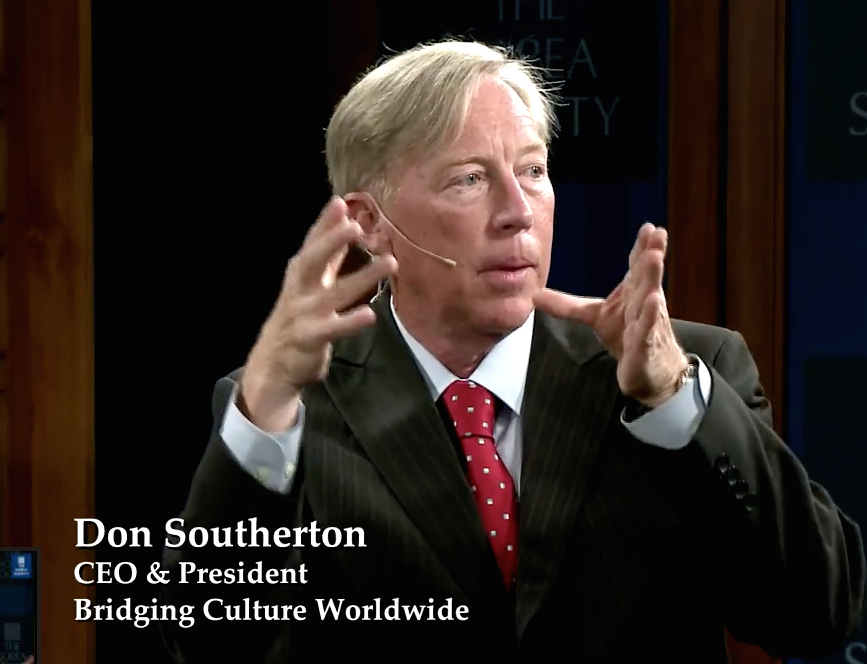
Listen to Podcast from the Korea Society Corporate Series Featuring Don Southerton

Listen to Podcast Here:

Korea Society Corporate Series Featuring Don Southerton

TKS 2

This Week’s Episode of Everything Korea – Watch Now!

Two topics, first I’ll be working from NYC this week. I’ll be sharing the Korea Society presentation once their very professionally team produces the video series and uploads to YouTube. Please Stay tuned.

That said, much of my professional work is providing strategy and consulting to the top Korean brands globally.

This includes working with non-Korean firms, leadership and audiences to explain the dynamics and nuances in Korean business. During a long day that can often extend into the evening, I tackle client issues.

A common question both in media interview and by clients is “ Don, how did you get interested in Korean business?”

My Korea focus and experience are actually rooted in Korean martial arts. I began martial arts in the early 1970s, receiving my Cho Dan (1st Degree Black Belt) by the mid 1970s, opened my first school in 1976 and tested for Sabom Master Instructor in 1987. In 2013, I was inducted into the Taekwondo Hall of Fame.

Outside my public image today of business consultant, coach, trainer, strategist, social commentator, and author. I’ve continued to be a life-long student of traditional Korean martial arts– now for 43 years.

I have added several complex Chinese forms to my repertoire of over 35 hyung—the traditional sets of combative movements martial artists’ practice to hone their bodies and minds.

I have always seen martial arts as not only a way of staying in shape through a wide range of stretching, kicking, and hand movements, but also a demanding mental regiment.

All said, I attribute my success in Korean business much in part to the discipline, “meditation in motion,” self-control, patience, and focus sharpened over a lifetime in the martial arts—not to mention the strong rooting in the cultural dimension of a traditional Korea art.

Just one more thing, in addition to my Korean facing Facebook pages, I just added a new martial arts Page. It includes some articles I have written for both academic and the martial arts industry.

So until next time, this is Don Southerton wishing you all the best.

As in past Everything Korea, I will share links on topics discussed in the accompanying copy.

1. The Korea Society
http://www.koreasociety.org/corporate/korea_perspective.html

Please Follow and Like:
2. My Facebook Page ( lots of posts I see as timely and relevant)
https://www.facebook.com/dsoutherton

3. Bridging Culture Worldwide Facebook Page (Korea facing)
https://www.facebook.com/BridgingCultureWorldwide

4. My Martial Arts Page (cool videos and articles)
https://www.facebook.com/pages/Don-Southerton/846237712136423

Questions, Comments, Thoughts? Go to questions@koreabcw.com

‪#‎Koreasociety‬ ‪#‎NewYorkCity‬ ‪#‎strategy‬ ‪#‎Korea‬ ‪#‎Koreanbusiness‬‪#‎martialarts‬ ‪#‎personaldevelopment‬ ‪#‎mentaldiscipline‬ ‪#‎patience‬ ‪#‎focus‬‪#‎Koreanculture‬

Korea Inc.–Common Misconceptions

Many thanks to my friends at The Korea Society for posting on YouTube segments of recent Korea Inc business discussion.

[embedplusvideo height=”281″ width=”450″ editlink=”http://bit.ly/14iQtpq” standard=”http://www.youtube.com/v/UnAMaDxXwm4?fs=1″ vars=”ytid=UnAMaDxXwm4&width=450&height=281&start=&stop=&rs=w&hd=0&autoplay=1&react=1&chapters=&notes=” id=”ep8145″ /]

To view the full YouTube Working for Korea Inc. series go to:
https://www.youtube.com/playlist?list=PLYTdCvotGB1QKPCB5zVzabQD6NG9I2VkZ

DS

Working for Korea Inc.

An evening discussion with Don Southerton

The Korea Society

Hosted by The Korea Society, NYC

June 27, 2013  5:30 PM

Korean firms operating internationally employ non-Koreans at all
levels. Don Southerton, CEO of Bridging Culture Worldwide and
author of Korea Facing: Secrets for Success in Korean Global
Business, shares insights on working for Korea-based companies and
understanding Korean operational norms for goods and services
providers.

http://www.koreasociety.org/corporate/working_for_korea_inc.html

THE KOREA SOCIETY is a private, nonprofit, nonpartisan organization
with individual and corporate members that is dedicated solely to
the promotion of greater awareness, understanding and cooperation
between the people of the United States and Korea.

In pursuit of its mission, the Society arranges programs that
facilitate discussion, exchanges and research on topics of vital
interest to both countries in the areas of public policy, business,
education, intercultural relations and the arts. Funding for these
programs is derived from contributions, endowments, grants,
membership dues and program fees.

From its base in New York City, the Society serves audiences across
the country through its own outreach efforts and by forging
strategic alliances with counterpart organizations in other cities
throughout the United States as well as in Korea.

For more info dsoutherton@bridgingculture.com

###

Korea Herald: No Two Chaebol Are Alike

Many thanks to Korea Herald and reporter Elaine Ramirez, the
article shares my views on Korea facing global business.

http://www.koreaherald.com/view.php?ud=20130408000691

No Two Chaebol Are Alike, Author says

By Elaine Ramirez
While Koreans’ rising presence on the global stage is hard to
ignore, how to do business with them as a non-Korean is an
increasingly tricky area little covered in English-language
literature. Don Southerton explores the niche with his recently
published book “Korea Facing: Secrets for Success in Korean Global
Business,” which picks apart how to work with a Korean conglomerate
from the ground up, for non-Koreans working in Korean branches
overseas.

“Over the years I witnessed firsthand cross-cultural issues that
surfaced as Korean companies expanded globally. My role has been to
address these issues such as poor trust among the Korean and
Western teams, lack of communication, local employee turnover and
managing expectations,” Southerton said in an email interview with
The Korea Herald.

Although he has long been aware and exposed to the cultural
differences in Western and Korean business settings, he said, it
was when he began working at a Korean subsidiary in the U.S. in the
early 2000s that he witnessed the differences between how U.S. and
Korean teams managed the company.

He noted that the differences in decision-making processes, for
example, had been a particular source of friction between Korean
and Western teams: Key decisions were always deferred to the parent
headquarters in Korea, and Koreans in the overseas branches needed
to scrutinize and approve even the most mundane matters, regardless
of the Western team’s experience in the field.

He discovered, as he writes in “Korea Facing,” that all too many
frustrations were rooted in not knowing how to do things “Korean
style” ― or, for the Korean side, not knowing any other way.

In “Korea Facing” he shares his personal experiences from working
particularly for Hyundai-Kia overseas branches as a coach,
consultant and trainer with those Korean and Western teams, and
offers experience-based advice for overcoming those workplace
challenges.

His chapters explore basic business culture lessons, from the
levels of the Korean managerial hierarchy, to nuances on the right
timing for getting approvals, meeting protocol ― upon meeting
foreign teams, Koreans line up their business cards on the table to
match their seating order, and he advises doing the same ―
identifying and resolving conflicting expectations and ambitions of
Korean and Western teams, and insight on just how much the Korean
chairman’s wife might influence the direction of the company.

But Korean companies are gradually loosening their neckties and
adapting to Western business practices, he notes.

“I feel the Korean groups have seen the need to be flexible and
adapt quickly to changes in global economic fluctuations,” he said.
“For example, in the recent global recession they saw an
opportunity to expand when others pulled back in production, R&D
and marketing. They capitalized on this opportunity to leapfrog
ahead of the competition.”

Additionally, young Korean employees sent overseas have often
attended school or lived abroad, and increasingly more Korean
executives have worked overseas as expats. And as the overseas
businesses are increasingly using English to communicate, so, too,
do they adapt more casual Western business norms and practices, he
added.

Beyond all the differences between Korean and non-Korean working
cultures, Southerton noted, Korean companies deal with many of the
same challenges: How quickly projects can be approved and executed
depends on the individual company; Korean and Western companies
both struggle with generational gaps when trying to create harmony
and cohesiveness within their ranks; and no two Koreans or Korean
companies are alike, nor should they be approached as such.

The last is a theme he drives throughout his book ― affiliates
under the same chaebol and even sub-divisions of affiliates have
entirely different business cultures, and it is important not to
work on assumptions based on experiences with other companies, he
emphasizes.

“One common mistake by Western teams outside Korea is assuming that
because they might have worked for other global companies such as a
Japanese firm that they will have few challenges adapting to a
Korean company,” he said. “Norms, expectations and mindset differ,
even with Korean groups.

“Many Western overseas teams have stereotyped Koreans, often based
on their interactions with the early expats dispatched to the local
operation. Like Westerners, experience, training and skills vary ―
some Korean expats do well while others struggle,” he added. “In
global business we need be mindful of others, and recognize that
Korean teams and leadership vary in their approaches to challenges
and management.”

“Korea Facing: Secrets for Success in Korean Global Business” is
available through iBook, Kindle, Nook, and Google Book.

###

Korea Facing 2013 Video

By Don Southerton,  Songdo to Belmar Editor

As we begin a new year, I’d like to share thoughts on Korean facing global business for 2013.

[embedplusvideo height=”365″ width=”450″ standard=”http://www.youtube.com/v/Yfw4_VVeM-U?fs=1″ vars=”ytid=Yfw4_VVeM-U&width=450&height=365&start=&stop=&rs=w&hd=0&autoplay=1&react=1&chapters=&notes=” id=”ep4705″ /]

Questions?

BTW We are always interested in new opportunities, so keep us in mind….

Contact: Dsoutherton@bridgingculture.com

DS

Korea Facing Book Interviews Online

By Don Southerton, Editor
Thought you may appreciate links to my recent Korea media interviews. Essentially, I encourage collaboration and offer thoughts on what is the best way to approach Korean facing business–in Korea and globally. BTW Each interview looks at the topic from a different perspective.

1. Last week’s tbs eFm Seoul radio interview is now available in mp3 format.

Here’s the link. Just download and listen.

http://sites.google.com/site/ds19192/mp3/0108_Don_Southerton.mp3

2. WSJ Korea Real Time

Southerton Advises Non-Koreans in Overseas Korean Offices

Wall Street Journal

http://blogs.wsj.com/korearealtime/2013/01/14/southerton-advises-non-koreans-in-overseas-korean-offices/

This was also re-posted on Marmot’s Hole, the leading Korean blog for expats.

http://www.rjkoehler.com/2013/01/18/advice-for-non-koreans-working-for-korean-companies-overseas/

3. Busan Hap

http://www.busanhaps.com/article/korea-facing-interview-korea-global-consultant-don-southerton

Hope this is helpful….  more media to come…

My thanks go to the eFM Morning Show team, WSJ’s Evan Ramstad, Marmot’s Robert Koehler, and Busan Haps’ Jeff Liebsch…

DS

Korea Facing: Decision Making

By Don Southerton, Editor

As noted in the 3 previous Korea Facing hierarchy articles, ( see LINK below) power in Korean companies is often very centralized and only people at the highest level have the right to decide on issues. In Korea, the working team’s role is to implement or gather needed information. In other cases where overseas leadership and teams hope to offer a new service or program, local Korean management’s role is to gather information and then share with the appropriate senior team members, who are often in Korea. The local opinion is valued, but review may come from Korea.

My Suggestion…When conducting a meeting where a decision must be made please recognize that your local Korean team(s) will have considerable say in it’s outcome. This may include both the operations and finance teams. First, since the topic and subject matter may be new to your Korean team, I recommend you share prior to the meeting any needed background documents (best provided in PPT format). In addition, have an informal pre-meeting Q&A with the Korean team leader to brief and update them on any specifics. Note: they may need a day to review proposals and agreements, so timing is critical. Even in the best cases, expect that the Korean team may want to postpone any decision until they can carefully review and perhaps confer with Korea. I suggest all documents and meeting PPTs be immediately forwarded to the Korean team. I’d create a sense of urgency with a timeline for execution and implementation. Regardless, expect some delays and be patient. Over the years, I’ve found that Korean teams appreciate when their overseas co-workers recognize that the internal approval process takes time and offer supportive data or documents.

BTW, if your firm provides services to a Korea–based partner, provide both the western and Korean teams with background information prior to any meetings. Moreover, be prepared to share the meeting’s content with the Korean team, too.

Korea Facing LINK http://archive.aweber.com/bcw-clients/L.Vjo

Korea Facing Secrets: Hierarchy in the Workplace

By Don Southerton, Editor

We’ve received some great feedback on the 3 Korea Facing hierarchy articles…. hope you enjoy, too.

To subscribe, go to 
http://forms.aweber.com/form/24/175507524.htm

Don
This is really interesting stuff and is helping to give me a valuable insight into the working culture of my Korean colleagues.

Thank you.


…love your Korea Facing educational newsletters, it is really a great and easy way to get the basics so that you want to know more….


Great pieces!


Hi Don,

This information is very timely


Aloha Don,
Again, great points! I liked Part 3.

Like today’s organizations in America, Korean organizations are also presented with the internal challenge of bringing multi-generational employees together to create harmony and cohesiveness.  Individuals from each generation, such as traditionalist, baby boomer, generation X, or generation Y, bring divergent values, beliefs, attitudes, and expectations based on their pivotal experiences and events that portrait both personal and societal backgrounds.  These multi-generational terms may be not used exactly the same in Korea, but the challenges that Korean organizations face at the moment caused by the gap between different generations are virtually the same. 


Individuals of each generation group were born and grew up in the same time period which allows them to witness/participate in common historical events such as political and economic changes.  For this reason, individuals with shared experience have an easier time building bonds and working together in harmony rather than working with individuals from different generation groups.  The particular characteristics of each generation group deeply influence how employees think about many aspects of organizational behavior such as motivation, satisfaction, creativity, innovation, loyalty, commitment, and team work.  This accentuates the importance of understanding those distinctive characteristics of each generation group in order to engender successful outcomes while working with the multi-generational workforce in an organization. 


In my opinion, this type of issue should be dealt at the top management level rather than middle or lower level management for more satisfying outcomes.  As the middle managers noted, they are fearful of losing opportunities to get promoted or even losing jobs by provoking their superiors and subordinates in a negative way.   Expecting them to make a difference in their views and behaviors without getting full support from top management may have a very little bearing on acquiring successful outcomes.


Change is not easy, but feasible as long as transformative leadership is practiced by every single member of an organization from top to bottom.


Thank you for sharing and allowing me to contribute my two cents!


Jennie  


Chunghea  (Jennie) Oliver shares that she grew up during the wild days as South Korea sought to shed its image as the Hermit Kingdom and to engage the hyper-modern world of global business as an engine of technologic wonder and manufacturing excellence. She travelled to the Philippines and to America to study, work, and discover a life for herself.


Along the way, Chunghea has earned degrees in both business and education, which culminated in her successful defense of an interdisciplinary dissertation looking at the question of cultural competence and second language acquisition in order to complete the Doctor of Education in Organizational Leadership offered by Argosy University/Hawaii.