Tag Archive for Korea consulting

Now Offering Premium Korea Business Insights
Now Offering Premium Korea Business Insights

Now Offering Premium Korea Business Insights

After two months of sharing Korea Business Insights on Substack, I’m launching paid subscriptions for professionals who need deeper access to frameworks, analysis, and coaching on Korean business partnerships.

What This Means

If you’re a free subscriber, nothing changes. You’ll continue receiving Daily Briefings, Notes, Chats, and select Korea Business Weekly posts.

If you want more, paid subscriptions are now available.

What Paid Subscribers Get

Korea Business Weekly – In-depth strategic analysis. The same frameworks and insights I use with Fortune 500 clients navigating Korean partnerships, market entry, and negotiations.

Complete Daily Briefing Access – Full archive of daily analysis on Korean business developments.

Case Studies & Frameworks – the tools I use in consulting.

One-on-One Coaching – Monthly 30-minute sessions for personalized guidance on your Korean business challenges.

Full Archive – Two months of content plus everything going forward.

Why Subscribe

For 20+ years, I’ve advised top Korean groups, startups and Fortune 500 companies on Korean partnerships and market strategy.

This newsletter gives you access to the same insights and monthly coaching for $15/month or $150/year.

If you’re navigating Korean business relationships – market entry, partnership management, or deal negotiations – this subscription delivers immediate ROI.

Subscribe here: https://donsoutherton.substack.com/subscribe

Questions? Contact me at don@bridgingculture.com

Don

The Signature Paradox

The Signature Paradox

Photo by Scott Graham on Unsplash

Over my 20 years working with Korean companies, I’ve repeatedly encountered what I call “the signature paradox.” Korean partners are enthusiastic about a collaboration, have invested months building the relationship, and clearly see the mutual benefit. Yet when it comes time to sign even basic documents, NDAs, non-binding MOUs, letters of intent, they hesitate or simply don’t sign.

This pattern perplexes Western companies. From their perspective, these preliminary agreements are routine steps that protect everyone and demonstrate good faith. They’re often caught off guard when Korean partners who seemed eager suddenly go quiet once paperwork arrives.

I assume it’s risk avoidance, though the reluctance isn’t about the relationship or the project’s commitment.

Rather, it reflects deeply ingrained attitudes about written agreements. In Korean business culture, signing any document—even one explicitly labeled “non-binding”—creates a sense of obligation and potential exposure that executives prefer to avoid until absolutely necessary. There’s an unspoken belief that once something is written and signed, it becomes leverage in future disputes, regardless of what the agreement actually says.

Western legal teams find this especially frustrating. In their framework, unsigned preliminary agreements create MORE risk, not less. The cultural disconnect runs deep: Americans reduce risk through documentation; Koreans often see documentation itself as the risk.

I’ve watched promising partnerships stall for months over reluctance to sign basic NDAs. I’ve seen Western executives question whether their Korean counterparts were genuinely serious about the collaboration. Meanwhile, the Korean side doesn’t understand why Americans won’t simply proceed on the basis of verbal understanding and trust in the relationship. 

Even after agreements are signed, getting Korean partners to return the signed copies can take weeks or months. Not to mention, Korean management is very hierarchical; working-level staff who negotiate the terms often lack the authority to sign, and securing approval from senior leadership adds layers of delay. 

These issues often need to be formally addressed in quarterly Board of Directors meetings, elevating what Western companies view as routine administrative matters to executive-level agenda items.

The challenge becomes how to continue building the relationship while still pressing for the agreements Western companies need. This requires patience, cultural translation in both directions, and often a staged approach where informal understandings gradually transition to written terms as trust deepens.


Big take-away

The hierarchical point explains “why the delays happen,” authority sits higher up the chain than Westerners expect.

Brand Amplification: What Most Companies Get Wrong

Press enter or click to view image in full size

Brand Amplification: What Most Companies Get Wrong

I discuss why global trade shows like CES are built for brand amplification, not places to make deals, and what companies must do to approach market entry, credibility, and long-term growth more strategically.

I am watching it happen again. Startups and SMEs assume that investing in time, travel, and government-backed support will translate directly into deals and partnerships. They staff booths, pitch attendees, and wait for purchase orders.

Meanwhile, major brands like Samsung, LG, Hyundai, and Lotte are operating under an entirely different playbook.

What Major Brands Understand

For example, events like CES aren’t deal-closing events. They are brand amplification platforms.

Korea Strategic Services Don Southerton

CES Expectations 2026– From AI Hype to AI Implementation

By Don Southerton

As I have shared, last year’s CES was all about AI buzz and brand framing; for many, AI was an attention-grabber. Some brands were genuinely about AI, while many tagged AI onto their descriptions.

See  https://www.brandinginasia.com/ces-2025-yes-it-was-all-about-ai/

For decades, the Show has been about consumer goods, and it still is, although drones and robotics have captured my attention in recent years. I am curious about what this year holds. 

Personally, I am interested in Hyundai.

In particular, the Hyundai Motor Group plans to present its next-generation electric Atlas robot for the first time as a primary example of its AI robotics strategy.

Atlas is a humanoid robot developed by Boston Dynamics Inc., its robotics affiliate.

https://pulse.mk.co.kr/news/english/11504851

Main Shift: From AI Hype to AI Implementation

“Agentic AI” (autonomous systems that act independently) replaces buzzwords with a focus on real productivity gains, not just marketing. 

I’ll be looking for fewer flashy announcements and more working products.

Hyundai is blending its hierarchical innovation cultures with Boston Dynamics’ agile US roots to accelerate commercialization in manufacturing. 

I plan real-time LinkedIn and X posts at the Hyundai’s Media Day (Jan 5, 1-1:45 PM PST)

And the real CES story may not be Atlas the robot, but whether Hyundai can industrialize Silicon Valley robotics, in Hyundai fashion, may succeed where others stall.

About Don Southerton

Author of Hyundai Way: Hyundai Speed | Founder & CEO, Bridging Culture Worldwide | Global Korean Business Strategist & Media Contributor

Recognized for insights on Hyundai’s corporate culture and Korean business execution, and frequently featured in global outlets including WSJ, BBC, Bloomberg, Forbes, and Branding in Asia. Known informally in the industry as the “Hyundai Whisperer,” he frequently explores how Korean companies like Hyundai evolve from fast followers to innovation leaders. 

Schedule a chat

https://calendly.com/dsoutherton-bridgingculture

CES 2026

CEs2026

Join Don Southerton

CES 2026 Exclusive Support

Maximize your CES 2026 impact with dedicated pre-show, on-site, and post-show support exclusively for brands, government agencies, and startups.

Our Services

  • Pre & Post-Show Promotion and PR – Build momentum before the show and sustain it after.
  • Media Support – Strategic media outreach and relationship management
  • Client Relations – Connect with new customers.

Successfully supported clients at CES 2020, 2021, 2022, 2024, and 2025 with measurable results in media coverage, customer acquisition, and partnership development.

Why Work With Us

We understand the market and culture

  • Deep CES experience – Proven success across multiple years
  • Dedicated to excellence – Elevating innovation on the global stage

Take Action

FINAL SPOTS AVAILABLE

I will be on-site starting January 4. Contact me immediately to secure your slot.

https://calendly.com/dsoutherton-bridgingculture/30min

Dsoutherton@bridgingculture.com

www.bridgingculture

Text or Call +1-310-866-3777

Christmas in Korea

Christmas in Korea

In South Korea, Christmas has grown in popularity. Nevertheless, for many, Christmas is seen as a distinctly Christian holiday; however, for many, it is a secular holiday like  Valentine’s Day.

This said, here is the Korean ter–메리 크리스마스   melikeuliseumaseu

which is pronounced Merry Christmas

That said, as the holidays approach, you may wish to greet Korean colleagues with the most common Holiday greeting.  In fact, it is the best seasonal greeting for New Year’s, too.

Sae hae bok man i ba deu say yo! 

Hint: When speaking, break the greeting into: sae hae bok—mahne—bah deu say yo

Sae hae bok man i ba deu say yo! works well both in person, in a card, text, or an email. 

Given the time difference, plan to send holiday greetings to friends and colleagues in Korea,  today.

Questions?  Just ask. Text or Call 310-866-3777 www.bridgingculture.com

Have a safe Holiday.  

Don is truly “The Hyundai Whisperer” a trusted mentor to many in our industry

Plan Now for 2026: Navigating Year-End Differences in Korean Business Culture

Don’t Wait Until January: Why Your Korea Strategy Needs Immediate Attention.

Getting ahead in 2026: Leveraging Korea’s Year-End Work Cycle

Overseas Korean companies’ teams often go into holiday mode; plants close for routine end-of-year maintenance; offices shut down; and employees take vacations.

In Korea, we observe restructuring, end-of-year team meetings, annual reports to leadership, and some members taking on new assignments.

That said, we should remember that most Korean expats still go to work every day…

In fact, I recall meeting with senior leadership on December 31, when the HQ parking lot and building halls were mostly empty—except for the Korean CEO and most of the expats.

Additionally, throughout the morning, newly assigned Korean expats visited the CEO’s office to introduce themselves, and colleagues joined during these visits.

My recommendation is to develop a strategy now so we can get a head start for early 2026—the Korean teams will be prepared. www.bridgingculture.com

Don Southerton

CES 2026 Update

CES 2026 Korea-Exclusive Support

Time running out, act now

Maximize your CES 2026 impact with dedicated pre-show, on-site, and post-show support exclusively for Korean brands, government agencies, and startups.

Our Services

• Pre & Post-Show Promotion and PR – Build momentum before the show and sustain it after.

• Media Support – Strategic media outreach and relationship management

• Client Relations – Connect with new customers.

Successfully supported Korean clients at CES 2020, 2021, 2022, and 2025 with measurable results in media coverage, customer acquisition, and partnership development.

Why Work With Us

• Korea-exclusive focus – We understand your market and culture

• Deep CES experience – Proven success across multiple years

• Dedicated to excellence – Elevating Korean innovation on the global stage

Take Action

I have only a few slots remaining for the CES January 2026 Show.

Dsoutherton@bridgingculture.com

Text or Call

+1-310-866-3777

www.bridgingculture.com

CES 2026 Korea-Exclusive Support

Limited Slots Available

Maximize your CES 2026 impact with dedicated pre-show, on-site, and post-show support exclusively for Korean brands, government agencies, and startups.

Our Services

  • Pre & Post-Show Promotion and PR – Build momentum before the show and sustain it after
  • Media Support – Strategic media outreach and relationship management
  • Client Relations – Connect with new customers and forge valuable partnerships

Proven Track Record

Successfully supported Korean clients at CES 2020, 2021, 2022, and 2025 with measurable results in media coverage, customer acquisition, and partnership development.

Why Work With Us

  • Korea-exclusive focus – We understand your market and culture
  • Deep CES experience – Proven success across multiple years
  • Dedicated to excellence – Elevating Korean innovation on the global stage

Take Action

Only a few slots remain for January 2026.

Contact us for case studies and availability.

https://www.ces.tech

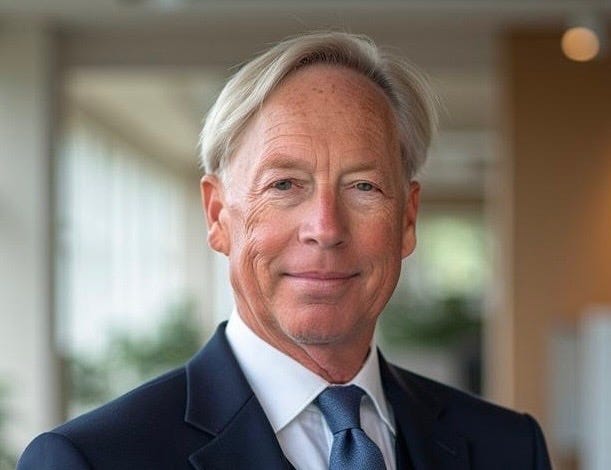
Don Head Shot

The Korean Art of Staying Ahead of Project Disruption, Part 2: Executive briefing  #5

In Part 1, I shared some insights into how best to ensure projects stay on track amid change from outside of our control. If you haven’t had time to check out, please do… In this Executive Briefing, I will discuss how even the best laid plans can get blindsided. In a conversation with an industry veteran and longtime Western executive for a major Korean Group, we were concerned that a new global hire may be a poor fit. 

In particular, in the person’s attitude–at least to being open to Korean business norms and practices as well as advice given to them on how to work within the system. My friend commented that the hire, who was very confident in their position, close-minded, and had their own way of doing things, would never see their demise in coming and be blindsided. 

Stepping back, as I mentioned in the last Executive Briefing, my experience is that savvy Korean management has “eyes in the back of their head,” little gets by them, and they take much in consideration before making any decision or move. They see and sense what’s around the corner. 

Still, forces can take a Korean company’s direction 180 degrees. This most often occurs as a new Administration or policymakers take office in South Korea and with it comes new economic policy, vision, and initiatives. For example, in the past presidential administrations, we’ve seen a push for Green, Creative, and a “Hydrogen Economy.” 

For each case, Korean companies have had to realign and dedicate resources. Besides these high-level government shifts, leadership succession within a Korean Group, along with changes in an industry, can also lead to programs being put on hold, terminated abruptly, modified, or even pushed to the forefront. Again, in both situations, savvy management and teams have lead time and remain ever watchful to avoid being caught off guard. 

As always, each situation is different, but what remains constant is a refined approach, one I base on years of experience. Be observant. Make no assumptions. Have a countermeasure. 

One final thought… In many cases, the C-suite, leadership, and teams do need direct support. I strongly encourage you to reach out to me, even if just for a neutral opinion. It’s also best to engage early and not wait until issues escalate or go sideways. Waiting rarely improves things.

About Don Southerton

Don is a long-time C-suite advisor providing strategy, consulting, and mentoring to Korea-based global businesses. He writes and speaks frequently on Korea and Korean business-related topics.

More About US

https://bridgingculture.com

https://bridgingculture.com/wp-content/uploads/2025/09/cover-v1.pdf