Today is an exciting day for me. I just launched my Patreon page.
Staying on top of Korea facing business issues and breaking news that impacts you makes a large demand on my time.
Don Southerton
The research, analysis, writing, and delivering the best content possible to you every week has become a full-time job.
In order to continue providing the very best content I can, I could really use your help. I feel Patreon is a great option to offset the costs. If you aren’t familiar with Patreon, it’s an easy way for those interested in my work to see new exclusive content and have access to a range of my services.
100% of all funds contributed through Patreon will be used to cover my bandwidth, so I can focus on creating great content. As a friend, I wanted to share the news with you before promoting more widely.
So, if it feels right to you, anything you or the company contribute is most appreciated. With each tier there are some cool benefits, too.
It’s easy for those new to Korea business to make quick assumptions. I often have to remind myself lessons learned, too. Over time those engaged in projects find there are complexities often rooted deep within in the culture — requiring context, recent and past. This is a normal learning process.
As an example, I’ve also found it very valuable over the years to work with a number of Korean Groups, and the affiliates companies. (I define an affiliate is one of the many family controlled subsidiaries that chaebol typically operate across diverse industries. These can include in-house IT, Marketing, Construction, Design, Sales, and Financing.)
What stands out is how the Culture vary between the Korean Groups — and even within a Group and it affiliates. Perhaps moving among Groups and affiliates sometimes in a single day, I see and experience the subtle differences more than most. This can range from the tangibles like building design, workspace layout, dress code and amenities to intangibles such as what one can sense in day to day employee engagement, morale and openness to new ideas. In other words, the working of one Korean company or agency can differ lots from another.
In particular, there are even Culture differences, such as; 1) in Korea between the domestic HQ and their own local affiliates; and 2), in Korea, between the domestic teams and their own in-house overseas divisions; and 3) between the HQ operations in Korea and the company’s overseas affiliates.
Digging deeper, I feel recognizing what is common between the companies’ counts, too. This can include intrinsic Group values and norms shared across the organization, or even more common general Korean business practices and expectations.
This all means when a Korea related issue surfaces we have to look at with several colored lenses. Candidly, that’s how I pull apart situations, provide context, and a solid work-through when supporting clients as a mentor and their Korea business strategist. Again, watch out for quick assumptions.
As a follow up to news on Hyundai Motor Group chaebol reform, we are seeing some interesting developments. First Samsung is one of the few Groups yet to reform their shareholder structure. That said, I feel they will adopt one similar to Hyundai’s recent plan– a hybrid from the traditional Korean Holding Corp. model.
For starters and some clarity regarding the spin-off and merger within the Hyundai Motor Group Chaebol reform, Hyundai MOBIS, the new de facto holding company still plans to further beef up its core auto parts business.
That said, operations for both domestic Korea modular and A/S parts will move over to GLOVIS as announced—overseas operations will remain under MOBIS.
In particular, MOBIS as the Group’s nerve center will focus more on R&D, and investing in future growth drivers like autonomous vehicles and connected cars.
Next… and getting lots of media coverage and in my opinion nothing that radical.
On Wednesday, Elliott Advisors, a hedge fund sponsor subsidiary of the U.S. fund, called on Hyundai Motor Group to step up its efforts to overhaul its governance structure after announcing it had acquired more than US$1 billion (1.05 trillion won) worth of stocks in three key affiliates of the Korean automotive group.
“While this step is encouraging, more needs to be done to benefit the companies and stakeholders,” Elliott said in a statement.
The hedge fund sponsor also called for a detailed roadmap to further enhance the Korean auto giant’s corporate governance, optimize balance sheets, and enhance capital returns at Hyundai affiliates.
Elliott Advisors said in the statement it looks forward to engaging with management and other shareholders directly on these issues and offering recommendations regarding the proposed plan.
In response, Hyundai said it will make continued efforts to enhance shareholder value and the worth of its affiliates while focusing on better communicating with shareholders.
I’ve also seen HMC sources note they plan to meet with Elliot teams during an upcoming investor event.
Again foreign investment in Korean publically held companies is nothing new.
For example, HMC’s total foreign ownership is about 46% of the Common Stock. Kia is at about 38%.
Elliott Advisors is estimated to own only a combined 1.4 percent stake in Hyundai Motor, Kia Motors and Hyundai MOBIS.
One more thing…
Did you have an opportunity to review my detailed 5 Page Report on Hyundai Motor Group Chaebol reform…. If not I please contact me… as has been very well received.
I’m also available to comment and answer questions as always…
I’d like to share the story behind what has become a cornerstone for Hyundai and Kia Motors.
Please enjoy this weekend’s read, “The Hyundai Advantage, Creative Marketing and America’s Best Warranty—The Story Behind”
“A bold creative marketing ’10-year / 100,000-mile Warranty’ program was first introduced in the U.S. in 1998…not by Detroit’s Big 3 or the growing number of Japanese brands, but by Korean automaker Hyundai Motor.”
In my trip to SoCal this week, and KMA, HMA, GMA, MPA and HCA, many were asking about previous Weekend Read 1-4. No problem, go to: Case Studies
March 20, 2017StaceyvodcastComments Off on Everything Korea, March 20 Episode Move Forward Within the Culture.
That’s my message this year in both commentaries and on-site presentations. It captures my work, which is to provide companies, leadership and teams with how best to work effectively… taking into account Culture plays a huge role in their workplaces.
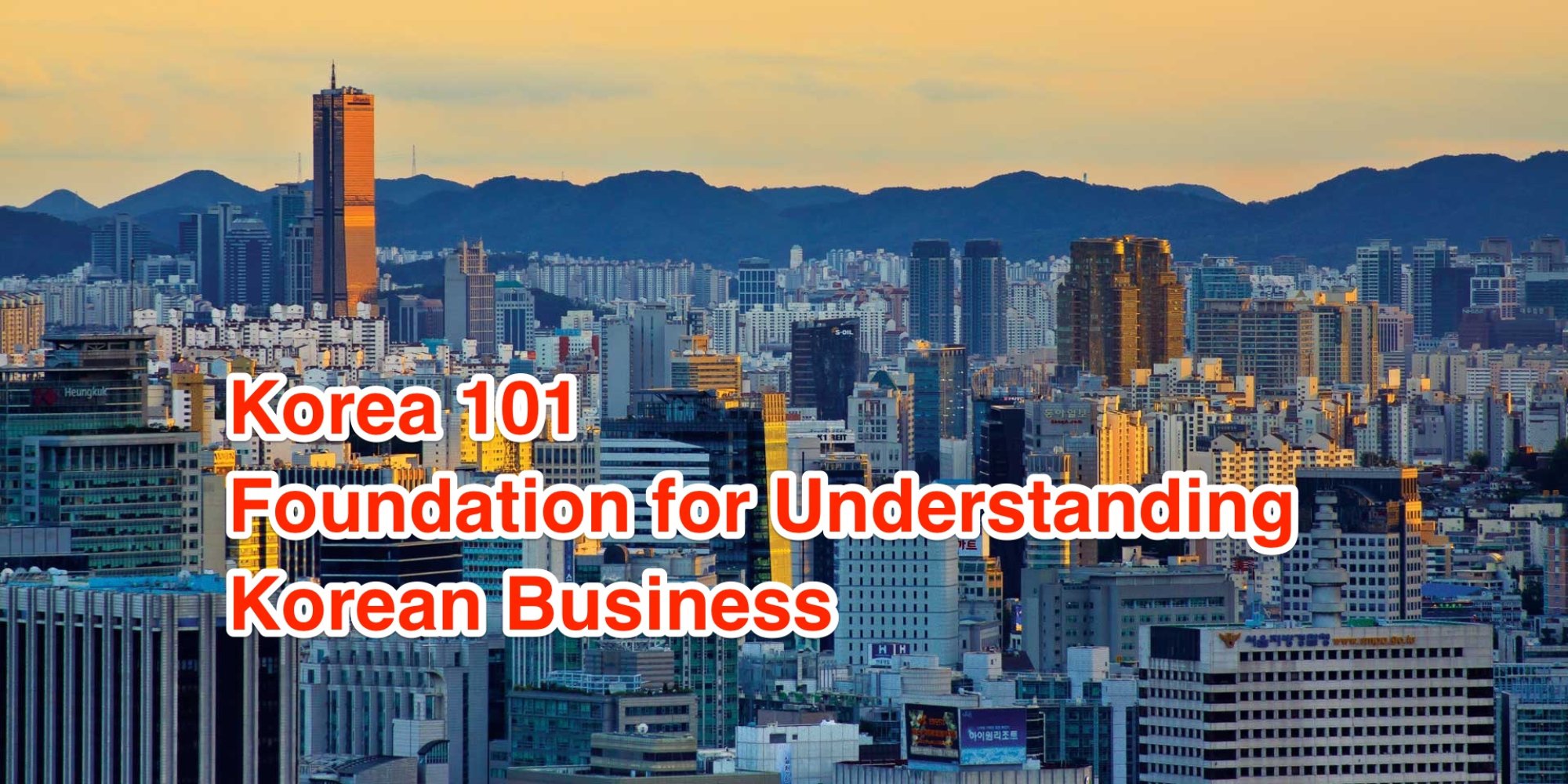
March 13, 2017StaceyvodcastComments Off on Everything Korea March 13 Episode: Korea 101 Foundation for Understanding Korea Business
When you ask somewhat “what are you most passionate about?” It can be very revealing—family, work, hobbies, sports, and social issues.
For me and my work its sharing Korean business culture and, in particular, strategies to succeed with the Culture.
Since 2004 I have offered programs and mentoring to thousands across America and internationally. A flagship Korea 101 program has served as the core for this Korean business culture mentoring. In turn, this training and coaching builds upon current experiences of the teams, while providing new understandings that lead to solutions.
Both our on-site and web-based programs have been offered to teams not only in America, but also in Canada, UK, Belgium, Germany, Russia, AU, India, South Korea, and the Middle East.
Customized versions have been professionally recorded and distributed worldwide to organizations and incorporated in their in-house programs.
Ideally the program is on-site over 4 to 6 weeks—each class a 1½-hour session. That said, we have a number of options including half and full day immersion programs.
Korea 101 and 201 programs are also an integral part of on-boarding and mentoring for key executives and management.
I like to highlight that we find participants genuinely care about their work and the company, and acquiring the needed skills offered in Korea 101 specifically help them to move forward within the culture.
Finally, the key to the success of our Korea programs has been the strong endorsement of our partner firms’ CEOs, senior American and Korean management, and across their teams. As organizations they realize that their teams need support. Expecting employees to “get it” without training and coaching rarely works. We are proud to work with our partners and their teams.
To chat about Korea 101 or a Korean facing business question, Stacey stacey@koreabcw.com, my assistant can schedule us a time to meet or chat by phone. For all urgent matters, Text me at 310-866-3777
I’m taking a week off from sharing commentary on the Korean car brands, market entry best practices, the Korean presidential impeachment, the indictment of Samsung’s de facto leader, and North Korean sword rattling.
However, beginning next week a Korea 201 program on Korea corporate and business culture will have me back in The OC (Orange County, home to the US HQs for Hyundai Motor, Kia Motors, Genesis, MOBIS Parts, Innocean, GLOVIS, Autoever, the California design centers, and Hyundai Capital. )
Amid meetings, days are filling up, but times are still open on Wednesday and Thursday.
As always, Text, Facebook Message, Linkedin Message or Email, and we can arrange a time. Or, Stacey stacey@koreabcw.com, my assistant can schedule us a time to meet, or chat by phone. For all urgent matters, Text me at 310-866-3777
BTW
If you have not had an opportunity to read my recent articles, here are the links
Globalization Requires a Better Process for Korean Car Makers – Lessons https://brandinginasia.com/attracting-top-talent/ Analysis: South Korea – Four Best Practices for Market Entry https://brandinginasia.com/south-korea-market-entry-2/ Inside Look: South Korea – Market Entry and Barriers https://brandinginasia.com/south-korea-market-entry/ Creative Culture vs. Process in South Korea https://brandinginasia.com/creative-culture-korea/
February 28, 2017StaceyvodcastComments Off on Everything Korea: February 27 Episode–Globalization Requires a Better Process—Firing and Hiring
I was recently asked by the editors of Korea Herald’s The Investor magazine to comment on the Korean car manufacturers, in particular Hyundai Motor.
My policy is never to speak about clients, but instead provide a perspective from a cultural standpoint. I’d like to share in condensed form, as well as with an epilogue, the guest contributor article titled: New considerations loom as Korean car brands strive to become more global
I noted, globally, the car industry in 2017 is more competitive than ever due to market fluctuations, shifting demand from sedans to SUVs and predictions that US car sales have peaked.
According to the Detroit Free Press an average of three separate industry forecasts from Kelley Blue Book, Edmunds.com and LMC Automotive predict overall U.S sales are expected to fall about 1.7%.
That said, Korean brands have done exceedingly well on a global scale. I see this trend continuing as Korean OEMs (original equipment manufactures) seek out top talent and adapt to changing conditions, even in an era of potential Trump protectionism.
And while success continues, there are still issues, some of which are rooted in culture that can still be a hindrance to the realization of full potential.
For example, in regard to talent, the abrupt dismissal of a Korean carmaker’s top Western executive can draw considerable attention in the local market’s media and industry.
Sources say these sudden departures are most often due to a failure to meet sales goals set by the headquarters in Seoul. But what’s behind these departures might very well be the real story of interest.
Korean vs. Western Norms
First, tenure for top Korean senior C level executives, excluding chaebol family members, is usually just several years and, in some cases, not even a single year. The career path for long-term Korean employees is to continually move up the hierarchy through a narrowing pyramid, with fewer and fewer advancing to the highest levels.
Even then, Chosun Ilbo noted only one out of 115 staff are likely to rise to a management position–this according to a study of 184 listed subsidiaries of the top conglomerates by market researcher CEO Score.
Among management, logistically only a select few can achieve vice president level and an even smaller number can become president or CEO. Studies have shown the average Korean CEO is 58.8 years old, graduated from a prestigious university and took 25 years to get to the top.
These executives recognize that at some point in their career they will be asked to retire and exit, allowing their juniors to advance. Most often these organizational changes occur during the end of year restructuring.
These practices align with norms of a collectivistic society and the Korean executive accepts the decision based on the group goals taking precedence over his or her individual objectives and desires. The goals and needs of the group supersede the comfort and satisfaction of the individual.
Following a somewhat different model, Korean overseas organizations have at times opted to assign a Korean to oversee the local OEM subsidiary. These employees work as expatriates for 3-5 years and then return to Korea for reassignment, retirement or exit.
Cultural Expectations
At other times Korean companies will hire seasoned western professionals for the top leadership positions. Local industry expectations are that the westerners will stay on the job for an extended period until they retire or move to another company. A gap occurs when Korean cultural expectations are that the western leader would only hold the job for at most five years.
While year-end restructuring with promotions, retirements and dismissals are accepted Korean business norms, timing for the departure of a key western leader can be an issue. In particular, with a year-end exit the holidays allow little if any progress on recruitment.
Typically, companies, Korean or Western, are well into the new year before they can effectively interview candidates, review options, and consult with senior management before reaching such an important decision. Even if the search is internal, the process takes months.
What is concerning in today’s global market is a top proven leader of that caliber needed to head up a brand may be unwilling to accept a position so tied to achieving robust sales goals as well as being responsible for the overall business, when design, product mix and production targets are also set by the Korean HQ.
An Alternative Approach
I do see some alternatives. Termination of senior leadership goes with business. However, as Korean car brands strive to become more global, deep consideration is needed to determine the best way executives should leave. With a well-managed process there is little damage to the brand, and the field is opened to the best potential candidates for the job.
As an epilogue to The Investor article, and as a trusted industry friend and market leader reinforced… changing executives does come with the territory.
Nevertheless, we have seen in the case with American CEOs John Mendel of Honda, Jim O’Sullivan of Mazda, and Jim Press of Toyota—plus most recently Nissan’s Carlos Ghosn stepping down from the role of CEO, there is a success model of well-crafted exit notices (retiring, leaving for family reasons, resigning to seek other opportunities). These reduce negative press and promote a more balanced, attractive workplace culture.
I am a strong advocate of Korean global business. I see great opportunities and am passionate about seeing Korean brands succeed overseas as well as international brands thriving in Korea. However, as I have shared in a previous Brand in Asia article, my experience is that companies, Korean and global, need to recognize the considerable upfront investment required to enter markets outside their home countries.
In this follow up commentary I would like to share what I see as best practices.
Step 1: Do your homework
Invest time and resources in Discovery of the local market. Seek out an expert knowledgeable in both the local market and business sector to perform an objective detailed competitive analysis. The report should identify the strengths and weaknesses of the competition within the market, strategies that will provide you with a distinct advantage, the barriers that may prevent you from entering your market, and weaknesses in the competition that can be exploited.
Frankly, too often we see a company just scratch the surface. In some cases this is to control initial investment costs by assigning in-house teams to work remotely by researching via Google search. In other cases the staff at headquarters dispatches a team to do some “field work,” attend trade shows, and perhaps arrange to visit a few potential partners. This falls short of a legitimate competitive analysis.
Step 2: Get in front of the right people
For highly recognized U.S. or global brands, there is less a barrier in setting up meetings because product or service name recognition does open doors. I have found that this recognition at least generates enough interest for a potential partner to want to learn more. For Korean brands entering an overseas market there is considerably more effort in establishing upfront credibility.
I should point out that a cost comes with arranging solid introductions. This process is very time consuming for both international and Korea market entry. Additionally, anyone with the skill set, savvy and reputation to make introductions, especially with decision-makers, cannot be expected to do so as a favor.
Top consultants with a proven track record also do not work contingent on a potential partner and the company signing a contract.
Step 3: Share your brand, product and service like a first date
Although best done in person, I recognize introductions and first contact today is often “virtual.” That said, any content presented at this stage should be the very highest quality and well localized. Far too often, I see re-purposed PDF and PPT presentations—not unique, custom tailored content. Then, make sure the grammar, spelling and punctuation are double-checked by a native speaker, and the pages are free of format glitches.
Step 4: Share the Vision
During their screening and selection process global companies will select a top candidate among potential partners based on a number of criteria—foremost being the partner’s solid vision and business plan in the market. They will ask if the local partner has performed a detailed competitive analysis (see Step 1). They will then ask for a comprehensive Go To Market Business Plan. As a best practice, the Business Plan needs to be detailed, not a 3-4 page overview. As with PDFs or PPTs shared in introductions, the Plan needs to be free of glitches, poor grammar or spelling errors. The documents need to present an attractive, sound business opportunity.
All said, these 4 steps are best practices that can lead to a successful Memorandum of Understanding (MOU) and then agreement. They require time, resources, and commitment—with up front cost and many steps counter to past and current practices in Korea that traditionally require less investment.
Frankly, global business comes with challenges and risks. The effort requires embracing a new model and taking bold action by committing resources to a project that takes them into uncharted waters even when they feel a more practical approach is to tackle each stage as it unfolds.
Stepping back to August 2005, I was conducting cross-cultural training and coaching sessions at a manufacturing facility. In the early months of the plant operations, tensions between the American and Korean teams were mounting.
Startup operations are always a daunting task. The additional cultural dimensions and language differences only compounded the odds of having a smooth launch.
Recognizing the challenges, senior Korean leadership asked if I could provide team- building workshops that would allow the respective managers to better address escalating concerns and issues.
Consensus was that the problem was “cultural”—Koreans not understanding Americans and visa-versa. I had been working across their organization for several years and I had dealt with what I thought were similar situations.
However, a few hours into the team-building workshops I uncovered the true cause of the strained relationship, but it was not what I had expected.
Most of the American teams were production veterans—hand picked because they had been top performers at Ford, Toyota, Nissan, Honda, Mercedes Benz, and GM North American plants. In contrast, the Korean teams were career employees—most having worked for a decade or more at a sister plant in South Korea.
What surfaced in discussions was that many of the new American managers had been searching in earnest for a Way—documented policies and procedures that would guide them in decision-making and day-to-day work. For example, former Toyota managers looked for a model similar to the Toyota Way, while others who had worked for Ford Motor Company sought standard operation procedure manuals (SOPS). Not finding a set Way resulted in some Americans feeling that there might be a communications and language issue. More concerning, a few hinted strongly at trust issues and that Koreans were deliberately withholding vital information.
Listening to the group, I had a realization. Over the years working with the company and other Korea-based businesses, I found sharing historic background and differences between Korean culture and other cultures as a proven, effective and commonly accepted cross-cultural learning model. Nevertheless, it became crystal clear to me that what was truly needed in this situation was to clarify and impart an intangible—the Way or vision.
A Shared Mindset
Jumping forward several years… on a number of occasions I have shared my quest to better understand the companies’ Way (and triggered by the work at the plant ) with veteran Korean staff and executives. Time and time again, I found those long employed by the Company reflecting for a moment and then stating frankly that the company’s approach was not easy to explain.
For example, one senior Korean pointed out that within company there are several management styles and approaches to tackling an issue depending on the person’s lineage.
Groomed by their seniors, junior members of teams adopt the mentor’s methodology and leadership style—some “hard” and demanding, others “soft” and preferring collaboration.
Another executive imparted that their Way was acquired over time. He added that,with the exception of some minor differences among the sister companies, the transferring of key people among divisions, creates a shared mindset.
At a minimum, Korean teams understand the thought process and methods of others across the organization regardless of the affiliations.
The Korean executives did agree that understanding the corporate mindset by both Koreans and non-Koreans working across the organization was vital to the continued success of the Company.
In Contrast
Recognizing lessons learned in incorporating a Way in the operations of other American plants, I’d like to share a success model. In 2009 Korea based Kia Motors Manufacturing Georgia’s senior leadership took a bold approach Day One. The crafted their “Kia Way.” Key elements include:
Continuous Improvement
One System One Team
Effective 2-Way Communication
Cooperative Mindset
Harmony Teamwork Trust
At the core, the “Kia Way” aligns teams—Korean and American. In particular, it provides continuity as new Korean expatriates are assigned to the plant, as well as Americans formerly employed within the manufacturing industry and who join the team in Georgia.
All said, I am strong advocate of crafting a “Way,” for Korean operations overseas—one that addresses and tailored to local needs while still aligning with the global organization Culture.
Would you like to schedule a time to discuss steps to implement a “Way” in your organization?
To facilitate and with my rather demanding workload and travel, Stacey, my personal assistant at stacey@koreabcw.com can schedule us for a time.






Today is an exciting day
Today is an exciting day for me. I just launched my Patreon page.
Staying on top of Korea facing business issues and breaking news that impacts you makes a large demand on my time.
The research, analysis, writing, and delivering the best content possible to you every week has become a full-time job.
In order to continue providing the very best content I can, I could really use your help. I feel Patreon is a great option to offset the costs. If you aren’t familiar with Patreon, it’s an easy way for those interested in my work to see new exclusive content and have access to a range of my services.
100% of all funds contributed through Patreon will be used to cover my bandwidth, so I can focus on creating great content. As a friend, I wanted to share the news with you before promoting more widely.
So, if it feels right to you, anything you or the company contribute is most appreciated. With each tier there are some cool benefits, too.
Here’s the link and how to participate. https://www.patreon.com/EverythingKorea
Don