Stepping back to August 2005, I was conducting cross-cultural training and coaching sessions at a manufacturing facility. In the early months of the plant operations, tensions between the American and Korean teams were mounting.
Startup operations are always a daunting task. The additional cultural dimensions and language differences only compounded the odds of having a smooth launch.
Recognizing the challenges, senior Korean leadership asked if I could provide team- building workshops that would allow the respective managers to better address escalating concerns and issues.
Consensus was that the problem was “cultural”—Koreans not understanding Americans and visa-versa. I had been working across their organization for several years and I had dealt with what I thought were similar situations.
However, a few hours into the team-building workshops I uncovered the true cause of the strained relationship, but it was not what I had expected.
Most of the American teams were production veterans—hand picked because they had been top performers at Ford, Toyota, Nissan, Honda, Mercedes Benz, and GM North American plants. In contrast, the Korean teams were career employees—most having worked for a decade or more at a sister plant in South Korea.
What surfaced in discussions was that many of the new American managers had been searching in earnest for a Way—documented policies and procedures that would guide them in decision-making and day-to-day work. For example, former Toyota managers looked for a model similar to the Toyota Way, while others who had worked for Ford Motor Company sought standard operation procedure manuals (SOPS). Not finding a set Way resulted in some Americans feeling that there might be a communications and language issue. More concerning, a few hinted strongly at trust issues and that Koreans were deliberately withholding vital information.
Listening to the group, I had a realization. Over the years working with the company and other Korea-based businesses, I found sharing historic background and differences between Korean culture and other cultures as a proven, effective and commonly accepted cross-cultural learning model. Nevertheless, it became crystal clear to me that what was truly needed in this situation was to clarify and impart an intangible—the Way or vision.
A Shared Mindset
Jumping forward several years… on a number of occasions I have shared my quest to better understand the companies’ Way (and triggered by the work at the plant ) with veteran Korean staff and executives. Time and time again, I found those long employed by the Company reflecting for a moment and then stating frankly that the company’s approach was not easy to explain.
For example, one senior Korean pointed out that within company there are several management styles and approaches to tackling an issue depending on the person’s lineage.
Groomed by their seniors, junior members of teams adopt the mentor’s methodology and leadership style—some “hard” and demanding, others “soft” and preferring collaboration.
Another executive imparted that their Way was acquired over time. He added that,with the exception of some minor differences among the sister companies, the transferring of key people among divisions, creates a shared mindset.
At a minimum, Korean teams understand the thought process and methods of others across the organization regardless of the affiliations.
The Korean executives did agree that understanding the corporate mindset by both Koreans and non-Koreans working across the organization was vital to the continued success of the Company.
In Contrast
Recognizing lessons learned in incorporating a Way in the operations of other American plants, I’d like to share a success model. In 2009 Korea based Kia Motors Manufacturing Georgia’s senior leadership took a bold approach Day One. The crafted their “Kia Way.” Key elements include:
Continuous Improvement
One System One Team
Effective 2-Way Communication
Cooperative Mindset
Harmony Teamwork Trust
At the core, the “Kia Way” aligns teams—Korean and American. In particular, it provides continuity as new Korean expatriates are assigned to the plant, as well as Americans formerly employed within the manufacturing industry and who join the team in Georgia.
All said, I am strong advocate of crafting a “Way,” for Korean operations overseas—one that addresses and tailored to local needs while still aligning with the global organization Culture.
Would you like to schedule a time to discuss steps to implement a “Way” in your organization?
To facilitate and with my rather demanding workload and travel, Stacey, my personal assistant at stacey@koreabcw.com can schedule us for a time.
Supporting clients and their challenges requires getting to the core issues. It’s distinguishing between what are the organizational and what are the cultural impasses then providing practical solutions and work through’s.
Much of my work is first listening carefully to clients and their challenges. Equally valuable is walking around the corporate offices, observing and capturing multiple viewpoints. Nothing beats being onsite. Nothing beats getting face to face.
Too often, I find challenges as murky, complex and layered with frustrations, so a deconstruction is needed. Not to mention there is a growing Korean business dimension to an overseas operations.
In most cases I bring a fresh perspective—one rooted in years working with Korea-facing business. I’d like to share that in addition to mentoring, I have recently began to work directly on specific and very select high profile projects with clients. To often an initiative that can dramatic improve local operations fails to get the needed support or approval from Korean local leadership or from the mother organization in Korea. I work to ensure these proposals get taken seriously.
Don Southerton, CEO and president of Bridging Culture Worldwide, a global consulting firm that focuses on Korea business ventures, is one of 10 companies that rents and operates from Perc. Photo by Amy Woodward
1.Working with and within a culture is sensible, practical and effective.
2. Within an overarching corporate culture, there are generally several subcultures each with the own unique elements.
3. Use the culture you already have.
….take pains to stay within the most essential tenets of existing culture.
4. [it’s] Critical to fully understand the culture, then be able to de-construct and simply aspects relevant to your situation.
These quotes are from a well crafted article titled, “Stop Blaming Your Culture”
A colleague recently shared the article recognizing the concept had value for his own company in working with and within their Culture. In particular, I was asked then to assist with providing insights into the Korean side of my client’s Culture. Echoing the article “Culture matters!”
I strongly recommend you download the article and study. I’d then be happy to share my thoughts on how to work within your specific Culture.
In a June Vodcast I shared a “short answer” describing my work consulting for CEO and C-level management as well as the teams.
My short answer has been what client and long friend, a CMO for a major company best described my practice to others as Everything Korea… I also like having been introduced as “ a high power consultant” or Don is “the guru, the guy CEOs want to have their voice heard with…
In particular, I provide counsel and solutions based on my years working with Korean business—a good part in the international expansion into new markets and the challenges that surface.
I also shared why I post weekly Vodcasts, frequent media commentaries, case studies as well as books on Korea facing topics. They all serve as channels to educate and inform.
This said, in my consultancy each engagement needs to be approached on a case-by-case basis—no two situations identical.
If you feel you might benefit from my Korean business insights, I’ve blocked out my availability to chat and discuss…. Just go to http://www.meetme.so/southerton
In closing, I’ve included a “Long Answer” List of varied media resources and interviews that share and highlight the scope of my work as well as advise for Korea facing companies.
Links
Wall Street Journal Korea Real Time
“Southerton Advises Non-Koreans in Overseas Korean Offices”
It’s hard not to be a watchdog for Korean facing issues that grow in concern and could potential have a global impact on the organizations and clients I support.
In an interview for an upcoming segment for the Korean media show “Koreascape” on globalization, I was also asked for my opinion on the recent drama within Lotte, Korea 5th largest chaebol over control of the Group. The host Kurt Achin, a seasoned journalist, shared concern over the bold move by one of the Founder’s son to take control of the Group, which has drawn considerable media and popular notice to the ongoing issue of succession among the chaebol. This media attention has not only been limited to Korea, but showed up on Page 1 of the WSJ as well as AP and the other leading wire and new service. [BTW Lotte is Korea’s largest retail, distribution, tourism and construction Group with a growing international presence and annual sales estimated at more than $100 billion. Also, Chaebol is a common South Korean term for their conglomerates, often multinational, global enterprises led by a Chairman and in most instances family controlled.]
This brings us to a media summary on the topic of Korean Family Succession, as well as a FAQ sharing my thoughts.
To prefix my comments, in her book, How to tell your story so the world listens, Bobette Buster author and USC Adjunct Professor notes:
“It has been said that Industrial Age ended after the end of World War Two. Then, it was superseded by the Age of Information via the computer, the 1960s boom in Madison Avenue advertising…and television. Then with the Internet boom of the 1990s, there followed in 2003 with viral explosion of the social media. With this a new deceiving conceit arose: anything worth knowing is available at our fingertips. This immediacy has curiously, made people less curious about discovering the world, at least to any depth.” The author then points out; we often “… know the facts, but not the context in which they happen.”
Let’s start with what we know and specifically fueling so much concern, and then I will share some context in a FAQ.
An editorial on the Lotte controversy in Yonhap, the Korean newswire service, writer sums up popular sentiment:
“Koreans are sick and tired of these internecine fights when the managerial control of a chaebol moves between generations.” More so, “who will succeed a family decision, rather than a formal shareholders’ meeting.”
Fuel to the fire… In July, amid considerable media attention, Samsung C&T and Cheil Industries agreed to an $8 billion merger that essentially consolidated the Samsung Group’s Lee family sway over Samsung Electronics, the Group’s flagship. This move sparked the ire of activist shareholder Paul Singer, CEO of U.S. hedge fund Elliott Associates. The American firm publically felt the deal would undervalued their substantial stock holdings in Samsung C&T while overvaluing Cheil to the benefit of the Lee family successor. Samsung rallied their supporters to win over Elliott in a heated vote.
Noting, I have prepared a three point FAQ look at context behind Korean succession, past and present.
1. What’s driving Korean family succession?
Looking back, Korea’s chaebol model is strongly rooted in their past. Neo-Confucianism, the dominant secular ideology of the nation going back to 1392, required all government officials and bureaucrats to pass rigid civil service examination for local, provincial or court positions. The Korean monarchy was the exception, male primogeniture used to determine the next ruler. Likewise, within Korean families, the eldest son and his descendants take precedence over siblings and their descendants. Elder sons took precedence not only over younger sons, but all sons took precedence over daughters—even elder daughters.
With the modern era and end of Japanese Colonial Rule, Korean business groups emerged. Family run, they gained considerable momentum during the 1960s, 1970s, and 1980s under the state-run policies mandated by the government.
At times this was a love/ hate relationship between the Groups and Government—with transfer of family wealth becoming an issue as the first generation of Founders handed over control to their children.
It is here we also see the first controversies surface. Following Korean traditional Confucian norms that dictated the eldest son be granted control over the family holdings as the next patriarch in some cases as with Samsung and Hyundai, a sibling or relative other than the eldest was selected by the Founder. In some instances, the elder sibling(s) fell out of favor of Founder, while in other cases a younger son assumed the role following the death of an elder son or if there was no son, a relative would take control.
2. How is the recent merger at Samsung associated with succession?
A second set of issues with wealth transfer centers on inheritance taxation—a tax levied up to 50% of the patriarch’s assets. To avoid the hefty tax, defacto holding companies allowed the second generation to gain control over the Groups with a marginal investment and little direct inheritance of the patriarch’s holdings.
As we move into a 3rd Gen of family control Groups like Samsung and Hyundai Motor have been engaged in similar lengthy and well orchestrated fiscal moves to transfer wealth and control. Much of this is through merging smaller companies, which the future successor has a substantial interest, with a larger Group’s firm, gaining control with no investment of monies. i.e. Samsung C&T and Cheil Industries.
A second method is work funneling.
In this process, Korean chaebol families have considerable ownership stakes in many of the privately held sister companies.
Next, the other subsidiaries give these smaller companies a huge amount of business to increase their revenue. Finally, these smaller companies grow considerably over time and can move to an IPO or sell some of their holdings to outside investors. i.e. Hyundai Glovis and Innocean Worldwide.
The families can then use the revenue stream to buy stock in other key publically traded subsidiaries and their chaebol’s defacto holding company.
In both cases, ownership stake along with circular, cross and pyramid (radiant) shareholdings give them direct and indirect control over the entire Group.
3. Noting public sentiment regarding succession, how likely is it for the South Korean President Park Geun-hye to toughen corporate laws?
As I note above, there has been a longtime Love/ Hate relationship between the chaebol and the Government. Despite the chaebols’ dominance and influence, they are increasingly coming under pressure from new laws and regulations designed to increase financial transparency and accountability of family members.
For instance, the government recently enacted a “deemed inheritance tax,” so that family members can’t get around South Korea’s inheritance tax laws, and has revised commercial laws to tighten requirements for reporting internal transactions.
This said, at time when addressing Korea’s sluggish economy is a priority for the current administration, few feel President Park Geun-hye will lash out at against the Groups. I see pressure being exerted on Lotte to resolve their family differences. I also see succession plans by Samsung and Hyundai continuing, with the reins of control and ownership transferred as planned—with hope to draw as little attention as possible.
To conclude, as a colleague expressed recently that for succession plans still in the works, their transition will come late in the cycle. As others bring attention to the issue, transitions that must and will occur from the current and aging leadership to the next generation will gets more a legal focus and public scrutiny.
I’d add this means focus and resources the Group’s leadership should have on running their business will be re-directed to dealing with succession. Decisions impacting their global operation could be delayed as well as the approval process, which require a high level sign off.
Outside my day-to-day support of Korean facing business and clients, I am drawn to ponder on issues and drill deep. I other words research, investigation and then providing commentary on the direction of Korean business from trends inside Korea to Korea-facing international operations.
An example of this process, several years ago I coined the term K-lobalization (Globalization with a K for Korea) as I saw the trend when Korean firms boldly promote their own unique management style and corporate culture internationally and across many markets. A recent manifestation is organization-wide, corporate-directed mandates…. from core value, vision, and management training directives to most recently how they should brand or even target specific consumers in local markets. Usually these programs are expected to be unchallenged and accepted without question by overseas teams—at times not in the best interest of the local operation.
This said, a new topic, which has my interest, was touched upon in May 11 edition of Everything Korea… there I argue a key challenge in Korean success with startups and innovation was “culture. I would like to expand this perspective more broadly to be the “culture” needed to foster the Creative Process in general. In fact, this is the first of three commentaries on the topic.
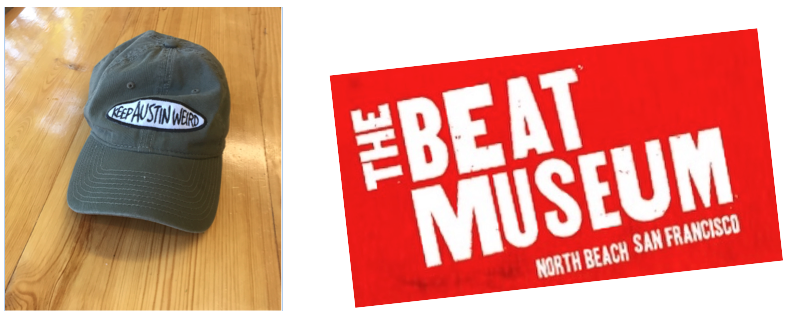
Let me explain. What has evolved in America regarding startups, tech, and innovation is they tend to hub in cities with diversity and strong counter-cultures like Boulder, Colorado, San Francisco, Austin, TX, and NYC, although more and more scenes are emerging in Nashville, TN or here in Golden, CO…
Nuff said…Edgy Austin and Jack Kerouac
Within these communities I have witnessed an amazing synergy not only in day-to-day interactions and dialogue, but also in resources. Actually spending an hour and listening to the chats and even pitches for Angel Funding in edgy Caffe Centro on a South Park Street in San Francisco (the couple of blocks once referred as the Tech Ground Zero and where concepts like Twitter were launched and well as scores of tech companies and startups now call home) one quickly sees why locating in one of these scenes is key. In fact, showing how widespread, I frequently hear similar coffee shop launch pitches in Golden, Colorado.
Let me explain more in detail.
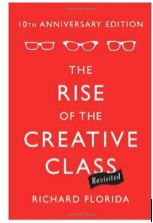
As academic Richard Florida points out in The Rise of the Creative Class, creatives as a group reflects a “powerful and significant shift in values, norms, and attitudes.” He clusters this attitude to be:
1) Individualism
2) Meritocracy
3) Diversity and Openness (which can translate to gender, sexual preference, race and my favorite “personal idiosyncrasies”.)
Of course those familiar with the Korean workplace and by this I don’t mean only the larger organizations but even most progressive firms, recognize there is a huge disparity from these “creative” norms.
For example, in contrast to the individualism within the creative class, in Korea we find deeply rooted collectivism where the group is the primary unit of reality and the ultimate staendard of value.
In collectivistic societies, group goals take precedent over an individual’s objectives. This view does not deny the reality of the individual, but, ultimately, collectivism holds that one’s identity is determined by the group(s) with which one is affiliated.
Collectivistic cultures also require that individuals fit into the group—and “conform.”
Noting this, outside values, norms and attitude, perhaps the gap between US and Korea that also occurs is in “risk mindset.” Today the American entrepreneurs, angel investors and VC who launched Facebook, Twitter, Instagram, Linkedin, Square and now Super continue to look for, invest and provide mentorship and guidance to what they hope will be the next success story…. In most cases they are investing resources in multiple ventures….
This said they know and accept that failure is part of the process…. As Biz Stone (co-founder of Twitter, and an early investor in Square, Medium…and a bunch more) said at SXSW on his most recent work… “the failure of one venture, Jelly, led to success at a venture, Super.me ”
So getting back to Korea the real challenge is not in lack of ideas or topnotch talent, but in allowing and fostering a culture of Diversity and Openness, an acceptance of failure, and tolerating and even embracing non-conformity.
The good news…. I would not give up on Korea and a creative culture. More of my thoughts on this in the next episode of Everything Korea. I even will propose a roadmap for grooming creatives in Korea.
I truly enjoy sharing the nuances of Korean business culture—whether through my books, Vodcasts like this one, in media interview and articles, or coaching those new to the Korea facing workplace.
Long part of my core business has been On-boarding. In fact, this week I have a number of engagements scheduled in Southern California with some planned for San Francisco in the next future.
On-boarding or, organizational socialization is where new employees, from C-level staff to entry-level hires, acquire necessary knowledge, skills, and behaviors to be effective in their job. In most cases for my work this means those employed by Korean companies, but it also includes those partners that provide services to Korean global firms
A common false assumption taken by some is those new to the company or project “will get” the cultural nuances without considerable support. Nothing can be more mistaken.
I find the Struggles for non-Koreans can range from team members not dealing with matters feeling it may offend their Korea colleagues to being perplexed and frustrated why approval processes are so complex or why Finance appears to be the making final call in critical operational decisions. The later two situations covered extensively in my books Korea Facing and Korea Perspective. See link below.
All said, my role in On-boarding is to provide context and the reasons behind Korea facing business, while over time mentoring, coaching and steering teams and C-level leadership to solutions.
If coaching and mentoring is like something you and your company can benefit from, I have blocked out some times I’m available to discuss more. Just go to http://www.meetme.so/southerton Until next time…
In this week’s Everything Korea my thoughts again turn to discussing why some Korean businesses do well outside Korea, while others struggle.
A caveat is tied to last week’s episode where although Korea entrepreneurs have and continue to launch some amazing new startup concepts—few ever gain the stellar funding and success achieved by similar startups the US in the past or now with concepts like Periscope, Meerkat or my favorite Super.me.
Frankly what works well in Korea may not work well outside Korea and with regard to the Startup Model even work within Korea. Same thing goes for global brands, what works well in each respective country or region needs some if not substantial localization—localizations a catch phrase that everyone agrees to but few truly embrace.
In particular, I see with Korea brands looking outside Korea to often the same missteps re-occurring. In my recent case study “A Global Approach: For Korea Management Teams” I address many of the challenges. See the link below for a copy of the study.
So what are some steps in my opinion for 1) Korean brands already having a global footprint, or 2) brands that wish to expand outside Korea, or 3) domestic Korea startups, all need to take?
I’ll talk more on this in the next episode, but for a first step–embrace and immerse in the local culture, market norms and success model.
What is a poor idea is for an overseas team modeling practices after the Korea operations. This I know can be difficult–most Korean teams dispatched are most familiar with the Korean model, receive limited support to transition, or are subjected to pressure from their peers and seniors to limit the embracing of local norms over the mother company’s. The later situation a real concern.
Again in the next episode we’ll drill deeper to the core causes of the disconnects.
Oh one more thing… Those struggling with some of the challenges I’ve mentioned, or have issues within your organization that need to be addressed….I have blocked out my availability to chat and discuss…. Just go tohttp://www.meetme.so/southerton
Two topics, first I’ll be working from NYC this week. I’ll be sharing the Korea Society presentation once their very professionally team produces the video series and uploads to YouTube. Please Stay tuned.
That said, much of my professional work is providing strategy and consulting to the top Korean brands globally.
This includes working with non-Korean firms, leadership and audiences to explain the dynamics and nuances in Korean business. During a long day that can often extend into the evening, I tackle client issues.
A common question both in media interview and by clients is “ Don, how did you get interested in Korean business?”
My Korea focus and experience are actually rooted in Korean martial arts. I began martial arts in the early 1970s, receiving my Cho Dan (1st Degree Black Belt) by the mid 1970s, opened my first school in 1976 and tested for Sabom Master Instructor in 1987. In 2013, I was inducted into the Taekwondo Hall of Fame.
Outside my public image today of business consultant, coach, trainer, strategist, social commentator, and author. I’ve continued to be a life-long student of traditional Korean martial arts– now for 43 years.
I have added several complex Chinese forms to my repertoire of over 35 hyung—the traditional sets of combative movements martial artists’ practice to hone their bodies and minds.
I have always seen martial arts as not only a way of staying in shape through a wide range of stretching, kicking, and hand movements, but also a demanding mental regiment.
All said, I attribute my success in Korean business much in part to the discipline, “meditation in motion,” self-control, patience, and focus sharpened over a lifetime in the martial arts—not to mention the strong rooting in the cultural dimension of a traditional Korea art.
Just one more thing, in addition to my Korean facing Facebook pages, I just added a new martial arts Page. It includes some articles I have written for both academic and the martial arts industry.
So until next time, this is Don Southerton wishing you all the best.
As in past Everything Korea, I will share links on topics discussed in the accompanying copy.
Golden, Colorado (PRWEB) February 02, 2015 Korean global business consultant Don Southerton has released his latest publication, titled Korea Perspective. Southerton notes, ” As a result of my interacting with Korea facing business on an almost daily basis, Western overseas teams, as well Korean leadership and teams, have openly shared their challenges and pressing concerns. In turn, I have worked to provide them with a framework, strategy, and solutions. This book is based on these daily interactions.”
The intended audiences, the author points out, are Westerners employed by Korean-based companies outside South Korea, firms providing services or products to a South Korean overseas subsidiary or operations and global companies that have significant business with a Korean company.
Southerton adds, “All in all, this book offers a road map to avoid the pitfalls, navigate around the roadblocks, and thrive.”
Korea Perspective is available through Amazon Kindle, Nook and most popular booksellers.
About the author Don Southerton has a life-long interest in Korea and the rich culture of the country. He has authored numerous publications with topics centering on culture, new urbanism, entrepreneurialism, and early U.S.-Korean business ventures. Southerton also lectures extensively and writes and comments on modern Korean business culture and its impact on global organizations.
He is a frequent contributor to the media (WSJ, Forbes, CNN Fortune, Bloomberg, Automotive News, Korea Times, Korea Herald, Yonhap, Korea Magazine, and FSR) on Korea facing business and culture. He heads Bridging Culture Worldwide, a Golden, Colorado based company that provides strategy, consulting and training to Korea-based global business. An avid martial artist, Southerton has pursued the study and practice of Korean traditional arts for more than forty years.






Everything Korea, November 16 Episode: Crafting a “Way”…
Stepping back to August 2005, I was conducting cross-cultural training and coaching sessions at a manufacturing facility. In the early months of the plant operations, tensions between the American and Korean teams were mounting.
Startup operations are always a daunting task. The additional cultural dimensions and language differences only compounded the odds of having a smooth launch.
Recognizing the challenges, senior Korean leadership asked if I could provide team- building workshops that would allow the respective managers to better address escalating concerns and issues.
Consensus was that the problem was “cultural”—Koreans not understanding Americans and visa-versa. I had been working across their organization for several years and I had dealt with what I thought were similar situations.
However, a few hours into the team-building workshops I uncovered the true cause of the strained relationship, but it was not what I had expected.
Most of the American teams were production veterans—hand picked because they had been top performers at Ford, Toyota, Nissan, Honda, Mercedes Benz, and GM North American plants. In contrast, the Korean teams were career employees—most having worked for a decade or more at a sister plant in South Korea.
What surfaced in discussions was that many of the new American managers had been searching in earnest for a Way—documented policies and procedures that would guide them in decision-making and day-to-day work. For example, former Toyota managers looked for a model similar to the Toyota Way, while others who had worked for Ford Motor Company sought standard operation procedure manuals (SOPS). Not finding a set Way resulted in some Americans feeling that there might be a communications and language issue. More concerning, a few hinted strongly at trust issues and that Koreans were deliberately withholding vital information.
Listening to the group, I had a realization. Over the years working with the company and other Korea-based businesses, I found sharing historic background and differences between Korean culture and other cultures as a proven, effective and commonly accepted cross-cultural learning model. Nevertheless, it became crystal clear to me that what was truly needed in this situation was to clarify and impart an intangible—the Way or vision.
A Shared Mindset
Jumping forward several years… on a number of occasions I have shared my quest to better understand the companies’ Way (and triggered by the work at the plant ) with veteran Korean staff and executives. Time and time again, I found those long employed by the Company reflecting for a moment and then stating frankly that the company’s approach was not easy to explain.
For example, one senior Korean pointed out that within company there are several management styles and approaches to tackling an issue depending on the person’s lineage.
Groomed by their seniors, junior members of teams adopt the mentor’s methodology and leadership style—some “hard” and demanding, others “soft” and preferring collaboration.
Another executive imparted that their Way was acquired over time. He added that,with the exception of some minor differences among the sister companies, the transferring of key people among divisions, creates a shared mindset.
At a minimum, Korean teams understand the thought process and methods of others across the organization regardless of the affiliations.
The Korean executives did agree that understanding the corporate mindset by both Koreans and non-Koreans working across the organization was vital to the continued success of the Company.
In Contrast
Recognizing lessons learned in incorporating a Way in the operations of other American plants, I’d like to share a success model. In 2009 Korea based Kia Motors Manufacturing Georgia’s senior leadership took a bold approach Day One. The crafted their “Kia Way.” Key elements include:
At the core, the “Kia Way” aligns teams—Korean and American. In particular, it provides continuity as new Korean expatriates are assigned to the plant, as well as Americans formerly employed within the manufacturing industry and who join the team in Georgia.
All said, I am strong advocate of crafting a “Way,” for Korean operations overseas—one that addresses and tailored to local needs while still aligning with the global organization Culture.
Would you like to schedule a time to discuss steps to implement a “Way” in your organization?
To facilitate and with my rather demanding workload and travel, Stacey, my personal assistant at stacey@koreabcw.com can schedule us for a time.