
To recap my thoughts in previous posts, a strong Creative Class is seen as key to sustaining a forward-leaning, innovative economy. Going hand in hand with this is workplaces that embrace diversity and openness, are not opposed to self-expression, promote individual recognition for hard work as well as resulting compensation (more than a base pay) for doing what they are good at… and they work in a community offering an engaging and even edgy lifestyle.
So where do I see disconnects between South Korea and America?
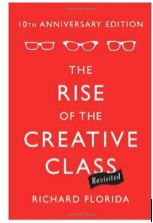
For starters in America the old Fordism and Company Man model at least for the creative class has shifted. Workers were once strongly tied to the company, this relationship nicely summed up by Richard Florida, “You were a company man, identifying with the company and often moving largely in the circles created or dictated by it.” Today, creatives value their unique social identity–one able to move intact from firm to firm and well as assuming the risks and absorbing the benefits companies once backed.
In contrast, rooted in Korean norms and collectivism, Korean workers strongly identify with their company—perhaps more so within the major Groups like Samsung, Hyundai, LG, and SK, as well as those working for a high profile global brands in Korea like Nike.
These organizations tend to be highly traditional vertical (and often horizontal) corporations— top-down management hierarchically flowing workload down to teams (most often operating in silos) with the Taylorized expectancy they follow routines and norms long established. In contrast, a creative work culture dies when so regimented as Florida points out, “ like rote work in the old factory or office.” A long hour chained to cubical cranking out Point points is very different than a culture where ideas are conceptualized inside one’s head in a café over a latte or during a trail run.
All said, one could argue Korea may not be wired for fostering a sustainable creative culture.
What I do find as encouraging is many in Korea on a personal level attracted to and appreciate counter-culture. There is an ever growing segment is their society adopting a lifestyle more conducent to creativity. Much of this influence has been Koreans exposed to the global art scene, the influence of expat non-Koreans, plus Koreans embracing their own traditional artisan heritage. In some ways, this movement has taken on a rather edgy Bohemian feel… one I find very cool.
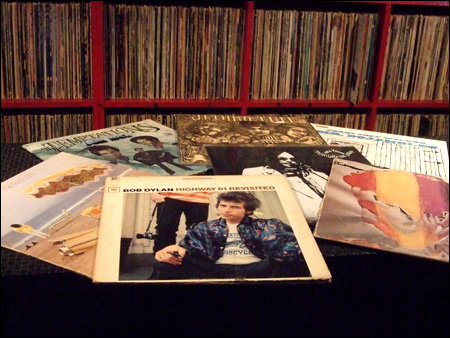
Seoul LP Bars, the 60s and Dylan.
For example, Korean media reports there are a growing number of “dives with DJs and extensive collections of LPs,” many located in ultra-hip neighborhoods…. walls plastered with album covers from the likes of Pink Floyd, Jimi Hendrix and B.B. King. The interiors shrines to Bob Dylan and Neil Young and the cultural revolution of the 1960s.
One more thing,
I have a request for my friends both Korean and non-Korean expats in Korea to share their observations, especially on the emerging counter-culture.
I’ll also be pulling together some example of a budding Korean counter-culture scene and what I see as roadmap for workplaces looking to attract and groom creatives—not only for Korea, but also for their U.S. and global operations.
Until next time…
Schedule a chat? http://www.meetme.so/southerton
or
Direct Questions? Go to questions@koreabcw.com

Everything Korea, July 13 Episode: a Roadmap for Creative Class Korea and US
In the two previous posts we looked at the dynamics required to nurture a creative and innovative workplace. In particular, Korean work values, norms and attitude surfaced as polar opposites to the characteristics of the western creative class workplace. In turn some core change would be required if Korea aspired to develop a strong sustainable innovation-driven economy. In fact, the current South Korean president, Madame Park, Geun-hye recognized this and upon election boldly had proclaimed a “Creative Economy” as her platform for Korea’s economic growth over her 5 year term in office.
Frankly most in Korea’s private and public sector have found this high level government mandate hard to embrace—in part because the overall concept was difficult to grasp within their current society. And, as I have pointed out what drives a creative economy is creatives as well as the unique communities that align with values and sustain their lifestyles. For example over-hearing a tech startup chat in edgy Golden, Colorado coffee shop Pangaea, I quizzed the three young entrepreneurs on “why Golden?” They response was 1) lifestyle, and more specifically rock climbing 2) access to established startup and incubator hubs like Boulder and Denver, and 3) available local funding for startup, the community quite wealthy.
To give another snapshot, Biz Stone former Twitter co-founder shared in a recent weekly update on his current venture Super.me, his partner Ben Finkel’s view on their work culture
* The world is our oyster. We get to build awesome software, dream up future products, use the best technologies, and get well paid for doing it. There’s no handbook, but the challenge is part of the thrill.
* We have tons of flexibility in our work style, no micromanaging and minimal bureaucracy. Of course, we can still improve our work processes, but this is another problem we get to collaboratively improve together.
* Working with a small, creative group thinking up and building future products—that has always been my dream. Of course, the products won’t work as planned, we’ll have to adapt, redirect, and persist.
In a future Everything Korea episode, I’ll suggest some steps Korean companies need to take if they look to build a creative workforce in their domestic Korean divisions, but before I tackle that set of challenges, I would like to address the need for Korean overseas operations to be sensitive to the needs, values, and attitudes of the creatives with their local organizations. Studies show that up to 1/3 of the American workforce are now part of the creative class. The best companies recognize this trend. Sadly, firms that ignore this reality, suffer.
My big concern is that Korean companies with global operations may fail to recognize this reality, too. This reality was well captured by Authors Josh Hammond and James Morrison in their book The Stuff Americans Are Made Of.
The authors cite seven cultural forces that define Americans:
I feel Korean companies need to recognize and adopt a creative culture in local markets to sustainable recruit and retain this talent — a difficult challenge even for many American companies strongly rooted in older workplace norms. Again quoting Richard Florida, “ Many companies are merely presenting a cheap, façade of the alternative [creative culture]—a Ping-Pong table, perhaps an espresso machine.”
So for starters, Korean companies that need to draw upon local creative class talent will find that locating in right community can be half the battle. This means a locale that embraces diversity and openness, with some edgy counter-culture thrown in. Interestingly, we know there is considerable synergy between the creative class workforce in these communities like San Francisco, Austin, TX and Boulder, Colorado—a huge side benefit to any firm looking to nurture their workforce.
Perhaps the greatest hurtle is ensuring that Korea workplace norms and company practices do not over-power and overtake local norms—resulting in a stifling of the very creativity the Korean company so desires… In the worst cases, top creatives will exit and those that stay make no attempt to tap their creativity.
Again this is not an easy task, and frankly one I spend considerable time as a consultant providing leadership and teams—Korean and Western– with strategy work arounds and solutions. And, I do have solutions.
More to come on this topic, in the meantime if you and your company would like to discuss, I would be happy to chat. I’ve found each company has it’s own dynamics and I approach case-by-case crafting an approach tailored to the client.
So until next time…
Oh, one more thing…. I am back in SoCal and OC two days this week. Some time still open.
Schedule a chat? http://www.meetme.so/southerton
or
Direct Questions? Go to questions@koreabcw.com