
Earth Day- Earth Week- Earth Month 2023
By Don Southerton
Reflecting on Earth Day, my ties to Green and Sustainability have reached back in time more than a few years. In fact, it parallels my work with Korea. In the mid-2000s, I was an advisor to developing and building the Incheon, South Korea Songdo International Business District. Under the leadership of Green visionary Stan Gale, the city is the global model for urban sustainability.

Envisioned as a Green, high-technology city of the future — at the time, it was one of the world and Korea’s most significant foreign real estate development projects.
Built on reclaimed land and with partners like Kohn Pederson Fox, Cisco, and United Technology, the forward-leaning project also showcased some of the first LEED-certified buildings in South Korea and Asia.
In conjunction with the Songdo IBD project and my work for Hyundai, around 2007 the Songdo team and I had the opportunity for a VIP visit to Hyundai Motor’s R&D. We even got to fuel their 1st Gen Hydrogen Fuel Cell Electric Vehicles (FCEV), and then test drive the vehicles. At this time, Songdo’s leadership was very interested in FCEV buses for the International Business District powered by hydrogen.
Songdo’s innovations were again the subject of my 2013 article for the Korean government’s Ministry of Culture, Sports & Tourism, highlighting the city’s Green accomplishments.
Link: https://www.scribd.com/document/157552923/KOREA-2013-VOL-9-No-08#
I also hosted a 2013 BBC World Service visit to Songdo IBD, showing off its Green smart city capabilities, capped off by an interview with Cisco’s former Chief Global Strategist Wim Elfrink, an early adopter who popularized the term IoT — the Internet of Things. A day later, we visited Hyundai Motor’s Eco Lab and test-drove their 3rd Gen HCEV, a first-of-its-kind production SUV, which was soon launched in Korea and then California.
In the years that followed, as companies I supported moved to mobility and EVs, I, too, shifted my research and work to these new sectors. Electrification has been and continues to be a major part of my work, leading to an ongoing immersion in the sector supporting Korean startup Grinergy and Green lithium battery technology.
This year we’re seeing a heightened level of engagement fueled by the U.S. Biden administration’s funding more eco-friendly and secure sourcing of related Green technologies at the top of the list. See https://www.linkedin.com/pulse/american-made-limits-sourcing-eliminating-dependence-new-southerton/?trackingId=DMW8HonHQV2b1SGG%2B43GmQ%3D%3D
In particular, the focus on Green, Sustainability, and Resilience is this year’s Earth Day, or as one presenter at a recent webinar shared—it’s more of an Earth Week and Earth Month.
Personally, this includes participating in workshops and presentations at the Federal, State, and local levels, including groups like Yale Blue Green (YBG), who are engaged in environmental and sustainability topics and issues, and the Colorado Electric Vehicle Coalition.
This coming week is no different with plans to attend a Live Earth Day event at NREL—the National Renewable Energy Lab headquarters in Golden, Colorado.
Takeaways
As a Colorado DOT electrification expert shared, the questions their office received just a year ago centered on “if” EVs and related mobility were a good idea—to now a heightened acceptance and questions on expanding infrastructure and issues like micro-mobility, battery recycling, and end-of-life—to expanding availability from urban centers to rural and less economically served areas.
More so, as noted above and in my previous article American-Made, Limits on Sourcing, Eliminating a Dependence on China there is a need for better sourcing and sustainability of the raw materials and components used in Green tech.
Finally, as we reflect on Earth Day, in both in my work and pursuits, I find a greater embrace of new Green technologies, fueled by government and private funding and with a growing public interest in sustainability.
Questions? Comments? Have a project in mind or need support?
Urgent requests Text at 310-866-3777 All other Dsoutherton@bridgingculture.com



Grinergy CEO: The biggest obstacle in the electric vehicle era is the battery!
Translated by Don Southerton
— Lithium-ion batteries perform poorly in cold weather. Lead-acid batteries are not environmentally friendly.
— alternative, lithium-titanium compound, minus 30 degrees, withstand fast charging,
— buses, ships, heavy-duty ‘multiplier’ market can coexist with lithium-ion
“There are several problems with batteries used in today’s vehicles. Lead-acid batteries are safe, but they pollute the environment and are heavy. Lithium-ion batteries lose their performance significantly when the temperature drops. I think there are batteries that solve these problems. I think the era will come when the existing battery market and new batteries coexist.” Grinergy CEO Sungpang (Scott) Bang
This is a startup that began with the idea that battery technology is a key issue in the era of electric mobility. In Silicon Valley, Sungpang ( Scott) Bang (47, photo)who worked at Tesla, Apple, Byton, and Hyundai, etc., and Samsung Electronics’ former COO Byung-hoon Jeong, who co-founded Grinergy in 2017, are the main characters.
They witnessed early on that the automobile industry was slowly shifting from internal combustion engines to electric vehicles, but they realized that current battery technology could not match the tasks that internal combustion engines are doing.
For example, there are problems in that the existing batteries under perform the internal combustion engine in heavy trucks that require strong output or in areas where more than half of the year temperatures falls below -10 degrees Celsius except in the summer.
For this reason, for several years since its establishment in 2017 Grinergy has developed a secondary battery using Lithium Titanium compound (LTO). Currently, 5 patents related to LTO batteries have been registered and 6
applications have been filed. Grinergy co-CEO Bang met with reporters in San Jose, California, USA and said, “LTO batteries are lead-free, so they are more environmentally friendly and work at -30 degrees.”
The typical case use is in electric vehicles and low temperatures. This is because Lithium-ion batteries that power vehicles instead of internal combustion engines perform poorly in low temperatures.This lithium-ion battery operates normally at 10–50 degrees Celsius, and its efficiency drops significantly when the temperature is higher or lower.
More so, in order to upgrade energy sources from internal combustion engines to electricity for transportation means that cars, trucks, heavy equipment, railways, and yachts operating in cold regions have no choice but to look for other alternatives due to the limitations of the existing Lithium-ion batteries.
On the other hand, LTO batteries are resistant to temperature, so they can be charged at -30 degrees Celsius. “We are conducting due diligence evaluations of batteries with a [Korean] military base through a defense venture project,” said CEO Bang. The goal is to prove how much Grinergy’s LTO battery can perform even in cold weather.
In addition, Grinergy is providing products for Korea’s outdoor smart signs. The current batteries powering the smart signs freeze in cold weather and do not work properly.
Grinergy is also paying attention to medium-to-large transportation such as buses, ships, trains, and heavy equipment, markets that are urgently required to be electrified due to the soot and the pollution problems that pose.
In the case of transportation, it is important to increase the mileage by compressing the size and weight of the battery, but it is also more important to increase the output of energy in a short time. CEO Bang said, “Grinergy’s batteries have better performance for these special industries.”
There is a growing possibility that LTO batteries will replace lead-acid batteries used for starting in existing vehicles. Lead-acid batteries are widely used in automobiles because they are very safe. Even electric vehicles such as Tesla contain lead-acid batteries and are used for starting.
Lead-acid batteries are widely used in automobiles because they are very safe.
Even electric vehicles such as Tesla contain lead-acid batteries and are used for starting the vehicle.
However, since the recycling of lead-acid batteries is often done in underdeveloped countries — breaking down of the battery into its raw materials — it causes not only environmental pollution issues but also poses health problems. CEO Bang notes he saw the environmental pollution problem of recycling this lead acid battery and thought about how to solve it.
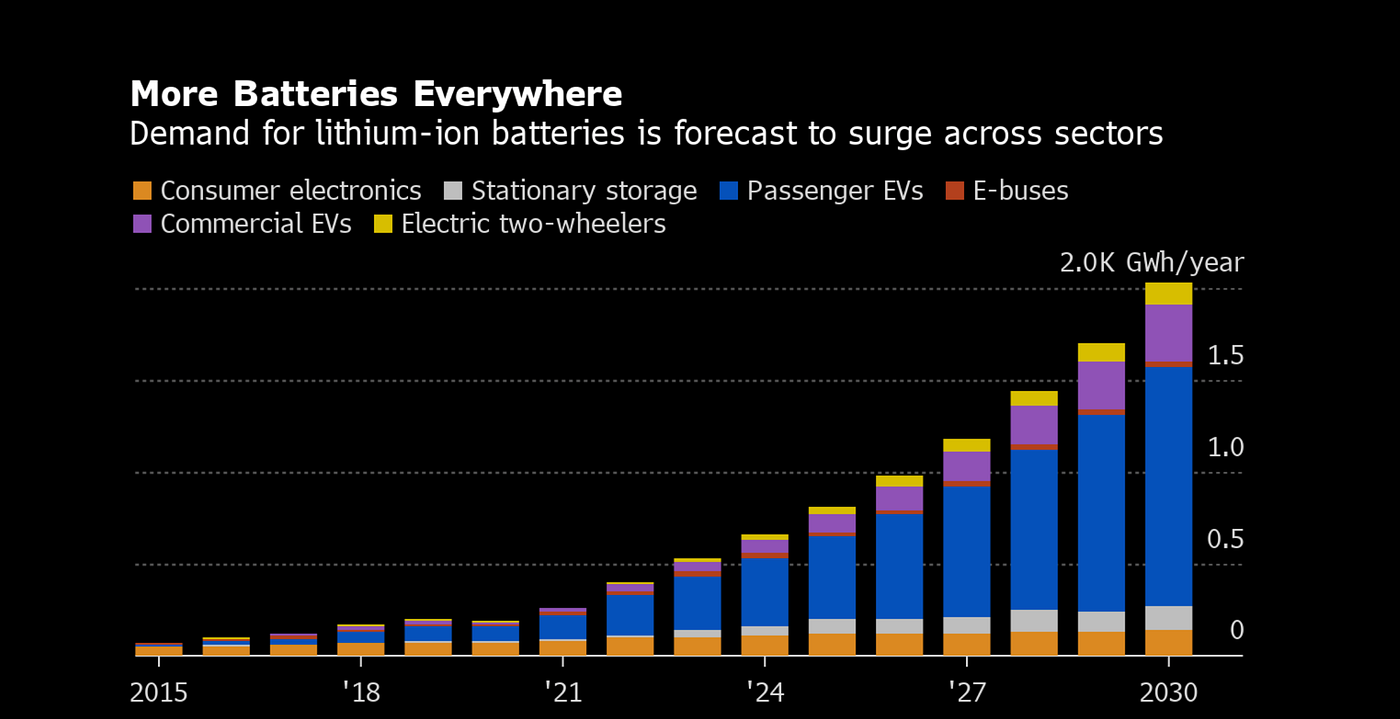
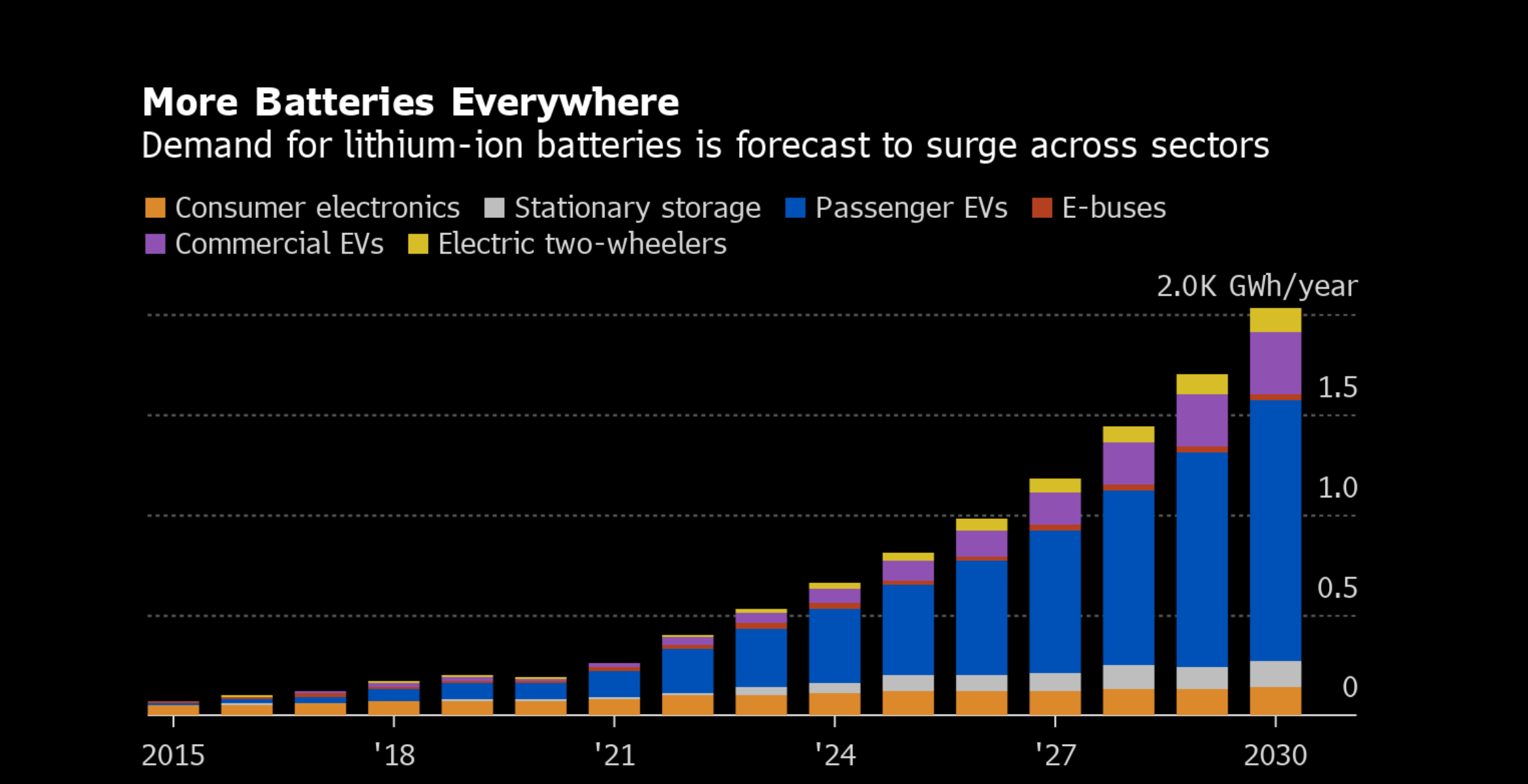
Of course, LTO batteries are not without their drawbacks. CEO Bang said, “LTO batteries have 10~15% less capacity to the same volume compared to general lithium batteries. In particular, he predicted that lithium-ion batteries and LTO batteries would coexist in the future. CEO Bang explained, “The global battery market is worth close to $1 trillion, but half of the battery market is lithium-ion and the rest is lead-acid batteries.” He added, “LTO batteries can be charged at -30 degrees Celsius, can be charged more than 10 times faster than lithium-ion, and are eco-friendly, so there is a good chance of winning.”
[Silicon Valley = Reporter Shin Hyeon-gyu / Reporter Lee Sang-deok]
[ⓒ Maeil Business & mk.co.kr,]
https://donsoutherton.medium.com/the-biggest-obstacle-in-the-electric-vehicle-era-is-the-battery-56e8a63210b7