March 20, 2017StaceyvodcastComments Off on Everything Korea, March 20 Episode Move Forward Within the Culture.
That’s my message this year in both commentaries and on-site presentations. It captures my work, which is to provide companies, leadership and teams with how best to work effectively… taking into account Culture plays a huge role in their workplaces.
March 13, 2017StaceyvodcastComments Off on Everything Korea March 13 Episode: Korea 101 Foundation for Understanding Korea Business
When you ask somewhat “what are you most passionate about?” It can be very revealing—family, work, hobbies, sports, and social issues.
For me and my work its sharing Korean business culture and, in particular, strategies to succeed with the Culture.
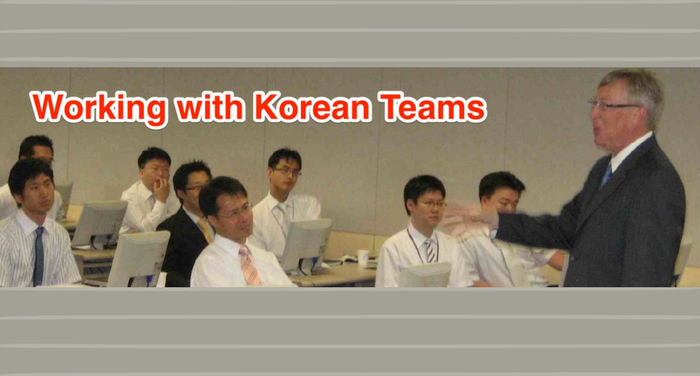
Since 2004 I have offered programs and mentoring to thousands across America and internationally. A flagship Korea 101 program has served as the core for this Korean business culture mentoring. In turn, this training and coaching builds upon current experiences of the teams, while providing new understandings that lead to solutions.
Both our on-site and web-based programs have been offered to teams not only in America, but also in Canada, UK, Belgium, Germany, Russia, AU, India, South Korea, and the Middle East.
Customized versions have been professionally recorded and distributed worldwide to organizations and incorporated in their in-house programs.
Ideally the program is on-site over 4 to 6 weeks—each class a 1½-hour session. That said, we have a number of options including half and full day immersion programs.
Korea 101 and 201 programs are also an integral part of on-boarding and mentoring for key executives and management.
I like to highlight that we find participants genuinely care about their work and the company, and acquiring the needed skills offered in Korea 101 specifically help them to move forward within the culture.
Finally, the key to the success of our Korea programs has been the strong endorsement of our partner firms’ CEOs, senior American and Korean management, and across their teams. As organizations they realize that their teams need support. Expecting employees to “get it” without training and coaching rarely works. We are proud to work with our partners and their teams.
To chat about Korea 101 or a Korean facing business question, Stacey stacey@koreabcw.com, my assistant can schedule us a time to meet or chat by phone. For all urgent matters, Text me at 310-866-3777
February 28, 2017StaceyvodcastComments Off on Everything Korea: February 27 Episode–Globalization Requires a Better Process—Firing and Hiring
I was recently asked by the editors of Korea Herald’s The Investor magazine to comment on the Korean car manufacturers, in particular Hyundai Motor.
My policy is never to speak about clients, but instead provide a perspective from a cultural standpoint. I’d like to share in condensed form, as well as with an epilogue, the guest contributor article titled: New considerations loom as Korean car brands strive to become more global
I noted, globally, the car industry in 2017 is more competitive than ever due to market fluctuations, shifting demand from sedans to SUVs and predictions that US car sales have peaked.
According to the Detroit Free Press an average of three separate industry forecasts from Kelley Blue Book, Edmunds.com and LMC Automotive predict overall U.S sales are expected to fall about 1.7%.
That said, Korean brands have done exceedingly well on a global scale. I see this trend continuing as Korean OEMs (original equipment manufactures) seek out top talent and adapt to changing conditions, even in an era of potential Trump protectionism.
And while success continues, there are still issues, some of which are rooted in culture that can still be a hindrance to the realization of full potential.
For example, in regard to talent, the abrupt dismissal of a Korean carmaker’s top Western executive can draw considerable attention in the local market’s media and industry.
Sources say these sudden departures are most often due to a failure to meet sales goals set by the headquarters in Seoul. But what’s behind these departures might very well be the real story of interest.
Korean vs. Western Norms
First, tenure for top Korean senior C level executives, excluding chaebol family members, is usually just several years and, in some cases, not even a single year. The career path for long-term Korean employees is to continually move up the hierarchy through a narrowing pyramid, with fewer and fewer advancing to the highest levels.
Even then, Chosun Ilbo noted only one out of 115 staff are likely to rise to a management position–this according to a study of 184 listed subsidiaries of the top conglomerates by market researcher CEO Score.
Among management, logistically only a select few can achieve vice president level and an even smaller number can become president or CEO. Studies have shown the average Korean CEO is 58.8 years old, graduated from a prestigious university and took 25 years to get to the top.
These executives recognize that at some point in their career they will be asked to retire and exit, allowing their juniors to advance. Most often these organizational changes occur during the end of year restructuring.
These practices align with norms of a collectivistic society and the Korean executive accepts the decision based on the group goals taking precedence over his or her individual objectives and desires. The goals and needs of the group supersede the comfort and satisfaction of the individual.
Following a somewhat different model, Korean overseas organizations have at times opted to assign a Korean to oversee the local OEM subsidiary. These employees work as expatriates for 3-5 years and then return to Korea for reassignment, retirement or exit.
Cultural Expectations
At other times Korean companies will hire seasoned western professionals for the top leadership positions. Local industry expectations are that the westerners will stay on the job for an extended period until they retire or move to another company. A gap occurs when Korean cultural expectations are that the western leader would only hold the job for at most five years.
While year-end restructuring with promotions, retirements and dismissals are accepted Korean business norms, timing for the departure of a key western leader can be an issue. In particular, with a year-end exit the holidays allow little if any progress on recruitment.
Typically, companies, Korean or Western, are well into the new year before they can effectively interview candidates, review options, and consult with senior management before reaching such an important decision. Even if the search is internal, the process takes months.
What is concerning in today’s global market is a top proven leader of that caliber needed to head up a brand may be unwilling to accept a position so tied to achieving robust sales goals as well as being responsible for the overall business, when design, product mix and production targets are also set by the Korean HQ.
An Alternative Approach
I do see some alternatives. Termination of senior leadership goes with business. However, as Korean car brands strive to become more global, deep consideration is needed to determine the best way executives should leave. With a well-managed process there is little damage to the brand, and the field is opened to the best potential candidates for the job.
As an epilogue to The Investor article, and as a trusted industry friend and market leader reinforced… changing executives does come with the territory.
Nevertheless, we have seen in the case with American CEOs John Mendel of Honda, Jim O’Sullivan of Mazda, and Jim Press of Toyota—plus most recently Nissan’s Carlos Ghosn stepping down from the role of CEO, there is a success model of well-crafted exit notices (retiring, leaving for family reasons, resigning to seek other opportunities). These reduce negative press and promote a more balanced, attractive workplace culture.
At times representing Korean firms licensing the foreign brand and at times the international company seeking a Korean partner. In the best cases, I bring partners together, resolve their differences, and work towards an amicable agreement. In less so pleasant circumstances, I have been engaged when terms of an agreement are in dispute.
For entry into Korea, the current model is for an international brand to request the potential Korean company to prepare a “go to market” Business Plan. The plan would usually include background on the company, the competition, a 5-year sales and revenue projection and the number of locations they will open over that time period.
This model of asking the local partner to outline their plan may work well internationally between western companies—similar norms shared. For Korea, this model has faults for a number of reasons and ends in Brands less than pleased over time. This experience is not uncommon.
First and foremost Korean companies have high uncertainty and prefer to minimize risk in new ventures. They feel circumstance may change and not wish to be locked in to a rigid commitment. More significant, they see an Agreement as a roadmap subject to constant “adjustment” (code word for downsizing) and modification. This means the Plan they craft may be one attractive on paper for the sake of securing the Brand—and open at a later date to re-negotiation.
What’s more, when asked to draft a Business Plan/ Go To Market Plan, the actual teams developing the plan may have limited (some no) experience in actually launching a brand with western expectations. In turn, their business plan on paper may be very different what they will do in reality.
So what does this mean for 2017?
Frankly, I have been increasingly hesitate when asked about approaching potential Korean partners for international brands knowing the current Korean mindset and their preferred business practices.
Instead, I strongly recommend international brands present their potential partners with the Brand’s business plan for the market vs. asking for their Korean team to prepare their version.
This, of course, is a new model, however, it is over time in both parties best interest with expectations agreed upon up front and less subject to disagreement down the road…
As for crafting a localized business plan, this is something I can assist ….
February 6, 2017StaceyvodcastComments Off on Everything Korea, February 6, Korea, Market Entry, and Opportunity 2017
With the start of every new year I am approached to consult on market entry and new business development projects that range in size and scale.
In addition to longtime and ongoing international support of major Korea Groups and their branding, marketing, sales, and manufacturing subsidiaries, I work with companies to secured overseas partnerships. This includes both Korean SME (Small to Medium size Enterprises) firms entering other countries (the U.S. for example) as well as foreign firms seeking opportunities into Korea.
Particularly for smaller Korean firms hoping to expand globally the challenges are many. In fact a recent Korea Times article, Korea seeks to boost SME exports points out SME struggle considerably more than the large group companies. I concur.
Why? Frankly, my experience is that global companies, even SME looking at Korea, recognize the considerable upfront investment required to enter the market. The companies invest time and resources in Discovery and hire experts to assist in the local market. As a benchmark based on recent projects this cost is easily a minimum of US$30,000- $50, 000…. just to accomplish an MOU with NO contingencies on fees for first securing a partnership. There are, of course, additional costs after an agreement is signed.
In contrast, Korean firms entering overseas markets prefer to take a different, more reserved approach. Sadly the success rate for Korea firms entering overseas markets is poor—even with the support of highly dedicated Korean government agencies such as KOTRA .
I can elaborate in more detail, but basically Korea companies tend to be very direct and want someone to focus on finding them a solid, committed overseas partner or client with little investment and upfront payment of fees to local experts in market entry — all compensation contingent upon first finding a potential partner. This rarely (never!) works.
More so, although Korean companies have websites, product, and company information (often in need of editing), they lack what is commonly accepted content for meeting presentations with potential partners, including, but not limited to, a detailed localized, savvy Go to Market Plan—often a high content 20-30 pages and a competitive market analysis. These western expectations are not options.
Even with adequate funding and preparation, getting in front of the right people is probably the greatest challenge in market entry. This is the same for Korean market entry or overseas market entry. For highly recognized U.S. or global brands, there is less a barrier in setting up meetings because of the strong desire for a top brand. For Korean brands entering an overseas market there is considerable more effort. In fact, I most often have to rely on my credentials to begin a dialogue with a potential partner vs. the Korean brand itself, which typically is little known outside Korea and East Asia.
All said, I am a strong advocate of Korean global business. I see great opportunity and am passionate about seeing Korean brands succeed overseas. However, as I have shared, this does require an upfront investment.
Like a moth to a bright light, I am drawn to Korean facing business issues and trends. I explore and then provide commentary on the direction of Korean business from developments inside South Korea to their impact on international operations. To better define this task, my perspective is “culture.”
I’d like to share some thoughts from my most recent visit to Seoul, South Korea—the third in as many months. (This commentary is also available in Branding in Asia)
First, I see huge leaps in the culture that nurtures an emerging “creative class.” In America, as an example, startups, technology, and innovation have tended to evolve in cities with diversity and strong counter-cultures, all of which foster creativity. Those familiar with the Korean workplace … and by this I mean not only larger organizations but also the most progressive firms… once recognized the stark disparity in “creative” norms between Korea and the US.
That said, one can sense the change just strolling down a trendy urban district undergoing gentrification such as Hongdae or Sinsadong where streets and alleys are dotted with vogue shops and hip cafes. Likewise, as rent has soared in these areas, adjacent neighborhoods, Yeonnam-dong and Sangsu-dong, for example, have become home to Korean hipsters and young artists.
In particular, this emerging Korean creative class has generated a demand for and furthered the appeal for chic design, urban art, indie music, and hip, smart fashion as many look to stand out as individuals within a people once depicted cross-culturally as high in conformity. I see this latter trend as a critical shift in Korean society. As academic Richard Florida points out in The Rise of the Creative Class, creatives as a group reflect a “powerful and significant shift in values, norms, and attitudes.” He identifies these attitudes as:
1) Individualism
2) Meritocracy
3) Diversity and Openness (which can translate to gender, sexual preference, race and my favorite “personal idiosyncrasies”)
Gaps
This said, there are still gaps in applying a creative culture to business, especially when a project’s expectations are measured in global terms. Digging deeper perhaps the reason for the disparity is a matter of process and mindset. For example, in the West whether it is a business proposal, a go to market strategy or a roll out, seasoned veterans, in-house or contracted, work from Day 1 to define and flesh out the project. Complementing this approach, their working level teams are experienced. Overall, there is typically considerable investment in time and talent up front.
In contrast, the Korean approach is more to adapt and modify. Since the working teams involved tend to be comparatively less experienced, the project takes them into uncharted waters, so the more practical approach is to tackle each stage as it unfolds.
Additionally, in the West, high-level leadership, such as Vice Presidents, CMOs and COOs, are commonly directly engaged in the project. This enables a more hands-on approach that brings into play their talents and expertise. In Korea, we find it’s a working level team engaged on a day-to-day basis with leadership only periodically briefed on progress.
The challenge arises when western expectations call for detailed upfront plans following a proven model versus ones that are more general roadmaps with fewer specifics.
All and all, I see the engagement of Korean teams in global projects as a positive direction. This promotes the adoption of western approaches to project development enhanced with Korea’s emerging creative culture.
As always, we open to discussing your needs and concerns. Stacey, stacey@koreabcw.com, my assistant can schedule us a time to meet, or chat by phone. For urgent matters, Text me at 310-866-3777
One more resource– this week it’s my 2014 book Hyundai Way: Hyundai Speed. In it, I tackled the often-raised question, “What has made Hyundai so successful?” The book also looks to capture my ongoing pursuit to define and share Hyundai corporate culture, which by nature is an intangible
Chapters in the book then explore the ties between Korean and Hyundai heritage with deeply rooted culture and tradition that still strongly impacting the modern workplace. After sharing this background on Korea, I look at the rise of Hyundai under its founder Chung Ju Yung and the current chairman Chung Mong Koo.
Next, the focus is on Hyundai corporate culture, old and then insights into the notable company management styles. The final chapter shares my opinions on a question many outside Korea have asked of this enigmatic system: “Is Hyundai business model globally sustainable?” Again, I tackle this question from the cultural perspective.
Have a Korea-facing situation that needs addressing? Need some insights into Korea-facing challenges? In many cases, we can provide solutions and workarounds.Questions@koreabcw.com
In the recent case study, I mentioned K-lobalization. To many, this was a new concept. In reality K-lobalization was something I coined in 2008. I’d add to a video’s content, which I recorded in March 2008 on the topic (but still very relevant).
In particular we find Korean companies in 2015 are better defining their strategy globally. This means they are instituting a bolder standardized approach to marketing, branding and operations. In the past they have taken a more fragmented approach, with lots of variations from region to region.
Please take a few minutes and review the video from 2008…
Oh, one more thing. As an additional resource, here’s an excerpt from
Korea Facing, Secrets for Success in Korean Global Business
By Donald G. Southerton, 2013
Chapter 1 K-lobalization (Globalization with a K for Korea)
When I began supporting overseas non-Korean management teams for Korean companies, I often heard staff looking for a time when Koreans would fully embrace local western business norms, step aside in key decisions, and let the westerners “run things.” Why?
The overseas branches of Korean companies commonly have a CEO who is a Korean expat managing the company or region with local support. The CFO and technical support can be expats, too. Most often these Korean expats form the core for business operations in the host country. By the way, the expats below senior management are often called “coordinators” in the West. However, the Korean term is ju jae won.
In the larger overseas subsidiaries, Korean expats are assigned to the major departments, including sales, marketing, HR, and product development, along with engineering, and design divisions. In many, if not most, cases these expats are not assigned manager roles but operate as a “shadow management” with considerable oversight of local operations. For westerners unfamiliar with the Korean model, this “oversight” usually translates into the Korean expats requiring sign off on all decisions—trivial to substantial. This can be a huge challenge when newly assigned expats have little specific background in or knowledge of the host country’s operations and market. Cognitively, they recognize localization is needed but, especially if under pressure to perform, may defer to their Korean company procedures and cultural norms. In other cases, Korean firms have also initially resisted local management guidance and followed what they felt would be the best approach. Sadly, they performed poorly and eventually yielded to the local teams.
Times do change. Recently, and unlike a decade or so ago, many Korean teams and management have become increasingly global savvy. More significantly, following the global recession of 2009-10 when many international firms experienced setbacks, Samsung, Hyundai Motor Group and LG soared and as a result some Koreans see their model as superior to rival western brands.
I call this K-lobalization—when Korean firms boldly promote their own unique management style and corporate culture internationally and across many markets.
In the week’s episode I recommend some books, as well as discuss Korean Foreign Investment, Tennessee and car tires.
A common question I get from Korean executives is “what books are you reading Don?” Two books stand out from my current bookshelf. [Both titles are listed in the video].
Before I share why these two books are on my reading list, I need to step back the past several months. Prior to my March trip to Seoul, I picked up a new iPhone 6 (and yes, I plan to get an iWatch Sport soon). Anyway, while in Korea and to take advance of the high speed Internet I planned to do the software update. Mid download, the phone locked up.
Luckily I was heading back to the US the next day, and would be in-flight for much of the next day, so I “survived” without phone, text and constant email updates. In the meantime, I was re-reading Tim Ferriss’ 4 Hour Workweek, and although cognitive to my addiction of constantly checking email, I finally came to recognize the time chewing up keeping an eye on emails, most all non-urgent, was impacting the quality of my work and life. In particular, my creative thought stream was disrupted with a mix of updates, alerts and promotions. I wouldn’t even mention how many times I would check emails during the night.
So what’s the relevancy, well, after now implementing some rather cool email filter processes, and earmarking times to follow up on emails, I have carved out noticeable blocks of time I am now devote to additional reading and research…. And I’ve found “Those who read, have something to share.”
Moving to my next topic, I’m in NYC at the Korea Society next week. I’d happy to say the presentation will be recorded, available on YouTube and I’ll be posting the links.
BTW I have some time still available while in New York, so let me know if you have some thoughts who I should meet with while in the City.
One more thing- In late May I will be in Tennessee as part of a panel discussing local foreign investment. Specifically I was asked to discuss Korean foreign investment in regard to Hankook Tire’s new $800 million car tire plant. Frankly, I’ve supported Hyundai and then Kia Motors’ manufacturing plants in Alabama and Georgia as well as teams from their other plants globally. I have also worked with Hyosung, which in their diverse product lines manufactures tire cords—the key component in tires. I’ve been followed news of the Hankook plant since last fall, and hope to learn more about their plans for the US plant as well as help the local government and community support the new plant.
In turn it’s these experiences that provide the insights I share with you and others—all of us benefitted from this work across and supporting the many legs of Korean business: Manufacturing, Sales and Marketing, research and design.
Building teamwork and cross-cultural understanding is paramount to success. Misunderstandings and stress created by the differences in culture impact productivity and smooth business operations. Cross-cultural education is recognized as the chief solution to cultural challenges in the workplace.
Bridging Culture Worldwide (BCW) provides a wide range of Korea-focused training, coaching, and consulting services beginning with Korea 101.
What is Korea 101? Korea 101 is a timely overview approach to Korean culture, modern history, norms and business culture. The goal of the program is to foster a better understanding of Korea and its business culture.
What are topics covered? Business and social etiquette History and economy of Korea Culture (music, art and cuisine) U.S./Korean relations including North Korea The Korean workplace, management structure, and decision-making Popular culture New trends Cross-cultural insights
Tell me more For the first time we are offering Korea 101 in an on-demand online learning format. The intent of each of the five lesson sessions is to build upon the current experiences, while providing new knowledge and insights.
Korea 101 has been offered in corporate Live and Webinar sessions both in the United States and internationally for more than a decade. Thousands of participants have benefited from training and the insights it shares.
The program is conducted by noted author, strategist and lecturer, Don Southerton CEO and President of Bridging Culture Worldwide. Don works closely with many of Korea’s top Groups such as Hyundai Motor and is an experienced specialist in bridging cultures between Korean and non-Koreans. His firm, Bridging Culture Worldwide, is a Golden, Colorado, Irvine, California, and Seoul, South Korea, which offers programs and consulting to help management and employees appreciate and understand Korean culture and business relations.
Noted Korea expert Don Southerton
Don has authored numerous publications with topics centering on culture, new urbanism, entrepreneurialism and early U.S.-Korean business ventures. Southerton also extensively lectures and writes and comments on modern Korean business culture and its impact on global organizations. He is a frequent contributor to the media (WSJ, Forbes, CNN Fortune, Bloomberg, Automotive News, Korea Times, Korea Herald, Yonhap, Korea Magazine, eFM tbs Koreascape and FSR) on Korea facing business and culture.
Outcomes include: A strong understanding of Korean cross-cultural differences and their relevance to Korean workplace culture. Reduce tensions and frustrations rooted in cross-cultural issues. Better morale and team spirit. Support for interacting with Korean teams assigned to local operations.
The Cost for the 5 web-based on-demand learning sessions in $495.00.
Everything Korea August 3 Episode: K-lobalization, A New Concept?
In the recent case study, I mentioned K-lobalization. To many, this was a new concept. In reality K-lobalization was something I coined in 2008. I’d add to a video’s content, which I recorded in March 2008 on the topic (but still very relevant).
In particular we find Korean companies in 2015 are better defining their strategy globally. This means they are instituting a bolder standardized approach to marketing, branding and operations. In the past they have taken a more fragmented approach, with lots of variations from region to region.
Please take a few minutes and review the video from 2008…
https://youtu.be/s53gLZ3TPtU
Oh, one more thing. As an additional resource, here’s an excerpt from
Korea Facing, Secrets for Success in Korean Global Business
By Donald G. Southerton, 2013
Chapter 1 K-lobalization (Globalization with a K for Korea)
When I began supporting overseas non-Korean management teams for Korean companies, I often heard staff looking for a time when Koreans would fully embrace local western business norms, step aside in key decisions, and let the westerners “run things.” Why?
The overseas branches of Korean companies commonly have a CEO who is a Korean expat managing the company or region with local support. The CFO and technical support can be expats, too. Most often these Korean expats form the core for business operations in the host country. By the way, the expats below senior management are often called “coordinators” in the West. However, the Korean term is ju jae won.
In the larger overseas subsidiaries, Korean expats are assigned to the major departments, including sales, marketing, HR, and product development, along with engineering, and design divisions. In many, if not most, cases these expats are not assigned manager roles but operate as a “shadow management” with considerable oversight of local operations. For westerners unfamiliar with the Korean model, this “oversight” usually translates into the Korean expats requiring sign off on all decisions—trivial to substantial. This can be a huge challenge when newly assigned expats have little specific background in or knowledge of the host country’s operations and market. Cognitively, they recognize localization is needed but, especially if under pressure to perform, may defer to their Korean company procedures and cultural norms. In other cases, Korean firms have also initially resisted local management guidance and followed what they felt would be the best approach. Sadly, they performed poorly and eventually yielded to the local teams.
Times do change. Recently, and unlike a decade or so ago, many Korean teams and management have become increasingly global savvy. More significantly, following the global recession of 2009-10 when many international firms experienced setbacks, Samsung, Hyundai Motor Group and LG soared and as a result some Koreans see their model as superior to rival western brands.
I call this K-lobalization—when Korean firms boldly promote their own unique management style and corporate culture internationally and across many markets.
Book Available on Amazon at:
http://www.amazon.com/dp/1481224336
I look forward to your questions and comments
questions@koreabcw.com