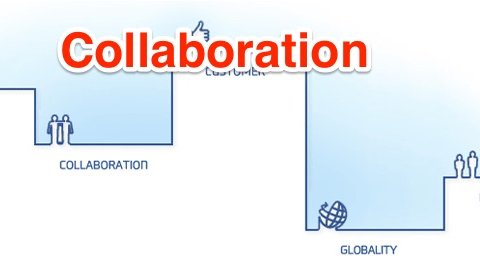
Collaboration. We hear the term promoted both as a core value and expectation in Korean global business. For me, it’s building a solid relationship with Korean teams—one by one.
In fact, whenever I take on a new Korea facing project, I seek out a team member, first as a point of contact and then someone I can strengthen the relationship building trust and mutual understanding. This can include daily chats by phone, email and Kakao.
In most cases, over time I add layers of support … understanding they are in a tough place… at times having to relay requests and demands they themselves may not clearly agree but nevertheless need to communicate.
In particular, I’ve found they may not be familiar with the project nuances—in contrast the experienced Western team. In my role, and to build the relationship I work as the go-between, mentoring and even share (confidentially) how to best frame their company’s issues and avoid if handled poorly what could result in an impasse.
Collaboration, all said, is about relationships, nurtured over time, and built on seeing a project through for both sides mutual benefits as well as the individual tied to the undertaking.
A respected colleague shared their thoughts on last week’s commentary “Hit the Target”—noting is was “a timely topic!” “… Especially as we enter the fourth quarter…”
Several readers also chimed in– lamenting that local leadership and teams receive little guidance in HOW to hit the target.
To add some context, HOW has considerable to do with Korean workplace culture norms. Leaders give directives, and teams execute in a top down manner. In some cases, well meaning leaders withhold detailed instructions to empower their teams to work through it themselves…. In other cases, some in less progressive management feel there are being paid to do a job…. And teams need to struggle like they themselves had earlier in their careers… While others recognize providing direction may be efficient, but hope their team will find new and better ways to tackle the challenge. In particular, some form of “hail Mary” that drives sales and even better at a low cost.
Frankly, demands today on Korean export driven business have pushed and stretched teams. Many feel they are operating at maximum with little room for additional market share or sales.
Risk avoidance adds another layer when new ideas are presented, too.
Under these circumstances I have two recommendations.
Present multiple and alternative ideas and countermeasures… vs. selecting one idea. I know a common response is “we do this, but to little avail.” This does take some cultural savvy… the best teams in Korea do find ways to get their message heard. I can help here…. in providing you with a best approach.
Couple with suggesting a trial or pilot approach to minimize risk and investment— with the ability to roll out fast. Again, this takes some savvy in how best to share and present…. Something I do often….
Care to discuss solutions? My personal assistant Stacey at stacey@koreabcw.com can coordinate a time for us to chat by phone, meet or handle by email.
As many of you know, I work between Korean affiliates and companies. What stands out is how sub-cultures vary even within the same Group. Perhaps moving among affiliates sometimes in a single day, I see and experience the subtle differences more than most. This can range from the tangibles like building design, workspace layout, dress code and amenities to intangibles such as what one can sense in day to day employee engagement, morale and comradery.
In fact, there are sub cultural differences:
1) in Korea between divisions and affiliates, 2) with Korea and their own overseas divisions and 3) as I noted between the local overseas affiliates.
So, sub-cultures do matter.
Digging deeper, I feel recognizing what is common between the companies’ counts, too. This can include intrinsic Group values and norms shared across the organization, or even more common general Korean business practices and expectations.
To add to the complexity, often the local sub-culture of an affiliate has evolved over time, and very independent of the mother organization in Korea. BTW We’re seeing as Korean Groups have expanded their global organizations into many markets there has been greater effort to now align the overseas operations with the HQ corporate culture. (I’ll provide some more on this in one of my next Vodcast)…
This means when a Korea related issue surfaces in local operations we have to look at with several colored lenses. Candidly, that how I pull apart situations and provide a solid work-through when supporting clients as a mentor and their Korea business strategist.
Learn More
Have a question or want to learn more about how I support and mentor clients? My personal assistant Stacey at stacey@koreabcw.com can coordinate a time for us to chat by phone, meet or handle by email.
It’s that time of the year with Chuseok, (the Korean Harvest Moon Festival) right around the corner.
In 2016, Chuseok holiday falls on September 15, the day before and after also celebrated as National Holidays.
Koreans previously followed the lunar calendar, but in recent history, they have followed the solar calendar in line with international practice.
While public holidays are based on the solar calendar, there are a few days that are celebrated based on the lunar calendar. These are the two most important traditional holidays, the Korean New Year’s Day (the first day of the first lunar month) and Chuseok mid-autumn festival (fifteenth day of the eighth lunar month).
In mass, (and I mean a substantial part of the population) families travel back to their home villages. Over the holiday they may perform ancestral rituals at the graves of relatives as well as share time with their family over traditional foods.
For your Korean colleagues (in Korea), you can wish them a happy Chuseok by phone, text, or email on Monday September 12 after 4 PM (Tuesday AM in Korea). Again, most Koreans will have a 5-day weekend starting their Wednesday …
For expat Koreans working outside Korea, here and globally you can wish then happy Chuseok on Thursday September 15.
If you’d like to try, here’s a common greeting.
추석 잘 지 내 새요
Chuseok jal ji nae sae yo..
To conclude, even though many things have been changed by Korea’s rapid industrialization, urbanization, and globalization we find in the celebration of Chuseok that family remains one of the bedrock of Korean society.
One more resource– this week it’s my 2014 book Hyundai Way: Hyundai Speed. In it, I tackled the often-raised question, “What has made Hyundai so successful?” The book also looks to capture my ongoing pursuit to define and share Hyundai corporate culture, which by nature is an intangible
Chapters in the book then explore the ties between Korean and Hyundai heritage with deeply rooted culture and tradition that still strongly impacting the modern workplace. After sharing this background on Korea, I look at the rise of Hyundai under its founder Chung Ju Yung and the current chairman Chung Mong Koo.
Next, the focus is on Hyundai corporate culture, old and then insights into the notable company management styles. The final chapter shares my opinions on a question many outside Korea have asked of this enigmatic system: “Is Hyundai business model globally sustainable?” Again, I tackle this question from the cultural perspective.
Have a Korea-facing situation that needs addressing? Need some insights into Korea-facing challenges? In many cases, we can provide solutions and workarounds.Questions@koreabcw.com
“Where were you a year ago?”– A comment after a recent international level leadership mentoring getaway.
Sadly, I hear it often and it can range from understanding workplace protocols to miscommunications between the Korean and Western teams.
That begs the question on when is the best time to ensure new western leadership and teams receive an immersion in Korean workplace norms, practices, expectations and mindset?
Immediate, a few days into the new job, or after they are on the job and caught up with all the urgent matters?
Having provided mentoring and coaching to a number of CEOs, COOs, VPs of Marketing, Sales, and Service, as well as teams, how company and leadership view timing has varied.
Many top leaders recognize from their own experience that with immediate mentoring and coaching the new employee will better tackle the issues and challenges set before them. In the best cases, I am onsite Day One….
Why?
Failing to have a grasp fully the Korea facing side of the business in for example decision making, approvals, communications (often one way), risk avoidance, and the what is the “Role of a Coordinator”…. will and does impact the new executive or team member.
As one veteran manager shared that a new executive can easily make costly mistakes or miscalculations without considering all the Culture nuances.
So where are the challenges?
Huge workload demands dropped on the new employee… their days overbooked with meetings although they do recognize the benefit of mentoring and coaching.
Local Korean teams seeing value in the mentoring, but feel best put off for a while. (Code word it costs money and unless a crisis let’s delay and we may not need). A caveat to this is if there has been a turnover of western executives (fired or resigned) due to poor understanding / conflict with the Korean side of the business, etc., they want the mentoring ASAP for the new executive.
New executive or team member feel they have a grasp of the Korea side of the business—often because they have worked for other international OEMs like the Japanese.
All said, there is no escaping the need to get you and the team mentoring, coaching and skills sets. I am here to support. Just a call away.
My personal assistant Stacey at stacey@koreabcw.com can coordinate a time for us to chat by phone, meet or handle by email.
As I pointed out in Part 1 of this series, recognizing there will be challenges is one thing, providing a solid solution is another. I’d like to address these and other issues when we look at Globally Mandated Program.
It is always best that globally developed and mandated programs are crafted to mesh and align well in support local operations…
So what are my recommendations? I’d be happy to share just a sample for consideration.
First all programs should:
Recognize the need for visual content to reflect our diversity– Low vs. high- context presentations, plus inclusive of individuals of Color, Ethnicity and Gender. (In many cases, I find global content is very White).
Get high-level local leadership input and support (vs. just input from working level team.)
Programs regardless of the content should align with local operations. For example with corporate culture, efforts should allow the local organizations to define their own corporate culture, and the global content developed to be flexible and easily incorporated into current training initiatives like New Employee Orientation and mandatory compliance workshops.
Avoid hiring an outside agency to craft, they rarely get True Vision–they understand the Data, but not Context. They may add credibility and professional look and feel, but to be cost effective, they usually plug Data into a generic Boiler Plate.
Craft content in a way to connect to a wide segment of the workforce including “The New Creative Class.” (See my case study on topic and who they are). Here is the Link.Creative Class Case Study
The program should be launched in a way that dazzles and impresses the local teams and leadership. Sadly I have seen well-crafted program presented poorly.
Concluding Thought
Shared globally programs can align an organization and serve as a compass to steer the respective teams forward. It is also a daunting task and one requiring a sound plan and execution.
###
For questions raised, Stacey, my personal assistant at stacey@koreabcw.com can coordinate a time for us to chat by phone, meet or handle by email.
Would you like a copy of my book Korea Facing: Secrets for Success In Korean Global Business? Click Here
This week I’d like to share three reports. All focus on Korea business. All easily accessed…read or download
….From the Korea-facing Global Business Toolbox: Strategies and Tactics
This report shares my recent thoughts on top strategies and tactics for tackling Korean facing global business. Note global is emphasized, since working outside Korea within local subsidiary operations is my primary focus and specialty.
This Case Study provides a roadmap and best practices to their Korean management and overseas divisions. This includes new Korean brands eager to launch their products and services outside Korea. The study is also applicable to those established Korean brands already in overseas markets who could benefit from benchmarking “what works” and “what doesn’t.”
The Challenges and Gaps in a Creative Workplace Culture: U.S. and Korea
The role of the creative class continues to pique my interest. In particular, I am drawn to uncovering the “culture” needed to foster the Creative Mind Process.
Oh, one more thing, in case you missed The Hyundai GalloperShinhwa, Myth and Legend, it is now available. Just go to http://unbouncepages.com/galloper/
Here’s a short lead into the article.
With the introduction of Genesis Motors Company in premium luxury car segment as well as the Hyundai Motor’s IONIQ, part of an expanded model lineup of hybrid and electric vehicles, many in the industry see these as bold moves by the Hyundai Motor Group and it leadership. Actually, it is but the latest chapter in a story and a legacy reaching back decades.
For questions raised, Stacey, my personal assistant at stacey@koreabcw.com can coordinate a time for us to chat by phone or handle by email.
Addressing issues from a cultural perspective, in most cases the only workarounds that we have and I can suggest are centered on education for Western teams working with Korean teams.
Western co-workers need educated in and be sensitive to the Korean communications style. With less an emphasis on formal channels, in the Korean workplace considerable information is shared informally throughout the often-extended workday.
Foremost, the Korean workplace is ever changing, priorities shift day to day and even throughout the day. For example, a directive might be altered after being requested—or the mission better defined or clarified.
Since change is frequent, many Korean expatriates working in local operations will refrain from sharing developing issues early on. To Americans for example it may appear they have been sitting on information that could have been shared much earlier—while in actuality instead of false starts, Korean expats want to make sure before engaging the local team.
An added dimension can also be Korea’s balli balli, which was topic of one of the past commentaries, and worth mentioning once again. It translates as hurry-hurry. Actually, balli means hurry, but the word is always used in tandem adding to the need to move fast. It’s a defacto core value— with everything from immediately responding to requests for data to launching major projects. More to the point, it means things need to get done today and now, not tomorrow. I see balli balli also perpetuating a culture of waiting to the last minute.
Even in the best cases, expect that Korean teams may want to postpone any local decision until they can carefully review and perhaps confer with Korea.
To improve communications, I suggest all relevant information be forwarded to the Korean teams. I’d create a sense of urgency with a “suggested” timeline for execution and implementation. Regardless, plan on some delays, be patient and know that once a go-ahead is given the expectation is the task is executed immediately… if not sooner ☺
Over the years, I’ve found that Korean teams appreciate when their overseas co-workers recognize their internal processes and why they postpone taking action to the very last minute…. I’d also be ready to offer as needed supportive data or documents as the situations unfold.
For questions, Stacey, my personal assistant at stacey@koreabcw.com can coordinate a time for us to chat by phone or handle by email.
Another Lesson from My Korea Facing Global Business Toolbox
More than a decade ago during a group session I hosted for overseas Korean and western senior managers, the discussion turned to the “role” of the westerners on teams engaged in local project development. The local western teams felt very under-utilized and wanted to contribute more. This, of course, was a source of considerable frustration for the westerners because their previous automotive OEM employers had given them considerable responsibility with little direct oversight and more fully utilized their experience and expertise.
Pondering for a moment during the discussion, a senior Korean pointed out that local input was respected, but perhaps this needed to be better communicated. The Korean manager went on to explain that his Korean teams knew how to do things “Korean style”, but what was needed were other ways of approaching work related issues.
More recently in early 2016, a senior Korean leader I have been mentoring echoed the similar sentiment. First, how local input was to be sought out and encouraged across the organization. And, second that seeking out “alternatives” was one of the company’s core tenets transcending the Group’s more contemporary updated values—but in actually deeply rooted solidly in the corporate culture.
The takeaway –share wherever possible other ways of approaching work related issues.
In closing, if you have questions regarding my Toolbox or Interested in how I work with companies? Stacey, my personal assistant at stacey@koreabcw.com can coordinate a time for us to chat.



Everything Korea: May 2 Episode, Part 2 Globally Mandated Programs
As I pointed out in Part 1 of this series, recognizing there will be challenges is one thing, providing a solid solution is another. I’d like to address these and other issues when we look at Globally Mandated Program.
It is always best that globally developed and mandated programs are crafted to mesh and align well in support local operations…
So what are my recommendations? I’d be happy to share just a sample for consideration.
First all programs should:
Concluding Thought
Shared globally programs can align an organization and serve as a compass to steer the respective teams forward. It is also a daunting task and one requiring a sound plan and execution.
###
For questions raised, Stacey, my personal assistant at stacey@koreabcw.com can coordinate a time for us to chat by phone, meet or handle by email.
Would you like a copy of my book Korea Facing: Secrets for Success In Korean Global Business? Click Here