There is synergic energy, commitment, and excitement in the air….
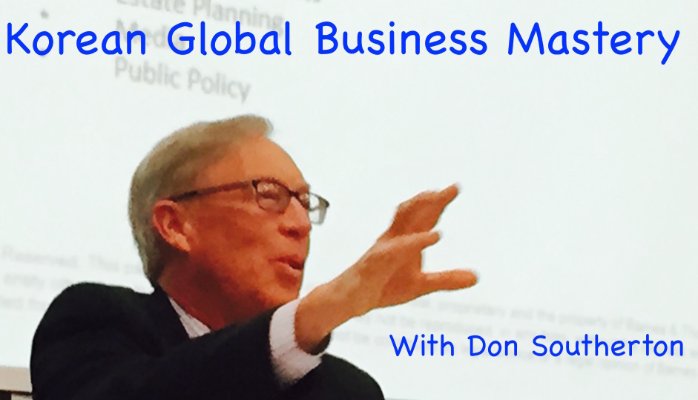
Beginning June 2016 I will introduce an exclusive Korean global business mastery service. Membership will be restricted to a select few… who will have elite access to strategies and insights I’ve developed over decades of research coupled with hands on experience.
The paid service is part mentoring and part providing immediate solutions into the challenges into Korean facing workplace and global business for C-level leadership, as well as teams.
The main focus is problem solving and support.
What it isn’t…
It is not a class or training program, while I do teach and bring a high level of expertise.
It is not group coaching individuals in a group setting, although there are weekly and monthly sessions.
It is not a Mastermind networking group, but we believe in sharing and connecting without soliciting.
Sign up for a Free Introductory: http://unbouncepages.com/bcw-mastery/
For direct inquiries on enrollment and fees, please contact me at: questions@koreabcw.com
Stepping back for a moment, I have shared in Vodcast as well as in my books and commentaries the role(s) of Korean executive coordinators. As expatriates assigned to overseas operations much of their day-to-day work is to act as liaisons with the company’s HQ teams. Some of this assignment is to serve as the local point of contact for correspondence and request from the HQ. Skimming through their email they prioritize correspondence– determining what are low level requests, answering some themselves, forwarding others, and elevating those deemed important. The same goes for their web-and phone chats…
So what is changing…
We are seeing the model moving to more direct communications between local teams and Korea, and with this new challenges have surfaced. In many cases Korean teams reaching out directly are unfamiliar with nuances in local governance, or the complexity of a project / services. Whereas in the past, an executive coordinator acting as the go-between might screen a request before engaging the local team.
In turn requests might require local teams hours to compile or research—their days already stretched thin. In some cases, requests are stacking up with new inquiries coming in faster than teams can complete.
In contrast to the West, HQ teams are often dedicated to a singular project, while the local team may be managing a multiple and diverse project workloads. And, with balli balli (Hurray Hurray) as defacto core value, the workplace expectation is for an immediate respond to requests. More to the point, it means things need to get done today and now, not tomorrow.
First and foremost…
Build rapport with the Korean team member via phone and email. As the mutual understanding and trust grow, early formality can drop and more frank colleague-to-colleague correspondence will develop. This can mean asking for when they truly need the request fulfilled… or if there have 2-3 recent requests… what is the priority.
As it is difficult to give one answer fits all situations, I’d be happy to suggest some appropriate workarounds.
For questions raised, Stacey, my personal assistant at stacey@koreabcw.com can coordinate a time for us to chat by phone, meet or handle by email.
Korea-facing business consultant, strategist, author, Hyundai Whisperer—and martial artist.
My public image is a trusted Korea-facing global business leader… I’ve also been an avid practitioner and Master Instructor of traditional Korean martial arts– a Mind and Body journey I have enjoyed for the past 44 years.
During the 1970s, 1980s, and 1990s, I trained extensively in Moo Duk Kwan Tang Soo Do (now also referred to as Soo Bahk Do), much of this under the Korean system’s Founder and son, the current Grand Master.
Highlights of these years included serving as Chief Instructor/ Coach for the United States Military Academy at West Point. Before shifting my interest to academia, writing, and global consultancy my martial arts schools, Southerton Karate, were nationally recognized leaders in the industry and among the largest in America. My years as a competitor in the late 1970s were recognized in 2013 by the Official Taekwondo Hall of Fame.
As of late, I also serve as an advisor to close friend and long time colleague Stephen Oliver’s elite international martial arts business consultancy.
For my daily practice, in addition to my repertoire of over 35 traditional hyung—over the past 16 years I have added a number of complex forms of Chinese and Korean origin. These Hyung are sets of combative movements martial artists’ practice to hone their bodies and minds.
In closing, I have always seen martial arts as not only a way of staying in shape through a wide range of stretching, kicking, and hand movements, but also a demanding mental and spiritual regiment.
More so, I attribute my success in business to the discipline, self-control, patience, and focus sharpened over a lifetime in the martial arts—not to mention bringing to my professional work a deep cultural dimension, which is an intricate part of the traditional Korea arts.
BTW You may find this interested, I have a dedicated Facebook Page with some my martial arts videos and photos—past and present. See Some Cool Videos
As I pointed out in Part 1 of this series, recognizing there will be challenges is one thing, providing a solid solution is another. I’d like to address these and other issues when we look at Globally Mandated Program.
It is always best that globally developed and mandated programs are crafted to mesh and align well in support local operations…
So what are my recommendations? I’d be happy to share just a sample for consideration.
First all programs should:
Recognize the need for visual content to reflect our diversity– Low vs. high- context presentations, plus inclusive of individuals of Color, Ethnicity and Gender. (In many cases, I find global content is very White).
Get high-level local leadership input and support (vs. just input from working level team.)
Programs regardless of the content should align with local operations. For example with corporate culture, efforts should allow the local organizations to define their own corporate culture, and the global content developed to be flexible and easily incorporated into current training initiatives like New Employee Orientation and mandatory compliance workshops.
Avoid hiring an outside agency to craft, they rarely get True Vision–they understand the Data, but not Context. They may add credibility and professional look and feel, but to be cost effective, they usually plug Data into a generic Boiler Plate.
Craft content in a way to connect to a wide segment of the workforce including “The New Creative Class.” (See my case study on topic and who they are). Here is the Link.Creative Class Case Study
The program should be launched in a way that dazzles and impresses the local teams and leadership. Sadly I have seen well-crafted program presented poorly.
Concluding Thought
Shared globally programs can align an organization and serve as a compass to steer the respective teams forward. It is also a daunting task and one requiring a sound plan and execution.
###
For questions raised, Stacey, my personal assistant at stacey@koreabcw.com can coordinate a time for us to chat by phone, meet or handle by email.
Would you like a copy of my book Korea Facing: Secrets for Success In Korean Global Business? Click Here
This week I’d like to share three reports. All focus on Korea business. All easily accessed…read or download
….From the Korea-facing Global Business Toolbox: Strategies and Tactics
This report shares my recent thoughts on top strategies and tactics for tackling Korean facing global business. Note global is emphasized, since working outside Korea within local subsidiary operations is my primary focus and specialty.
This Case Study provides a roadmap and best practices to their Korean management and overseas divisions. This includes new Korean brands eager to launch their products and services outside Korea. The study is also applicable to those established Korean brands already in overseas markets who could benefit from benchmarking “what works” and “what doesn’t.”
The Challenges and Gaps in a Creative Workplace Culture: U.S. and Korea
The role of the creative class continues to pique my interest. In particular, I am drawn to uncovering the “culture” needed to foster the Creative Mind Process.
Oh, one more thing, in case you missed The Hyundai GalloperShinhwa, Myth and Legend, it is now available. Just go to http://unbouncepages.com/galloper/
Here’s a short lead into the article.
With the introduction of Genesis Motors Company in premium luxury car segment as well as the Hyundai Motor’s IONIQ, part of an expanded model lineup of hybrid and electric vehicles, many in the industry see these as bold moves by the Hyundai Motor Group and it leadership. Actually, it is but the latest chapter in a story and a legacy reaching back decades.
For questions raised, Stacey, my personal assistant at stacey@koreabcw.com can coordinate a time for us to chat by phone or handle by email.
Addressing issues from a cultural perspective, in most cases the only workarounds that we have and I can suggest are centered on education for Western teams working with Korean teams.
Western co-workers need educated in and be sensitive to the Korean communications style. With less an emphasis on formal channels, in the Korean workplace considerable information is shared informally throughout the often-extended workday.
Foremost, the Korean workplace is ever changing, priorities shift day to day and even throughout the day. For example, a directive might be altered after being requested—or the mission better defined or clarified.
Since change is frequent, many Korean expatriates working in local operations will refrain from sharing developing issues early on. To Americans for example it may appear they have been sitting on information that could have been shared much earlier—while in actuality instead of false starts, Korean expats want to make sure before engaging the local team.
An added dimension can also be Korea’s balli balli, which was topic of one of the past commentaries, and worth mentioning once again. It translates as hurry-hurry. Actually, balli means hurry, but the word is always used in tandem adding to the need to move fast. It’s a defacto core value— with everything from immediately responding to requests for data to launching major projects. More to the point, it means things need to get done today and now, not tomorrow. I see balli balli also perpetuating a culture of waiting to the last minute.
Even in the best cases, expect that Korean teams may want to postpone any local decision until they can carefully review and perhaps confer with Korea.
To improve communications, I suggest all relevant information be forwarded to the Korean teams. I’d create a sense of urgency with a “suggested” timeline for execution and implementation. Regardless, plan on some delays, be patient and know that once a go-ahead is given the expectation is the task is executed immediately… if not sooner ☺
Over the years, I’ve found that Korean teams appreciate when their overseas co-workers recognize their internal processes and why they postpone taking action to the very last minute…. I’d also be ready to offer as needed supportive data or documents as the situations unfold.
For questions, Stacey, my personal assistant at stacey@koreabcw.com can coordinate a time for us to chat by phone or handle by email.
Another Lesson from My Korea Facing Global Business Toolbox
More than a decade ago during a group session I hosted for overseas Korean and western senior managers, the discussion turned to the “role” of the westerners on teams engaged in local project development. The local western teams felt very under-utilized and wanted to contribute more. This, of course, was a source of considerable frustration for the westerners because their previous automotive OEM employers had given them considerable responsibility with little direct oversight and more fully utilized their experience and expertise.
Pondering for a moment during the discussion, a senior Korean pointed out that local input was respected, but perhaps this needed to be better communicated. The Korean manager went on to explain that his Korean teams knew how to do things “Korean style”, but what was needed were other ways of approaching work related issues.
More recently in early 2016, a senior Korean leader I have been mentoring echoed the similar sentiment. First, how local input was to be sought out and encouraged across the organization. And, second that seeking out “alternatives” was one of the company’s core tenets transcending the Group’s more contemporary updated values—but in actually deeply rooted solidly in the corporate culture.
The takeaway –share wherever possible other ways of approaching work related issues.
In closing, if you have questions regarding my Toolbox or Interested in how I work with companies? Stacey, my personal assistant at stacey@koreabcw.com can coordinate a time for us to chat.
In this episode I’d like to share “Ten Insights into Korean business.” This is something I often incorporate into one on one coaching and mentoring sessions. It was also developed in collaboration with a senior Korea manager specifically to explain to his team’s Westerners on the company—the Westerners lacking first hand knowledge in the mother company and seeing the Company only in their local operations. In particular, there was a gap between how things were executed in Korea and had evolved locally– to a model less efficient and with time-consuming procedures.
To begin,
Trust There is a very strong trust within teams and in the company. This is often because of a legacy in achieving many bold accomplishments—often seemingly impossible tasks.
Family Traditional family norms permeate the work culture (Elder brother as boss, senior managers, etc.) and the related concept that co-workers are seen as family.
Challenge A one-word summary of the Korean workplace would be Challenge–both in what it has overcome and in what it expects of its global employees.
Input Companies are very hierarchical, but actively demands input from all levels. In fact, top management make decisions based on the expectation that the lower levels have considered all possible outcomes and challenges.
Teamwork Once a decision is made all dissenting or differing opinions unite to embrace success.
Solution In Korea, employees do not bad mouth or put down their company. In fact, employees feel that such an attitude is “part of the problem” and not “part of the solution.” Even among friends, negative thoughts are not shared.
Relationships From higher ranks to the lower ranks, they are very hierarchical. But, here are also very protective organizations. On one level, norms dictate that Seniors are demanding of their Junior employees. One reason is to make sure Juniors learn the work expectations, practices, and culture.
On another level, workers must ensure that mistakes are not made that could reflect badly on their Seniors the department, or the company. Once a Junior works for a Senior that Jr. is part of a network of other employees under the umbrella or protection of the Senior.
Expectations There are very high expectations that must be met. Doing a great job is what you are paid to do….
Collaboration The American workplace process is often to receive an assignment, clarify details, go off, work hard, and come back to the manager with the result.
The Korean staff will take a different approach. They will receive an assignment, work and discuss it collectively with others, and go back to the manager on multiple occasions informally to make sure they are following the path the manager wants. This method takes times, but Korean workers know when the manager sees the result, it will be what the senior requested.
Adaptability Flexibility and acceptance of change. Projects are subject to lots of change—some speed up, while others stall.
Questions, Comments? Want to chat?
To facilitate and with my rather demanding workload and travel, Stacey, my personal assistant at stacey@koreabcw.com can schedule us for a time.
Don Southerton, CEO and president of Bridging Culture Worldwide, a global consulting firm that focuses on Korea business ventures, is one of 10 companies that rents and operates from Perc. Photo by Amy Woodward
I was on a conference call last week when asked how best to describe my work—and do I provide consulting for CEO and C-level management—her organization’s international development committee made up of a number of CEOs.
My short answer was that a client and long friend, then a CMO for a major company best described my practice to others as Everything Korea… I also like having been introduced as “ a high power consultant” or Don is “the guru, the guy CEOs want to have their voice heard with, “ the later shared on Seoul’s eFM tbs Koreascape.
Pondering over the weekend on the question from the conference call much of what I do is provide context and a strategy to decision-makers involved in Korean facing business projects that range into the hundreds of million of Dollars.
In particular, I provide counsel and solutions based on my years working with Korean business—a good part in the international expansion into new markets and the challenges that surface and as a client once asked “ where are the landmines he needs to be aware of and avoid.”
So this gets to why I post weekly Vodcasts, frequent media commentaries, case studies as well as books on Korea facing topics. They all serve as channels to support and educate.
This said, in my consultancy each engagement needs to be approached on a case-by-case basis—no two situations identical.
If you feel you might benefit from my C-level insights, I’ve blocked out availability to chat and discuss….
To facilitate and with my rather demanding workload and travel, Stacey, my personal assistant at stacey@koreabcw.com can schedule us for a time.
In closing
A great book on the reshaping of the American economy and the New Order… check out Richard Florida’s The Rise of the Creative Class, Revised Edition. I prefer the hardcover.
And the music on Repeat Song listened to while drafting this week’s episode—Pink Floyd, “Wishing You Were Here” Re-mastered Available on iTunes.
Links
Seoul eFM Koreascape: Korean Corporate Culture insights
Korean global business can come with some serious challenges, especially if dis-connects between teams are left unchecked. With mentoring, coaching and a strategy, it’s possible to reduce these ills, and greatly improve morale and operations. So what are some of the common issues? I have listed 4 that surface often, and frankly I deal with and provide solutions.
1. A common perception is that the allegiance of Korean expatriates assigned to a local subsidiary is to the Korean HQ over local matters. This in turn drives their actions to the detriment of the local operations.
2. Another overarching issue is Trust, especially with the sharing of information. Many feel it is one-way (Korea requesting data and reports) but little feedback from Korea. It can even be perceived that little or poor communication exists even between HQ departments, or with their sister affiliates and suppliers.
3. Koreans assigned to local operations need to be more receptive to change, and be more 50-50/ give and take in interactions.
4. Local teams were hired with expectations “to Do something– Build something Grand. “ Seeing little progress this can lead to poor morale at local operations and can result in the high turnover of employees. Some feel it also taints the ability of local operations to recruit new team members within their respective industry.
Again, these concerns can be addressed and mitigated. It’s what I do. Would you like to schedule a time to discuss your needs?
To facilitate and with my rather demanding workload and travel, Stacey, my personal assistant at stacey@koreabcw.com can schedule us for a time.
Everything Korea: May 9 Episode, The “other side” of Don Southerton
Korea-facing business consultant, strategist, author, Hyundai Whisperer—and martial artist.
My public image is a trusted Korea-facing global business leader… I’ve also been an avid practitioner and Master Instructor of traditional Korean martial arts– a Mind and Body journey I have enjoyed for the past 44 years.
During the 1970s, 1980s, and 1990s, I trained extensively in Moo Duk Kwan Tang Soo Do (now also referred to as Soo Bahk Do), much of this under the Korean system’s Founder and son, the current Grand Master.
Highlights of these years included serving as Chief Instructor/ Coach for the United States Military Academy at West Point. Before shifting my interest to academia, writing, and global consultancy my martial arts schools, Southerton Karate, were nationally recognized leaders in the industry and among the largest in America. My years as a competitor in the late 1970s were recognized in 2013 by the Official Taekwondo Hall of Fame.
As of late, I also serve as an advisor to close friend and long time colleague Stephen Oliver’s elite international martial arts business consultancy.
For my daily practice, in addition to my repertoire of over 35 traditional hyung—over the past 16 years I have added a number of complex forms of Chinese and Korean origin. These Hyung are sets of combative movements martial artists’ practice to hone their bodies and minds.
In closing, I have always seen martial arts as not only a way of staying in shape through a wide range of stretching, kicking, and hand movements, but also a demanding mental and spiritual regiment.
More so, I attribute my success in business to the discipline, self-control, patience, and focus sharpened over a lifetime in the martial arts—not to mention bringing to my professional work a deep cultural dimension, which is an intricate part of the traditional Korea arts.
BTW You may find this interested, I have a dedicated Facebook Page with some my martial arts videos and photos—past and present. See Some Cool Videos