
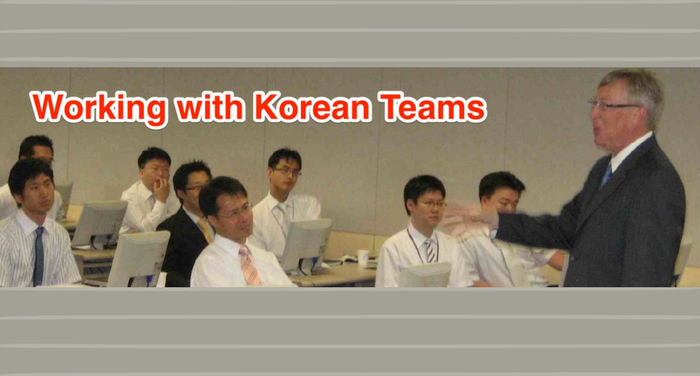
For most of my career I have worked with Korean teams—many based in Korea, many in local overseas operations. I find both exchanges rewarding, but very different and require a varying set of skills.
In this Part 1, I offer some insights into the overseas teams assigned to local subsidiaries.
Part 2 will cover my recommendations and best practices for supporting overseas teams, including work-arounds to common issues that surface—for example when department-level expats assigned to “support” local executives begin to assume more direct control over day to day operations.
Part 3 will look at working with Korean teams based in Korea.
To begin
We find with Korea facing international operations the communication channel between the Korean HQ and local subsidiary is through expatriates– although it is shifting some and I’ll cover more in Part 3.
In key positions, Korean expats serve in roles including the CEO who is responsible for managing the local company or region. The CFO and technical support can be expats, too. Most often these Korean expats along with local leadership executive form the core for business operations in the host country.
By the way, the expats below senior management are often referred to as “Executive Coordinators” or “Executive Advisors” in the West. As a caveat, this model does vary some and in some organization we see a mix of “Coordinators” and Korean assigned as line managers. However, the Korean term for these expatiates is ju jae won.
In the larger overseas subsidiaries, the Korean expats are assigned to the major departments.
In many instances, as I mentioned, the expats Coordinators are not assigned a direct managerial role but still hold considerable oversight over the local operations.
Roles vary with each company, but frequently a Coordinator’s primary role is to be a departmental liaison between Korea and the local subsidiary.
That said, for westerners unfamiliar with the Korean model, this “oversight” usually translates into the Korean expats requiring sign off on all decisions—trivial to substantial.
This can be a huge challenge when newly assigned expats have little specific background in or knowledge of the host country’s operations and market.
Cognitively, they recognize local management skills and expertise, but especially if under pressure to perform and meet expectations may defer to engaging in decision-making.
Of course this can be challenge.
New ju jae won are skilled and accomplished in Korean style business operations, norms and practices.
However, they are now assigned to an overseas subsidiary where norms, practices, expectations, and laws differ. Adding to this “Managing westerners” is very different than overseeing a Korean team…
All said, I do have proven recommendations and workarounds, so look for Part 2 in the series.
In the meantime, I’d like to ask if you could share your experiences working with expat teams. Email me @ questions@koreabcw.com Your comments, all kept private and confidential.
Other questions? Stacey, stacey@koreabcw.com, my assistant can schedule us a time to meet, or chat by phone. For urgent matters, text me at 310-866-3777.






Everything Korea August 3 Episode: K-lobalization, A New Concept?
In the recent case study, I mentioned K-lobalization. To many, this was a new concept. In reality K-lobalization was something I coined in 2008. I’d add to a video’s content, which I recorded in March 2008 on the topic (but still very relevant).
In particular we find Korean companies in 2015 are better defining their strategy globally. This means they are instituting a bolder standardized approach to marketing, branding and operations. In the past they have taken a more fragmented approach, with lots of variations from region to region.
Please take a few minutes and review the video from 2008…
https://youtu.be/s53gLZ3TPtU
Oh, one more thing. As an additional resource, here’s an excerpt from
Korea Facing, Secrets for Success in Korean Global Business
By Donald G. Southerton, 2013
Chapter 1 K-lobalization (Globalization with a K for Korea)
When I began supporting overseas non-Korean management teams for Korean companies, I often heard staff looking for a time when Koreans would fully embrace local western business norms, step aside in key decisions, and let the westerners “run things.” Why?
The overseas branches of Korean companies commonly have a CEO who is a Korean expat managing the company or region with local support. The CFO and technical support can be expats, too. Most often these Korean expats form the core for business operations in the host country. By the way, the expats below senior management are often called “coordinators” in the West. However, the Korean term is ju jae won.
In the larger overseas subsidiaries, Korean expats are assigned to the major departments, including sales, marketing, HR, and product development, along with engineering, and design divisions. In many, if not most, cases these expats are not assigned manager roles but operate as a “shadow management” with considerable oversight of local operations. For westerners unfamiliar with the Korean model, this “oversight” usually translates into the Korean expats requiring sign off on all decisions—trivial to substantial. This can be a huge challenge when newly assigned expats have little specific background in or knowledge of the host country’s operations and market. Cognitively, they recognize localization is needed but, especially if under pressure to perform, may defer to their Korean company procedures and cultural norms. In other cases, Korean firms have also initially resisted local management guidance and followed what they felt would be the best approach. Sadly, they performed poorly and eventually yielded to the local teams.
Times do change. Recently, and unlike a decade or so ago, many Korean teams and management have become increasingly global savvy. More significantly, following the global recession of 2009-10 when many international firms experienced setbacks, Samsung, Hyundai Motor Group and LG soared and as a result some Koreans see their model as superior to rival western brands.
I call this K-lobalization—when Korean firms boldly promote their own unique management style and corporate culture internationally and across many markets.
Book Available on Amazon at:
http://www.amazon.com/dp/1481224336
I look forward to your questions and comments
questions@koreabcw.com