Tag Archive for Korea Facing

Everything Korea, July 25 Episode: Mentoring, Leadership and West Point

In last week’s commentary, I shared my recent Branding In Asia interview. http://brandinginasia.com/don-southerton-interview/

Topics ranged from Korea’s changing corporate culture to upmarket trends with Korean automakers Hyundai, Kia, and their new stand-alone luxury brand Genesis.

What drew much attention was the profile’s mention of my 40+ years of Korean martial arts experience, the Tae Kwon Do Hall of Fame, and more so my years at the United States Military Academy (USMA) at West Point. From 1983 to 1991, I served as the Cadet martial arts instructor and USMA Karate Team coach.

Over the years, I remained in contact with a few of the former cadets. More recently via Facebook and Linkedin, I have been re-united with many more… This had been rewarding on several levels including how they served their country in peace time and conflict as well as how they have become outstanding leaders in both the private and public sectors.

Personally, beyond seeing how their lives have unfolded, what touches me most are the kind words they share.  It but reminds me the impact we have on other’s lives and the need to support and mentor whenever possible… the fruits of this labor revealed over time.

As one former cadet shared:

“I just wanted to take a moment to thank you for everything you taught me and the team.  I’ve applied those lessons time and again and worked to pass the knowledge on.  I just retired after 27 years in the Army.  Time does pass swiftly 🙂  Please accept my best wishes for your continued success.  Attached is a recommendation, if it is helpful.”
Linkedin Recommendation Link ( Scroll down to USMA/ West Point)  https://www.linkedin.com/in/donsoutherton

All said, much of my day is devoted to supporting key leadership –part sounding board, part helping keep the issues in perspective, part helping them keep their job…  and providing workarounds and alternatives—all with a Korea facing lens.

Connecting Deeper

Have a Korea-facing situation that needs addressing?  Need insights into Korea-facing business?  In many cases, we can provide solutions and workarounds.

My personal assistant Stacey at stacey@koreabcw.com can coordinate a time for us to chat by phone, meet or handle by email.

Everything Korea July 19 Episode: Branding in Asia

Much of my client work supporting Korea-facing business involves mentoring Marketing, Creative and Media leadership and teams. This has ranged from on-boarding new Chief Marketing Officers and Chief Creatives to CEOs and COOs of new Agencies of Record (AOR) as well as ongoing support across their teams.  In fact, I have interacted with most of the top “A-list” Ad, Digital, Media and Marketing groups and their organizations.

I have come to find branding especially fascinating and peaking my interest. More so, the Korean and Asian approach to the market in contrast to the West.

One resource I’d like to share and that stands out is Branding In Asia.

They provide a wealth of information for the industry into Asia’s diverse and widely varied tastes. In particular, Branding in Asia explores exciting new ideas and creative concepts exploding from the mind of Asia. Please subscribe.

It is only timely, that I was just asked to share some thoughts in their magazine.
I’ve included two Q&As from the profile.  For the full article go to: http://brandinginasia.com/don-southerton-interview/

Q: What is the biggest change you’ve seen in the business culture in Korea over the years?

A: For starters, Change is a constant within the Korean companies. As for corporate culture, Korean companies have found that as they expanded operations overseas the rigid norms and practices that worked well domestically needed to be adapted to local Western markets. In turn, this gap in cultures is well recognized by HQ teams who are in daily interactions with the West. Most recently, the leading Korean brands have crafted more global savvy corporate visions, core values and communications to reflect their international footprint and diverse workforce. In some cases, I have developed and shared these programs worldwide.

Q: You’ve said that Korea is the place for companies to start before moving into neighboring markets like China and Japan. Can you talk about that?

A: International market entry can be a huge challenge for Western brands looking at new opportunities. I have long seen Korea as providing a sound entry point for further expansion into China, Japan, India and Vietnam. Ever growing, Korean companies have divisions in these countries and have strong international business networks and supply chains. Options include partnering in a Joint Venture or Licensing Agreement with a local Korean firm, first for Korea, and then for a rollout across East Asia.

Again, for the full article go to: http://brandinginasia.com/don-southerton-interview/

One last thing…
Have a Korea-facing situation that needs addressing?  Need some insights into Korea-facing business?  In many cases, we can provide solutions and workarounds.

My personal assistant Stacey at stacey@koreabcw.com can coordinate a time for us to chat by phone, meet or handle by email.

Everything Korea, July 4 Episode: “Daily Calls with Korea”

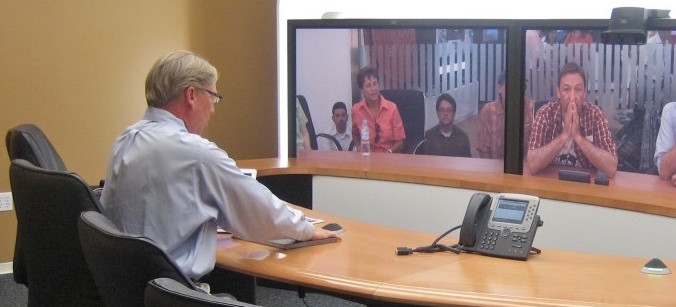
Korea team Video Conferencing

My teams and I are ever on the phone with Korea!”  It’s something a week does not go by without hearing. … it’s someone I know so well personally.

With the shift to ever-increasing daily interactions with Korean HQs via web and phone conferences, western teams need even deeper practical insights into the Culture along with new skill sets.  In particular, the Executive Coordinator/ Advisor model had its limitations…but the Koreans assigned as expatriates did learn local norms and adapt over time. This mean the Coordinators molded to local operations with a lessening need for many in the local teams to become skilled in Korea workplace norms.

In contrast, Korea-based teams follow deeply imbedded HQ and company norms. They are not likely to model or adapt to their overseas subsidiaries.

This now means strong skills in managing the relationship and understanding the Korean workplace “in’s and out’s” and “do’s and don’t” as well as effective communication take on a new heightened significance.

I feel there is no escaping the need to get you and the team mentoring, coaching and skills sets. I am here to support. Just a call away.

My personal assistant Stacey at stacey@koreabcw.com can coordinate a time for us to chat by phone, meet or handle by email.
Everything Korea: Brexit, Korea and Hyundai

Difficult not to be following Brexit (short for British Exit from the EU).

brexit

Things are still fluid, so my commentary targets the impact on Korea-facing global business and specifically the Korean car sector (and dominated players, Hyundai and Kia).

That said, as a cultural historian it’s hard not to mention my initial reaction is a potentially wider pendulum swing toward populist Protectionism-Isolationism after years of “The World is Flat” Globalism and Free Trade Agreements.

To begin….
Headlines abound like “the Pound tanked, while the Dollar and the Japanese Yen gain ground,” and “… Brexit a blow to integrated global economy,” the later a Korean headline.

From a broader trade perspective, South Korea’s exposure to the U.K. is minimal.
Due to this low trade exposure we expect the Brexit to have no major impact on the Korea economy’s projected growth. Korea’s exports to the U.K. amounted to just 1.4 percent of all export shipments.  This said, the Brexit’s wider implications have many in Korea on alert and noting  “the uncertainty” that was common term cited last year with the downswing in the global economy.

More significant, and something I comment on often is the foreign exchange market. As we see when there is some global economic crisis, the immediately effect is the Won-Dollar exchange rate impacted—in this case Korean currency sinking compared to the U.S. dollar by the greatest % rate in five years.

This is not always a bad thing….
As a result, US Dollar profits repatriated back to Korea are worth more in Won, so essential US overseas operations getting more bang for the Buck.

We need to watch carefully the Won with relation to the Japanese Yen, too. South Korean carmakers fared well between 2007 and 2011 as the Won fell as much as 50% against the Yen. That trend reversed in the middle of 2012.  So, noted in my introduction, the Yen is strengthening.

Regarding car imports to UK….
The Brexit departure could revive a 10-percent tariff on exports of Korean passenger vehicles to UK unless a deal similar to the EU-Korea trade pact is negotiated.  Short term this will have little impact, as there is a 2 year grace period for the withdraw from the EU.

If no UK-Korea trade agreement is implemented, the Korean car brands will have disadvantage in price competitiveness compared to Japanese and German rivals, which have production bases in the UK.

For the Hyundai and Kia…. the real concern is the effect it will have on the European market as a whole, as well as the global economy….  In recent months, both Hyundai and Kia have seen an upswing in business in the EU   As of last year, Hyundai Motor and Kia Motors sold about 850,000 vehicles in the European countries, with 20 percent sold in the U.K.

Thanks to the FTA benefits, Korea has exported cars over 1,500 CC without any tariffs. Starting from July, those under 1,500 CC are also exempt from tariffs.

Over time… We’ll see UK move to becoming a “regulatory island adopting its own rules for tariffs, duties and standards. The European market will be more like Asia—with different rules in we find in Japan, South Korea, Hong Kong, and China.

Crisis?
To share a reach out for a comment from a close colleague and a leading global economist focused on Korea…. my friend notes: “Probably a lot of turbulence over next several weeks because many aspects of the Brexit were not considered by the Leave camp. But I think the markets are probably oversold as London’s position as financial center is not affected in short-run, and neither is trade. Put differently, the material effects are not as catastrophic as might appear in short-run …”

In closing… look for my follow ups this week….  As well as share you comments and questions… so, please share your remarks…. ☺

As mentioned in my introduction, whether Brexit is isolated, or the first of a broader populist Protectionism movement—it is something of interest to be followed…

Everything Korea, June 6 Episode, Life-Work Balance?

Work Life Balance Signpost Shows Career And Leisure Harmony

Korea “…a society where overtime work is seen as a symbol of diligence.”

A frequently surfacing concern among westerners in my work supporting Korean global subsidiaries is the Korean expatriates assigned to local operations have little or no Life-Work Balance.

In particular, expats (commonly referred as Executive Coordinators or Executive Advisors) work long hours often extending into the late evening. Westerners are sympathetic and respect this dedication, but question working such long hours and see the toll it takes their Korean colleagues.

Working lengthy hours has been a trait of the Korean workplace, in fact, it goes hand and hand with Korean students who in their middle and high school years can devote up to 20 hours a day on school-related work.

Frankly although Koreans endure long days I feel those assigned overseas tack on even more hours… the assignment demanding as well as time differentials requiring correspondence into the evening. Adding to the situation, whereas in Korea they work as a team—sharing the long hours with co-workers, many expats are the sole Korean in the department – with them remaining in the office into the evening when all others have left.  In many cases, expat feel they carry considerable burden for the performance of their department…

In a recent Korea Herald article, it notes:

For 26-year-old office worker Lee Hye-ri, it seems like a far-fetched dream to exercise and enjoy her hobbies after work every day. It is quite difficult to imagine life outside her workplace as she works as late as 11 p.m.

The newcomer, who was employed by a state-run company last year, often works overtime and sometimes works at home on weekends. She dozes off on the bus while commuting and sleeps a lot on weekends to fight a chronic lack of sleep.

“It has become a habit to work overtime. I might be able to finish my job during working hours if I focus, but I just think to myself, ‘Let’s just work overtime,’” she told The Korea Herald. “For workers, going back home in time is a special occasion and working late is part of everyday routine.”

Lee is one of many Korean workers who suffer from chronically long working hours in a society where overtime work is seen as a symbol of diligence.

The article goes on to point out the social ramifications of long hours including health and family issue.  Some in government have tried to address with introducing new labor laws to limit long hours….

All said, as the Western workplace recognizes and embraces the need for Life Work Balance it has become a frequent topic in Korea and one the new generation is beginning to consider when looking at their future and employment.

While we are looking at the Korean workplace, I’d like to take this opportunity to share an update on my Korean Global Business Mastery Program.

Membership-based, the program offers elite access to strategies and insights I’ve developed over decades of research coupled with hands on experience.

The paid service is part mentoring and part providing immediate solutions into the challenges into Korean facing workplace and global business for C-level leadership as well as teams. The main focus is problem solving and support.

Register today for a free introductory consultation at:http://unbouncepages.com/bcw-mastery/

For direct inquiries on enrollment and fees, please contact me at: questions@koreabcw.com

Korean Global Business Mastery

Global Business Mastery

There is synergic energy, commitment, and excitement in the air….

Beginning June  2016 I will introduce an exclusive Korean global business mastery service. Membership will be restricted to a select few… who will have elite access to strategies and insights I’ve developed over decades of research coupled with hands on experience.

The paid service is part mentoring and part providing immediate solutions into the challenges into Korean facing workplace and global business for C-level leadership, as well as teams.

The main focus is problem solving and support.

What it isn’t…

  • It is not a class or training program, while I do teach and bring a high level of expertise.
  • It is not group coaching individuals in a group setting, although there are weekly and monthly sessions.
  • It is not a Mastermind networking group, but we believe in sharing and connecting without soliciting.

Sign up for a Free Introductory:
http://unbouncepages.com/bcw-mastery/

For direct inquiries on enrollment and fees, please contact me at:
questions@koreabcw.com

Everything Korea: May 23, Global Mandates, My Workarounds

As Seen in

Stepping back for a moment, I have shared in Vodcast as well as in my books and commentaries the role(s) of Korean executive coordinators.  As expatriates assigned to overseas operations much of their day-to-day work is to act as liaisons with the company’s HQ teams. Some of this assignment is to serve as the local point of contact for correspondence and request from the HQ.  Skimming through their email they prioritize correspondence– determining what are low level requests, answering some themselves, forwarding others, and elevating those deemed important.  The same goes for their web-and phone chats…

So what is changing…

We are seeing the model moving to more direct communications between local teams and Korea, and with this new challenges have surfaced.  In many cases Korean teams reaching out directly are unfamiliar with nuances in local governance, or the complexity of a project / services. Whereas in the past, an executive coordinator acting as the go-between might screen a request before engaging the local team.

In turn requests might require local teams hours to compile or research—their days already stretched thin.  In some cases, requests are stacking up with new inquiries coming in faster than teams can complete.

In contrast to the West, HQ teams are often dedicated to a singular project, while the local team may be managing a multiple and diverse project workloads. And, with balli balli  (Hurray Hurray) as defacto core value, the workplace expectation is for an immediate respond to requests.  More to the point, it means things need to get done today and now, not tomorrow.

First and foremost…

Build rapport with the Korean team member via phone and email.  As the mutual understanding and trust grow, early formality can drop and more frank colleague-to-colleague correspondence will develop.  This can mean asking for when they truly need the request fulfilled… or if there have 2-3 recent requests… what is the priority.

As it is difficult to give one answer fits all situations, I’d be happy to suggest some appropriate workarounds.

For questions raised, Stacey, my personal assistant at stacey@koreabcw.com can coordinate a time for us to chat by phone, meet or handle by email.

Everything Korea: May 16 Episode Global Mandates Part 3, a Caveat

Several years ago as Korean brands like Samsung, Hyundai, Kia and LG soared during the global recession, I coined the term K-lobalization (Globalization with a K for Korea).  I saw a trend as Korean firms instead of deferring to the local organization to boldly promote their own unique management style and corporate culture internationally and across many markets.  Much of shift this was the result of the Korean brands succeeding as their rivals Western and Japanese product suffered in the downturn.

As pointed out in Part 1 and Part 2 of this series on Korea-directed organization-wide, corporate mandates…. from core value, vision, and management training directives to most recently how they should brand or even target specific consumers in local markets.

One caveat has been the roll back of locally assigned executive coordinators; expats working in the overseas subsidiaries whose roles are to serve as liaisons with the Korean HQ. We see instead teams in Korea directly reaching out to local teams by videoconference, email and phone.

There are some very positive sides to this such as requests go directly to those engaged in the work, long term personal relations are developed and nurtured as well as open two-communications strengthened.

Less constructive is in many cases Korean teams are unfamiliar with nuances in local governance, or the complexity of a project / services. In turn requests might require local teams hours to compile or research—their days already stretched thin.  In some cases, requests are stacking up with new inquiries coming in faster than teams can complete.  In fact as of 2016, this has become the issue I am most frequently asked how best to deal with…

So what are the recommended work-arounds? In Part 4 in the series I will address.

In the meantime I’d like to solicit your input.  What situations are you encountering? Anything I missed?

For questions raised, Stacey, my personal assistant at stacey@koreabcw.com can coordinate a time for us to chat by phone, meet or handle by email.

Everything Korea: May 9 Episode, The “other side” of Don Southerton

Korea-facing business consultant, strategist, author, Hyundai Whisperer—and martial artist.

AAEAAQAAAAAAAAjYAAAAJDg4OTViYjA0LTEzMDctNDM1Zi1iYzE5LTk1MGQyNWFhM2UyOA

My public image is a trusted Korea-facing global business leader… I’ve also been an avid practitioner and Master Instructor of traditional Korean martial arts– a Mind and Body journey I have enjoyed for the past 44 years.

AAEAAQAAAAAAAAgxAAAAJDU3ZmE5Mzk3LTM2YjQtNDQzZS1hYmQ1LTBjZjNkNGZkZmFmMw

During the 1970s, 1980s, and 1990s, I trained extensively in Moo Duk Kwan Tang Soo Do (now also referred to as Soo Bahk Do), much of this under the Korean system’s Founder and son, the current Grand Master.

Highlights of these years included serving as Chief Instructor/ Coach for the United States Military Academy at West Point. Before shifting my interest to academia, writing, and global consultancy my martial arts schools, Southerton Karate, were nationally recognized leaders in the industry and among the largest in America. My years as a competitor in the late 1970s were recognized in 2013 by the Official Taekwondo Hall of Fame.

As of late, I also serve as an advisor to close friend and long time colleague Stephen Oliver’s elite international martial arts business consultancy.

AAEAAQAAAAAAAAjyAAAAJGQ1NGFiM2UzLTk1ZDAtNDFiNy1iMmQ5LWM0ZTJiOTM3ODhhMg

For my daily practice, in addition to my repertoire of over 35 traditional hyung—over the past 16 years I have added a number of complex forms of Chinese and Korean origin.  These Hyung are sets of combative movements martial artists’ practice to hone their bodies and minds.

In closing, I have always seen martial arts as not only a way of staying in shape through a wide range of stretching, kicking, and hand movements, but also a demanding mental and spiritual regiment.

More so, I attribute my success in business to the discipline, self-control, patience, and focus sharpened over a lifetime in the martial arts—not to mention bringing to my professional work a deep cultural dimension, which is an intricate part of the traditional Korea arts.

BTW You may find this interested, I have a dedicated Facebook Page with some my martial arts videos and photos—past and present.  See Some Cool Videos

Everything Korea: May 2 Episode, Part 2 Globally Mandated Programs

As I pointed out in Part 1 of this series, recognizing there will be challenges is one thing, providing a solid solution is another. I’d like to address these and other issues when we look at Globally Mandated Program.

It is always best that globally developed and mandated programs are crafted to mesh and align well in support local operations…

So what are my recommendations?   I’d be happy to share just a sample for consideration.

First all programs should:

  • Recognize the need for visual content to reflect our diversity– Low vs. high- context presentations, plus inclusive of individuals of Color, Ethnicity and Gender.  (In many cases, I find global content is very White).
  • Get high-level local leadership input and support (vs. just input from working level team.)
  • Programs regardless of the content should align with local operations. For example with corporate culture, efforts should allow the local organizations to define their own corporate culture, and the global content developed to be flexible and easily incorporated into current training initiatives like New Employee Orientation and mandatory compliance workshops.
  • Avoid hiring an outside agency to craft, they rarely get True Vision–they   understand the Data, but not Context.  They may add credibility and professional look and feel, but to be cost effective, they usually plug Data into a generic Boiler Plate.
  • Craft content in a way to connect to a wide segment of the workforce including  “The New Creative Class.” (See my case study on topic and who they are).  Here is the Link.Creative Class Case Study
  • The program should be launched in a way that dazzles and impresses the local teams and leadership.  Sadly I have seen well-crafted program presented poorly.

Concluding Thought  

Shared globally programs can align an organization and serve as a compass to steer the respective teams forward.  It is also a daunting task and one requiring a sound plan and execution.

###

For questions raised, Stacey, my personal assistant at stacey@koreabcw.com can coordinate a time for us to chat by phone, meet or handle by email.

Would you like a copy of my book Korea Facing: Secrets for Success In Korean Global Business?   Click Here