From a string of weekly trips to OC/ Irvine, California, home to the U.S. HQ offices of Hyundai Motor, Kia Motors, Genesis, MOBIS Parts, Innocean and Hyundai Capital, to somewhat longer trips to a Vegas Dealer Show, NY and LA Auto Shows, HATCI R&D in Ann Arbor, KMMG and the Tier One’s in Georgia and Hyundai in Canada and even longer treks to Seoul, in 2016 I supported leadership across the Korean OEMs and their affiliates.
This said, it was a challenging year for both the western and Korean overseas teams. Bluntly, we all felt the frustration; the common thread—the need to hit steep sales targets. Layered on top was mounting anxiety from South Korea over a declining export economy and a weakening Won. Not to mention, the political scandals touched to the heart of Korean Groups—their Chairman called into the National Assembly and probed if pressured to contribute monies in exchange for special presidential treatment.
Sadly we also saw the abrupt exit of Hyundai Motor America’s CEO Dave Zuchowski, our long time friend who we advised on all things Korea. Still we are honored to support so many in leadership who come to us for advice and perspective—a role we take with utmost seriousness and hold in deep confidentially.
With 2016 also came new clients and a range of projects, among these working on the PyeongChang Winter Olympics. Equally appreciated were the opportunities to share my thoughts and perspective to a wide audience including groups like KOTRA NYC, and in media– Branding In Asia who both highlighted work in an interview as well as published a number of commentaries.
So what’s before us in 2017…Trump, the Korean Presidential Election and Succession?
“Trump?”—a name and an uncertainty that surfaces often. I constantly field questions from both Korean and American business leadership on the impact of the election and the new administration. Who would know I would be asked to speak in December about Trump to 45 Korea executives. I also find it interesting that diverse Trump scenarios tied to possible renegotiation of the North American Free Trade Accord by the new administration were mulled at the Hyundai Motor global strategy summit in Seoul.
Looking forward, trade agreements, US military support for South Korea and dealing with North Korea’s nuclear buildup still top the list. On the trade agreement front, my expectation is at some time during the next year it will be looked at deeper by the Trump administration. However, until there is a South Korean president in office, with the impeachment waiting to be upheld by the Courts, we’ll see no Trump-Korean President summit to drill deeper.
Korea’s Presidential Election 2017
What I will be probing for is the “tone” of presidential hopefuls—2017 an election year in South Korea. One candidate, for example, is already demanding the Chaebol model be dismantled.
In particular, my thoughts were summed up in Forbes, a timely December Frank Ahrens’ article remarking it was likely an incoming Korean president could ride into office on a wave of populist anger directed at the nation’s elites. Still, says veteran South Korea business consultant Don Southerton, “a new administration will need chaebol support to drive the economy and jobs or quickly lose public support.”
I’d add we have experienced decades of “love-hate” between the Korean Groups and the government. One minute mandating new rounds of regulations such as restrictions on mutual investments and loan guarantees to curtail chaebols—the next minute persuading chaebol leadership to spur growth. The reality is Group support by Samsung, Hyundai, LG, Lotte and SK is needed to create jobs, invest in R&D and support an incoming president’s initiatives to grow the economy.
Less likely considering the emergence of a more cynical generation that may threaten to upend an old system, nevertheless seeing disruptive politics emerging globally, we could even a new president promising change but openly allied with the chaebol as engines of growth. We’ll have to wait and see. That said, at least in the short run post-scandal I see Groups coming under pressure in laws and regulations designed to increase financial transparency and accountability of family members.
Finally the Succession issue…
What stood out at the recent National Assembly grilling of the top chaebol Chairman, many men in their late 70s, was the targeting of now defacto head of Samsung, who has assumed his father’s role. With the mantle of Samsung now handed to the third generation of the Lee family, we may see similar at Hyundai and the other top Groups. In fact, South Korea’s textile giant Hyosung just announced with year-end the ushering in the era of the group’s third-generation management. I expect more announcements in the weeks to come…
What will this new generation bring forth? For one, Samsung’s successor Jay Y Lee has promised to abolish the conglomerate’s “control tower” the Future Strategy Office in response to criticism about the office’s role in the group-wide business command and control operations. No major decisions such as acquisitions or entering new businesses without the FSO’s scrutiny. On a side note, Hyundai Motor Group is one of the few groups that doesn’t operate a de facto control tower. Unlike more diversified chaebol, Hyundai core business is automotive with its affiliates already aligned in supporting a common interest.
As for succession at Korea’s second largest conglomerate, Hyundai Motor Group’s heir E.S. Chung continues to take a more visible leadership role. For example, E.S. Chung has sought to break away from the old model of a strictly Korean leadership team to more diverse international team as part of his strategy to better position their brand. More recently he re-structured the annual year-end global strategy meeting of 50 Hyundai and Kia Motors Korean executives from their overseas branches. What stood out was the collaborative, open discussion based structure of the summit vs. an older conservative and hierarchical format in which the head of each overseas branch would give a one-way briefing to the Chairman.
We can assume E.S. Chung will continue to follow his design-loving passion, and consensus-building management style in 2017.
Summing up
2017 may be seen as a year of uncertainties—both domestically in Korea and internationally with the potential for a weakening global economy, more disruptive politics and tightening of budgets and spending. The later is concerning since cutbacks would only hamper sales in what may be a tough market.
November 28, 2016StaceyCommentaryComments Off on Everything Korea: November 28 Episode, South Korean Impeachment, a Growing Likelihood?
Commenting on the impact of the Trump election on Korean trade for the past weeks—Korea-facing trade an area of my expertise– I have been hesitant as a Westerner to offer my views on the indictments against South Korean President Park.
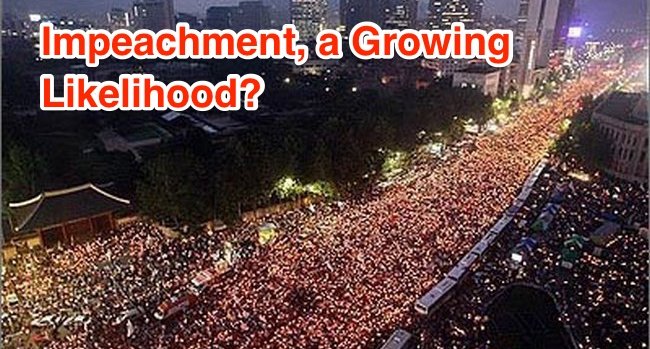
Nevertheless, impeachment seems a growing likelihood. Politicos now predict the National Assembly will secure the required two-thirds majority vote needed to pass an impeachment bill. To this point, I feel the compelled to share what “next steps” we may see unfold. Pouring over scholarly updates including my longtime friend Professor Steph Haggard’s insightful “ Park Unraveling” series https://piie.com/blogs/north-korea-witness-transformation, I present a number of “If’s,” in short of President Park stepping down and resigning.
The “If’s.”
1. If the National Assembly moves forward and passes an impeachment bill, the Constitutional Court is then responsible for deliberating the case. In addition, President Park’s powers would be suspended with the Prime Minister charged to lead the nation during the interim.
2. The Court then has 180 days to make a ruling on whether charges against the president warrant impeachment. If the Constitutional Court upholds the impeachment bill, the South Korean Constitution stipulates a presidential election must be held within 60 days. That means if the Court takes the full six months to rule on the case, the election would be held in August 2017.
3. If the Court rules in favor of impeachment, President Park would be stripped of her post and could face criminal and civil charges. Under Korean law, presidents while in office are immune from prosecution short of treason or insurrection.
4. It is worth noting, the next South Korean presidential election is scheduled for December 20, 2017. In the event, the Court rules in favor of President Park, incumbent Korean presidents are limited to a single 5-year term in office, and President Park could not seek re-election.
5. With no clear favorite yet for 2017 presidential election along with if President Park is impeached triggering an earlier election, pundits do feel the current United Nations Secretary-General Ban Ki-moon, a former Korean Prime Minister, positioned well as the front-runner amid a field of opposition party hopefuls.
All noted, with the situation subject to change and fluid, we’ll have to take a wait and see approach to what unfolds next.
“Trump?”—a question that surfaced often while I attended the 2016 LA Auto Show Media Days. I fielded questions from both Korean and American auto industry leadership on the impact of the election. Many had been following my daily posts and recent commentary.
Assessing what next to share, I see several actions by the incoming U.S. administration.
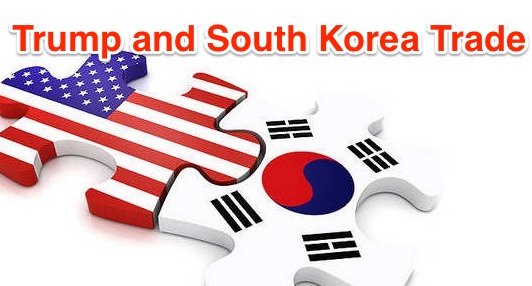
First in contrast to the president-elect’s bold statements to take on NAFTA, I find the U.S. is less likely to purse extreme actions such the withdrawal from or a major renegotiation of the KORUS FTA.
That said, the U.S. is likely to strengthen “policy” measures that could restrict imports by imposing anti-dumping tariffs or countervailing duties. This is not new. For example, after a repeated pattern of pricing below cost by Samsung and LG on clothes washers over the years the Korean brands now pay hefty anti-dumping duties to offset margin and price advances over manufacturers and threatening American manufacturing jobs. The incoming president could direct the U.S. Department of Commerce to aggressively purse similar actions against Korean importers where local jobs are impacted.
The incoming president may also demand its trading partners revalue their currency, starting with those nations that we recently placed on its currency watch list. In April, the U.S. Treasury Department announced a list of countries on its watch list that includes South Korea it would closely monitor for any unfair trade practice. Weakening a currency can make goods produced for export more attractive however it leads to a trade deficient especially if the host country has a stronger currency as is the case with the Strong U.S. Dollar.
In recent days, the U.S. Dollar has continued to surge in value against currencies around the world following the election. Again, this may be good for American consumers buying foreign goods but makes U.S. manufacturing less competitive for export. As for the South Korean Won it has finally begun to strengthen against the Dollar following the shock U.S. election results.
More an issue than the Dollar to Won is if the U.S. targets and designates China as a currency manipulator and slaps up to 45-percent tariffs on Chinese imports to America. Korea will as a ripple effect suffer since their economy is increasing dependent on its export trade to China, which would slow.
Well-Stated Korean Concerns …
My longtime friend Yun Won-sik, who serves as the executive vice president for the Korea Trade-Investment Promotion Agency (KOTRA) recent statements capture the mood in Korea. He notes how major Korean exporters could potentially face increasingly unfavorable business conditions in the United States.
“Although it is too early to say what steps the Trump administration will take at the moment, it is certain that Korea will face greater pressure to open its legal and other services industries, and curb its shipments to the United States,” Yun said.
“It is unlikely that Trump will nullify the KORUS FTA but will instead choose to revise it in favor of U.S. companies. He will certainly raise trade barriers to keep out foreign goods to revitalize America’s faltering steel and other traditional manufacturing industries as he promised to marginalized blue-collar workers.”
Oh, one more thing…
On the encouraging side, earlier this year the International Trade Commission (ITC) showed the KORUS FTA did have a positive effect on the American economy and improving the trade balance.
The report pointed out that the KORUS FTA led to a $15.7 Billion improvement in the U.S. trade balance in 2015. The U.S. posted a $28.3 billion trade deficit with South Korea that year, but it would have been $44 Billion without the bilateral free trade pact
Building on this and to counter the fallout of Trump’s protectionist trade policies, last week the Korean government has begun to mobilize resources in an effort to sway the incoming U.S. administration that the KORUS FTA is mutually beneficial and, in particular, how South Korean investments in the U.S. has stimulated American jobs over the years.
I, too, see this as a strong argument as one only has to travel Route 85 South from Georgia into Alabama to see the growth spurred by the Kia Motors Manufacturing Georgia and Hyundai Motor Manufacturing Alabama plants. The rise of Tier One and Two providers along the corridor and the boost to the local economy is hard to ignore. More so, for those of us who visited the area prior to the opening of the car plants.
Stay tuned to my updates as new developments unfold. Questions and comments welcome. Questions@Koreabcw.com
I would not be fitting without sharing my thoughts on the recent US presidential election and its potential impact on US Korea global business. To many in Korea the election results are troubling… another layer of stress and concern amid a downturn in Korean exports.
Trade agreements, US military support for South Korea and dealing with North Korea top the list. On the trade agreement front, I was a supporter of KORUS FTA both prior to its ratification and contributing a number of high profile articles on the benefits of the treaty.
More so, I’ve commonly referred to KORUS FTA is news articles, interviews and speaking engagements.
My clients Hyundai Motor America, Kia Motors America and well as Mobis Parts America benefit from the treaty… although I’m told 60% of the two OEMs finished product sold in America are made in US plants. (Some engines and a number of Tier 1, 2 and 3 components are still imported, but much less than when the plants were established).
Frankly, I am more concerned with trade agreements with Mexico. Korean Groups, Hyundai, Samsung and LG operate plants across Mexico for local demand and export to America.
As an example, a new Kia Motors Mexico plant opened earlier in 2016 with plans to supply up to 80% of their capacity for export. A heavy trade tariff on Mexican goods exported to the US would be troubling not only to Kia, but a growing wave of Korean Tier providers. On a side note, opening a plant in Mexico for an OEM is not only about labor costs and savings, but eliminates a heavy tariff on vehicles the brand also wishes to imports into Mexico.
In addition and less know as another example is Hyundai Motor Group affiliate Hyundai Translead, who I have also supported. First developed under the maquiladora program, trailers made in the Mexico plant currently are sold in the US—check out the back of a Wal-Mart trailer you see on the highway for the Hyundai logo… or this Hyundai Translead video.
As for Samsung Electronics, since the 1980s, with the construction of an electronics complex (SAMEX) in Tijuana, where TVs, color monitors, and mobile phones are currently being produced. Samsung Electronics Mexico (SEM), a local sales subsidiary, was established in 1995, and now the operation has been expanded to include refrigerator and air conditioner production. Samsung Electronics also has local production of side-by-side refrigerators, front-loading washing machines and other high-end appliances.
All said, Detroit’s Big Three automakers — GM, Ford and Chrysler — all have production plants in Mexico, and any hefty tariff would impact them as well. In addition, GM’s Korea plants produce cars for the US market.
With more questions that answers, I’ll be revisiting the impact of the elections as it unfolds over time. So stay tuned.
Oh one more thing-
Regarding North Korea, I see with President- elect Trump’s unpredictable, and aggressive way of thinking it may make Pyongyang more cautious about its military provocations.
Collaboration. We hear the term promoted both as a core value and expectation in Korean global business. For me, it’s building a solid relationship with Korean teams—one by one.
In fact, whenever I take on a new Korea facing project, I seek out a team member, first as a point of contact and then someone I can strengthen the relationship building trust and mutual understanding. This can include daily chats by phone, email and Kakao.
In most cases, over time I add layers of support … understanding they are in a tough place… at times having to relay requests and demands they themselves may not clearly agree but nevertheless need to communicate.
In particular, I’ve found they may not be familiar with the project nuances—in contrast the experienced Western team. In my role, and to build the relationship I work as the go-between, mentoring and even share (confidentially) how to best frame their company’s issues and avoid if handled poorly what could result in an impasse.
Collaboration, all said, is about relationships, nurtured over time, and built on seeing a project through for both sides mutual benefits as well as the individual tied to the undertaking.
As I have shared before, supporting clients and their challenges requires getting to the core issues. It’s distinguishing between what may be, for example, a local organizational, or what may be tied to the Company in Korea. It then requires probing for any cultural impasses before providing a practical solution and a work through.
Much of this work is first listening carefully to clients and their challenges. Equally valuable is walking around the corporate offices, observing and capturing multiple viewpoints. Nothing beats being onsite. Nothing beats getting face to face.
Too often, I find challenges as murky, complex and layered with frustrations, so a deconstruction is needed.
In most cases, I bring a fresh perspective—one rooted in years working with Korea-facing business. I’d like to share that in addition to mentoring, my work also involves directly supporting specific and very select high profile projects with clients.
Next Steps
As a next step, I suggest we set a time to discuss how we can work together. My personal assistant Stacey at stacey@koreabcw.com can coordinate a time for us to meet or chat by phone.
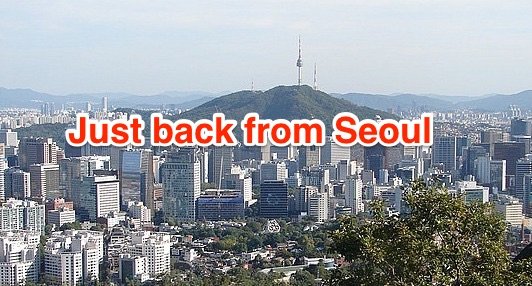
I’m just back from Seoul. With “Meet and Greets,” more than once casually bumping into few longtime friends in the hotel and at the airport, a number of high level presentations, a VIP tour of Hyundai Card’s two newest venues—the Music Library and the Vinyl and Plastic retail store, and an even a day trip to PyeongChang, home to the upcoming 2018 Winter Olympics, the days and nights stayed busy.
Amid all the travel, I study the corporate Korean workplace. It’s the sub-culture within the different Groups and their affiliates—nuances– that capture my attention. Marketing teams, for example, dressing ever more casual, ties less and less commonplace, meetings in coffee shops adjacent to corporate offices, not to mention many teams working Remote in the cafes with easy to access Wi-Fi.
Still often we see some constants—older senior executives in their company car, usually black Mercedes, BMWs or Hyundai Equus (now Genesis G90, but badged in Korea as EQ 900), the exchange business cards, although less formal in how they are presented, the dominance in the local market of the top Groups—Samsung, Hyundai, SK, LG and Lotte, as well as annual strikes underway—on this trip Hyundai Motor Company’s union and the subway and railway unions.
All said, what continues to linger in the workplace is rigid canons in the Day to Day — hierarchical top down management and communications, risk avoidance and zero-sum mindsets, and although companies boasting their globalism, few wanting to move beyond the standard response “That wouldn’t work in Korea” when international teams seek to share their global approach to business.
Of course this is where I come in… giving perspective, providing context, sharing workarounds and facilitating change.
Care to discuss?
My personal assistant Stacey at stacey@koreabcw.com can coordinate a time for us to chat by phone, meet or handle by email.
A respected colleague shared their thoughts on last week’s commentary “Hit the Target”—noting is was “a timely topic!” “… Especially as we enter the fourth quarter…”
Several readers also chimed in– lamenting that local leadership and teams receive little guidance in HOW to hit the target.
To add some context, HOW has considerable to do with Korean workplace culture norms. Leaders give directives, and teams execute in a top down manner. In some cases, well meaning leaders withhold detailed instructions to empower their teams to work through it themselves…. In other cases, some in less progressive management feel there are being paid to do a job…. And teams need to struggle like they themselves had earlier in their careers… While others recognize providing direction may be efficient, but hope their team will find new and better ways to tackle the challenge. In particular, some form of “hail Mary” that drives sales and even better at a low cost.
Frankly, demands today on Korean export driven business have pushed and stretched teams. Many feel they are operating at maximum with little room for additional market share or sales.
Risk avoidance adds another layer when new ideas are presented, too.
Under these circumstances I have two recommendations.
Present multiple and alternative ideas and countermeasures… vs. selecting one idea. I know a common response is “we do this, but to little avail.” This does take some cultural savvy… the best teams in Korea do find ways to get their message heard. I can help here…. in providing you with a best approach.
Couple with suggesting a trial or pilot approach to minimize risk and investment— with the ability to roll out fast. Again, this takes some savvy in how best to share and present…. Something I do often….
Care to discuss solutions? My personal assistant Stacey at stacey@koreabcw.com can coordinate a time for us to chat by phone, meet or handle by email.
A week does not go by without a colleague or client expressing deep concern for what seems an overarching and singular need for their company to hit their numbers. To most, despite a number of vital business initiatives, they feel the monthly demand to meet “plan” is all that matters.
Frankly, as long as I have been working with Korea facing global business it has been a (the) driven force. In fact, I can recall more than a decade ago while mentoring a new American divisional vice president that his Korean coordinator, obviously under some duress and knowing I understood the company well, pulled me aside. He asked passionately I stress to the new VP they needed to “Hit the Target.” Repeating the phase, 3 times so to ensure I got it… then patting me on the back and sending me over to the adjacent office with the VP.
In another case, I was a speaker at LG’s Mobile national sales meeting. Capping the upbeat and motivating event, the CEO with a huge graph projected behind him shared their amazing unit sales growth over for the years, then added the next year’s “stretch goal” as a hush came over the room. The new goal a huge bump over past years, which had pushed teams and the organization to their limits.
To be fair, this model is not unique to Korean business. It is also the subject on frequent discussion in Korea. However, South Korea’s modern economy was once rooted in a state run export driven model—the government fixing private industries and well as the nation’s overall production and sales quotas in many sectors. Today despite leading international as well as Korean economic experts arguing the old model is dated and need to move more to the service sector… the export production model still remains a driving force… one now where Korean Groups now direct their own organizations production and sales numbers across global organizations and into numerous markets. In part with so much of the Korean identify, economy and jobs tied to export production the Groups are under pressure to continue to seek growth each year—push the teams even harder. More so, with global stagnation in new markets and China, the past successes are marginalized. As a consequence Sales to move inventories has to rely on special pricing and incentives, which hurt brand image and profits.
Sadly Korea brands are world class and should sell based on their quality and value from cars to smartphones.
So what’s the solution?
First we need to accept this has long been the foundation of Korean business and it has been their proven success model. It’s part of their Culture and in a sense Tradition accepted by many. In turn, others do hope and argue for Korea to re-invent and redefine itself, less focused on growth numbers and more on a being a leader in new technology and innovation synonymous with Silicon Valley.
Care to discuss some additional solutions? My personal assistant Stacey at stacey@koreabcw.com can coordinate a time for us to chat by phone, meet or handle by email.
One more resource– this week it’s my 2014 book Hyundai Way: Hyundai Speed. In it, I tackled the often-raised question, “What has made Hyundai so successful?” The book also looks to capture my ongoing pursuit to define and share Hyundai corporate culture, which by nature is an intangible
Chapters in the book then explore the ties between Korean and Hyundai heritage with deeply rooted culture and tradition that still strongly impacting the modern workplace. After sharing this background on Korea, I look at the rise of Hyundai under its founder Chung Ju Yung and the current chairman Chung Mong Koo.
Next, the focus is on Hyundai corporate culture, old and then insights into the notable company management styles. The final chapter shares my opinions on a question many outside Korea have asked of this enigmatic system: “Is Hyundai business model globally sustainable?” Again, I tackle this question from the cultural perspective.
Have a Korea-facing situation that needs addressing? Need some insights into Korea-facing challenges? In many cases, we can provide solutions and workarounds.Questions@koreabcw.com



Everything Korea, The New Year Episode: Gazing Back: A Look Forward
2016 in retrospect. 2017 before us.
From a string of weekly trips to OC/ Irvine, California, home to the U.S. HQ offices of Hyundai Motor, Kia Motors, Genesis, MOBIS Parts, Innocean and Hyundai Capital, to somewhat longer trips to a Vegas Dealer Show, NY and LA Auto Shows, HATCI R&D in Ann Arbor, KMMG and the Tier One’s in Georgia and Hyundai in Canada and even longer treks to Seoul, in 2016 I supported leadership across the Korean OEMs and their affiliates.
This said, it was a challenging year for both the western and Korean overseas teams. Bluntly, we all felt the frustration; the common thread—the need to hit steep sales targets. Layered on top was mounting anxiety from South Korea over a declining export economy and a weakening Won. Not to mention, the political scandals touched to the heart of Korean Groups—their Chairman called into the National Assembly and probed if pressured to contribute monies in exchange for special presidential treatment.
Sadly we also saw the abrupt exit of Hyundai Motor America’s CEO Dave Zuchowski, our long time friend who we advised on all things Korea. Still we are honored to support so many in leadership who come to us for advice and perspective—a role we take with utmost seriousness and hold in deep confidentially.
With 2016 also came new clients and a range of projects, among these working on the PyeongChang Winter Olympics. Equally appreciated were the opportunities to share my thoughts and perspective to a wide audience including groups like KOTRA NYC, and in media– Branding In Asia who both highlighted work in an interview as well as published a number of commentaries.
So what’s before us in 2017…Trump, the Korean Presidential Election and Succession?
“Trump?”—a name and an uncertainty that surfaces often. I constantly field questions from both Korean and American business leadership on the impact of the election and the new administration. Who would know I would be asked to speak in December about Trump to 45 Korea executives. I also find it interesting that diverse Trump scenarios tied to possible renegotiation of the North American Free Trade Accord by the new administration were mulled at the Hyundai Motor global strategy summit in Seoul.
Looking forward, trade agreements, US military support for South Korea and dealing with North Korea’s nuclear buildup still top the list. On the trade agreement front, my expectation is at some time during the next year it will be looked at deeper by the Trump administration. However, until there is a South Korean president in office, with the impeachment waiting to be upheld by the Courts, we’ll see no Trump-Korean President summit to drill deeper.
Korea’s Presidential Election 2017
What I will be probing for is the “tone” of presidential hopefuls—2017 an election year in South Korea. One candidate, for example, is already demanding the Chaebol model be dismantled.
In particular, my thoughts were summed up in Forbes, a timely December Frank Ahrens’ article remarking it was likely an incoming Korean president could ride into office on a wave of populist anger directed at the nation’s elites. Still, says veteran South Korea business consultant Don Southerton, “a new administration will need chaebol support to drive the economy and jobs or quickly lose public support.”
I’d add we have experienced decades of “love-hate” between the Korean Groups and the government. One minute mandating new rounds of regulations such as restrictions on mutual investments and loan guarantees to curtail chaebols—the next minute persuading chaebol leadership to spur growth. The reality is Group support by Samsung, Hyundai, LG, Lotte and SK is needed to create jobs, invest in R&D and support an incoming president’s initiatives to grow the economy.
Less likely considering the emergence of a more cynical generation that may threaten to upend an old system, nevertheless seeing disruptive politics emerging globally, we could even a new president promising change but openly allied with the chaebol as engines of growth. We’ll have to wait and see. That said, at least in the short run post-scandal I see Groups coming under pressure in laws and regulations designed to increase financial transparency and accountability of family members.
Finally the Succession issue…
What stood out at the recent National Assembly grilling of the top chaebol Chairman, many men in their late 70s, was the targeting of now defacto head of Samsung, who has assumed his father’s role. With the mantle of Samsung now handed to the third generation of the Lee family, we may see similar at Hyundai and the other top Groups. In fact, South Korea’s textile giant Hyosung just announced with year-end the ushering in the era of the group’s third-generation management. I expect more announcements in the weeks to come…
What will this new generation bring forth? For one, Samsung’s successor Jay Y Lee has promised to abolish the conglomerate’s “control tower” the Future Strategy Office in response to criticism about the office’s role in the group-wide business command and control operations. No major decisions such as acquisitions or entering new businesses without the FSO’s scrutiny. On a side note, Hyundai Motor Group is one of the few groups that doesn’t operate a de facto control tower. Unlike more diversified chaebol, Hyundai core business is automotive with its affiliates already aligned in supporting a common interest.
As for succession at Korea’s second largest conglomerate, Hyundai Motor Group’s heir E.S. Chung continues to take a more visible leadership role. For example, E.S. Chung has sought to break away from the old model of a strictly Korean leadership team to more diverse international team as part of his strategy to better position their brand. More recently he re-structured the annual year-end global strategy meeting of 50 Hyundai and Kia Motors Korean executives from their overseas branches. What stood out was the collaborative, open discussion based structure of the summit vs. an older conservative and hierarchical format in which the head of each overseas branch would give a one-way briefing to the Chairman.
We can assume E.S. Chung will continue to follow his design-loving passion, and consensus-building management style in 2017.
Summing up
2017 may be seen as a year of uncertainties—both domestically in Korea and internationally with the potential for a weakening global economy, more disruptive politics and tightening of budgets and spending. The later is concerning since cutbacks would only hamper sales in what may be a tough market.