Tag Archive for Don Southerton

Everything Korea: May 16 Episode Global Mandates Part 3, a Caveat

Several years ago as Korean brands like Samsung, Hyundai, Kia and LG soared during the global recession, I coined the term K-lobalization (Globalization with a K for Korea).  I saw a trend as Korean firms instead of deferring to the local organization to boldly promote their own unique management style and corporate culture internationally and across many markets.  Much of shift this was the result of the Korean brands succeeding as their rivals Western and Japanese product suffered in the downturn.

As pointed out in Part 1 and Part 2 of this series on Korea-directed organization-wide, corporate mandates…. from core value, vision, and management training directives to most recently how they should brand or even target specific consumers in local markets.

One caveat has been the roll back of locally assigned executive coordinators; expats working in the overseas subsidiaries whose roles are to serve as liaisons with the Korean HQ. We see instead teams in Korea directly reaching out to local teams by videoconference, email and phone.

There are some very positive sides to this such as requests go directly to those engaged in the work, long term personal relations are developed and nurtured as well as open two-communications strengthened.

Less constructive is in many cases Korean teams are unfamiliar with nuances in local governance, or the complexity of a project / services. In turn requests might require local teams hours to compile or research—their days already stretched thin.  In some cases, requests are stacking up with new inquiries coming in faster than teams can complete.  In fact as of 2016, this has become the issue I am most frequently asked how best to deal with…

So what are the recommended work-arounds? In Part 4 in the series I will address.

In the meantime I’d like to solicit your input.  What situations are you encountering? Anything I missed?

For questions raised, Stacey, my personal assistant at stacey@koreabcw.com can coordinate a time for us to chat by phone, meet or handle by email.

Everything Korea: May 9 Episode, The “other side” of Don Southerton

Korea-facing business consultant, strategist, author, Hyundai Whisperer—and martial artist.

AAEAAQAAAAAAAAjYAAAAJDg4OTViYjA0LTEzMDctNDM1Zi1iYzE5LTk1MGQyNWFhM2UyOA

My public image is a trusted Korea-facing global business leader… I’ve also been an avid practitioner and Master Instructor of traditional Korean martial arts– a Mind and Body journey I have enjoyed for the past 44 years.

AAEAAQAAAAAAAAgxAAAAJDU3ZmE5Mzk3LTM2YjQtNDQzZS1hYmQ1LTBjZjNkNGZkZmFmMw

During the 1970s, 1980s, and 1990s, I trained extensively in Moo Duk Kwan Tang Soo Do (now also referred to as Soo Bahk Do), much of this under the Korean system’s Founder and son, the current Grand Master.

Highlights of these years included serving as Chief Instructor/ Coach for the United States Military Academy at West Point. Before shifting my interest to academia, writing, and global consultancy my martial arts schools, Southerton Karate, were nationally recognized leaders in the industry and among the largest in America. My years as a competitor in the late 1970s were recognized in 2013 by the Official Taekwondo Hall of Fame.

As of late, I also serve as an advisor to close friend and long time colleague Stephen Oliver’s elite international martial arts business consultancy.

AAEAAQAAAAAAAAjyAAAAJGQ1NGFiM2UzLTk1ZDAtNDFiNy1iMmQ5LWM0ZTJiOTM3ODhhMg

For my daily practice, in addition to my repertoire of over 35 traditional hyung—over the past 16 years I have added a number of complex forms of Chinese and Korean origin.  These Hyung are sets of combative movements martial artists’ practice to hone their bodies and minds.

In closing, I have always seen martial arts as not only a way of staying in shape through a wide range of stretching, kicking, and hand movements, but also a demanding mental and spiritual regiment.

More so, I attribute my success in business to the discipline, self-control, patience, and focus sharpened over a lifetime in the martial arts—not to mention bringing to my professional work a deep cultural dimension, which is an intricate part of the traditional Korea arts.

BTW You may find this interested, I have a dedicated Facebook Page with some my martial arts videos and photos—past and present.  See Some Cool Videos

Everything Korea: May 2 Episode, Part 2 Globally Mandated Programs

As I pointed out in Part 1 of this series, recognizing there will be challenges is one thing, providing a solid solution is another. I’d like to address these and other issues when we look at Globally Mandated Program.

It is always best that globally developed and mandated programs are crafted to mesh and align well in support local operations…

So what are my recommendations?   I’d be happy to share just a sample for consideration.

First all programs should:

  • Recognize the need for visual content to reflect our diversity– Low vs. high- context presentations, plus inclusive of individuals of Color, Ethnicity and Gender.  (In many cases, I find global content is very White).
  • Get high-level local leadership input and support (vs. just input from working level team.)
  • Programs regardless of the content should align with local operations. For example with corporate culture, efforts should allow the local organizations to define their own corporate culture, and the global content developed to be flexible and easily incorporated into current training initiatives like New Employee Orientation and mandatory compliance workshops.
  • Avoid hiring an outside agency to craft, they rarely get True Vision–they   understand the Data, but not Context.  They may add credibility and professional look and feel, but to be cost effective, they usually plug Data into a generic Boiler Plate.
  • Craft content in a way to connect to a wide segment of the workforce including  “The New Creative Class.” (See my case study on topic and who they are).  Here is the Link.Creative Class Case Study
  • The program should be launched in a way that dazzles and impresses the local teams and leadership.  Sadly I have seen well-crafted program presented poorly.

Concluding Thought  

Shared globally programs can align an organization and serve as a compass to steer the respective teams forward.  It is also a daunting task and one requiring a sound plan and execution.

###

For questions raised, Stacey, my personal assistant at stacey@koreabcw.com can coordinate a time for us to chat by phone, meet or handle by email.

Would you like a copy of my book Korea Facing: Secrets for Success In Korean Global Business?   Click Here

Everything Korea, April 18 Episode: the Toolbox, a Global Approach, and Creatives

This week I’d like to share three reports. All focus on Korea business. All easily accessed…read or download

….From the Korea-facing Global Business Toolbox: Strategies and Tactics

This report shares my recent thoughts on top strategies and tactics for tackling Korean facing global business. Note global is emphasized, since working outside Korea within local subsidiary operations is my primary focus and specialty.

https://www.scribd.com/doc/302653498/From-the-Korea-facing-Global-Business-Toolbox-Strategies-and-Tactics

A Global Approach: For Korea Management Teams

This Case Study provides a roadmap and best practices to their Korean management and overseas divisions. This includes new Korean brands eager to launch their products and services outside Korea.  The study is also applicable to those established Korean brands already in overseas markets who could benefit from benchmarking “what works” and “what doesn’t.”

https://www.scribd.com/doc/286823722/A-Global-Approach-For-Korea-Management-Teams

The Challenges and Gaps in a Creative Workplace Culture: U.S. and Korea

The role of the creative class continues to pique my interest. In particular, I am drawn to uncovering the “culture” needed to foster the Creative Mind Process.

https://www.scribd.com/doc/271936685/Creative-Workplace-Culture-U-S-and-Korea

Oh, one more thing, in case you missed The Hyundai GalloperShinhwa, Myth and Legend, it is now available.  Just go to http://unbouncepages.com/galloper/

Here’s a short lead into the article.

With the introduction of Genesis Motors Company in premium luxury car segment as well as the Hyundai Motor’s IONIQ, part of an expanded model lineup of hybrid and electric vehicles, many in the industry see these as bold moves by the Hyundai Motor Group and it leadership. Actually, it is but the latest chapter in a story and a legacy reaching back decades.

For questions raised, Stacey, my personal assistant at stacey@koreabcw.com can coordinate a time for us to chat by phone or handle by email.

Everything Korea, Episode March 14, the Workarounds

Addressing issues from a cultural perspective, in most cases the only workarounds that we have and I can suggest are centered on education for Western teams working with Korean teams.

Western co-workers need educated in and be sensitive to the Korean communications style. With less an emphasis on formal channels, in the Korean workplace considerable information is shared informally throughout the often-extended workday.

Foremost, the Korean workplace is ever changing, priorities shift day to day and even throughout the day.  For example, a directive might be altered after being requested—or the mission better defined or clarified.

Since change is frequent, many Korean expatriates working in local operations will refrain from sharing developing issues early on. To Americans for example it may appear they have been sitting on information that could have been shared much earlier—while in actuality instead of false starts, Korean expats want to make sure before engaging the local team.

An added dimension can also be Korea’s balli balli, which was topic of one of the past commentaries, and worth mentioning once again. It translates as hurry-hurry.  Actually, balli means hurry, but the word is always used in tandem adding to the need to move fast. It’s a defacto core value— with everything from immediately responding to requests for data to launching major projects.  More to the point, it means things need to get done today and now, not tomorrow.  I see balli balli also perpetuating a culture of waiting to the last minute.

Even in the best cases, expect that Korean teams may want to postpone any local decision until they can carefully review and perhaps confer with Korea.

To improve communications, I suggest all relevant information be forwarded to the Korean teams. I’d create a sense of urgency with a “suggested” timeline for execution and implementation. Regardless, plan on some delays, be patient and know that once a go-ahead is given the expectation is the task is executed immediately… if not sooner ☺

Over the years, I’ve found that Korean teams appreciate when their overseas co-workers recognize their internal processes and why they postpone taking action to the very last minute…. I’d also be ready to offer as needed supportive data or documents as the situations unfold.

For questions, Stacey, my personal assistant at stacey@koreabcw.com can coordinate a time for us to chat by phone or handle by email.

Everything Korea, February 29: The “Why” Behind Seeking Alternatives

Another Lesson from My Korea Facing Global Business Toolbox 

More than a decade ago during a group session I hosted for overseas Korean and western senior managers, the discussion turned to the “role” of the westerners on teams engaged in local project development. The local western teams felt very under-utilized and wanted to contribute more. This, of course, was a source of considerable frustration for the westerners because their previous automotive OEM employers had given them considerable responsibility with little direct oversight and more fully utilized their experience and expertise.

Pondering for a moment during the discussion, a senior Korean pointed out that local input was respected, but perhaps this needed to be better communicated. The Korean manager went on to explain that his Korean teams knew how to do things “Korean style”, but what was needed were other ways of approaching work related issues.

More recently in early 2016, a senior Korean leader I have been mentoring echoed the similar sentiment.  First, how local input was to be sought out and encouraged across the organization. And, second that seeking out “alternatives” was one of the company’s core tenets transcending the Group’s more contemporary updated values—but in actually deeply rooted solidly in the corporate culture.

The takeaway –share wherever possible other ways of approaching work related issues.

 In closing, if you have questions regarding my Toolbox or Interested in how I work with companies? Stacey, my personal assistant at stacey@koreabcw.com can coordinate a time for us to chat.

Getting my weekly newsletter?  

If not, here’s the link to subscribe.  Look for exclusive insights and opinions. http://forms.aweber.com/form/64/2141090564.htm

Everything Korea, Best of 2015—an encore Episode—The Short Answer From June 8…

Link to Vodcast: https://youtu.be/jCSoN3-RxXY

Don Southerton, CEO and president of Bridging Culture Worldwide, a global consulting firm that focuses on Korea business ventures, is one of 10 companies that rents and operates from Perc. Photo by Amy Woodward

Don Southerton, CEO and president of Bridging Culture Worldwide, a global consulting firm that focuses on Korea business ventures, is one of 10 companies that rents and operates from Perc. Photo by Amy Woodward

I was on a conference call last week when asked how best to describe my work—and do I provide consulting for CEO and C-level management—her organization’s international development committee made up of a number of CEOs.

My short answer was that a client and long friend, then a CMO for a major company best described my practice to others as Everything Korea… I also like having been introduced as “ a high power consultant” or Don is “the guru, the guy CEOs want to have their voice heard with, “ the later shared on Seoul’s eFM tbs Koreascape.

Pondering over the weekend on the question from the conference call much of what I do is provide context and a strategy to decision-makers involved in Korean facing business projects that range into the hundreds of million of Dollars.

In particular, I provide counsel and solutions based on my years working with Korean business—a good part in the international expansion into new markets and the challenges that surface and as a client once asked “ where are the landmines he needs to be aware of and avoid.”

So this gets to why I post weekly Vodcasts, frequent media commentaries, case studies as well as books on Korea facing topics. They all serve as channels to support and educate.

This said, in my consultancy each engagement needs to be approached on a case-by-case basis—no two situations identical.

If you feel you might benefit from my C-level insights, I’ve blocked out availability to chat and discuss….

To facilitate and with my rather demanding workload and travel, Stacey, my personal assistant at stacey@koreabcw.com can schedule us for a time.

In closing

A great book on the reshaping of the American economy and the New Order… check out Richard Florida’s The Rise of the Creative Class, Revised Edition. I prefer the hardcover.

And the music on Repeat Song listened to while drafting this week’s episode—Pink Floyd, “Wishing You Were Here” Re-mastered Available on iTunes.

Links

Seoul eFM Koreascape: Korean Corporate Culture insights

https://www.dropbox.com/s/v5siwvpyhor2uff/Copy%20of%20002%20KS%2012 14150404_1.mp3?dl=0

The Rise of the Creative Class http://www.amazon.com/Rise-Creative-Class-


Pink Floyd, “Wishing You Were Here” https://itunes.apple.com/us/album/wish-

you-were-here-remastered/id704223460

Everything Korea, December 7 Episode: Top 4 Ills

Korean global business can come with some serious challenges, especially if dis-connects between teams are left unchecked. With mentoring, coaching and a strategy, it’s possible to reduce these ills, and greatly improve morale and operations. So what are some of the common issues? I have listed 4 that surface often, and frankly I deal with and provide solutions.

1. A common perception is that the allegiance of Korean expatriates assigned to a local subsidiary is to the Korean HQ over local matters. This in turn drives their actions to the detriment of the local operations.

2. Another overarching issue is Trust, especially with the sharing of information. Many feel it is one-way (Korea requesting data and reports) but little feedback from Korea. It can even be perceived that little or poor communication exists even between HQ departments, or with their sister affiliates and suppliers.

3. Koreans assigned to local operations need to be more receptive to change, and be more 50-50/ give and take in interactions.

4. Local teams were hired with expectations “to Do something– Build something Grand. “ Seeing little progress this can lead to poor morale at local operations and can result in the high turnover of employees. Some feel it also taints the ability of local operations to recruit new team members within their respective industry.

Again, these concerns can be addressed and mitigated. It’s what I do. Would you like to schedule a time to discuss your needs?

To facilitate and with my rather demanding workload and travel, Stacey, my personal assistant at stacey@koreabcw.com can schedule us for a time.

Everything Korea, November 30 Episode: The Economist looks at Korean corporate culture.

This week’s episode shares thoughts from an interview with The Korean corporate culture.  I have attached a link to a PDF version. Take a few minutes and read. BTW The article appears in this week’s Print Edition as well in the Digital version…. Circulation 4.5 Million paper/ 2.5 million Digital …

The Article paints the Korean workplace as softening…. And I agree this is true at Hyundai Capital as they cite… and I feel Capital is perhaps one, if not the leader in crafting less restrictive and innovative workplace in Korea…

This said, and not a surprise for my viewers and readers, is how the article– in probing deeper–how many Korean companies in contrast have gotten tougher on staff … in fact it’s my point of view that this is more dominate force today in the Korean workplace especially in overseas operations, than a softening ….

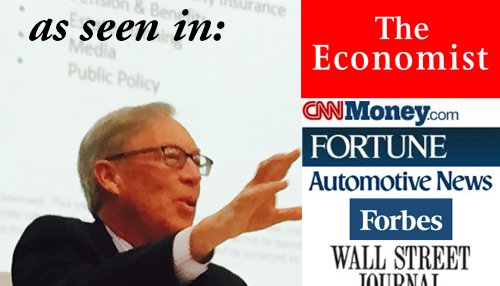
Don Southerton, who advises South Korean businesses on how to manage their foreign operations, says many have been “going back to basics” since the slowdown in China and other big emerging markets. Their Korean staff have reverted to working longer hours and straining to hit short-term targets, under pressure from the bosses back in Seoul.

The article adds some companies (code word for the major Groups) in Korea appear “to be tightening the screws,” “making them stick to a strict lunch hour,” or “asking them to arrive at the office an hour earlier.”

All in all, I feel The Economist article reflects an ever-changing Korean workplace, one I share in mentoring, coaching and crafting a strategy to overcome the challenges.

Access Link to the Article

https://www.scribd.com/doc/291417799/Loosening-their-ties-The-

In the meantime, would you like to schedule a time to discuss your Korea facing business questions?

To facilitate and with my rather demanding workload and travel, Stacey, my personal assistant at stacey@koreabcw.com can schedule us for a time.

Everything Korea, November 16 Episode: Crafting a “Way”…

Stepping back to August 2005, I was conducting cross-cultural training and coaching sessions at a manufacturing facility. In the early months of the plant operations, tensions between the American and Korean teams were mounting.

Startup operations are always a daunting task. The additional cultural dimensions and language differences only compounded the odds of having a smooth launch.

Recognizing the challenges, senior Korean leadership asked if I could provide team- building workshops that would allow the respective managers to better address escalating concerns and issues.

Consensus was that the problem was “cultural”—Koreans not understanding Americans and visa-versa. I had been working across their organization for several years and I had dealt with what I thought were similar situations.

However, a few hours into the team-building workshops I uncovered the true cause of the strained relationship, but it was not what I had expected.

Most of the American teams were production veterans—hand picked because they had been top performers at Ford, Toyota, Nissan, Honda, Mercedes Benz, and GM North American plants. In contrast, the Korean teams were career employees—most having worked for a decade or more at a sister plant in South Korea.

What surfaced in discussions was that many of the new American managers had been searching in earnest for a Way—documented policies and procedures that would guide them in decision-making and day-to-day work. For example, former Toyota managers looked for a model similar to the Toyota Way, while others who had worked for Ford Motor Company sought standard operation procedure manuals (SOPS). Not finding a set Way resulted in some Americans feeling that there might be a communications and language issue. More concerning, a few hinted strongly at trust issues and that Koreans were deliberately withholding vital information.

Listening to the group, I had a realization. Over the years working with the company and other Korea-based businesses, I found sharing historic background and differences between Korean culture and other cultures as a proven, effective and commonly accepted cross-cultural learning model. Nevertheless, it became crystal clear to me that what was truly needed in this situation was to clarify and impart an intangible—the Way or vision.

A Shared Mindset

Jumping forward several years… on a number of occasions I have shared my quest to better understand the companies’ Way (and triggered by the work at the plant ) with veteran Korean staff and executives. Time and time again, I found those long employed by the Company reflecting for a moment and then stating frankly that the company’s approach was not easy to explain.

For example, one senior Korean pointed out that within company there are several management styles and approaches to tackling an issue depending on the person’s lineage.

Groomed by their seniors, junior members of teams adopt the mentor’s methodology and leadership style—some “hard” and demanding, others “soft” and preferring collaboration.

Another executive imparted that their Way was acquired over time. He added that,with the exception of some minor differences among the sister companies, the transferring of key people among divisions, creates a shared mindset.

At a minimum, Korean teams understand the thought process and methods of others across the organization regardless of the affiliations.

The Korean executives did agree that understanding the corporate mindset by both Koreans and non-Koreans working across the organization was vital to the continued success of the Company.

In Contrast

Recognizing lessons learned in incorporating a Way in the operations of other American plants, I’d like to share a success model. In 2009 Korea based Kia Motors Manufacturing Georgia’s senior leadership took a bold approach Day One. The crafted their “Kia Way.” Key elements include:

  •  Continuous Improvement
  •  One System One Team
  •  Effective 2-Way Communication
  •  Cooperative Mindset
  •  Harmony Ÿ Teamwork Ÿ Trust

At the core, the “Kia Way” aligns teams—Korean and American. In particular, it provides continuity as new Korean expatriates are assigned to the plant, as well as Americans formerly employed within the manufacturing industry and who join the team in Georgia.

All said, I am strong advocate of crafting a “Way,” for Korean operations overseas—one that addresses and tailored to local needs while still aligning with the global organization Culture.

Would you like to schedule a time to discuss steps to implement a “Way” in your organization?

To facilitate and with my rather demanding workload and travel, Stacey, my personal assistant at stacey@koreabcw.com can schedule us for a time.

unnamed