
Tag Archive for Don Southerton

Everything Korea: September 26 Episode, “Hit the Target”

sept26

A week does not go by without a colleague or client expressing deep concern for what seems an overarching and singular need for their company to hit their numbers.  To most, despite a number of vital business initiatives, they feel the monthly demand to meet “plan” is all that matters.

Frankly, as long as I have been working with Korea facing global business it has been a (the) driven force.  In fact, I can recall more than a decade ago while mentoring a new American divisional vice president that his Korean coordinator, obviously under some duress and knowing I understood the company well, pulled me aside. He asked passionately I stress to the new VP they needed to “Hit the Target.”  Repeating the phase, 3 times so to ensure I got it… then patting me on the back and sending me over to the adjacent office with the VP.

In another case, I was a speaker at LG’s Mobile national sales meeting.  Capping the upbeat and motivating event, the CEO with a huge graph projected behind him shared their amazing unit sales growth over for the years, then added the next year’s “stretch goal” as a hush came over the room. The new goal a huge bump over past years, which had pushed teams and the organization to their limits.

To be fair, this model is not unique to Korean business. It is also the subject on frequent discussion in Korea.  However, South Korea’s modern economy was once rooted in a state run export driven model—the government fixing private industries and well as the nation’s overall production and sales quotas in many sectors.  Today despite leading international as well as Korean economic experts arguing the old model is dated and need to move more to the service sector…   the export production model still remains a driving force… one now where Korean Groups now direct their own organizations production and sales numbers across global organizations and into numerous markets. In part with so much of the Korean identify, economy and jobs tied to export production the Groups are under pressure to continue to seek growth each year—push the teams even harder.  More so, with global stagnation in new markets and China, the past successes are marginalized. As a consequence Sales to move inventories has to rely on special pricing and incentives, which hurt brand image and profits.

Sadly Korea brands are world class and should sell based on their quality and value from cars to smartphones.

So what’s the solution?  

First we need to accept this has long been the foundation of Korean business and it has been their proven success model.  It’s part of their Culture and in a sense Tradition accepted by many.  In turn, others do hope and argue for Korea to re-invent and redefine itself, less focused on growth numbers and more on a being a leader in new technology and innovation synonymous with Silicon Valley.

Care to discuss some additional solutions?  My personal assistant Stacey at stacey@koreabcw.com can coordinate a time for us to chat by phone, meet or handle by email.

Everything Korea, September 19 Episode, Sub-cultures Matter

sept-19

As many of you know, I work between Korean affiliates and companies. What stands out is how sub-cultures vary even within the same Group. Perhaps moving among affiliates sometimes in a single day, I see and experience the subtle differences more than most.  This can range from the tangibles like building design, workspace layout, dress code and amenities to intangibles such as what one can sense in day to day employee engagement, morale and comradery.

In fact, there are sub cultural differences:

1) in Korea between divisions and affiliates, 2) with Korea and their own overseas divisions and 3) as I noted between the local overseas affiliates.

So, sub-cultures do matter.

Digging deeper, I feel recognizing what is common between the companies’ counts, too. This can include intrinsic Group values and norms shared across the organization, or even more common general Korean business practices and expectations.

To add to the complexity, often the local sub-culture of an affiliate has evolved over time, and very independent of the mother organization in Korea.  BTW We’re seeing as Korean Groups have expanded their global organizations into many markets there has been greater effort to now align the overseas operations with the HQ corporate culture.  (I’ll provide some more on this in one of my next Vodcast)…

This means when a Korea related issue surfaces in local operations we have to look at with several colored lenses.  Candidly, that how I pull apart situations and provide a solid work-through when supporting clients as a mentor and their Korea business strategist.

Learn More

Have a question or want to learn more about how I support and mentor clients? My personal assistant Stacey at stacey@koreabcw.com can coordinate a time for us to chat by phone, meet or handle by email.

Everything Korea September 6 Episode: an Intangible Corporate Culture

One more resource– this week it’s my 2014 book  Hyundai Way: Hyundai Speed. In it, I tackled the often-raised question, “What has made Hyundai so successful?” The book also looks to capture my ongoing pursuit to define and share Hyundai corporate culture, which by nature is an intangible

Chapters in the book then explore the ties between Korean and Hyundai heritage with deeply rooted culture and tradition that still strongly impacting the modern workplace.  After sharing this background on Korea, I look at the rise of Hyundai under its founder Chung Ju Yung and the current chairman Chung Mong Koo.

Next, the focus is on Hyundai corporate culture, old and then insights into the notable company management styles. The final chapter shares my opinions on a question many outside Korea have asked of this enigmatic system: “Is Hyundai business model globally sustainable?” Again, I tackle this question from the cultural perspective.

To Dig Deeper

Here’s a link to Hyundai Way: Hyundai Speed
http://unbouncepages.com/hyundai-way/  or you can request a PDF from my personal assistant Stacey at stacey@koreabcw.com.

As Always….

Have a Korea-facing situation that needs addressing?  Need some insights into Korea-facing challenges?  In many cases, we can provide solutions and workarounds.Questions@koreabcw.com

Everything Korea August 29 Pitfalls and Roadblocks—Korea Perspective

Over the past few weeks, I’ve enjoyed sharing resources. This week it’s my book from 2015, Korea Perspective—which I wrote as a road map to avoid the pitfalls, navigate around the roadblocks, and “thrive.”

In crafting the book I drew heavily on conversations with Western overseas teams, as well Korean leadership and teams.  In particular, both groups openly shared their challenges and pressing concerns along with the inner workings of their companies with hopes for improving communication.

In turn, my goal was to provide a framework, strategy, and solutions.

To Dig Deeper

Since so many have opted to get copies for my other writings, here, too, is a link toKorea Perspective http://unbouncepages.com/korea-perspective-launch/, or you can request a PDF from my personal assistant Stacey at stacey@koreabcw.com.

As Always….

Have a Korea-facing situation that needs addressing?  Need some insights into Korea-facing challenges?  In many cases, we can provide solutions and workarounds. Questions@koreabcw.com

Everything Korea August 22 Episode Seoul Man, The Book

This is a special edition and for a change, I‘d like to share what I feel is a great Korea facing resource—my friend Frank Ahrens’ soon to be a best seller.

Frank’s career prior to the 3 years as Hyundai Motor Company’s head of global PR was a journalist for the Washington Post.  His vivid accounts of the years with HMC provide readers with a look behind the curtain—some cultural, some personal experiences. All a must read for anyone working for a Korean company.

Speaking with Frank last week, what stands out is his observations and early first hand impressions into the workings of Hyundai—something those of us long involved with Korea-facing business far too often overlook, or take for granted as norm.

I strongly recommend you get a copy. To facilitate, here’s the link.https://www.amazon.com/Seoul-Man-Unexpected-Hilarity-Corporate/dp/0062405241

As Always….

Have a Korea-facing situation that needs addressing?  Need some insights into Korea-facing challenges?  In many cases, we can provide solutions and workarounds.  Questions@koreabcw.com

Everything Korea August 15 Solution-Based Korea Facing

To follow up on last week’s popular commentary, I’d like to also share another resource….my highly regarded book from 2013, Korea Facing: Secrets for Success in Korean Global Business. In particular, it provides solid hands-on solutions to the many challenges in the global workplace.  Working with so many of you, I, too, see the issues…daily.

The book’s focus was an ever-growing number of people employed by a Korean-based company outside South Korea.  We know the challenges and, in particular, business norms, practices, and the decision-making processes vary across cultures. Expecting teams to “get it” seldom works. Hoping new employees and management can recognize and grasp Korean corporate norms is like throwing someone into a pool and assuming they will swim, not sink.

Who else will benefit?

Likewise, if your firm provides services or products to a South Korean overseas subsidiary or operations the exclusive coaching and consulting service will be beneficial and offer tactics to strengthen and maintain the relationship.

Finally, if your company has significant business in Korea, but leadership and headquarters are located in the West, we offer key management with coaching on how best to deal with pressing issues and challenges that surface.

Frankly, in all three cases I have had extensive experience. In each case I have seen people and companies both fail and succeed.  Our coaching service will provide a roadmap to avoid the pitfalls, navigate around the roadblocks, and thrive.

In many cases, Korean leadership and teams have openly shared their challenges and pressing concerns along with the inner workings of the company with hopes I would “assist” in educating their overseas teams in the firm’s vision, values, procedures, and methods.

In sum, I have offered hundred of hours of coaching, consulting, and training to both leadership and team employed by Korean firms, and to firms providing key services to their Korean partners.

To Dig Deeper

Here’s a link to “solution-packed” Korea Facing in a Complimentary PDF copy:http://unbouncepages.com/korea-facing/, or you can request a PDF from my personal assistant Stacey at stacey@koreabcw.com.

As Always….

Have a Korea-facing situation that needs addressing?  Need some insights into Korea-facing challenges?  In many cases, we can provide solutions and workarounds.    Questions@koreabcw.com


Everything Korea, August 1 Episode: Solving Problems and the Creative Process


I recently came upon a 5 step process for solving problems.  My work centers on this, as well as reminding the CEOs I support that it’s a big part of their job, too—by default many leaders just focusing on operations.  So the list peaked my interest. Digging deeper I found it was sourced from a book originally published by James Webb Young in 1939A Technique for Producing Ideas.  To many in the industry, Young was one of the original Ad Men.  Supporting so many in Marketing, Media and Branding, I found this fascinating.

As a caveat with South Korea new global branding as “Creative Korea,” it is only timely to look more closely at creativity, more so, having commented frequently in this Vodcast on the Korean vs. Western creative class. (My PDF on the topics is available upon request).

Let look at James Webb Young’s process.

  1. Gather new material. At first, you learn. During this stage you focus on 1) learning specific material directly related to your task and 2) learning general material by becoming fascinated with a wide range of concepts.
  2. Thoroughly work over the materials in your mind. During this stage, you examine what you have learned by looking at the facts from different angles and experimenting with fitting various ideas together.
  3. Step away from the problem. Next, you put the problem completely out of your mind and go do something else that excites you and energizes you.
  4. Let your idea return to you. At some point, but only after you have stopped thinking about it, your idea will come back to you with a flash of insight and renewed energy.
  5. Shape and develop your idea based on feedback. For any idea to succeed, you must release it out into the world, submit it to criticism, and adapt it as needed.

As always, we appreciate you comments and feedback. Please feel free to share either privately at questions@bcwkorea.com or publicly in the comment section.


Everything Korea July 19 Episode: Branding in Asia

Much of my client work supporting Korea-facing business involves mentoring Marketing, Creative and Media leadership and teams. This has ranged from on-boarding new Chief Marketing Officers and Chief Creatives to CEOs and COOs of new Agencies of Record (AOR) as well as ongoing support across their teams.  In fact, I have interacted with most of the top “A-list” Ad, Digital, Media and Marketing groups and their organizations.

I have come to find branding especially fascinating and peaking my interest. More so, the Korean and Asian approach to the market in contrast to the West.

One resource I’d like to share and that stands out is Branding In Asia.

They provide a wealth of information for the industry into Asia’s diverse and widely varied tastes. In particular, Branding in Asia explores exciting new ideas and creative concepts exploding from the mind of Asia. Please subscribe.

It is only timely, that I was just asked to share some thoughts in their magazine.
I’ve included two Q&As from the profile.  For the full article go to: http://brandinginasia.com/don-southerton-interview/

Q: What is the biggest change you’ve seen in the business culture in Korea over the years?

A: For starters, Change is a constant within the Korean companies. As for corporate culture, Korean companies have found that as they expanded operations overseas the rigid norms and practices that worked well domestically needed to be adapted to local Western markets. In turn, this gap in cultures is well recognized by HQ teams who are in daily interactions with the West. Most recently, the leading Korean brands have crafted more global savvy corporate visions, core values and communications to reflect their international footprint and diverse workforce. In some cases, I have developed and shared these programs worldwide.

Q: You’ve said that Korea is the place for companies to start before moving into neighboring markets like China and Japan. Can you talk about that?

A: International market entry can be a huge challenge for Western brands looking at new opportunities. I have long seen Korea as providing a sound entry point for further expansion into China, Japan, India and Vietnam. Ever growing, Korean companies have divisions in these countries and have strong international business networks and supply chains. Options include partnering in a Joint Venture or Licensing Agreement with a local Korean firm, first for Korea, and then for a rollout across East Asia.

Again, for the full article go to: http://brandinginasia.com/don-southerton-interview/

One last thing…
Have a Korea-facing situation that needs addressing?  Need some insights into Korea-facing business?  In many cases, we can provide solutions and workarounds.

My personal assistant Stacey at stacey@koreabcw.com can coordinate a time for us to chat by phone, meet or handle by email.

Everything Korea, July 4 Episode: “Daily Calls with Korea”

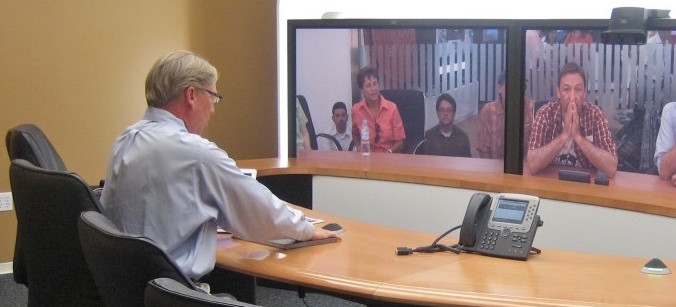
Korea team Video Conferencing

My teams and I are ever on the phone with Korea!”  It’s something a week does not go by without hearing. … it’s someone I know so well personally.

With the shift to ever-increasing daily interactions with Korean HQs via web and phone conferences, western teams need even deeper practical insights into the Culture along with new skill sets.  In particular, the Executive Coordinator/ Advisor model had its limitations…but the Koreans assigned as expatriates did learn local norms and adapt over time. This mean the Coordinators molded to local operations with a lessening need for many in the local teams to become skilled in Korea workplace norms.

In contrast, Korea-based teams follow deeply imbedded HQ and company norms. They are not likely to model or adapt to their overseas subsidiaries.

This now means strong skills in managing the relationship and understanding the Korean workplace “in’s and out’s” and “do’s and don’t” as well as effective communication take on a new heightened significance.

I feel there is no escaping the need to get you and the team mentoring, coaching and skills sets. I am here to support. Just a call away.

My personal assistant Stacey at stacey@koreabcw.com can coordinate a time for us to chat by phone, meet or handle by email.

Everything Korea: Brexit, Korea and Hyundai

Difficult not to be following Brexit (short for British Exit from the EU).

brexit

Things are still fluid, so my commentary targets the impact on Korea-facing global business and specifically the Korean car sector (and dominated players, Hyundai and Kia).

That said, as a cultural historian it’s hard not to mention my initial reaction is a potentially wider pendulum swing toward populist Protectionism-Isolationism after years of “The World is Flat” Globalism and Free Trade Agreements.

To begin….
Headlines abound like “the Pound tanked, while the Dollar and the Japanese Yen gain ground,” and “… Brexit a blow to integrated global economy,” the later a Korean headline.

From a broader trade perspective, South Korea’s exposure to the U.K. is minimal.
Due to this low trade exposure we expect the Brexit to have no major impact on the Korea economy’s projected growth. Korea’s exports to the U.K. amounted to just 1.4 percent of all export shipments.  This said, the Brexit’s wider implications have many in Korea on alert and noting  “the uncertainty” that was common term cited last year with the downswing in the global economy.

More significant, and something I comment on often is the foreign exchange market. As we see when there is some global economic crisis, the immediately effect is the Won-Dollar exchange rate impacted—in this case Korean currency sinking compared to the U.S. dollar by the greatest % rate in five years.

This is not always a bad thing….
As a result, US Dollar profits repatriated back to Korea are worth more in Won, so essential US overseas operations getting more bang for the Buck.

We need to watch carefully the Won with relation to the Japanese Yen, too. South Korean carmakers fared well between 2007 and 2011 as the Won fell as much as 50% against the Yen. That trend reversed in the middle of 2012.  So, noted in my introduction, the Yen is strengthening.

Regarding car imports to UK….
The Brexit departure could revive a 10-percent tariff on exports of Korean passenger vehicles to UK unless a deal similar to the EU-Korea trade pact is negotiated.  Short term this will have little impact, as there is a 2 year grace period for the withdraw from the EU.

If no UK-Korea trade agreement is implemented, the Korean car brands will have disadvantage in price competitiveness compared to Japanese and German rivals, which have production bases in the UK.

For the Hyundai and Kia…. the real concern is the effect it will have on the European market as a whole, as well as the global economy….  In recent months, both Hyundai and Kia have seen an upswing in business in the EU   As of last year, Hyundai Motor and Kia Motors sold about 850,000 vehicles in the European countries, with 20 percent sold in the U.K.

Thanks to the FTA benefits, Korea has exported cars over 1,500 CC without any tariffs. Starting from July, those under 1,500 CC are also exempt from tariffs.

Over time… We’ll see UK move to becoming a “regulatory island adopting its own rules for tariffs, duties and standards. The European market will be more like Asia—with different rules in we find in Japan, South Korea, Hong Kong, and China.

Crisis?
To share a reach out for a comment from a close colleague and a leading global economist focused on Korea…. my friend notes: “Probably a lot of turbulence over next several weeks because many aspects of the Brexit were not considered by the Leave camp. But I think the markets are probably oversold as London’s position as financial center is not affected in short-run, and neither is trade. Put differently, the material effects are not as catastrophic as might appear in short-run …”

In closing… look for my follow ups this week….  As well as share you comments and questions… so, please share your remarks…. ☺

As mentioned in my introduction, whether Brexit is isolated, or the first of a broader populist Protectionism movement—it is something of interest to be followed…